
You can likely list countless technologies that are designed to reduce their own waste. But how many do you know that reduce the waste of others? While goals like “waste neutral” and “carbon zero” are crucial to ensuring today’s products and lifestyles aren’t leaving pollutants in our air and waterways, they don’t address the fact… Continue reading These innovative tech-solutions are helping rid the world of pollution
Category: Suppliers
自律航行船を開水域へ:ベロダイン・ライダーが次世代のAV開発者をMaritime RobotX Challengeで支援
米カリフォルニア州サンノゼ–(BUSINESS WIRE)–(ビジネスワイヤ)– ベロダイン・ライダーは、自律航行船コンテスト「2018 Maritime RobotX Challenge」で競う15の大学チームに、指導とライダーセンサーを提供しました。2018年12月にハワイのホノルルで開催されたRobotXには、米国、オーストラリア、中国、日本、台湾、シンガポールの大学チームが参加しました。 参加チームは、推進システム、センサーシステム、制御システムを装備した船舶をゼロから製作しました。船舶の自律航行を実現する上で重要な認知機能を提供する要素となったのは、ベロダイン製ライダーセンサーのPuck™とUltra Puck™です。 コンテストで各チームの自律航行船は、航海と制御、障害物の回避、位置確認とシーケンス、シンボル識別と入港、検出と搬入、水中回収作業、状況認識が可能なことをデモで示しました。チームはそれぞれ、ウェブサイトと技術設計書を作成し、プレゼンとビデオでそれぞれの取り組みを紹介しました。 コンテストではシンガポール国立大学が優勝し、オーストラリアのクイーンズランド工科大学が2位に、フロリダ州デイトナビーチのエンブリー・リドル航空大学が3位になりました。 ベロダイン・ライダーの社長兼最高商業責任者(CCO)のMike Jellenは、次のように語っています。「Maritime RobotX Challengeを通じて、次世代のエンジニアは自律航行船を支えるライダー3D認知技術の力について学習できます。これらの優れた学生が海洋技術のあり方の変革に取り組むに当たり、協力できたことは光栄なです。」 大学レベルの国際コンテストであるRobotXは、学生が海洋環境向けの自律航行船(AV)技術とロボット技術に触れる機会を拡大できるように企画されています。このイベントを運営する非営利組織のRoboNationは、学生の力を高め、STEM(科学、技術、エンジニアリング、数学)した活用して、より広い世界を学べるようにすることを追求しています。ベロダインはRoboNationのスポンサーです。 RoboNationのエグゼクティブディレクターのダリル・デビッドソン氏は、次のように述べています。「このコンテストは、海洋分野で通用する自律ロボットシステムに対する学生の関心を促すためのもので、協力的自主性を伴った科学とエンジニアリングに重点を置いています。ベロダインがこのイベントに関与することで、学生は最先端のライダー技術を体験できる一方で、同社は自律技術について学ぶ世界トップレベルの学生と交流する機会が得られます。ライダー技術は、一流の研究組織や商業組織が自律技術のエキサイティングな革新成果を今日の市場にもたらすべく利用している技術です。」 ベロダイン・ライダーについて ベロダインは、自律性と運転支援のための最もスマートで強力なライダーソリューションを提供しています。1983年に設立され、カリフォルニア州サンノゼに本社を構えるベロダインは、画期的なライダーセンサー技術のポートフォリオで世界的に知られています。2005年にベロダインの創業者で最高経営責任者(CEO)のデビッド・ホールが、リアルタイム・サラウンドビュー・ライダー・システムを発明し、自動車、新しいモビリティー、マッピング、ロボット工学、セキュリティーなどの分野で認知と自律性の機能に革命をもたらしました。ベロダインの高性能製品ラインには、コスト効果の高いPuck™、汎用のUltra Puck™、L4-L5レベルの自律性に対応したAlpha Puck™、ADAS向けに最適化されたVelarray™、画期的なドライバー支援ソフトウエアのVella™を含め、広範な検知ソリューションがあります。 RoboNationについて 非営利組織のRoboNationは、学生が世界規模の課題に対する革新的ソリューションを発見するための能力を身に付けられるよう、実践的な教育体験の道筋を提供することを使命としています。RoboNationは、技術によって人々が団結し、学習、共有、創造できる世界を思い描いています。www.robonation.org 本記者発表文の公式バージョンはオリジナル言語版です。翻訳言語版は、読者の便宜を図る目的で提供されたものであり、法的効力を持ちません。翻訳言語版を資料としてご利用になる際には、法的効力を有する唯一のバージョンであるオリジナル言語版と照らし合わせて頂くようお願い致します。 Go to Source
Tenneco Fourth Quarter and Full Year 2018 Earnings Release and Conference Call Notice
LAKE FOREST, Ill.–(BUSINESS WIRE)–Tenneco Inc. (NYSE: TEN) plans to issue its fourth quarter and full year 2018 earnings release before the market opens on Monday, February 25, 2019 and hold a conference call the same day at 8:00 a.m. ET. The purpose of the call is to discuss the company’s results of operations, as well… Continue reading Tenneco Fourth Quarter and Full Year 2018 Earnings Release and Conference Call Notice
Bosch plans takeover of LAWA Solutions
Bosch Service Solutions is a leading global supplier of Business Process Outsourcing for complex business processes and services. Using the latest technology and the Internet of Things, the Bosch division develops integrated and innovative service solutions in the areas of Mobility, Monitoring, and Customer Experience. Around 9,500 associates at 28 locations support national and international… Continue reading Bosch plans takeover of LAWA Solutions
Goodyear Acquires Weeting Tyres
Acquisition aligns with Goodyear’s strategy Weeting Tyres branches to remain part of the HiQ Network, under Goodyear ownership Birmingham, UK, 4th February 2019 – Goodyear Dunlop Tyres UK Ltd announced today that it acquires Weeting Tyres, a leading tyre retail company based in Norfolk, Suffolk and Essex, UK. The retailer, Weeting Tyres, currently operates as… Continue reading Goodyear Acquires Weeting Tyres
TomTom Expands Partnership with Microsoft to Power Microsoft Cloud Offerings with Location-Based Services
AMSTERDAM & REDMOND, Wash.–(BUSINESS WIRE)–TomTom (TOM2) and Microsoft Corp. (MSFT) today announced that they are expanding their partnership, bringing TomTom’s maps and traffic data into a multitude of mapping scenarios across Microsoft’s cloud services. With this broadened integration, TomTom will be a leading location data provider for Microsoft Azure and Bing Maps. TomTom is also… Continue reading TomTom Expands Partnership with Microsoft to Power Microsoft Cloud Offerings with Location-Based Services
Allison Transmission Schedules Fourth Quarter 2018 Earnings Conference Call
INDIANAPOLIS–(BUSINESS WIRE)–Allison Transmission Holdings Inc. (NYSE: ALSN), the largest global provider of commercial duty fully-automatic transmissions, today announced that it will hold its fourth quarter 2018 financial results conference call at 8:00 a.m. ET on Tuesday, February 26. President and Chief Executive Officer David S. Graziosi and Vice President, Chief Financial Officer and Treasurer Frederick… Continue reading Allison Transmission Schedules Fourth Quarter 2018 Earnings Conference Call
Continental Successfully Concludes Kathrein Automotive Acquisition
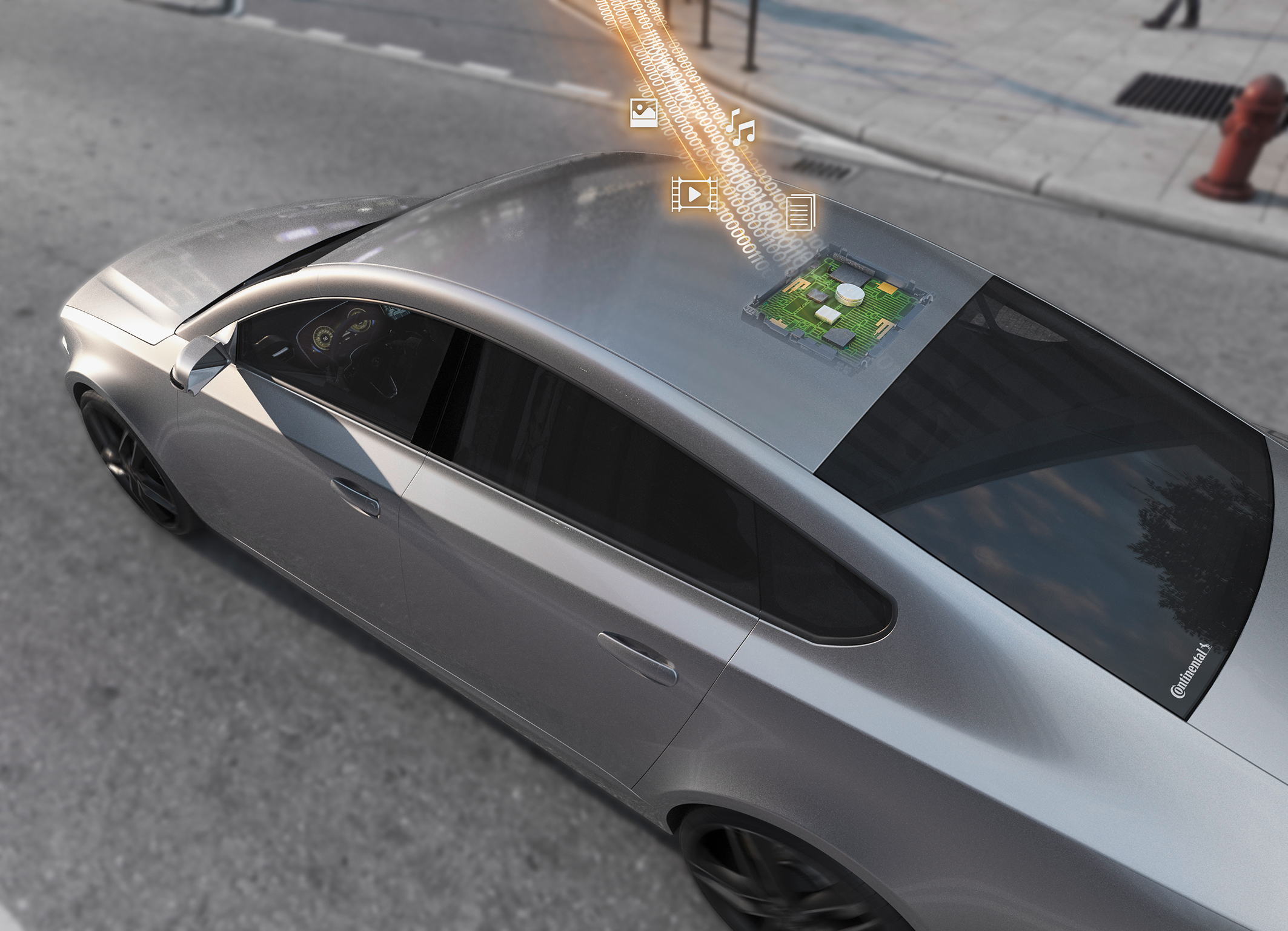
Antitrust authorities clear Continental’s acquisition of Kathrein Automotive Newly acquired development expertise will consolidate the company’s position on the growing vehicle antenna market Working closely together to build on joint development achievements and drive forward innovations Pioneering development of the Intelligent Antenna Module Regensburg, February 4, 2019. Technology company Continental announced today the successful completion… Continue reading Continental Successfully Concludes Kathrein Automotive Acquisition
How Lidar Revolutionized the Way We See the World
How Lidar Revolutionized the Way We See the WorldFebruary 1, 2019|In Blog|By Albie Jarvis
An Interview with Todd Neff, author of
The Laser That’s Changing the World
Todd Neff’s The Laser That’s Changing the World, tells the story of lidar’s origins, the people who propelled it forward, and its fascinating transitions to the mainstream.
Lidar has a long, rich history with its early concept dating back to the 1930s. The technology was developed in the early 1960s, closely following the invention of the laser. Lidar gained public notice in 1971 when the Apollo 15 mission used the technology to map the moon’s surface. Since then, lidar has been deployed in numerous game-changing applications such as self-driving cars, unmanned aerial vehicles, robotics, security, and more.
Todd Neff is an award-winning science, environment, and healthcare journalist who has written a book that catalogs many of the captivating stories in lidar’s history. The book, called The Laser That’s Changing the World, tells the story of lidar’s origins, the people who propelled it forward, and its fascinating transitions to the mainstream.
We checked in with Todd to hear from him about some of lidar’s early pioneer days, the technology’s road to autonomous vehicles, and where lidar is headed.
Award-winning science, environment, and healthcare journalist, Todd Neff
VL: One of the great strengths of your book is you addressed a complex technology in a way that’s easy to understand. Why do you think it’s important for a non-technical audience to know about lidar?
Todd Neff: People in general should know about lidar because I think lidar is going to be everywhere. Unless someone manages to come up with another technology that can combine with cameras and radar units to instantly provide precise distance measurements millions of times a second, lidar will be as standard on self-driving cars as headlights are on human-driven cars. In not too many years, driving your own car is going to be like churning your own butter or brewing your own beer. People will do it, but when it’s a question of driving in traffic or napping through it, it’s not going to be a hard decision for most of us. Vehicle autonomy depends on a lot of technology, but history shows that lidar has been the key enabler.
Velodyne Lidar’s Alpha Puck, Velarray, and VelaDome
VL: In the book, you called the 2004 DARPA Grand Challenge the “birthplace of the self-driving car industry.” Why was that event so pivotal to the industry?
Neff: The 2004 DARPA Grand Challenge brought together a large group of very smart, not-at-all-risk-averse people – corporate, academic, and independent – who had had, until that point, no sense of the critical mass of talent and interest that had independently accumulated to develop self-driving vehicles. A community was born, in effect. It also showed that the core technologies – particularly computing technologies – had gotten fast enough and solid enough that good engineers could combine them into a package that could do much more than was possible even a few years earlier. The sensors were the weakness, but it wasn’t long before David Hall changed that.
VL: One especially notable outcome of that challenge, you wrote, was David Hall’s invention of the “seminal sensor for self-driving cars.” As you look at lidar’s history, how did David’s invention spur autonomous vehicle development?
Neff: It could be the case, decades from now, that lidar will seem as quaint on autonomous vehicles as hand-crank starters would be on modern cars. But there will be no denying that David Hall’s invention of automotive lidar, which he debuted on a Toyota Tundra in the 2005 DARPA Grand Challenge, marked the moment at which the idea of developing commercially viable self-driving cars became realistic. The ability to identify objects in front of, next to, and behind a vehicle vastly simplified software development (you no longer had to “remember” what you just passed – that it was, say, a guy on a courier bike that would be next to you again at the next stoplight). You could just observe the guy on the bike and plan around it in real time. By the 2007 DARPA Urban Challenge, there were a half dozen finishers in a much more demanding course than those of the desert challenges. Hall’s Velodyne lidar was on five of them, including the winner, Carnegie Mellon’s “Boss.”
VL: Lidar is seen as an essential technology for autonomous vehicles. What did you learn about lidar’s role in other application areas such as 3D mapping, drones, and robots?
Neff: Automotive lidar piqued my initial interest, and it’s a major focus of The Laser That’s Changing the World. But the automotive story doesn’t start until the second half of the book. Like any other reporting effort, you find that there’s a lot more to the story than you first imagined. In this case, I learned that what became lidar was first envisioned by an Irish savant, Edward Hutchinson Synge, 30 years before the invention of the laser, and that the technology’s evolutionary path quickly diverged into two forks – defense (targeting systems) and atmospheric science (spotting pollution plumes at first). Then came bathymetry and land mapping (including land on Mars, Mercury, and the moon); geological and forestry and archeological applications; architectural and construction-related applications, and on and on. Now you’ve got lidar mapping Times Square for Spiderman movies and lidar zapping license plates in the hands of traffic officers; lidar measuring global winds from space; and lidar measuring the altitude of satellites so the same satellites can measure sea levels that are rising based on the mass balance of ice sheets, which other scientists are measuring with lidar. In the time it took to read the above paragraph, someone probably came up with a new application for lidar.
Velodyne Lidar’s HDL 64E, HDL 34E, The Puck, and Ultra Puck
VL: You have called lidar “a really powerful, massively adaptable tool.” It has had dramatic but not very well-known impact in a variety of fields. Can you share one area that you found particularly interesting?
Neff: I found it all interesting, really. There’s been such creativity in the development and application of lidar technology. And it has been organic and unpredictable. Researchers both in the scientific and the defense worlds noted that, with airborne lidar, enough laser light sneaks through a forest canopy that they can make out the ground below. On the defense side, they developed sensors that can see tanks and trucks hidden in jungles. On the science side, they found the long-hidden Seattle Fault on Bainbridge Island, and archaeologists then flew lidar over Central American jungles to completely rewrite the history of Mayan civilization (cities were many times larger than they were believed to be previously, when you had to hack through jungle to survey anything). The history of lidar provides a fascinating look at how a fundamental enabling technology can spill across and ultimately revolutionize radically different fields over time.
VL: You have noted that lidar has a tradition of creativity and innovation reaching back decades. Building on this legacy, what do you see next for lidar?
Neff: The huge amount of brainpower and money pouring into automotive lidar will yield smaller and smaller systems that are easier and easier to program and operate at lower and lower cost. I’d guess lidar will be incorporated into assistive technologies to help the visually impaired safely navigate their worlds, for example. Wheelchairs could well become autonomous. The work happening in automotive lidar today will make such systems technically and economically viable, just as the work done in the telecommunications industry brought lasers to the point that they were inexpensive and reliable enough to incorporate into automotive lidar. But you just can’t predict where a creative scientist or engineer with a problem to solve will take a new enabling technology. The history of lidar demonstrates that in spades.
For Velodyne Lidar Products Click HERE
Stanimira Koleva joins HERE as Senior Vice President (SVP)
Singapore – HERE Technologies, a global leader in mapping and location services, today announced the appointment of Stanimira Koleva as Senior … Go to Source