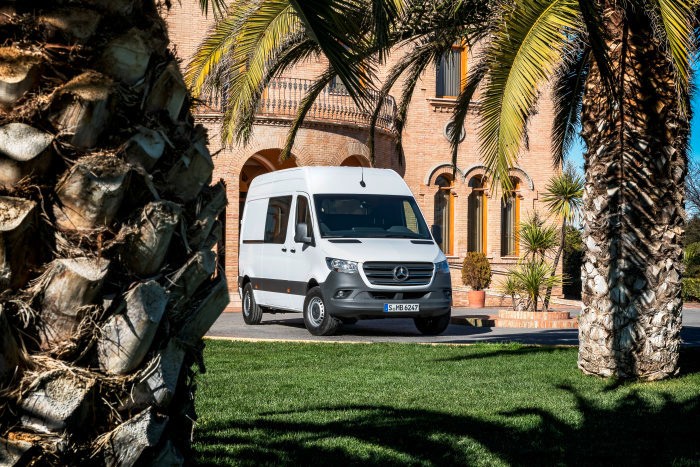
The third generation of the Mercedes-Benz Sprinter is already proving to be a successful model, less than a year after its market launch. Since the start of sales in February 2018, the flow of orders has been steadily increasing.
Author: Daimler Official News
#MBsocialcar: Mercedes-AMG E 53 4MATIC+ Estate.
Recommended Kraftstoffverbrauch kombiniert CO₂-Emissionen kombiniert Stromverbrauch im kombinierten Testzyklus Product may vary after press date on 26.12.2018. 1 Die angegebenen Werte wurden nach dem vorgeschriebenen Messverfahren ermittelt. Es handelt sich um die „NEFZ-CO₂-Werte“ i. S. v. Art. 2 Nr. 1 Durchführungsverordnung (EU) 2017/1153. Die Kraftstoffverbrauchswerte wurden auf Basis dieser Werte errechnet. Der Stromverbrauch wurde auf der Grundlage der VO 692/2008/EG ermittelt.… Continue reading #MBsocialcar: Mercedes-AMG E 53 4MATIC+ Estate.
Mercedes-Benz Global Fashion Engagement 2018: Mercedes-Benz affirms its dedication to fashion

20.
December 2018
Stuttgart
Press Contact (1)
Mona Moll
Lab1886 & Mercedes-Benz Fashion Engagement Global
mona.moll@daimler.com
Tel: +49 711 17 93799
Fax: +49 711 17-91437
Download
Filter
Do you really want to delete the data record?
Please wait a moment …
Please wait a moment …
Please wait a moment …
Please wait a moment …
Mercedes-Benz Global Fashion Engagement Overview
Stuttgart, Dec 20, 2018
#WeWonder Manifesto
Stuttgart, Dec 20, 2018
Mercedes-Benz Fashion Week in Berlin
Stuttgart, Dec 20, 2018
International Festival for Fashion, Photography and Fashion Accessories in Hyères
Stuttgart, Dec 20, 2018
International Designer Exchange Program (IDEP), MB Presents Show
Stuttgart, Dec 20, 2018
Mercedes-Benz Fashion Week around the world: Mercedes-Benz Fashion Week Madrid
Stuttgart, Dec 20, 2018
Loading
Daimler at Consumer Electronics Show 2019
17.
December 2018
Stuttgart/Las Vegas
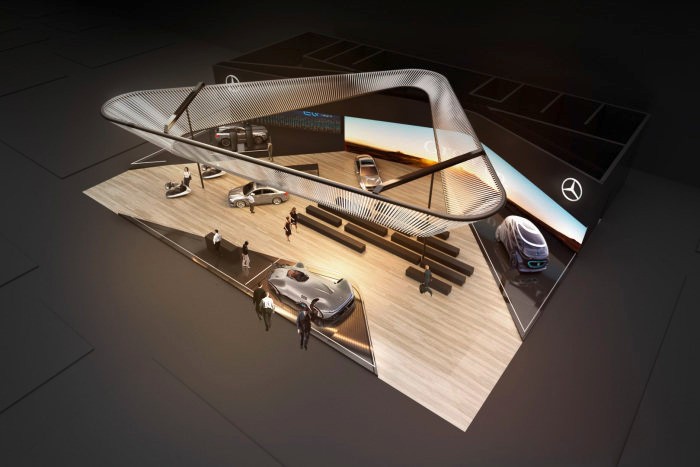
World première of the new Mercedes-Benz CLA Two US premières: Mercedes-Benz EQC and Vision URBANETIC Daimler Trucks at CES with significant news about the strategy for automated driving Follow the Daimler Trucks press conference live at daimler.com/live/ Experience the Mercedes-Benz Cars press conference and talks live at Mercedes me media: media.mercedes-benz.com/ces2019 Stuttgart/Las Vegas. Daimler's trade fair exhibition at the Consumer Electronics Show in Las Vegas (CES; 8 to 11 January 2019) will be focusing fully on the outlook on the future of mobility. Highlights include the world première of the new Mercedes-Benz CLA, US premières of the battery-electric Mercedes-Benz EQC (combined power consumption: 2 kWh/100 km; combined CO2 emissions: 0 g/km, provisional figures)[1] as well as the revolutionary Vision URBANETIC mobility concept plus essential news about the Daimler Trucks' strategy for automated trucks. After the Mercedes-Benz press conference, Sajjad Khan, Member of the Divisional Board of Mercedes-Benz Cars, CASE and Vice President Digital Vehicle & Mobility, will be giving an insight into the current developments within the context of the Daimler-wide CASE digitalisation strategy – Connected, Autonomous, Shared & Service and Electric Drive. In the afternoon, Wilfried Porth, Member of the Board of Management of Daimler AG and Human Resources and Director of Labour Relations at Daimler AG's Mercedes-Benz Vans, will be explaining the future of mobility using Vision URBANETIC as an example.
On the day before (Monday, 7 January), Daimler Trucks will be providing an overview of the most recent company and technology developments at the Keep Memory Alive Center (KMAC) and will be announcing the company's next steps within the context of automated driving. Media representatives will subsequently be given the opportunity to experience the most recent products from the North American truck and bus/coach portfolio at the Las Vegas Motor Speedway.
The new Mercedes-Benz CLA will be showcased to the global public for the very first time, featuring its evolved MBUX (Mercedes-Benz User Experience) infotainment system, a technological innovation that premièred at CES in 2018. New functions have already been added a mere 12 months later. As a result, the new Mercedes-Benz CLA Coupé is not only the most emotional vehicle of its class, it is also a highly intelligent automotive specimen: the new CLA offers a number of clever solutions, from the MBUX Interior Assistant that identifies operation requests on the basis of movements to lend the vehicle interior a certain level of intelligence, to augmented reality for navigation and the ability to understand indirect voice commands as well as ENERGIZING COACH featuring individual fitness recommendations.
The Mercedes-Benz EQC will be celebrating its US première – the first purely battery-electric Mercedes-Benz EQ series production model as a symbol for the start of a new mobility era at Daimler. Visually the crossover SUV is a pioneer of avant-garde electric aesthetics, representing an impressive combination of convenience, quality and everyday suitability. These elements are accompanied by dynamic performance, thanks to two electric motors at the front and rear axles with a combined output of 300 kW. Thanks to a sophisticated operating strategy, the EQC delivers an electric range of over 450 km according to NEDC (provisional figures).
The Vision URBANETIC will also be celebrating its US première – a completely new mobility concept for demand-based, efficient and sustainable mobility. The visionary concept is based on an autonomously driving, electrically driven chassis suitable for bodies intended to transport passengers or cargo. The fully network-compatible Vision URBANETIC forms part of an ecosystem in which logistics companies, local public transport companies as well as private individuals can digitally send their transport requests across urban environments. The concept reduces traffic volume, relieves inner-city infrastructure and contributes to a new, urban quality of life. The show car also demonstrates how an innovative and intelligent UI/UX design can also maintain the smooth functioning of mobility even without a driver.
The Daimler Trucks press conference will start on Monday, 7 January, at 9 am (CET -9 hours) at the Keep Memory Alive Center (KMAC). Afterwards media representatives will have the opportunity to exchange ideas about current trends and innovations with Daimler Trucks experts. You can also watch the live stream of the Daimler Trucks press conference at daimler.com/live/.
The Mercedes-Benz Cars press conference will start on the first press day, 8 January, at 11 am (CET -9 hours) at the Mercedes-Benz exhibition stand. The press conference, subsequent insight into CASE with Sajjad Khan (8 January, 2 pm (CET -9 hours) and Wilfried Porth's presentation about the future of mobility (8 January, 3.30 am (CET -9 hours) can also be viewed as part of multi-angle live streams on Mercedes me media at mercedes-benz.com/ces2019. This is where you will also find press materials, images and video clips relating to Daimler Trucks, Mercedes-Benz Cars and Mercedes-Benz Vans at CES via the continously updated Mediahub.
[1] Figures for fuel consumption/power consumption and CO2 emissions are provisional and were determined by the technical service for the certification procedure in accordance with the WLTP test procedure and correlated in NEDC values. EC type approval and a certificate of conformity with official figures are not yet available. Differences between the stated figures and the official figures are possible.
Press Contact
Katja Bott
Head of Global Communications Mercedes-Benz Cars
katja.bott@daimler.com
Tel: +49 711 17 75841
Fax: –
Florian Martens
Head of Global Communications Trucks & Buses
florian.martens@daimler.com
Tel: +49 711 17-41525
Fax: +49 711 17-52006
LinkedIn: https://www.linkedin.com/in/florian-martens/
Twitter: https://twitter.com/florian_martens
Press Contact Overview
Media
Download
Pictures (4)
Documents (1)
Media Contact (2)
Filter
Show thumbnails
Show list
Slideshow
Zoom
Preview
Details
Do you really want to delete the data record?
Please wait a moment …
Please wait a moment …
Please wait a moment …
Please wait a moment …
15A662
18A1081
18C1055_001
18C0763_403
Loading
The new Mercedes-Benz G 350 d: The point of entry to the G-Class without compromises
21.
December 2018
Stuttgart
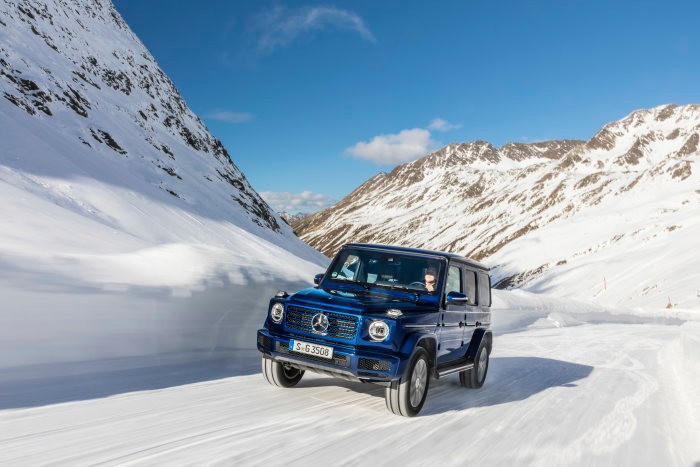
Fuel consumption, combined: 9.8-9.6 l/100 km; combined CO2 emissions: 259-252 g/km*Stuttgart. Powerful, comfortable, superior: The first vehicles of the new G-Class have been conquering the world's off-road trails since June. The cross-country vehicle convinces with performance, safety, modern assistance systems and excellent handling. The powertrain line-up is now being expanded with an efficient diesel variant. The new G 350 d (fuel consumption, combined: 9.8-9.6 l/100 km; combined CO2 emissions: 259-252 g/km)[1] boasts an output like never before. The models will be available to order starting in January 2019 and will arrive in dealerships in spring. As a result, the G-Class model range now offers buyers a choice between the G 500 (fuel consumption, combined: 12.1-11.5 l/100 km, combined CO2 emissions: 276-263 g/km), the AMG G 63 (fuel consumption, combined: 13.1 l/100 km, combined CO2 emissions: 299 g/km) and the new G 350 d.
The new OM 656 diesel engine will also set standards in the G-Class in terms of performance – both on and off the road. “Our goal was to increase the performance” while reducing the consumption and improving the noise characteristics at the same time”, stresses Ola Källenius, responsible for Group Research and Mercedes-Benz Cars Development on the Daimler Board of Management.
The characteristics of the top-notch engine include the stepped-bowl combustion process, two-stage exhaust turbocharging as well as the use of CAMTRONIC variable valve timing. This heats up the exhaust system without driving up fuel consumption. The further advanced NANOSLIDE® cylinder wall coating also reduces friction losses in the piston/cylinder wall system and reduces fuel consumption.
As powerful and superior as never before
The new in-line six-cylinder diesel makes the icon the most efficient “G” so far. It produces an output of 210 kW (286 hp) and with a peak torque of 600 Newton metres between 1200 and 3200 rpm is as powerful as never before.
The new six-cylinder diesel engine is designed to comply with future emissions legislation (RDE – Real Driving Emissions). All components relevant for efficient emissions reduction are installed directly at the engine. This contributes to faster effectiveness of the catalytic converter and the diesel particulate filter. Thanks to the integral technology approach comprising the new stepped-bowl combustion process, dynamic multi-path exhaust gas recirculation and near-engine emission control system, further reduced consumption figures with low emissions are possible. Thanks to the near-engine insulated configuration, the emission control system has little heat loss and ideal operating conditions.
The most efficient G of all time
Thanks to further enhanced emission control technologies, the powerful six-cylinder unit from the modern OM 656 engine family remains below all of the emission limits of the current Euro 6d-TEMP standard even in demanding driving situations and environmental conditions. This is achieved with an additional selective catalytic reduction (SCR) converter with an ammonia slip catalyst (ASC) in the exhaust tract of the GLE. The SCR catalyst (Selective Catalytic Reduction) reduces the nitrogen oxides (NOx) in the exhaust gas. To this end, AdBlue®, an aqueous urea solution, is fed into the system. It chemically converts the nitrogen oxides in the exhaust gas, thus releasing ammonia, which reduces up to 80 percent of the nitrogen oxides into harmless nitrogen and water in the downstream SCR catalytic converter. The filler neck for the AdBlue® is integrated into the external tank recess of the vehicle, which makes straightforward filling at the fuel pump possible.
In ECO drive mode, the gliding function helps to save additional fuel. When the driver's foot leaves the accelerator pedal, the transmission's clutch disengages. This reduces the engine speed to idling level, and the driving resistance is reduced by the compression and frictional forces of the engine while coasting. The G-Class “glides”, using its own, current kinetic energy for a certain distance. It rolls for a measurably longer distance than when coasting. This results in further fuel savings. The clutch is re-engaged as soon as the driver operates the accelerator or brake pedal.
Key data of the G 350 d at a glance:
G 350 d
Displacement
2925 cc
Bore x stroke
82.0 x 92.3 mm
Compression ratio
15.5 ɛ
Engine and output
OM 656, 210 kW (286 hp) at 3400-4600 rpm
Peak torque
600 Nm at 1200-3200 rpm
Fuel consumption, NEDC combined
9.8-9.6 l/100 km
CO2 emissions
259-252 g/km
Acceleration 0-100 km/h
7.4
Top speed
199 km/h
Comfort (too) at new heights
Partly due to the new quiet and harmonious diesel engine, the G-Class proves to be extremely comfortable, even on long distances. When driving, the exhaust system and the engine, which is also willing to rev at higher engine speeds, produce much less noise and vibrations in the interior. To reduce engine noise, the engine mounts of the diesel engine are actively controlled for the first time. At speeds below 5 km/h, they are set to soft to optimally dampen the transfer of torsional vibrations to the ladder-type frame at low engine speeds. At higher engine speeds, the two engine mounts are automatically made stiffer, which has positive effects on the vibrational comfort and the driving dynamics.
9G-TRONIC on board
For the transmission of power, the 9G‑TRONIC automatic transmission with torque converter was specifically adapted to meet the needs of the off-road icon. The developers used a dedicated software application to shorten the shift and response times of the 9-speed transmission and make the G-Class seem even more lively. The wide transmission ratio not only makes driving quieter and more comfortable especially at low engine speeds, it simultaneously also contributes to reducing fuel consumption. Especially in first gear, the off-roader responds to accelerator pedal commands noticeably better, which customers will appreciate especially when pulling away from a traffic light, for example. The “G” is now also significantly more agile during brief sprints under partial load.
The new transfer case is flange-mounted directly to the 9G-TRONIC. It is designed to send 40 percent of the drive torque to the front axle and 60 percent to the rear axle. This configuration particularly benefits the handling characteristics on the road. The permanent all-wheel drive ensures maximum traction. However, the “G” would not be a “G” if it did not have even more in store. The low-range off-road reduction gear considerably increases torque at the drive wheels, which e.g. makes very difficult terrain negotiable.
Personal best in terms of equipment features
The G 350 d is more extensively equipped as standard than the preceding model even ex-factory. This includes the high-quality interior with leather seats, an instrument panel covered in ARTICO man-made leather, and open-pore wood. There are also new options to tailor the G 350 d fully to personal preferences. In addition to various optional extras, Mercedes-Benz offers items from the very popular designo manufaktur ex-factory. For the first time ever, the Exclusive Interior Plus with diamond quilting is optionally available for the G 350 d.
As a result, the G 350 d is a seamless fit with the G-Class, which embodies craftsmanship and customisability like no other vehicle from Mercedes-Benz. In fact, the G-Class is almost exclusively built by hand, which results in a total production time of at least 100 hours. This underscores the uniqueness and high quality of every G-Class.
DYNAMIC SELECT is now available with up to five drive modes for the G-Class as standard. This allows adjusting the vehicle characteristics in seconds at the touch of a button, as the system modifies the characteristics of the engine, transmission, suspension, and steering at the driver's behest. In addition, the G-Class offers a host of new driver assistance systems. For example, Active Braking Assist is able to prevent impending collisions or mitigate their consequences, and assist the driver during emergency braking. If necessary, it will brake autonomously if the driver takes no action to defuse a detected dangerous situation.
Even better off the road, more dynamic than ever on the road
Specifically for the G-Class, the new front axle is designed in such a robust way that the off-road performance and off-road capabilities of its predecessor are retained and partly even surpassed. The components of the double-wishbone front suspension are directly mounted to the ladder-type frame without a subframe. The lower wishbone's attachment points on the frame in Z-direction are positioned as high up as possible. This arrangement ensures good driveability beyond the asphalt.
At the rear, in contrast to the predecessor, the new rigid axle is controlled by four trailing arms on each side and a Panhard rod. This makes normal driving on the road even more comfortable. Off the road, the rear spring jounce of 82 mm and rebound of 142 mm plus the ground clearance of 241 mm to the rear axle gear help to ensure a safe ride even in extreme situations.
Thanks to the new front-axle design, the on-road performance of the G-Class has been enhanced at the same time. On the road, the “G” is as agile as it is comfortable and provides the driver with a better steering feel. The off-roader stays on track more solidly, and is agile and effortless when driving off-road.
Stronger than time
The G-Class is the top model among luxury off-road vehicles. It is not only the passenger car model series with by far the longest production run in the history of Mercedes-Benz, but also the forefather of all SUVs bearing the three-pointed star – this is why all Mercedes off-road models feature the upper-case G in their name.
What began more than 40 years ago with a cooperation agreement between then Daimler-Benz AG and Steyr-Daimler-Puch in the Austrian city of Graz is now a story peppered with superlatives and milestones. At the time of its market launch, in the spring of 1979, it was available with a choice of four engine variants covering a performance range from of 53 kW/72 hp to 115 kW/156 hp. Customers had the option of a Cabriolet with a short wheelbase or Station Wagon models with short or long wheelbase. The consortium decided on the simple but distinctive name “G”, standing for “Geländewagen” (off-road vehicle). At that time nobody could have guessed that this was an almost visionary decision in view of the later change in the nomenclature of Mercedes-Benz passenger cars classes, using just a single letter.
In 1989 the vehicles of the model series 463 marked the beginning of an evolutionary process for the off-roader that was not just about keeping pace with technical progress. It was an evolution that also brought a steadily expanding fan base and emphasised its character as an exclusive vehicle for any occasion. And, since 1993, a vehicle with an official name: the G-Class.
The summer of 2017 saw the 300,000th G-Class roll off the assembly line in Graz – a Mercedes-Benz G 500 in designo Mauritius blue metallic with black leather seats and contrasting white topstitching (fuel consumption, combined: 12.3 l/100 km; combined CO2 emissions: 289 g/km).
[1]The stated figures were determined in accordance with the prescribed measuring method. These are the NEDC CO2 figures pursuant to Art. 2 No. 1 Implementing Regulation (EU) 2017/1153. The fuel consumption figures were calculated based on these figures.
Press Contact
Christian Anosowitsch
Manager Communications SUV
christian.anosowitsch@daimler.com
Tel: +49 711 17-75849
Fax: +49 711 17-98646
Koert Groeneveld
Head of International Product & Technology Communications
koert.groeneveld@daimler.com
Tel: +49 711 17-92311
Fax: +49 711 17-94365
Press Contact Overview
Media
Download
Pictures (51)
Documents (1)
Media Contact (2)
Filter
Show thumbnails
Show list
Slideshow
Zoom
Preview
Details
Do you really want to delete the data record?
Please wait a moment …
Please wait a moment …
Please wait a moment …
Please wait a moment …
18C0997_003
18C0997_005
18C0997_015
18C0997_016
18C0997_025
18C0997_033
18C0997_038
18C0997_041
18C0997_047
18C0997_050
18C0997_056
18C0997_064
18C0997_068
18C0997_074
18C0997_078
18C0997_080
18C0997_083
18C0997_086
18C0997_091
18C0997_092
18C0997_097
18C0997_107
18C0997_111
18C0997_125
18C0997_133
18C0997_135
18C0997_136
18C0997_151
18C0997_152
18C0997_169
18C0997_170
18C0997_182
18C0997_184
18C0997_185
18C0997_193
18C0997_196
18C0997_199
18C0997_206
18C0997_209
18C0997_210
Loading
Sales launch for the new Mercedes-Benz GLE with six-cylinder diesel
19.
December 2018
Stuttgart
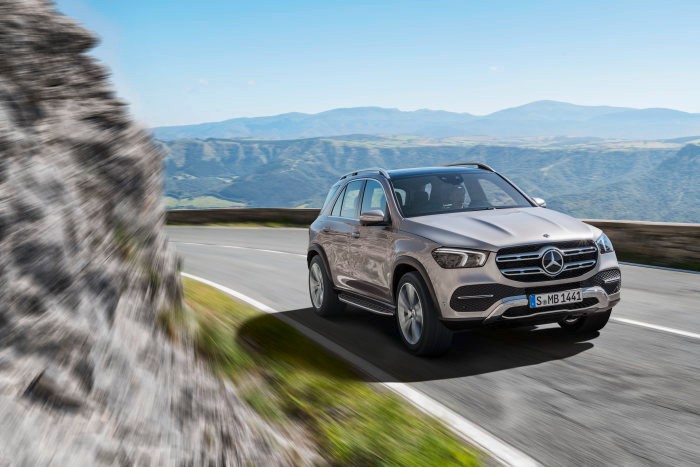
Combined fuel consumption: 7.5-7.0 l/100 km; combined CO2 emissions: 199-184 g/km*Stuttgart. The two diesel models of the new Mercedes‑B enz GLE which can now be ordered already comply with the coming Euro 6d emissions standard. The OM 656 six-cylinder diesel engine comes with 243 kW (330 hp) and 700 Nm of torque in the GLE 400 d 4MATIC (combined fuel consumption: 7.5-7.0 l/100 km; combined CO2 emissions: 199-184 g/km)[1] and costs 76,100.50 euros[2]. The GLE 350 d 4MATIC with an output of 200 kW (272 hp) and 600 Nm of torque (combined fuel consumption: 7.5-6.9 l/100 km; combined CO2 emissions: 198-184 g/km)1 is available from 69,496 euros2. Delivery of the first vehicles begins in spring of 2019.
Certification in accordance with the Euro 6d standard (RDE stage 2) not prescribed for new models until 1 January 2020 is possible due to measures including extended exhaust gas aftertreatment with an additional underbody SCR catalytic converter. Thanks to this enhanced technology the nitrogen oxide emissions drop to an average of 20 milligrams per kilometre in the case of the GLE 400 d 4MATIC, as shown by measurements in continuous operation of many thousands of kilometres. In individual journeys the values can also be considerably lower.
The new Mercedes-Benz GLE is not only exceptionally dynamic and more comfortable on the road, it is also more competent off the beaten track than ever before. Its exterior design exudes strength and charisma and at the same time sets a new aerodynamic best value in its segment with a cd value from 0.29. The interior is even more spacious, the second row of seats is electrically adjustable as an option and a third seat row is available on request. And the GLE will be full of innovations at launch. The new driver assistance systems further increase the level of active safety. The infotainment system has larger screens, and optionally comes with a full-colour head-up display with a resolution of 720 x 240 pixels and the MBUX interior assistant, which can recognise hand and arm movements and supports the driver's and front passenger's operating intentions. The model range of the new GLE which can currently be ordered: GLE 300 d 4MATIC
GLE 350 d 4MATIC
GLE 400 d 4MATIC
GLE 450 4MATIC
Number of cylinders/arrangement
4/in-line
6/in-line
6/in-line
6/in-line
Displacement (cc)
1950
2925
2925
2999
Rated output (kW/hp)
180/245
200/272
243/330
270/367
at rpm
4200
3.400-4.600
3600-4000
5500-6100
Extra output from EQ Boost (kW/hp)
–
–
–
16/22
Rated torque (Nm)
500
600
700
500
at rpm
1600-2400
1200-3200
1200-3000
1600-4500
Add. torque from ECO Boost (Nm)
–
–
–
250
Fuel consumption combined
(l/100 km)
6.4-6.1
7,5-6,9
7,5-7,0
9.4-8.3
Combined CO2 emissions (g/km)
169-161
198-184
199-184
214-190
Emission class
Euro 6d-TEMP
Euro 6d
Euro 6d
Euro 6d-TEMP
Acceleration 0-100 km/h (s)
7.2
6.9
5.8
5.7
Top speed (km/h)
225
230
240
250
Suggested retail price in Germany incl. 19% VAT (euros)
65.807,00
69.496,00
76,100.50
72.649,50
In the suspension range the E-ACTIVE BODY CONTROL (7735 euros) offers the synthesis of comfort, precision and dynamism, combined with unique off-road properties. This includes the fully active, electro-hydraulic suspension on a 48-volt basis; four DYNAMIC SELECT drive programmes including recovery mode, and depending on other equipment, ROAD SURFACE SCAN and the three-stage CURVE inclination function.
The trailer hitch (1,142.40 euros) is electrically foldable and retractable. With AIRMATIC, the GLE is permitted to tow 3.5 tonnes. And the Trailer Manoeuvring Assist (416.50 euros) provides support when reversing whilst operating with a car/trailer combination.
The ENERGIZING Package Plus (4,075.75 euros) offers particularly high levels of comfort. It bundles many of the premium equipment items, available separately, and includes multi-contour seats for driver and front passenger, seat climate control for driver and front passenger with seat heating and seat ventilation, the Warmth Comfort Package (for pleasant heat from all sides), the AIR-BALANCE Package (fragrancing, ionisation and cleaning the air) and six ENERGIZING Comfort programs as well as the ENERGIZING COACH for intelligent pre-selection of ENERGIZING Comfort programs that suit the driving situation and the driver's condition. Also on board: the ambient lighting with program-specific lighting moods.
Comfort and support while driving: Something for all purposes
The GLE takes another step toward autonomous driving with the Driving Assistance Package (2,296.70 euros). It provides support as the situation requires for adjusting speed, steering, changing lanes and even when there is a risk of collision. Components include Active Distance Assist DISTRONIC, Active Speed Limit Assist, extended automatic restart on motorways, speed adjustment based on the route with End of Tailback Function, Active Steering Assist, Active Lane Change Assist, Active Emergency Stop Assist, Emergency Lane Function; Active Brake Assist, Cornering and Cross-Traffic Function, End of Tailback Emergency Brake Function, Evasive Steering Assist; Active Lane Keeping Assist, Active Blind Spot Assist, Exit Warning Function; PRE-SAFE® PLUS and Traffic Sign Assist. The Driving Assistance Package Plus (2,891.70 euros) offers the highest degree of comfort and safety. It additionally contains the Stop-and-Go Assist, which provides support when driving in traffic, and in cases of lateral collisions, PRE-SAFE® Impulse Side can offer additional protection.
Little helpers with a great impact: The GLE thinks for you
The fully electric and adjustable second row of seats (1,428.00 euros) promises flexibility and comfort: the load compartment can be extended flexibly, and the rear seats can be positioned for individual comfort. Via the EASY-ENTRY entry and exit feature, electric adjustment also allows access to the 3rd seat row for 2 people (1,082.90 euros).
Adaptive MULTIBEAM LED headlamps (1,457.75 euros) with individually controllable LEDs react quickly to the traffic situation. The functions include Adaptive Highbeam Assist Plus (allows for dazzle-free permanent high beams); ULTRA RANGE Highbeam (increases the range to the permissible maximum); cornering light and active light function (optimally illuminates the field of vision depending on the driving situation); extended fog light, city light, country road mode, motorway mode and adverse weather light.
The adaptive windscreen wiper system MAGIC VISION CONTROL (464.10 euros) ensures the perfect view – even during wiping action. Heated channel flows integrated into the windscreen wipers are used. These spray the cleaning fluid onto the windscreen right in front of the heated wiper blades, exactly where it is needed.
MBUX as standard: The big experience on the interior
The command “Hey Mercedes” launches the customised service that MBUX provides. Personal profiles, forecast functions as well as a WiFi hotspot completely redefine the term digital networking. As standard are the following:
the Widescreen Cockpit with flexible display options: The desired content can be positioned individually and the host of functions controlled intuitively thanks to touch technology. The hard-disc navigation with Live Traffic[3] and Car-to-X Communication are always on-board (whereby networked vehicles exchange safety-relevant data). the Navigation Services3: The vehicle answers questions on your journey, tells you current fuel prices at your destination, the number of available parking spaces or the current weather. the Vehicle Set-up App3: Settings can be changed and information called up remotely on the smartphone. This includes sending addresses to the navigation system or locking the doors. Smartphone Integration: The mobile phone links up with the media system via Apple® CarPlay® and Android Auto®. This allows direct access to the smartphone's most important applications. You can also use apps from third-party service providers such as Spotify quickly and easily. Vehicle Monitoring3: If required, the smartphone allows you to see where the vehicle is located at any time and you can even determine what area the vehicle is allowed to enter. You will also immediately receive information on undesired vehicle movements. the Mercedes-Benz Emergency Call System (with an unlimited term): Via a communications module with its own sim card, an emergency call is initiated when an accident is detected, and this can reduce the time it takes for the emergency services to arrive. The emergency call can also be initiated manually to organise help. the communications module (LTE) for the use of Mercedes me connect services (with an unlimited term): It connects the vehicle with the internet. Two mobile phone antennas and an LTE-compatible SIM card ensure a fast connection. The Burmester® surround sound system (1,011.50 euros) ensures exceptional sound with 13 loud speakers and a total system output of 590 W. The Burmester® high-end 3D surround sound system (5,831 euros) with 25 speakers and a total system output of 1,590 W offers an even better sound experience. Here the loudspeakers in the roof liner compose a three-dimensional sound. [1] The stated figures were determined in accordance with the prescribed measuring method. These are the “NEDC CO2 figures” according to Art. 2 No. 1 Implementing Regulation (EU) 2017/1153. The fuel consumption figures were calculated based on these figures. Further information on the vehicles on offer, including the WLTP values, can be found for each country at www.mercedes-benz.com
[2] All prices shown in this press information: Recommended retail price in Germany, incl. 19% VAT
[3] Long-term use of these services requires registration on the Mercedes me Portal and consent to the terms of use for the Mercedes me connect services. In addition, the vehicle must be paired with the user account. The services can then be used free of charge for three years and thereafter can be prolonged for a fee.
Press Contact
Michael Allner
Manager Communications S-Class, SL, SLC, Guard & Maybach
michael.allner@daimler.com
Tel: +49 711 17-75846
Fax: +49 711 17-98646
Koert Groeneveld
Head of International Product & Technology Communications
koert.groeneveld@daimler.com
Tel: +49 711 17-92311
Fax: +49 711 17-94365
Press Contact Overview
Media
Download
Pictures (3)
Documents (1)
Media Contact (2)
Filter
Show thumbnails
Show list
Slideshow
Zoom
Preview
Details
Do you really want to delete the data record?
Please wait a moment …
Please wait a moment …
Please wait a moment …
Please wait a moment …
18C0625_003
18C0625_051
18C0625_154
Loading
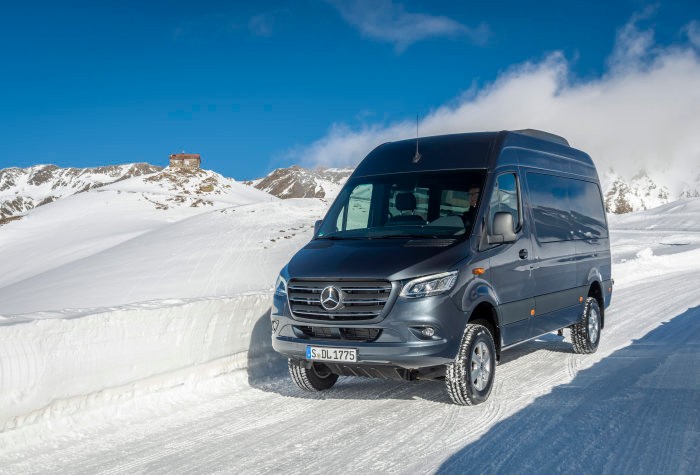
Whether driving onto a construction site or through snow and ice: The new Sprinter 4×4 is equal to the most severe conditions
06.
December 2018
Stuttgart
Fully integrated into the adaptive stability program ESP ASR can be disabled for defined driving situations Downhill Speed Regulation assists the driver in the mountains Assured traction with 4ETS and “Adaptive ESP” Stuttgart. Outstanding handling characteristics and very good traction, plus the safety and superiority that are hallmarks of the brand: since its market launch in 2011, the Sprinter 4×4 has been recognised as being the epitome of a large van, capable of mastering even the toughest of driving conditions while still retaining all the comfort features of its counterparts with conventional drive configurations. The third-generation Sprinter with all-wheel drive feels just at home on various mountain passes as it does on temporary roads to construction sites. The entry-level price for the panel van with standard wheelbase is 46 272 euros (in Germany, excl. VAT), and 43 652 euros(excl. VAT) for a chassis version.
Fully integrated into the adaptive stability program ESP
The selectable all-wheel drive of the new-generation Sprinter improves traction. When the engine is running, it is selected either when stationary or at low speeds up to 10 km/h by operating a switch in the instrument panel. Under normal operating conditions, this driving mode sees the torque of the Sprinter 4×4 distributed to the front and rear axles in a ratio of 35:65 respectively. This ensures handling characteristics that differ only marginally from those of the rear-wheel drive Sprinter in day-to-day operation.
The electronic traction control system 4ETS makes a major contribution to the optimal driving and handling characteristics. It is fully integrated into the electronic stability program “Adaptive ESP” and its control characteristics have been specially adapted for all-wheel drive. At the same time all the functions of Adaptive ESP are retained: anti-lock braking system (ABS), acceleration skid control (ASR), electronic brake force distribution (EBV), Brake Assist (BAS) and the Start-off Assist system (AAS).
If one or more wheels lose traction on a slippery surface, e.g. on snow or ice, 4ETS automatically brakes the spinning wheels with brief impulses, thus increasing the drive torque to the wheels with good traction. 4ETS uses the ABS wheel sensors for this purpose. The automatic braking intervention by 4ETS can match the effect of up to three differential locks: the inter-axle differential lock, rear axle lock and front axle lock.
ASR can be disabled for defined driving situations
Depending on the driving situation, the acceleration skid control (ASR) of the Sprinter 4×4 can be disabled for a short period using the menu buttons on the steering wheel. In this case the control thresholds are briefly extended to improve traction by allowing increased slip, e.g. when driving with snow chains or on gravel. The ASR function is automatically reactivated within a speed range of 40 to 60 km/h. The same applies if slip increases excessively, or after more than ten seconds in “ASR Off” mode. ESP always remains active in all situations.
However, 4ETS avoids critical driving situations in the first place. As the speed increases, the locking effect within an axle is reduced to prevent yawing motions (rotation around the vertical axis) in the interests of driving stability. Despite this intervention, overheating of the braking system is not possible: if the temperature of the brakes rises to an undesirable level during extreme off-road operations, 4ETS reduces the locking effect automatically until the brakes have cooled again. The driver is made aware of this by means of an indicator lamp.
Recognition of the load and centre of gravity (Load Adaptive Control LAC) is particularly important in view of the many body variants and conversions available for the Sprinter. In the case of special-purpose bodies, for example, Adaptive ESP registers a high centre of gravity and adapts the control characteristics accordingly. When driving off-road, Adaptive ESP thereby improves safety, e.g. when driving along inclines with large tilt angles.
Downhill Speed Regulation (DSR) is optionally available in conjunction with the reduction gear. It ensures that a preset speed is maintained when descending a gradient. This is made possible by interaction between the engine, transmission and specific braking intervention. DSR is activated by a button in the cockpit. The speed is then regulated by a rocker on the steering wheel. Mercedes-Benz can also optionally equip the Sprinter 4×4 with a hill-holder – ideal when driving in wintry conditions.
Even more traction: the Sprinter 4×4 with reduction gear
The all-wheel drive van is also optionally available with the additional “Low Range” reduction gear. When switched on with the vehicle stationary and the engine running, with 4×4 mode activated and the clutch operated or in automatic transmission position “N”, this lowers the transmission ratio by 42 percent. The maximum speeds in the individual gears are correspondingly reduced. Tractive power increases at the same time. This means that the Sprinter 4×4 can now be driven off-road with circumspection at low speeds, saving wear to the clutch. Use of the reduction gear is recommended during frequent slow manoeuvring to reduce clutch wear, on extreme gradients in mountainous regions and when driving with a full load or towing a trailer off-road.
Raised body level in the interests of off-road capabilities
While the Sprinter 4×4 does not claim to be an off-roader, raising the body by 155 millimetres at the front and 135 millimetres at the rear already gives a visual indication of typical off-road characteristics.
For example, the angle of approach of the Sprinter with 3.5 tons permissible gross vehicle weight is 26 degrees rather than 16 degrees for the Sprinter with conventional rear-wheel drive, and the angle of departure is 25 degrees (versus 17 degrees) for the panel van with short overhang. The breakover angle – which is important when negotiating hill crests – is 23 degrees rather than 14 degrees for the Sprinter 4×4 with standard wheelbase.
Depending on the engine variant, the gradient climbing ability is around 20 percent better than that of a conventionally powered Sprinter. At the same time its full day-to-day suitability in demanding commercial operations is fully retained: the weight increase compared to conventional drive configurations is a mere 140 kilograms. The load capacity remains the same.
Press Contact
Albrecht Eckl
Product Communications Mercedes-Benz Citan, Vito, Sprinter
albrecht.eckl@daimler.com
Tel: +49 711 17-52131
Fax: +49 711 17-52038
Peter Feneberg
Product Communications Mercedes-Benz Vans
peter.feneberg@daimler.com
Tel: +49 711 17-47117
Fax: +49 711 17-79057555
Press Contact Overview
Media
Download
Pictures (3)
Documents (1)
Media Contact (2)
Filter
Show thumbnails
Show list
Slideshow
Zoom
Preview
Details
Do you really want to delete the data record?
Please wait a moment …
Please wait a moment …
Please wait a moment …
Please wait a moment …
18C1003_002
18C1003_141
18C1003_152
Loading
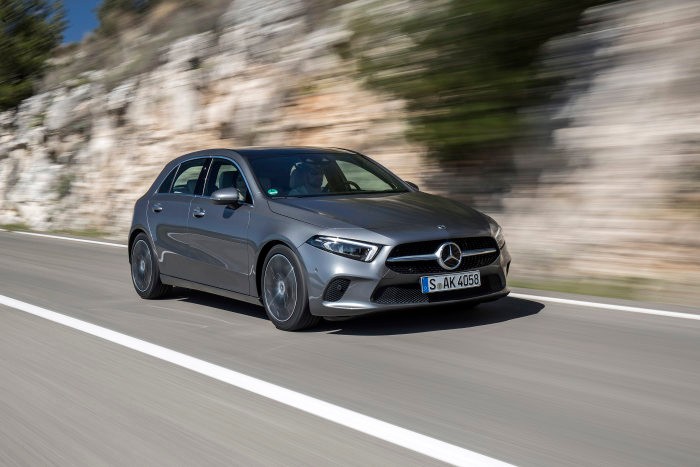
Mercedes-Benz receives award from Euro NCAP: The A-Class is awarded best in class in Europe for its safety
17.
December 2018
Löwen/Stuttgart
Fuel consumption combined: 4.5-4.1 l/100 km; Combined CO2 emissions: 118-108 g/km*Löwen/Stuttgart. Best vehicle tested this year and best in class in the small family vehicle segment: The European safety organisation Euro NCAP has presented the new Mercedes-Benz A-Class with an award for its outstanding safety.
The new A-Class from Mercedes-Benz has undergone European NCAP crash tests, and achieved outstanding results in them. As a result, it was awarded the top rating of five stars. “This Euro NCAP award, which we are delighted about, is recognition of the excellent standards of safety in our vehicles,” explained Prof. Dr. Rodolfo Schöneburg, Head of Passive Safety and Vehicle Functions at Mercedes-Benz Cars. “However, the standardised crash tests only represent a small sample of the real-life accidents that may be encountered on the street. For that reason, Mercedes-Benz designs all its model series using around 40 different accident constellations.”
Euro NCAP (European New Car Assessment Programme) is an organisation of European transport ministries, automobile clubs and insurance associations. It carries out crash tests and assesses vehicle safety based on the safety systems available. The General Secretary of Euro NCAP, Michiel van Ratingen, says: “In 2018 we introduced new, tougher tests, with a particular focus on protecting particularly vulnerable road users. The winners of the “Best in Class” awards clearly show that the vehicle manufacturers are striving for the highest levels of safety and that the Euro NCAP ratings act as a catalyst for significant progress where safety is concerned.”
The new A-Class: exemplary active and passive safety
The new A-Class is also the first Mercedes-Benz model to have been developed in part at the new Technology Centre for Vehicle Safety (TFS). The design of the vehicle structures incorporates findings from research into real accidents. The centrepiece of the body's safety concept is the highly rigid passenger compartment. Its great rigidity in accident conditions, e.g. in frontal, lateral or rear-end collisions and roll-overs, is above all due to the greater use of high-strength, ultra-high-strength and press-hardened sheet steel.
The driver and front passenger each have a three-point seat belt with belt force limiter and belt tensioner. In conjunction with the PRE-SAFE® system (optional equipment), the front seats are equipped with reversible belt reel tensioners. Both of the outer rear seats are fitted with a seat belt with reel tensioner and belt force limiter.
The new A-Class is equipped with driver and front passenger airbags, a driver's kneebag and windowbags as standard. Unlike in many competitor models, the windowbag also covers the A-pillar for more complete passenger protection. Thorax-pelvis sidebags are also fitted as standard in the front. Rear sidebags are optionally available.
The new A-Class has the very latest driving assistance systems with cooperative driver support, giving it the highest level of active safety in this segment, with functions adopted from the S-Class. For the first time, the A-Class is able to drive semi-autonomously in certain situations. It keeps a very close eye on the traffic situation: improved camera and radar systems allow it to see far ahead. The A-Class also uses map and navigation data for assistance functions. For example, Active Distance Assist DISTRONIC as part of the Driving Assistance package is able to support the driver in numerous route-specific situations, and predictively and conveniently adjust the speed e.g. when approaching bends, junctions or roundabouts.
The new A-Class comes with expanded Active Brake Assist as standard. Depending on the situation, it can effectively help to mitigate the consequences of rear-end collisions with slower-moving, stopping or stationary vehicles ahead, and even with crossing pedestrians and cyclists, or prevent them altogether.
Press Contact
Sarah Widmann
Intelligent Drive & Passive Safety
sarah.widmann@daimler.com
Tel: +49 711 17-97729
Fax: +49 711 17-79094388
Markus Nast
Manager Communications Compact Cars
markus.nast@daimler.com
Tel: +49 711 17-96357
Fax: +49 711 17-79055289
Koert Groeneveld
Head of International Product & Technology Communications
koert.groeneveld@daimler.com
Tel: +49 711 17-92311
Fax: +49 711 17-94365
Press Contact Overview
Media
Download
Pictures (1)
Documents (1)
Media Contact (3)
Filter
Show thumbnails
Show list
Slideshow
Zoom
Preview
Details
Do you really want to delete the data record?
Please wait a moment …
Please wait a moment …
Please wait a moment …
Please wait a moment …
18C0290_038
Loading
Project ONE: How AMG is bringing Formula 1 to the road.
Recommended Kraftstoffverbrauch kombiniert CO₂-Emissionen kombiniert Stromverbrauch im kombinierten Testzyklus Product may vary after press date on 17.12.2018. 1 Die angegebenen Werte wurden nach dem vorgeschriebenen Messverfahren ermittelt. Es handelt sich um die „NEFZ-CO₂-Werte“ i. S. v. Art. 2 Nr. 1 Durchführungsverordnung (EU) 2017/1153. Die Kraftstoffverbrauchswerte wurden auf Basis dieser Werte errechnet. Der Stromverbrauch wurde auf der Grundlage der VO 692/2008/EG ermittelt.… Continue reading Project ONE: How AMG is bringing Formula 1 to the road.
Optimally prepared – The new Sprinter for courier and delivery services.
Recommended Kraftstoffverbrauch kombiniert CO₂-Emissionen kombiniert Stromverbrauch im kombinierten Testzyklus Product may vary after press date on 15.12.2018. 1 Die angegebenen Werte wurden nach dem vorgeschriebenen Messverfahren ermittelt. Es handelt sich um die „NEFZ-CO₂-Werte“ i. S. v. Art. 2 Nr. 1 Durchführungsverordnung (EU) 2017/1153. Die Kraftstoffverbrauchswerte wurden auf Basis dieser Werte errechnet. Der Stromverbrauch wurde auf der Grundlage der VO 692/2008/EG ermittelt.… Continue reading Optimally prepared – The new Sprinter for courier and delivery services.