About Havn Havn, which launched in September 2019, offers customers, an all-electric, sustainable, and personalised transport service with no compromise on comfort and style. Each journey can be tailored to the preferences of the passenger with options such as playlist, temperature, and chauffeur interaction all customisable ahead of the journey via the iOS and Android… Continue reading @Tata-JLR: BLACKLANE INVESTS IN HAVN, LONDON’S PREMIUM ALL-ELECTRIC CHAUFFEUR SERVICE
Category: Official Press Release
Elevator Monitoring by Bosch Service Solutions shortens downtimes and reduces operating costs
Bosch Service Solutions is a leading global supplier of Business Process Outsourcing for complex business processes and services. Using the latest technology and the Internet of Things, the Bosch division develops integrated and innovative service solutions in the areas of Mobility, Monitoring, and Customer Experience. Around 10,000 associates at 26 locations support national and international… Continue reading Elevator Monitoring by Bosch Service Solutions shortens downtimes and reduces operating costs
@GM: Cruise Supports Vision Zero Network and Commits to National #ZeroTrafficDeaths Campaign

“We’re excited to partner with Cruise to make sure we’re doing all we can to make our streets, sidewalks, and bikeways safe for everyone. “We all need to step up to prioritize safety, including government at all levels and the private sector.” — Leah Shahum, of the Vision Zero Network. San Francisco — like more… Continue reading @GM: Cruise Supports Vision Zero Network and Commits to National #ZeroTrafficDeaths Campaign
Startup Couples AI with OR Video to Sharpen Surgeon Performance, Improve Patient Outcomes
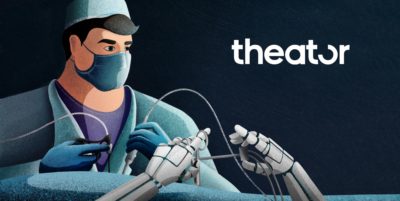
AI is teaching cars to make better decisions, so could it do the same for surgeons? Addressing that question is the mission of Theator, a startup based in Palo Alto, Calif., with an R&D site in Tel Aviv, that’s striving to fuel the nascent revolution in autonomous surgery. Theator co-founder and Chief Technology Officer Dotan… Continue reading Startup Couples AI with OR Video to Sharpen Surgeon Performance, Improve Patient Outcomes
World NM: Russian Railways does not renounce Gefco stake sale000836
/Update/ MOSCOW, February 8. /TASS/. Russian Railways keeps plans of selling shares in the international logistical operator Gefco, First Deputy CEO of the Russian railway operator Vadim Mikhailov told reporters on Monday. “Gefco [sale] was in plans in 2020. We do not remove [this topic] from the agenda. The question of the form of the… Continue reading World NM: Russian Railways does not renounce Gefco stake sale000836
ALYI Details Electric Vehicle Market Strategy And Democratized Cryptocurrency Finance Partnership
DALLAS, Feb. 8, 2021 /PRNewswire/ — Alternet Systems, Inc. (USOTC: ALYI) today highlighted the company’s electric vehicle market strategy and democratized cryptocurrency finance partnership detailed in a multimedia presentation published Friday, last week. ALYI has kick-started a comprehensive electric vehicle ecosystem with the introduction of the Revolt Electric Motorcycle with North American and African Continent editions… Continue reading ALYI Details Electric Vehicle Market Strategy And Democratized Cryptocurrency Finance Partnership
CES 2021 – January 11-14, 2021
January 11-14, 2021 | CES | Virtual EventTo schedule a live, virtual demo, email [email protected].CES 2021 – January 11-14, 2021 —AEye Insights: The Roadmap to AutonomyAEye Insights: 2021 Transportation TrendsAEye Reveals Advanced MEMS That Delivers Solid-State Performance and Reliability Needed to Advance Adoption of Low-Cost LiDARAEye Unveils 4Sight™, a Breakthrough LiDAR Sensor That Delivers Automotive Solid-State Reliability and Record-Breaking Performance4Sight for TruckingContinental Expands LiDAR Technology Portfolio by Investing in Robotic Vision and Sensing Pioneer AEyeCoffee Talk: Stephen LambrightCoffee Talk: John StocktonAEye Appoints Blair LaCorte as CEO; Luis Dussan Named President and CTO
Coffee Talk: Dr. Allan Steinhardt
Each week, we sit down with a different member of AEye’s leadership team to discuss their role, their view of challenges and opportunities in the industry, and their take on what lies ahead.
This week, we talk with our Chief Scientist, Dr. Allan Steinhardt.
1. You have an illustrious career. You are an IEEE fellow and former Chief Scientist at DARPA and recipient of the US Defense Medal for Exceptional Public Service, among other accolades. What prompted you to join a startup at this stage of your career?It wasn’t something I planned to do – It was opportunistic. When I left DARPA as a Chief Scientist, I became Chief Scientist at Booz Allen Hamilton and we built a Science and Technology business, where we consulted with Chief Technology Officers at many of the Fortune 100 companies. I was consulting for Airbus at the time. Paul Eremenko was the CEO of Airbus Silicon Valley Innovation Center and a former colleague of mine at DARPA. He wanted me to come to the Silicon Valley and identify interesting sensor companies for autonomous flight. I interviewed a lot of companies in the marketplace, and was really impressed with AEye. I saw it as being very similar to some of the more innovative, cutting-edge sensing concepts that I had seen from radar, and so I recommended an investment. Airbus invested, Luis invited me to join the board, and, later, to join the company. Actually, all three of us on the technical advisory board – myself, John Stockton and Blair LaCorte – quit the board to join the company, which I think is pretty unusual in the Valley.
The startup opportunity intrigued me, as I saw it as an opportunity to have a different kind of impact, to change the world through changing the kinds of products that are available. I was involved with some of the early investments in autonomy and LiDAR through DARPA, and like many others amongst my peers I was drawn to the autonomous vehicle commercial market as a result of the DARPA Grand Challenge I interacted with some of the early DARPA internet pioneers, guys like Dr. Vint Cerf who went on to do really cool things in industry as the internet was being born commercially. I see autonomous cars as being a similar disruptive technology. Doing the kind of work that I did at DARPA, but on a commercial scale, seemed very exciting to me.
2. Tell us about your role at AEye.I have a couple of roles: one of them has to do with the intellectual property, the patent portfolio. I also work closely with our CMO to articulate our value proposition to a non-technical audience. I had a very similar responsibility at DARPA, interfacing with various staffers and congressional committees that needed to articulate the value proposition. I also am intimately involved with the engineers on a daily basis as a mentor, as well as leading brainstorming. I’m pleased that over a dozen of our engineers have been involved in patent generation, so we have a very broad team of innovators. I also work very closely with the system engineers, CTO and chief engineer, and make sure that, when it comes to bids and product specifications, we have compliance in terms of the documentation or the articulated performance.
3. Can you expand upon your teamwork, and how you collaborate on the technical innovation that you’re leading?There are four groups that I work with. I work quite a bit with the software team, because we have a very agile system, and almost every aspect is subject to software control. We have three levels of feedback on the steering mirrors. Everything has software control parameters to it, so you really can’t just do the engineering. I work very tightly with the software team.
From the engineering team’s perspective, I work mostly with the architects and the system engineers that are trying to characterize and model the system. And then I do a fair amount of interaction with what we call our field application engineers, which are the people that have the most experience with operating our LiDAR as a LiDAR, as opposed to testing individual components of it, and they tend to have the deepest level of expertise and insight into potential ways to improve or to innovate on the system. I spend a lot of time with them and they work very closely with the marketing team, as well.
There’s an interesting synergy between marketing and the scientists. It’s sort of analogous in the military. I found I was much more comfortable working with and talking to what we refer to as operators like Special Forces or other “tip of the spear” kinds of military operatives, than the system engineering acquisition shops, which is typically where you think of engineering taking place. The reason I enjoyed that was that there’s a lot of innovation. The innovation doesn’t stop with the military. Once you have a system, innovation begins, so I’ve taken that philosophy here at AEye, and I think it’s really paying dividends.
4. Having funded hundreds of radar and LiDAR projects over the years, what do you think are some of the most interesting applications occurring right now?Some of these, I think, might be a little surprising, like geology and limb prosthetics.
LiDAR has been used as a lie detector. You can do 3D mapping of the flow of blood in the brain: the blood flows in the brain to replenish areas where there’s been a great deal of activity, so by looking to see whether activity is present in areas which are associated with imagination versus memory recall, you can infer whether a person is telling the truth or not. That science has also moved into thought-controlled prosthetics where soldiers that have lost limbs have functioning robotic limbs that are controlled by thought, and it’s based on that early work. Those advancements have been very satisfying to me personally.
There are two applications that stand out to me in the world of radar. One of the things that we use radio telescopes for, which is like the passive form of radar, is to measure continental drift. We can measure the drift of continents at the seven millimetre scale, and the way we do it is we steer radar dishes at the Big Bang and take recordings of the radio static from the Big Bang. By analyzing subtle shifts in how that signal is changing, we’re able to measure precisely the drift of continents, which has really changed the nature of earthquake prediction.
Another one is weather prediction. We have a system where you have different radars on different satellites, and you deliberately shoot from one satellite and receive on another through the air. By measuring the fingerprint of the signal, you’re able to get the moisture content in the air along that straw of atmosphere, and then you go through lots and lots of processing and you come up with a three dimensional map of the entire moisture content of the globe. A lot of the work on climate change and weather prediction is based on that.
5. In addition to your scientific achievements at DARPA, Booz Allen, MIT Lincoln Laboratory, and BAE/Alphatech, you’ve been a professor (Cornell), and a prolific author and speaker on space, land, and naval-based electronic warfare, sensor, and radar systems. What do you feel personally have been your most important contributions to science?I am an IEEE Fellow, and received recognition from the Defense Department on what’s called Space Time processing, which is looking deeply into how you combine data from a lot of different positions in space and time, and pull it all together. It’s kind of physics meets computer science and math. So I’d say that’s probably my most important contribution. A true scientist would say, “Well, Steinhardt, he’s not a scientist, he’s an engineer,” so it all depends on who you talk to. I’m not a physicist. I’m not a biologist. But there are scientists that use a lot of the tools that my teams have developed.
6. Finally, what’s your favorite mode of transportation?It would have to be mountain boots and a rope and an ice ax, when I’m moving up a ridge somewhere with my daughter, who loves to do mountaineering with me. My dad was a mountaineer, too. I also love sailing, and biking. I love being active. I use cars because I have to get to work. But I don’t wake up in the morning and say, “Gee, I can’t wait to to turn the key in my car.”
Coffee Talk: Dr. Allan Steinhardt —AEye Reveals Advanced MEMS That Delivers Solid-State Performance and Reliability Needed to Advance Adoption of Low-Cost LiDARAEye Appoints Blair LaCorte as CEO; Luis Dussan Named President and CTOCoffee Talk: Stephen LambrightContinental Expands LiDAR Technology Portfolio by Investing in Robotic Vision and Sensing Pioneer AEye4Sight for ITS ApplicationsAEye Unveils 4Sight™, a Breakthrough LiDAR Sensor That Delivers Automotive Solid-State Reliability and Record-Breaking PerformanceCoffee Talk: Nate Ramanathan50G Positive Z-DirectionAEye Insights: 2021 Transportation Trends
How HERE Technologies solves truck-specific routing challenges

With detailed insight from HERE’s Jørgen Behrens, this HERE360 exclusive reveals the significance of truck-specific map and routing solutions for today’s fleets. At CES 2021, Jørgen Behrens, Chief Product Officer (CPO) at HERE Technologies, participated in a podcast called, “How HERE Technologies is Moving Us Forward“. During the conversation with host Tyler Suiters, Behrens introduced… Continue reading How HERE Technologies solves truck-specific routing challenges
Solera AI Sets The Global Standard Now With 40% Faster Image Damage Detection And Unrivalled Accuracy
WESTLAKE, Texas, Feb. 8, 2021 /PRNewswire/ — Solera, a global leader in data, applications and services for insurance and automotive, has released a ground-breaking update to its Artificial Intelligence (AI)-powered, end-to-end automotive claims platform, Qapter®. The release is driven by a new approach to Machine Learning, that delivers 40% faster damage detection (in under 2 seconds)… Continue reading Solera AI Sets The Global Standard Now With 40% Faster Image Damage Detection And Unrivalled Accuracy