James O'Neal attaches a fender in the body shop at GM's Chevrolet Silverado and GMC Sierra pickup truck plant in Fort Wayne, Indiana, July 25, 2018.John Gress | ReutersGeneral Motors will trim production of the Chevrolet Equinox SUV at two North American car plants, a move that follows cuts announced by Ford, Honda and other manufacturers.
Automakers are facing what is only the second down market since the end of the Great Recession and the record sales that followed. How far down demand will go this time is a matter of debate, with analysts and planners warning that could depend on how the Trump administration handles disputes with China and other trade partners.
Industry officials, including General Motors CEO Mary Barra, say they learned critical lessons during the last recession and hope to be more proactive this time around, adjusting production early to stay in line with market demand while avoiding the sort of budget-busting incentives that devastated industry balance sheets a decade ago.
GM's latest cutback primarily targets the Equinox but also impacts two other SUVs, the GMC Terrain and Chevrolet Trax, and heightens concerns that the increasingly crowded list of new utility vehicles coming to market will create additional headaches for the industry.
GM plans to drop one of the three crews working at its San Luis Potosi plant in Mexico, spokesman Dan Flores confirmed in a telephone interview with CNBC. The factory produces the Equinox, GMC Terrain and Chevrolet Trax SUVs, all of which will see production cut. In addition, a factory in Ingersoll, Ontario that solely produces the Equinox will be idled for one week during late September.
The automaker is “focused on profitable sales and (we) want to do things that make good business sense. We're committed to running the business in a responsible manner,” Flores said. That echoes comments CEO Barra has made on several occasions that GM won't repeat a key mistake made in the run-up to the Great Recession. Rather than trimming production to meet demand, it relied on increasingly hefty incentives that ultimately ran up its losses and contributed to its eventual bankruptcy.
Ford echoed that approach in a statement, citing “long-standing practice of matching production with consumer demand” for its decision to curb operations at its Oakville, Ontario plant next month. The factory produces four SUVs — the Ford Flex, Ford Edge, Lincoln MKT and Lincoln Nautilus models. About 200 workers will be idled, and Ford cautioned further cuts could follow.
Honda, meanwhile, confirmed this week it has reduced production of its Accord and Civic models at its Marysville, Ohio plant. Nissan trimmed output in Canton, Mississippi, as well as its operations in Mexico in recent months, while also offering voluntary buyouts to an unspecified number of U.S. employees.
The second-largest Japanese automaker last month announced plans to cut production worldwide by 10% over the next three years, while eliminating 12,500 jobs. CEO Hiroto Saikawa told reporters during a news conference that “our situation right now is extremely severe.” A U.S. spokesman said Nissan has already made the necessary adjustments in the U.S., but several analysts said further cutbacks could be needed, pointing to the 8.3% decline in its sales for the first seven months of 2019.
Across the industry, the biggest cuts have focused on the passenger car side of the market. GM, for one, announced last November plans to close three North American assembly plants, while dropping an array of sedans including the Chevrolet Cruze and Impala, as well as the Cadillac CT6. The automaker's plant in Lordstown, Ohio has already been shuttered but one in Detroit is now scheduled to operate through at least early 2019.
The United Auto Workers Union has said the fate of the two U.S. plants will be a critical topic during contract talks with GM that began last month. During meetings on Capitol Hill last December, CEO Barra said the automaker has no plans to reverse its decision, however, and has already lined up a tentative buyer for the Lordstown factory.
What concerns industry observers is that there are signs demand for SUVs may be leveling off in some market segments, something signaled by recent cuts such as those of the four Ford utility vehicles.
Complicating matters, “While people are talking about fabulous SUV sales, the market is getting saturated with them and inventories are building while incentives are growing,” said Michelle Krebs, executive analyst with Autotrader.com.
Industry planners have been aggressively trying to manage inventories of unsold cars as sales have slowed this year. The numbers are now climbing up the high side of normal, ending July at a U.S. market average of around 67 days of stock, Krebs noted, up three days from May. The norm is closer to 60 days supply.
Traditionally, they've relied on incentives to hold down inventories and the numbers are rising. The average giveback in July was $3,911 per vehicle, according to research by Cox Automotive, a 4% year-over-year climb. On some pickups, meanwhile, the numbers have reached $10,000 or more.
But “this is an industry that remembers quite vividly what happened a decade ago,” said Stephanie Brinley, principal analyst with IHS Markit. Leading into the Great Recession, they kept ratcheting up the givebacks “to keep their plants running and production up. But they found there was a point where that eroded profitability to a point that couldn't be sustained.”
The challenge now, said Brinley, is to be “proactive,” and use production cuts to keep sales and inventories in balance, rather than waiting to be “reactive.”
Several industry executives, talking on background, said a key concern is what ongoing trade disputes could mean for the U.S. economy and, in particular, the auto market — a concern highlighted by the sharp downturn on Wall Street after the latest moves by the Trump administration and China.
There are other factors that could cause trouble. New car prices have reached record levels, at an average of around $33,000 for July, reported J.D. Power and Associates. Coming in $1,400 more than a year ago, that threatens to drive some potential buyers out of the market, Power said, at a time when there's a bubble of “nearly new” off-lease vehicles now flooding the market. Meanwhile, automotive interest rates have spiked to around 6%, according to data from tracking service Edmunds.
Barring an economic meltdown, analysts like David Andrea, a principal at Plante Moran, don't see more complete plant shutdowns in the works.
“Manufacturers are showing increased discipline going into the softening of the market,” he said, “but you'll see a lot more of these temporary reductions to keep inventories and incentives in check.”
Category: News Site
S&P reaffirms B+ rating on Tata Motors with negative outlook
The ratings agency, however, cautioned that it may lower the ratings by one notch if it sees diminishing prospects of turnaround at JLR. NEW DELHI: Ratings agency S&P has reaffirmed Tata Motors‘ long-term issuer and issue credit ratings to be ‘vulnerable to nonpayment’ while keeping the outlook negative. S&P Global Ratings said it has reaffirmed… Continue reading S&P reaffirms B+ rating on Tata Motors with negative outlook
In Next-Decade Lotus Will Go Electric With All New Models
After one more gasoline Lotus in 2020, every new model will have a fully electric version. Lotus Evija all-electric hypercar is to make a splash and open a wide way for the electrification of the entire Lotus lineup. Production of the Evija will start in 2020 and only 130 will be made. According to Lotus… Continue reading In Next-Decade Lotus Will Go Electric With All New Models
China new energy vehicle sales decline for first time in 2 years
July fall follows cuts to subsidies that had driven rapid growth Go to Source
EDAG develops scalable floor assembly for EVs
EDAG develops scalable floor assembly for EVs
Brose and IPG Photonics develop advanced laser-welding technology for seating
Brose and IPG Photonics develop advanced laser-welding technology for seating
Honda’s new tactic for attracting first-time car buyers: esports
Original Article
Lynk & Co To Produce Plug-In Cars For Europe In China
Lynk & Co still plans to introduce plug-in cars in Europe next year, but the production will take place in China instead of Belgium. Chinese brand Lynk & Co (part of Geely) backed away from its intention of launching plug-in car production for the European market using the Volvo facility in Ghent, Belgium. The reason is reportedly… Continue reading Lynk & Co To Produce Plug-In Cars For Europe In China
Audi Trying To Team Up With Rimac To Build R8 Electric Successor
Rimac could supply the batteries and electric motors. The Audi R8 is living on borrowed time. In May, Bram Schot, Audi’s chairman of the board of management, questioned if the R8 needed an internal combustion engine moving forward, adding that there is an ongoing discussion about the mid-engine vehicle’s future. A new report from CAR… Continue reading Audi Trying To Team Up With Rimac To Build R8 Electric Successor
Rivian Releases New “Let’s Ride” R1T Electric Pickup Truck Image
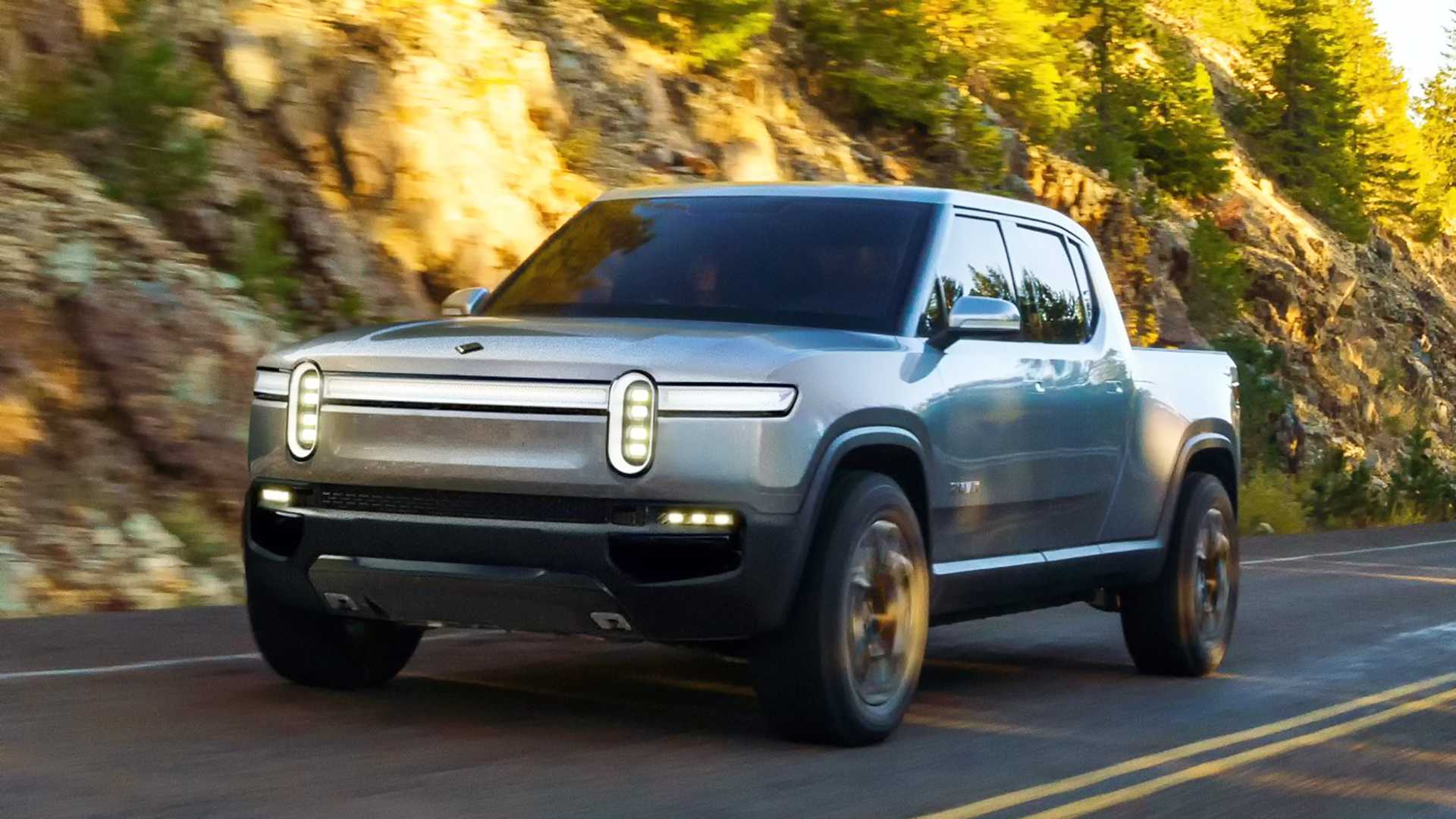
Seeing new images of the stunning R1T pickup truck never gets old. Perhaps only the Tesla truck is more highly anticipated than the Rivian R1T. Rivian is in the final stages of testing its electric pickup truck before the start of full-scale production next year. Meanwhile, Tesla has yet to even show the concept version… Continue reading Rivian Releases New “Let’s Ride” R1T Electric Pickup Truck Image