Tesla Inside Out, Part Deux — Tesla Stores, Early Deliveries, & Seeing Elon

Invest
Electric Cars
Electric Car Benefits
Electric Car Sales
Solar Energy Rocks
RSS
Advertise
Privacy Policy

Cars

Published on November 9th, 2019 |

by Zachary Shahan

Tesla Inside Out, Part Deux — Tesla Stores, Early Deliveries, & Seeing Elon

Twitter
LinkedIn
Facebook

November 9th, 2019 by Zachary Shahan

Continuing our discussion of Tesla and David Havasi’s long history at Tesla, we took up where we left off, talking about early Model S days at Tesla. At the time that, Tesla had a gigantic factory in Fremont with almost nothing in it other than big, wild dreams and post-apocalyptic images of Blade Runner and The Highlander flashing through their heads as they looked across the expansive space. (No, it wasn’t the 1980s, but many of the Tesla staff in 2012 had probably come of age in the ’80s, and it seems the atmosphere in the nearly empty factory stirred up those images again.)

If you prefer audio podcasts over watching YouTube videos, you can listen on your favorite podcasting platform instead. You can subscribe and listen to this podcast and other CleanTech Talk podcasts on: Anchor, Apple Podcasts/iTunes, Breaker, Google Podcasts, Overcast, Pocket, Podbean, Radio Public, SoundCloud, Spotify, or Stitcher.

David was brought onboard by George Blankenship, who was the architect behind Apple stores and The Gap before jumping into his VP of Design & Store Development role at Tesla. We are so used to Tesla stores now that they may seem like nothing special, but they shattered the auto industry mold by following that Apple model. The goal was basically to be the opposite of an auto dealership — welcoming, warm, cool, and a place you just enjoyed visiting. (Side note: David completely matches those characteristics, except that he’s a human, not a place.)

As David describes them, Apple stores were themselves revolutionary, something like “an art gallery and a petting zoo combined,” and Tesla replicated that feeling of premium, artistic, beautiful products being put on display but also, magically, available for touching and feeling and playing with. The atmosphere in a Tesla store is still something I love to experience. I’ll just go into my local store to see the eyes of wonder and excited tickling of inspiration that you can witness there. You can practically see into people’s brains as they let themselves genuinely consider buying a Tesla.

(At this point, we also had a bit of a chat about kids in Tesla stores, how much kids love Teslas, and how that relates to Tesla’s overall aim with the stores and the atmosphere therein. Then there was some discussion about people comparing Teslas to other vehicles in their class, about the different stages of tech adoption, and about Tesla’s leadership. To separate all of that out from the core of the interview, it will be in a separate video coming later.)

Coming to David’s first time seeing Elon Musk, we had to go back to a time when there were about a dozen small delivery teams around the country. David explained that those teams were made up of people with diverse backgrounds who sometimes had to operate and solve problems in situations they were completely unfamiliar with. He noted that, for example, back then the company was so small and bootstrapping it so much that the delivery teams had to build the trailers for the cars (“build” as in “put together,” sort of like IKEA furniture). Finding people on the team with the right skills for each part of the process was like a game of, “What’s your background? What can you do?” They had to pull together skills and experience and combine them into something like a real-world, come-to-life scrapbook. David shared a funny story about doing that one long day and night.

Getting back to the post-apocalyptic Fremont factory, David talked a bit about watching early Tesla engineers work right on the floor there and develop Tesla vehicles, the manufacturing system, and more. That’s also where he spotted Elon Musk for the first time. It’s not a story of Elon doing anything crazy — or even anything at all — but it’s a fun little story that certainly made me laugh.

The best part of this portion of our interview series, though, related to the head of manufacturing at the time and the final product his delivery team created one night. You just have to watch the video or listen to the podcast for the ending of this episode of “Tesla Inside Out.”

Related: “Tesla Inside Out — Tesla History From 7-Year Insider“

Side note: David and I will be the featured entertainment at a coming Tesla Florida Enthusiasts event on November 24 in Sarasota, Florida. Join us if you can!
Follow CleanTechnica on Google News.
It will make you happy & help you live in peace for the rest of your life.

About the Author

Zachary Shahan is tryin' to help society help itself one word at a time. He spends most of his time here on CleanTechnica as its director and chief editor. He's also the CEO of Important Media. Zach is recognized globally as an electric vehicle, solar energy, and energy storage expert. He has presented about cleantech at conferences in India, the UAE, Ukraine, Poland, Germany, the Netherlands, the USA, Canada, and Curaçao.

Zach has long-term investments in Tesla [TSLA] — after years of covering solar and EVs, he simply has a lot of faith in this company and feels like it is a good cleantech company to invest in. But he offers no investment advice and does not recommend investing in Tesla or any other company.

Back to Top ↑

Advertisement

Advertise with CleanTechnica to get your company in front of millions of monthly readers.

Top News On CleanTechnica

CleanTechnica Clothing & Cups

Join CleanTechnica Today!

Listen to CleanTech TalkAdvertisement

Advertisement

Follow CleanTechnica Follow @cleantechnica

© 2019 Sustainable Enterprises Media, Inc.

Invest
Electric Cars
Electric Car Benefits
Electric Car Sales
Solar Energy Rocks
RSS
Advertise
Privacy Policy

This site uses cookies: Find out more.Okay, thanks
Icelandic Walruses May Have Been Early Victims of Human-Driven Extinction

There are no walruses in Iceland, but, at one time, there were hundreds. The timing of the walruses’ disappearance suggests that the population’s loss may be one of the earliest known examples of humans driving a marine species to local extinction. The Ghost of Walruses Past Walruses used to be a major feature of life… Continue reading Icelandic Walruses May Have Been Early Victims of Human-Driven Extinction

Chevy’s electric hot rod truck mimics the sound of a V8

Ford isn’t the only automaker who rolled into SEMA with an electrified version of a familiar car. Chevy has unveiled an E-10 Concept hot rod that looks like a slammed vintage pickup truck (the 1962 C-10), but packs thoroughly modern EV tech. It’s powered by a double stack of concept electric crate motors that provide… Continue reading Chevy’s electric hot rod truck mimics the sound of a V8

Electric Ford Mustang GTE Fan Video Depicts A Shocking Future Pony

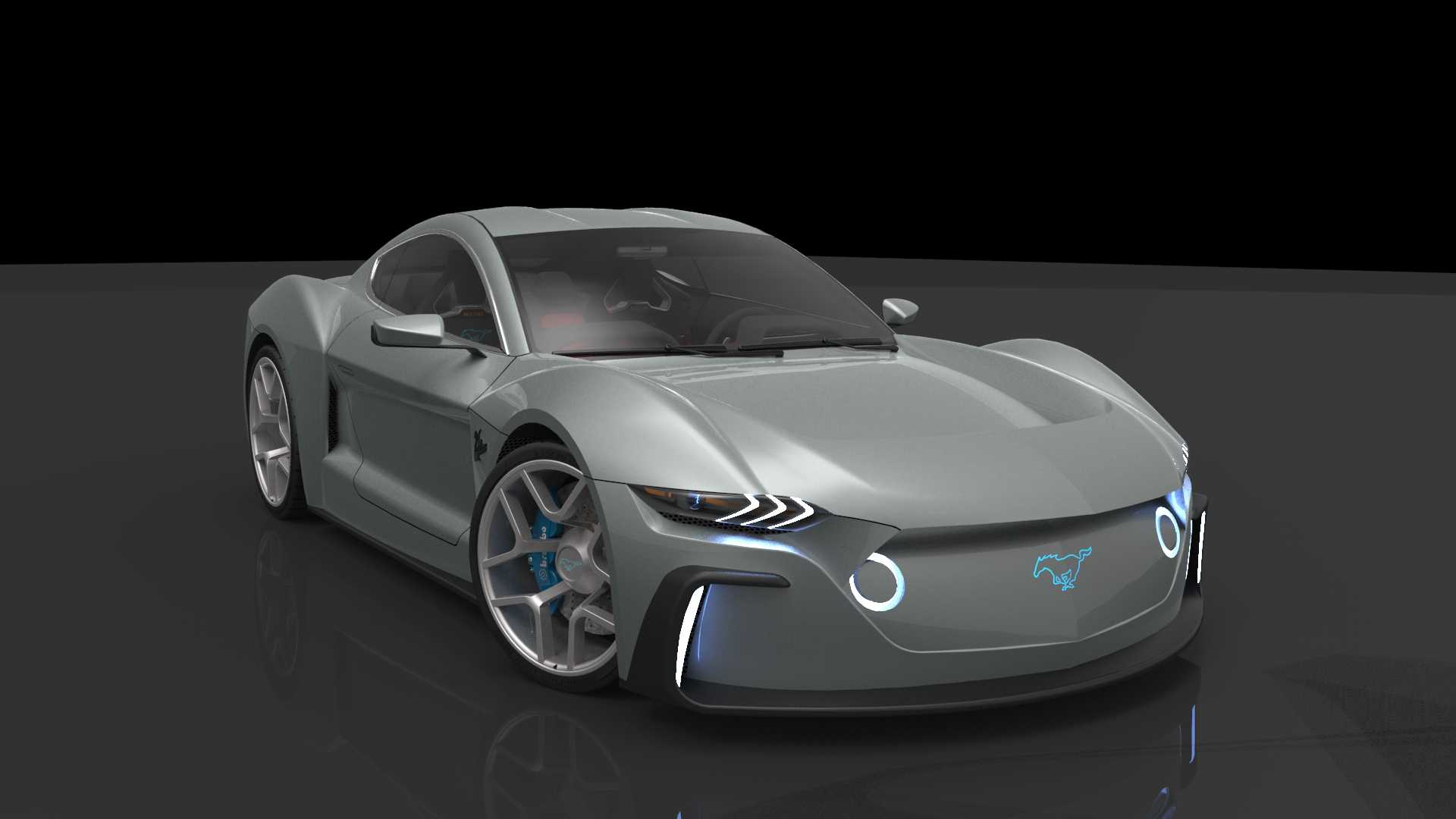
It’s unlike any Mustang EV rendering we’ve seen thus far. We just saw Ford unveil a wicked 900-horsepower all-electric Mustang at the 2019 SEMA Show, and we’re on the cusp of seeing the company’s new Mustang-inspired electric crossover which breaks cover in a couple of weeks. As such, electrified Mustangs are certainly on the brain… Continue reading Electric Ford Mustang GTE Fan Video Depicts A Shocking Future Pony

Maruti Suzuki India cuts production for 8th straight month in October – Livemint

Mumbai: Lack of demand for passenger vehicles in the country has forced India’s largest manufacturer, Maruti Suzuki to cut its production for the 8th consecutive month. The company’s total vehicle production last month stood at 119,337 units against 150,497 in October last year. The production of passenger vehicles was down 117,383 units from 148,318 in… Continue reading Maruti Suzuki India cuts production for 8th straight month in October – Livemint

Lordstown Motors CEO says workforce will be union

CLOSE A banner depicting the Chevrolet Cruze model vehicle is displayed at the General Motors’ Lordstown plant Nov. 27, 2018, in Lordstown, Ohio.  (Photo: John Minchillo/Associated Press) Steve Burns expects the workforce at the former General Motors Lordstown Assembly Plant to be union workers when production on an electric pickup starts anew there next year.… Continue reading Lordstown Motors CEO says workforce will be union

Tesla Model 3: prepare for winter with tires, mats, and some tips

There’s a lot of talk about electric vehicles not being good in the winter, but that’s not true, especially with Tesla’s vehicles, like the Model 3. If you prepare right, you should have a great driving and ownership experience during the winter. Here are some tips and accessories that can help you prepare your Model… Continue reading Tesla Model 3: prepare for winter with tires, mats, and some tips

The Man & Machine Issue: Artificial Intelligence vs. Human Behavior

Invest
Electric Cars
Electric Car Benefits
Electric Car Sales
Solar Energy Rocks
RSS
Advertise
Privacy Policy

Autonomous Vehicles

Published on November 9th, 2019 |

by Alex Voigt

The Man & Machine Issue: Artificial Intelligence vs. Human Behavior

Twitter
LinkedIn
Facebook

November 9th, 2019 by Alex Voigt

The world is currently discussing if artificial systems are good or bad, will help us or destroy us, and if they will ever function or not, and by doing that people make the mistake of actually trying to answer the wrong question. As of today, the biggest question about artificial intelligence is not the system itself, but the biggest challenge is the interface consequences between the human and the machine, or to be more precise the system existent out of two elements — a carbon and a silicon body.

We all have learned in our life how difficult, dangerous, or even fatal the coordination, cooperation, and operation between these two objects — the human and a machine — can be, and some of us may have been hurt by it or even worse. At least I can say I have been many times, and if you read the news today you will certainly find many other examples.

This has been true since humans invented the first machines moved by any energy form, be it animals, steam, or oil, and it is true for the new era we are entering — a time when software-driven artificial intelligence performs better in defined areas than a human will ever be. They already do, be it a train driving autonomously, a plane, or any kind of computer game winning against most of us, or at least against me. For those tasks the new machine interface can keep you safe, keep you healthy, more relaxed, and better performing, simply making more out of your life. It’s the new promise of the Holy Grail and promised land, everything goes.

Since the first tools were invented by humans, and every day after, we learned that you better be careful with that new thing as it’s promising to help you but it also may hurt or even kill you. It is engraved into our DNA, and if not as a child, you learn it the hard way later. Anyone can give plenty of examples, as we know to be careful with anything new. The doubt against ‘the new’ is a part of us because many who did not have that doubt simply didn’t survive and their DNA was not reproduced and given to the next generation. It’s a perfect example of nature eliminating risks for humankind by selecting those who have been careful.

Tesla Model 3 Autopilot Full Self Driving AP Fsd Navigate on Autopilot, Image credit: Kyle Field | CleanTechnica

One of ‘that new’ is the artificial intelligence system used in autonomous driving vehicles. In the selective recognition of our brain we focus only on the fact that a person sitting in such a vehicle was once killed and confirm our assumption that it is somehow dangerous regardless of the fact that not using it will expose you to a much higher likelihood of being killed. Our brain does not work with relativity and probability if it comes to a ‘kill threat’ but only with binary elimination of all other information, even if that person did die by a heart attack in a parked vehicle our brain disposition will declare the car to be somehow dangerous. It’s an odd form of generalization and elimination that works together with fear while all logical thinking and information is ignored and our fight or flight instincts are activated, while thinking is — for good reasons — totally deactivated. If you try to start a discussion in a calm way with someone in such a situation you feel a lot of aggression, and the reason is that the fight and run situation prohibits any sane conversation. It is a behavior that has been proven in the past to save lives, but in the world of artificial systems this behavior is outdated and actually puts lives at risk. Allow me to explain why.

Tesla Auto Pilot

Since ‘Smart Summon’ was released from Tesla — a feature allowing your car to drive to you or a place of your choice within a parking lot — the media and people are all over it. This includes excited owners as well as people who fear being killed by such a system. It’s an autonomous driving system feature, but the driver has still full control of it with a ‘dead man switch’ but it is just for stopping it in case something goes wrong.

After the release of Smart Summon, many videos have been posted on social media and if you watch them carefully you will realize the system works flawlessly in empty parking lots, but if it’s crowded and humans are driving or walking around, it stops and waits. In a very few cases other drivers did hit a Tesla because they simply did not see it, which is something that happens every day in the world between drivers in parking lots.

The human brain works in patterns, and if we sit in a car and another car is approaching us at a parking lot we do not differentiate if a human is sitting behind the wheel or a system, we just remember that situation and pattern and anticipate a human-like behavior from whoever controls that vehicle. In fact, most people believe you should not differentiate because we need to expect those systems to work like a human, but I claim we should definitely differentiate because those systems will not communicate with you like another human because it’s just a software system that cannot look in your eyes like we do unless it is conscious — which we don’t even want to consider to be an option today. It can’t wave with hands or communicate with signs or gestures or other subtle ways we are used to and mostly are not aware about ourselves. Just take the subtle communication of not using words between a man and women which causes a lot of confusion, and you know exactly what I am talking about.

To be accurate we should expect those systems to work like a human but not communicate like a human. Their communication is limited, or let’s say different, but if you still believe you need to use the same ways used to communicate with other humans don’t be surprised if a Smart Summon system does act different than expected if you wave to that car to drive by. The pattern your brain selected to deal with that vehicle is the wrong pattern unless you are a computer yourself.

What is required from all of us is therefore to learn how to deal with this new system, something many people feel to be forced on them without benefiting from, and if someone asks you to put effort into something but you feel you’re not getting anything in return most feel bad about it, and many even develop anger and aggression. Learning takes effort, so why should you as a pedestrian comply for that damn autonomous car developed for the rich and wealthy?

These emotions are what you see with people damaging Tesla vehicles without a visible reason why. They feel anger, mistrust, and pressure, and express those with violence be it keying the car, damaging the side mirror on a highway, or ICEing a Supercharger. These people feel like they are forced to change and their way of life is questioned by Tesla just because that company and its products exist. The natural reaction is therefore to somehow make it go away. It’s a basic behavior and makes a lot of sense in the context of humankind in history and is caused by one of our oldest parts of the brain which has been developed early on. One of my school teachers usually said to us pupils to ‘don’t forget to switch your brain on before you talk’ and he was damn right about that.

Communication is one of the challenges, and the other is the interface we communicate with.

If you think about what Neuralink, one of the many companies Elon Musk has started, is trying to accomplish, it is simply to help the computer to communicate better with humans and for humans to communicate better with the computer by inventing a new direct interface to the human brain that a computer chip would have direct access to. For those of you who believe this to be science fiction, allow me to say it has for years been standard practice for many people, for instance those having lost a limb being able to move an artificial hand with a computer which gets direction directly from your brain. It’s like a proof of concept that the approach does work. Our brain can effectively communicate directly with a computer and it’s also true that scientists do not really understand how that works in detail, but it works.

One of the reasons why this is of importance is that the existing input and output systems of a human have never been optimized for digital data transfer with an AI, and our abilities to use keyboards, touchscreens, and voice commands in that regards are just falling short of what a modern chip and computer would consider an even decent basic conversation. I call it the ‘man and machine issue’ and that’s why I chose the title for this article. At the end of the day all that matters is the language, the bandwidth, and the connection itself between us and whatever device we use to perform an action. As those actions move more and more in the “hands” of the artificial system, with us taking the role of a supervisor and just interfering if something does not go according to our expectations and plan, the ability to communicate and control effectively is even more important. We are lacking that ability because the human body needs time to adjust to new challenges and this challenge is brand new even with the always changing plasticity of our brain that develops within our lifetime if we train and feed it.

I am not talking about us growing a chip in our brain that communicates with an outside computer better, but about for instance the difference you realize in how your kids work with a computer as compared to yourself. We are all astounded by how fast and easy kids are able to use computer devices, performing and knowing them quickly better than we adults do. Most say ‘well, kids just learn better and faster and I am older and that’s, likely why’. My interpretation is tha..

Volkswagen Announces Pre-Production At Chinese Electric Vehicle factory

Invest
Electric Cars
Electric Car Benefits
Electric Car Sales
Solar Energy Rocks
RSS
Advertise
Privacy Policy

Cars

Published on November 9th, 2019 |

by Tim Dixon

Volkswagen Announces Pre-Production At Chinese Electric Vehicle factory

Twitter
LinkedIn
Facebook

November 9th, 2019 by Tim Dixon

Volkswagen has announced that it has started pre-production of the Volkswagen ID at its first purely EV-focused factory in China.

The new factory had only broken ground last year, similar to the Tesla Gigafactory 3, and it is a testament to how quickly China can roll out manufacturing infrastructure.

Volkswagen has been moving quickly to embrace battery electric vehicles after the diesel gate scandal but in China, they have additional pressure from the Chinese EV mandate which requires companies to produce new energy vehicles or buy credits from those that do.

Because of this, Volkswagen has worked with both of its long term joint venture partners (SAIC and FAW) and its new joint venture partner (JAC) to build electric vehicles and hybrids to meet its quota and maintain market access.

On the 8th of November, the company announced that it had started pre-production of a Chinese specific Volkswagen ID at its new factory in the town of Anting in a district of Shanghai, China. This is interesting as that is just 4 days after it started preproduction in its converted Zwickau plant in Germany, which was covered by CleanTechnica here and here

While the factory is starting pre-production after only one year since groundbreaking, Volkswagen has stated that it won’t start official volume production until October 2020. The factory volume production rate is 300,000 per year.

Dr. Stephan Wöllenstein, CEO of Volkswagen Group China, said:

“It took only 12 months to see the completion of this innovative factory. Congratulations to our colleagues in Anting, who will further prepare to produce the first China-model of the Volkswagen ID. family here in Shanghai. We will speed up our NEV offensive even more, as we expect further e-mobility market growth.”

Dr. Herbert Diess, Chairman of the Board of Management of Volkswagen AG, said:

“Together with the start of MEB production, we will launch the Volkswagen ID. family in China as well, a brand-new generation of fully electric and connected vehicles.”

Volkswagen is not doing this alone, so let’s see what the company is doing with its partners.

VW Group Chinese EV partners
SAIC
The Anting, Shanghai electric vehicle factory has a production capacity of 300,000 cars and is part of its SAIC joint venture. The factory has the ability to have six different car models in production.

FAW
In Foshan, they will have an electric vehicle factory with production capacity for another 300,000 electric vehicles as part of its FAW joint venture.

JAC (SOL)
In Hefei, Anhui, China, Volkswagen has a joint venture with JAC to produce over 100,000 electric vehicles under the new joint venture brand SOL. Starting with the E20X, the factory is under construction but the SOL e20x is already being manufactured and sold in China, but they didn’t do big announcements as it’s not based on its MEB platform.

Total
SAIC and FAW will use Volkswagen’s Modular Electric Drive Matrix (MEB) platform, so 600,000 MEB-based Volkswagen ID vehicles could be built in China by 2021 (They open in late 2020). Add to this the 100,000 BEV produced by the Volkswagen JAC joint venture and the production capacity grand total for China is 700,000 vehicles in 2021 if they do not add extra capacity. Very impressive.

The company plans on having 15 MEB models from different Volkswagen group brands built in China by 2025, so expect more news of plants and models coming in the next couple of years.

Conclusion
Volkswagen has taken another step to bring its vision of staying relevant (and in business) in the 21st century into being. This is good news for those that want to see a sustainable future, and for more information on Volkswagen’s international vision for affordable and mass-market EVs, I advise you read this article from Steve Hanley.

For updates, follow me on Twitter or add me on LinkedIn.
Follow CleanTechnica on Google News.
It will make you happy & help you live in peace for the rest of your life.

About the Author

Tim Dixon When not researching the Chinese electric car market, I am teaching in China. My interest in sustainable development started in University and it led me to work with Tesla Europe in the Supercharger team. I'm interested in science fiction, D&D, and travel. You can follow me on Twitter @TimDixon3.

Back to Top ↑

Advertisement

Advertise with CleanTechnica to get your company in front of millions of monthly readers.

Top News On CleanTechnica

CleanTechnica Clothing & Cups

Join CleanTechnica Today!

Listen to CleanTech TalkAdvertisement

Advertisement

Follow CleanTechnica Follow @cleantechnica

© 2019 Sustainable Enterprises Media, Inc.

Invest
Electric Cars
Electric Car Benefits
Electric Car Sales
Solar Energy Rocks
RSS
Advertise
Privacy Policy

This site uses cookies: Find out more.Okay, thanks

Japanese transmission maker JATCO opens new plant in east China

NANJING, Nov. 9 (Xinhua) — JATCO, one of the largest manufacturers of automatic transmissions in the world, put its new plant into operation on Friday in Zhangjiagang of east China's Jiangsu Province.
It is the second production base set up and wholly funded by the Japanese company in China.
With some 700 employees, the new plant covers 96,000 square meters and has an annual production capacity of 480,000 transmissions.
The main products will be the Jatco CVT8 models, which are used on premium midsize automobiles of Nissan and Renault brands produced by their joint ventures with China's automaker Dongfeng Motor Corporation, JATCO said.
Teruaki Nakatsuka, president of JATCO, said CVT (continuously variable transmission) technology has been a success in the Chinese market with the fuel-efficient and comfortable rides it provides for automobiles.
“China is an important strategic market of JATCO,” Nakatsuka said.
JATCO entered China in 2007 and founded its first manufacturing en..