We recently announced our investment in WeTrip (here), building on our previous investments in the adventure travel space. Sam Clifton, Associate at InMotion Ventures, explores why we invested in WeTrip. The anguish was fresh in my memory. Plans for a holiday with a group of friends had just fallen through, on account of too many… Continue reading Why we invested in WeTrip – the adventure travel platform
Category: OEMs
GM May Finally Be Serious About Electric Vehicles
Electric Cars
Electric Car Benefits
Electric Car Sales
Solar Energy Rocks
RSS
Advertise
Privacy Policy
Cars
Published on November 27th, 2018 |
by Frugal Moogal
GM May Finally Be Serious About Electric Vehicles
Twitter
Google+
LinkedIn
Pinterest
Facebook
November 27th, 2018 by Frugal Moogal
When I saw the news yesterday that GM is closing five plants and laying off nearly 15,000 employees, I was surprised. Not because it was happening, but because this could be an extremely forward looking move by the company.
Before I go on, I feel it’s important to present this article from a business perspective. In other words, what does this mean for GM as a company. The personal story of the people who are losing their jobs aren’t really a consideration in that case, even though obviously they should be.
Having said that, GM like all companies, is in a fight to stay ahead in its industry. Companies don’t make decisions to lay off those people without thinking them through. Even beyond any potential feelings of empathy for the workers, layoffs usually spur poor publicity, and in the case of GM will also create a battle with the auto workers union, neither of which is something the company wants. Yet, the decision to cut positions ultimately is connected to a business strategy that management feels makes the most sense at that given point in time. Sometimes it works, and sometimes it doesn’t.
It still negatively impacts those who lost their jobs. But that isn’t the focus of the rest of this article.
With all of that having been said, let’s dig in here for the reasons that GM may have made this move and why now was the right time.
GM Sales: Dropping?
The majority of the articles written about GM’s announcement talk about how GM sales have been dropping, and that’s the reason for the closures. And it’s true, sales dropped 11.1% in Q3 2018 compared to Q3 2017.
But there are a few problems with that. The first is that Q3 2017 was affected by higher than normal sales due to the effects of Hurricane Harvey.
Additionally, the results that GM posted for Q3 2018 were … well, I’m just going to let this article from Automotive News describe it:
“Stronger-than-expected results in China and North America propelled General Motors to a 25 percent increase in pretax profit in the third quarter and net income of $2.5 billion.”
So, sales dropped, but those drops were expected due to unique circumstances, were less of a drop than was anticipated, and GM still managed to improve its profitability. That’s not exactly the sort of results that cause businesses to lay off thousands and discontinue large segments of their market.
It does, however, work as a good scapegoat to changing your business strategy to try to meet a new market.
The SUV is King?
The media seems to have adopted recently that SUVs and crossovers are all that anyone wants now, and I hate it. I could have devoted an entire article to just this, but there are again factors at work here that I feel are driving the shift, so I’m going to try to encapsulate them here.
First, automobiles are lasting longer than ever before. When gas prices rose significantly, the majority of automobiles that were sold were smaller vehicles, many of which are still on the road today and nearly as good as the newer models. As a simple, single data point, the car that I traded in for my Model 3 was a 2008 Nissan Sentra. The 2015 Nissan Sentra looks physically the exact same as my car did.
Right along with this, a dealership makes the majority of its money on used car sales and service, incentivizing dealerships to sell consumers on these cheaper, new-looking sedans instead of directing them into the most recent 100% new model.
On the flip side, if you want a crossover or SUV, there are far fewer old, used options. Remember that when gas prices rose quickly about 10 years ago, people were dumping their SUVs because they could no longer afford to fuel them. Sedans made up the majority of new sales, and the used market had a glut of SUVs that dealers couldn’t give away.
Those used SUVs have aged out of the market — how often do you see Hummers driving around now, for instance — meaning if a driver wants to move into that vehicle segment, chances are she or he is going to be opting for a new vehicle or paying a lot for a used one.
At the same time, 2010 fuel standards are based on the vehicle’s footprint, or size. Thus, a larger vehicle needs to achieve less stringent fuel efficiency than a small vehicle. This example from Wikipedia’s article on Corporate Average Fuel Economy (CAFE) explains it perfectly:
“For example, the fuel economy target for the 2012 Honda Fit with a footprint of 40 sq ft (3.7 m2) is 36 miles per US gallon (6.5 l/100 km), equivalent to a published fuel economy of 27 miles per US gallon (8.7 l/100 km), and a Ford F-150 with its footprint of 65–75 sq ft (6.0–7.0 m2) has a fuel economy target of 22 miles per US gallon (11 l/100 km), i.e., 17 miles per US gallon (14 l/100 km) published.”
This gives automakers a few incentives to sell larger vehicles — not just can they charge more for them, but the technology to get them to be CAFE compliant is cheaper.
These two factors I think often go overlooked in the SUV “boom,” and it may be less of a boom than a temporary realignment. The narrative of an SUV surge and changing car buyers tastes is a good excuse by car companies, however, to hold off costly development into new cars.
Electric Vehicles Are A Material Risk to Legacy Automakers
This can’t be understated, yet it seems that the majority of investors haven’t grasped this. Electric vehicles are a material risk to legacy automakers.
The gasoline car market is extremely well developed and competitive. Margins are difficult to come by. GM achieved a $2.5 billion profit based on a margin of about 10% on its vehicles. While $2.5 billion seems like a huge number, GM pays shareholders a significant dividend, hovering near 25% of its expected profits in a year. (Ford’s is around 45%!)
Here’s a weird yet true fact — GM “burned” more cash in Q1 2018 than Tesla did. GM reported an adjusted automotive free cash flow of negative $3.464 billion. Tesla, which pundits were lined up to declare as a cash burning machine after Q1 2018, reported free cash flow of negative $785 million.
I’m highlighting this for a reason. Legacy automakers are having a difficult time creating a compelling electric vehicle that they make money on, and they have to spend significantly more money than Tesla does just to retain their position in the gas car business, a business which is expected to decline as electric vehicle sales increase.
Instead, GM (and every legacy automaker) has been forced into a difficult corner. Developing proper EV tech is not as easy as dropping a battery and electric motor into a car and calling it a day, as Tesla has clearly shown us. In 2010, it was estimated that bringing a new car model to market costs an automaker around $1 billion to $6 billion. I can only assume a whole new architecture would be even more.
Invest too much too soon, accidentally kill your gas car business, and you’ll burn so much money that the company will go bankrupt within a year or two.
Invest too little, and if the market shifts to electric cars that you haven’t yet developed, your margins crash and you burn all your money trying to quickly catch up and create a compelling, high-volume EV.
Is the Model 3 to Blame?
This may sound crazy on the surface, but I don’t think we would have been here without the Model 3 doing what it has done. To keep their smaller cars CAFE compliant, GM has to spend more money to develop better technology, which leads to smaller margins on those cars. A smaller margin on these vehicles means even a minor drop in sales could lead to significant losses.
What could have led to a drop in smaller sedan demand? According to AAA earlier this year, one in five drivers wants an electric car as their next vehicle.
I don’t think it’s a coincidence that both Ford and GM have discontinued huge segments of their sedans in the past seven months. Both companies see mounting development costs for a product that could be rapidly replaced. Ford seems to have no real plan, but GM seems to be trying to meet the challenge head on.
And, it’s going to get worse for legacy automakers soon. By 2020, Tesla will have the $35,000 Model 3 and could be spooling up production for the Model Y and truck. If a large number of buyers hear about these new electric models and decide to hold off purchasing a new gas car to see what is brought to market, that drop alone could be enough to put a legacy automaker that hasn’t created compelling electric options of their own into a tailspin.
Back to Yesterday’s News
This is what makes yesterday’s news so interesting. Most reporters stated that GM is responding to falling sales by focusing on its larger and more popular models.
Looking at the numbers, that isn’t what seemed to happen. GM is discontinuing the Chevy Cruze (31,971 Q3 sales), Impala (16,290), and Volt (5,429), the Buick LaCrosse (2,290), and the Cadillac XTS (4,101) and CT6 (2,281). Of these, both the Volt and XTS actually had increasing sales in Q3.
The Cruze, even with a 27% decrease in sales, was still Chevy’s fifth best selling model, and it accounted for over 6% of all Chevys sold.
We could contribute the decrease in Cruze sales to a lot of things, but if an automaker were to believe that the decrease in sales came partially from buyers holding off until they found a compelling electric car, this might be the time to ditch those models before they bleed too much money. This might be the time to quickly rush the new electric vehicles to market. When automakers suddenly find a luxury-priced sedan is all of a sudden competing on the best selling car list, it may be a wake-up call of sorts.
There isn’t a compelling, reasonably affordable SUV or truck option. Yet. But with the Tesla M..
InMotion backs WeTrip – the adventure travel platform
We are excited to announce our investment in WeTrip, the group travel platform that makes planning adventures and experiences easier. Our seed stage funding will support WeTrip in its global ambition to become the go-to digital platform for booking personalised group experience holidays. In November 2016, the company raised $1m funding to launch WeSki, a… Continue reading InMotion backs WeTrip – the adventure travel platform
VDL Nedcar to take on more staff for new Mini order
Dutch car maker VLD Nedcar has won an order to build a new type of Mini for German car manufacturer BMW, which will create some 1,200 jobs.The plant in Limburg already produces the three-door Mini and the Mini Cabrio and will now add a new generation of Mini Countryman to the range. The new car will be built exclusively in Born for the global market.
The new order will take the total workforce at the plant up to 4,000 plus 1,200 robots. Local officials are already talking about further expanding the plant and developing a direct railway link to make shipping easier, the Financieele Dagblad said.
DutchNews.nl has been free for 12 years, but now we are asking our readers to help. Your donation will enable us to keep providing you with fair and accurate news and features about all things Dutch.
Donate via Ideal, credit card or Paypal.
Extensive engine range for new Audi Q3
Audi is extending its engine range for the Audi Q3 to include a 2.0 TFSI in two output ratings and two other versions of the 2.0 TDI. As such, buyers can now choose from seven engine/transmission variants for the compact family SUV. The quattro permanent all-wheel drive provides additional traction, stability and dynamic handling. The… Continue reading Extensive engine range for new Audi Q3
Works meeting in Wolfsburg: praise for team’s achievements and look ahead to electric strategy
Kilian: Wolfsburg’s course for the future is set Osterloh: Wolfsburg is enabling the transformation Realignment of the Volkswagen brand is speeding up At today’s works meeting held at the Wolfsburg plant, Board Member for Human Resources Gunnar Kilian and Works Council Chairman Bernd Osterloh commended the achievements of plant employees as well as the entire… Continue reading Works meeting in Wolfsburg: praise for team’s achievements and look ahead to electric strategy
“Open Source Lab” sets course for the mobility of the future
Yesterday, the “Open Source Lab for Sustainable Mobility” has started dialogue as a platform for sustainable mobility in Berlin. It is funded by the Volkswagen Group Sustainability Council, is independent in its research agenda and is obliged to publish all research results and other results. “Our idea on the Sustainability Council was to create an… Continue reading “Open Source Lab” sets course for the mobility of the future
The new Sprinter is the ideal partner for the construction site.
Recommended Kraftstoffverbrauch kombiniert CO₂-Emissionen kombiniert Stromverbrauch im kombinierten Testzyklus Product may vary after press date on 28.11.2018. 1 Die angegebenen Werte wurden nach dem vorgeschriebenen Messverfahren ermittelt. Es handelt sich um die „NEFZ-CO₂-Werte“ i. S. v. Art. 2 Nr. 1 Durchführungsverordnung (EU) 2017/1153. Die Kraftstoffverbrauchswerte wurden auf Basis dieser Werte errechnet. Der Stromverbrauch wurde auf der Grundlage der VO 692/2008/EG ermittelt.… Continue reading The new Sprinter is the ideal partner for the construction site.
Tesla Partners With Auction Companies To Manage Used Car Market
Electric Cars
Electric Car Benefits
Electric Car Sales
Solar Energy Rocks
RSS
Advertise
Privacy Policy
Cars
Published on November 27th, 2018 |
by Steve Hanley
Tesla Partners With Auction Companies To Manage Used Car Market
Twitter
Google+
LinkedIn
Pinterest
Facebook
November 27th, 2018 by Steve Hanley
Car auctions move billions of dollars a year and are essential to the US automobile industry, yet operate out of the public eye. Every week, tens of thousands of used cars get redistributed from dealers and leasing companies to wholesalers and other dealers. The auctions are not open to the public, so very few people know about them, but they provide a means of turning cars in inventory into cash for sellers, and they provide a steady supply of fresh inventory for used car dealers.
Until now, Tesla has been managing its own used car inventory, but as sales of new cars ramp up, there are more Teslas being traded in. As much as Tesla likes to be a vertically integrated company that controls every aspect of its business, established auction houses like Adessa and Manheim are very good at what they do, and so Tesla has contracted with them to help manage its burgeoning supply of used cars, according to CNBC.
The majority of cars that go through the auction process are off-lease vehicles — something that Tesla is starting to have a lot of as leases from 2016 and earlier are just starting to mature. To handle the influx of more used cars — some of which may be trade-ins from other manufacturers or repossessions — Tesla now has postings on Glassdoor for used vehicle quality specialists, a remarketing manager, and used vehicle sales advisors. The company is targeting a “30-day or less turn-rate in the sale of pre-owned inventory.”
Many people have a negative attitude toward cars purchased from auction houses, but in truth, the supply of off-lease cars is the lifeblood of the used car industry. They are typically 2 to 3 model years old with between 30,000 and 50,000 miles on them. They are professionally reconditioned by the auction staff and often cannot be told from new. If you think all 300 used cars in inventory down at your local dealer are local trade-ins, you don’t understand how the used car business in America works.
Because Teslas will now be available at major auctions, that means they will soon start showing up on dealer lots alongside other cars in the used car inventory, meaning people interested in buying a used Tesla will have more options and possibly somewhat lower prices.
The secret to the used car business is turning the inventory. Many of the top used car retailers set 30 days as the maximum time a car can remain on the books. After that, it goes back up for auction. The theory is that it is better to lose a little money now if the proceeds can be reinvested in fresh inventory that will sell quickly and generate a profit later.
When your children ask you for career advice, tell them to become an auctioneer. Those who make it are typically some of the wealthiest people in the community. They get paid a fee by sellers to include their cars in the auction and another fee by buyers when the car sells. Most operate finance companies that loan buyers the money to purchase the cars. They operate inspection and reconditioning services that generate income as well.
Forget being a lawyer or a doctor or even a Wall Street trader. Being an auctioneer is where it’s at. You own nothing and have little overhead. No one dies or goes to jail if you make a mistake. It’s the perfect business for anyone who wants to make a lot of money with minimal headaches.
And it’s addicting. Once a week, the cars start rolling across the auction block at 9:00 am at a rate of 2 per minute until well into the afternoon. The bigger auctions have up to 15 lines running simultaneously and sell as many as 1,500 cars in a day. It’s insane, and crazy good fun. Way better than playing video games in your mom’s basement.
Support CleanTechnica’s work by becoming a Member, Supporter, or Ambassador.
Or you can buy a cool t-shirt, cup, baby outfit, bag, or hoodie or make a one-time donation on PayPal.
About the Author
Steve Hanley Steve writes about the interface between technology and sustainability from his home in Rhode Island and anywhere else the Singularity may take him. His muse is Charles Kuralt — “I see the road ahead is turning. I wonder what's around the bend?”
You can follow him on Google + and on Twitter.
Back to Top ↑
Advertisement
CleanTechnica Clothing & Cups
Advertise with CleanTechnica to get your company in front of our readers.
Top News On CleanTechnica
Advertisement
Follow @cleantechnica
Join CleanTechnica Today!
EV Charging Guidelines for Cities
Share our free report on EV charging guidelines for cities, “Electric Vehicle Charging Infrastructure: Guidelines For Cities.”
Advertisement
Cleantech Press Releases
New Research Shows That Only Two Large Petroleum Companies Have Meaningful Emission Reduction Targets
Koben Announces EVOLVE EVSF —Grid-Friendly Modular EV Store & Forward System
The New Danish Climate Plan — Together For A Greener Future
The EV Safety Advantage
Read & share our free report on EV safety, “The EV Safety Advantage.”
The State of EV Charging
Our 93-Page EV Driver Report
30 Electric Car Benefits
Blockchain × Cleantech
Our Electric Vehicle Reviews
Tesla News
Correcting the Cleantech Record
38 Anti-Cleantech Myths
Wind & Solar Prices Beat Fossils
Cost of Solar Panels Collapses
© 2018 Sustainable Enterprises Media, Inc.
Electric Cars
Electric Car Benefits
Electric Car Sales
Solar Energy Rocks
RSS
Advertise
Privacy Policy
This site uses cookies: Find out more.Okay, thanks
Mazda Reveals All-New Mazda3
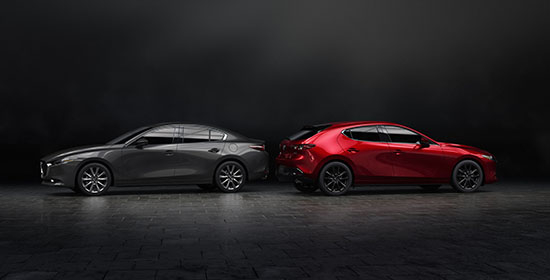
2018/11/28 Products and Technology Redesigned model kicks off a new generation of Mazda cars HIROSHIMA, Japan—Mazda Motor Corporation today hosted the world premiere of the all-new Mazda3. The fully redesigned model will be rolled out to global markets starting from North America in early 2019. The all-new Mazda3 will be on display at the Los… Continue reading Mazda Reveals All-New Mazda3