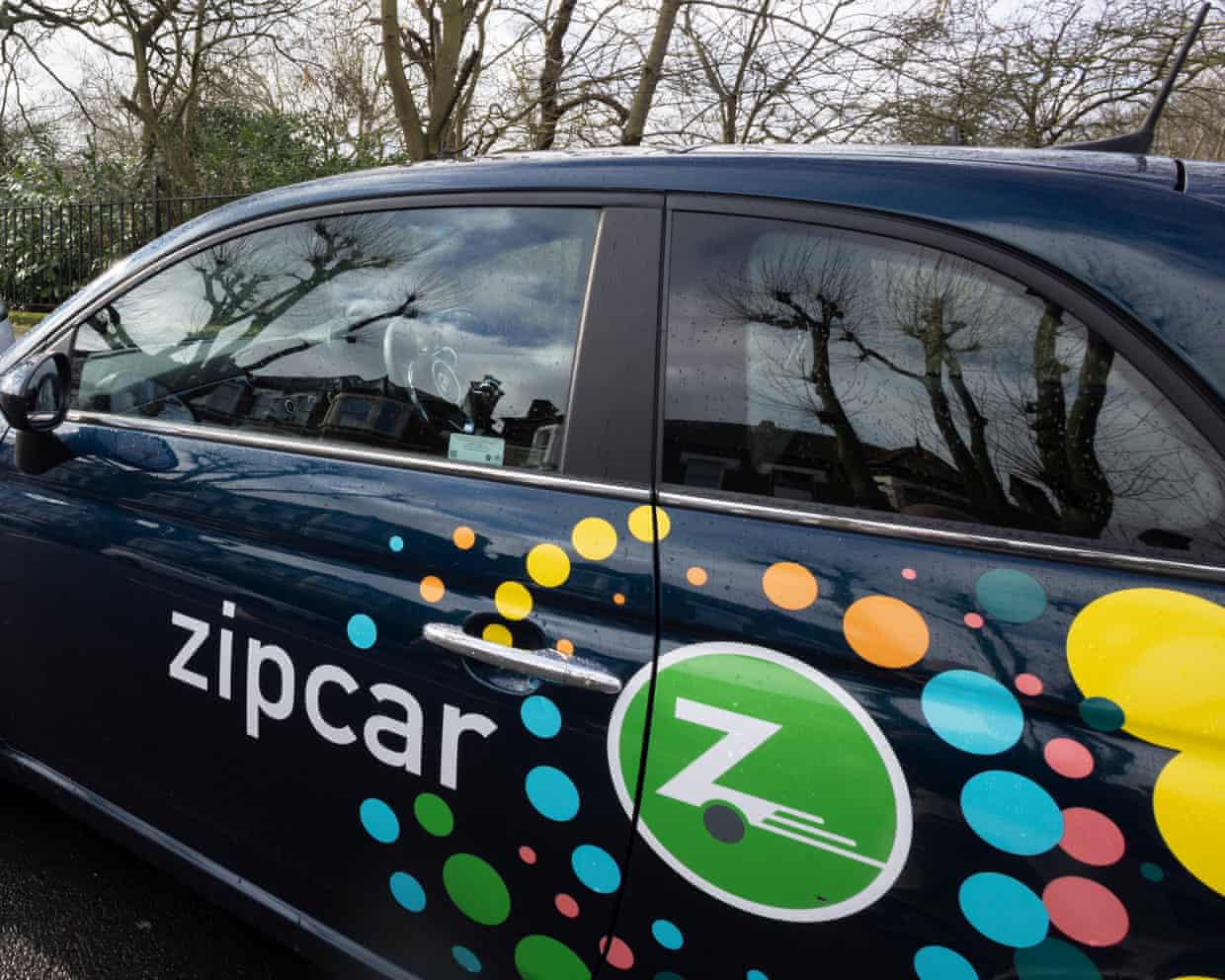
Zipcar, world’s biggest car-sharing company, to close UK operation
Move by firm, owned by US group Avis Budget, will remove access to shared fleet across London at end of year
The world’s biggest car-sharing company, Zipcar, has said it will close its UK operation, removing access to its shared fleet across London at the end of this year.
The company, owned by the US car rental group Avis Budget, said it will suspend new bookings after 31 December, pending the outcome of a consultation on possible redundancies. The UK operating company had 71 staff last year, according to its latest accounts.
The closure will be a blow to advocates of car-sharing as a more sustainable form of personal transport, as well as to some car clubs that relied on Zipcar to share private vehicles.
James Taylor, Zipcar UK’s general manager, wrote in an email to customers: “We are proposing to cease the UK operations of Zipcar and have today started formal consultation with our UK employees.” Taylor directed customers to the website of CoMoUK, a national charity for shared transport, to find other car-sharing options.
The closure will follow a tricky period for car-sharing companies. The Guardian reported in March that Avis Budget had quietly downgraded the valuation of its Zipcar subsidiary, amid declining revenues in come key markets.
The proposed closure would come after Zipcar (UK) reported an £11.7m loss for 2024.
The company said it would honour existing bookings, including over the Christmas period. It also said it would contact users with bookings running into the new year, while paying subscribers will receive refunds for the period after 31 December.
The concept of car-sharing gained popularity during the coronavirus pandemic as Zipcar, Enterprise Car Club and Share Now offered app-based car rental by the hour, while companies such as Hiyacar, Turo and Getaround opened up the ability to rent neighbours’ cars.
However, companies running their own fleets have struggled to make a profit, with relatively high maintenance costs for fleets scattered around cities.
after newsletter promotion
Zipcar in the UK had pioneered the “flex” model of running a fleet of cars with no set parking space, allowing users in London to park in residents’ bays almost anywhere in the centre of the city.
Car-sharing is generally seen as more sustainable because it avoids the extra carbon emissions needed to produce vehicles for every individual household.