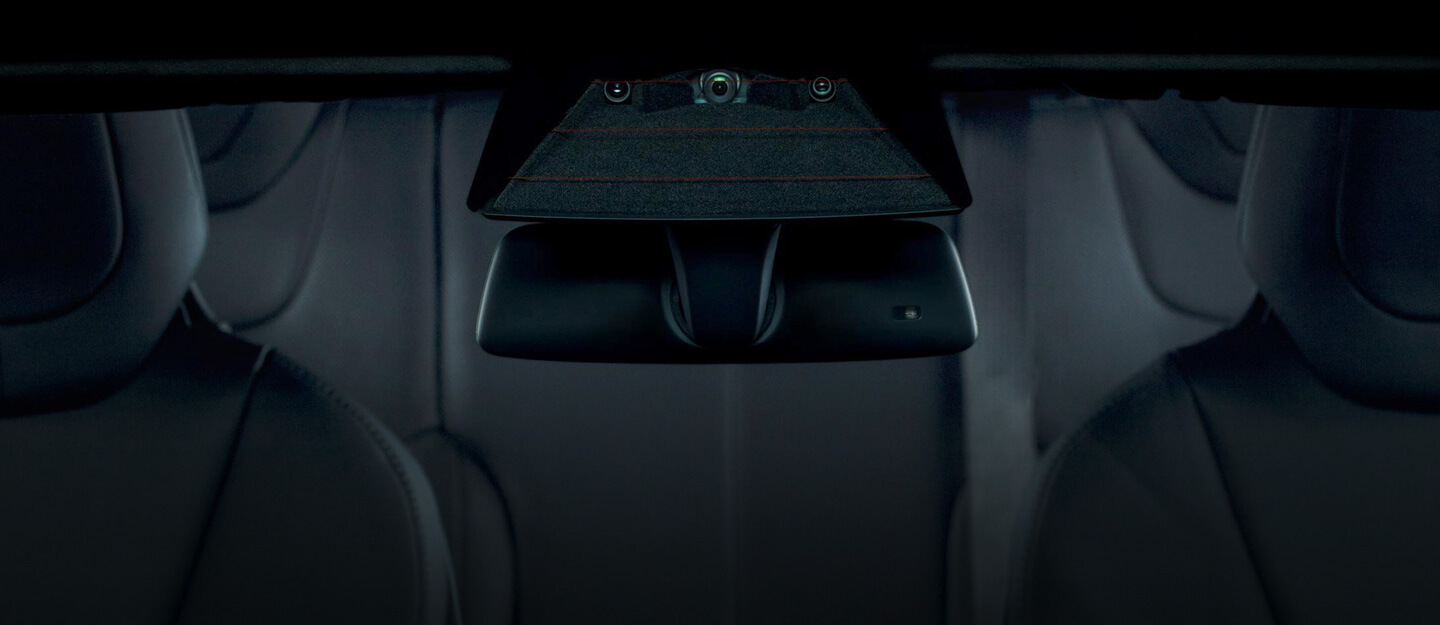
Tesla appears to be preparing to introduce yet another new camera sensor to its hardware suite, according to code found in the automaker’s latest firmware. While hardware improvements are generally good news, this latest discovery adds to the mounting evidence that Tesla is continuously moving the goalposts for self-driving, potentially leaving millions of owners with “older” hardware in the dust… again.
The discovery comes from longtime Tesla hacker and researcher @greentheonly, who frequently digs into Tesla’s software updates to find unannounced features and hardware changes.
According to Green, Tesla’s firmware now references a new sensor model: IMX00N.
Looks like Tesla is changing (upgrading?) cameras in (some?) new cars produced.
Where as HW4 to date used exterior cameras with IMX963, now they (might potentially) have something called IMX00N.
This would ostensibly replace or complement the Sony IMX963 sensors currently used in Hardware 4.0 (AI4) vehicles. The IMX963 is the 5-megapixel sensor that replaced the 1.2-megapixel Aptina sensors found in Hardware 3 cars just two years ago.
We don’t have the specifications for the “IMX00N” yet. It could be a custom Sony SKU for Tesla or a placeholder name for a new image sensor.
Here are the specs comparisons between the camera sensors in HW3 and AI4 Tesla vehicles:
| Specification | Hardware 3.0 (HW3) | Hardware 4.0 (AI4) | Technical Implication |
| Sensor Resolution | 1.2 Megapixels (1280 × 960) | ~5 Megapixels (2896 × 1876) | 4X Data Density. Allows detection of objects at >300m and digital cropping. |
| Sensor Model | Onsemi AR0136AT | Sony IMX490 (Estimated) | Flagship Automotive Sensor. Simultaneous HDR & LFM. |
| Color Filter Array | RCCC (Red-Clear-Clear-Clear) | RGGB (Red-Green-Green-Blue) | Semantic Fidelity. True color perception for signs, lights, and road markings. |
| Dynamic Range | ~110 dB | >120 dB (Single Exposure) | Contrast Mastery. No motion artifacts in tunnel exits or night driving. |
| Data Interface | FPD-Link III (Likely) | GMSL2 or MIPI A-PHY | High Bandwidth. Supports uncompressed 5MP streams at high frame rates. |
| Front Cameras | 3 (Main, Narrow, Wide) | 2 (Main, Wide) | Optical Simplification. Digital zoom replaces the physical telephoto lens. |
| Lens Coating | Standard | Deep Red IR Cut / Anti-Glare | Glare Mitigation. Reduces blinding from headlights and sun. |
| Heaters | Passive (Waste Heat) | Active Heating Elements | All-Weather Resilience. Rapid defogging and de-icing. |
| Retrofit | N/A | Impossible for HW3 cars | Fleet Fragmentation. HW3 cars are permanently hardware-limited. |
Electrek’s Take
Of course, you would expect Tesla to improve its vehicles, including its sensor suite, gradually. It is a good thing in and of itself.
There are three problems with Tesla updating its hardware suite for autonomous driving:
- It promised to all owners since 2016 that their vehicles have all the required hardware to achieve “Full Self-Driving,” and at the time, CEO Elon Musk said that it would mean “unsupervised self-driving.”
- It has yet to achieve that, and it promised to offer free hardware retrofit if needed, but it has yet to offer those.
- When Tesla launches a new autonomous driving hardware suite, it rapidly puts less effort into software that works with its previous hardware suite.
If the current cameras in HW4 (let alone HW3) are sufficient for Level 4 autonomy, why is Tesla spending resources to integrate a new sensor? The most logical answer is that the current sensors have limitations, whether it’s glare handling, low-light performance, or resolution, that limit the system’s reliability.
If that’s the case, can we expect Tesla to update all the vehicles that are supposed to have the hardware to reach level 4? I wouldn’t bet on it.
CEO Elon Musk already admitted that the HW3 computer won’t support it back in January 2025, almost a year ago, and instead of announcing a solution, Tesla owners were only promised a “mini version” of FSD v14, which itself is not the promised unsupervised self-driving.
At this point, it’s hard to put hope on Tesla doing the right thing here.


FTC: We use income earning auto affiliate links. More.