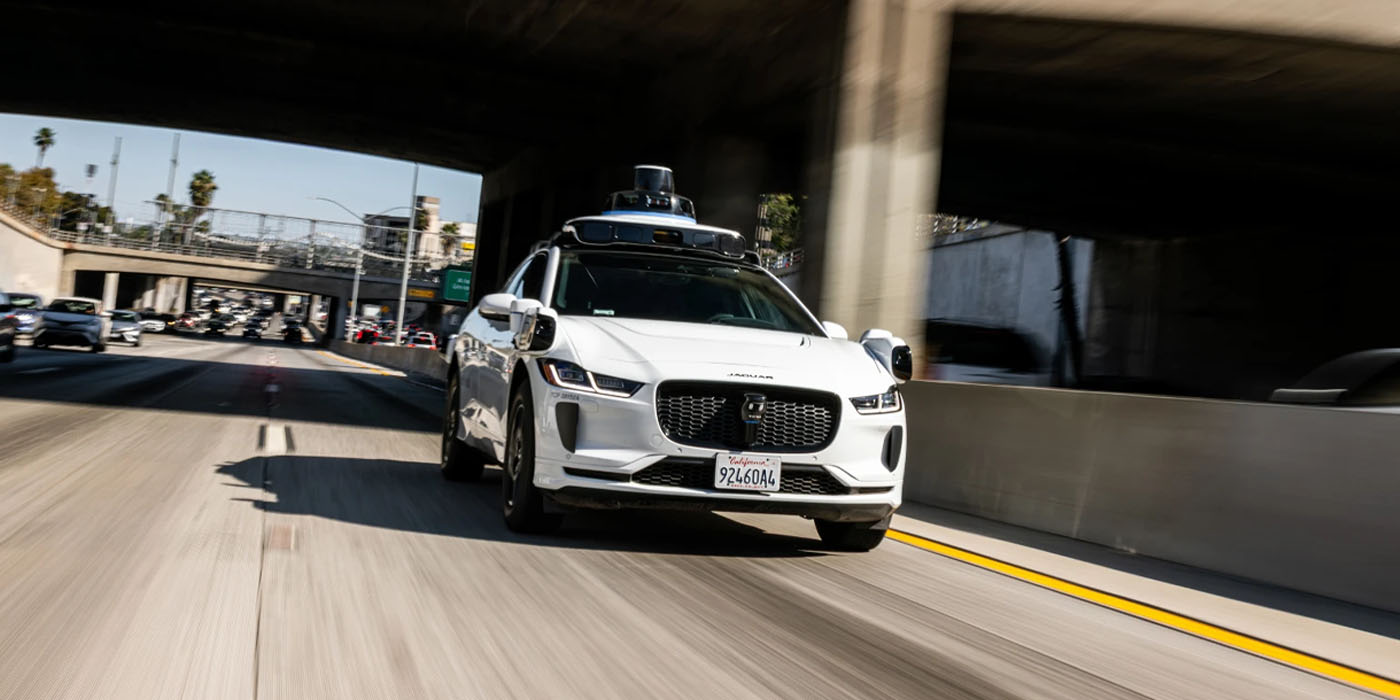
For years, the loudest and most persistent argument coming from the Tesla camp, including Elon Musk himself, against Waymo has been simple: “Sure, it works, but it can’t scale.”
The narrative, usually pushed by those heavily invested in the promise of Tesla’s “generalized Full Self-Driving”, was that Waymo was a geofenced parlor trick. They argued that Waymo’s reliance on lidar, radar, and, specifically, high-definition (HD) mapping would mean it would take years to launch in every new city.
But the narrative is now dying, as Waymo went from testing to fully autonomous in a couple of Texas cities in just a few months.
Unlike Tesla, Waymo has been offering fully autonomous commercial rides for years, which has been a threat to the narrative Elon Musk has been pushing: that Tesla is the leader in autonomous driving.
Musk’s solution has been to claim that Waymo’s system is not scalable compared to Tesla’s and Tesla investors have been betting heavily on him being right on this.
Well, that narrative just officially died deep in the heart of Texas.
Based on the latest operational updates as of early December 2025, Waymo has pulled human safety drivers from its vehicles in both Dallas and Houston. While currently restricted to employee rides before a public launch in 2026, the vehicles are now operating fully autonomously in these complex urban environments.
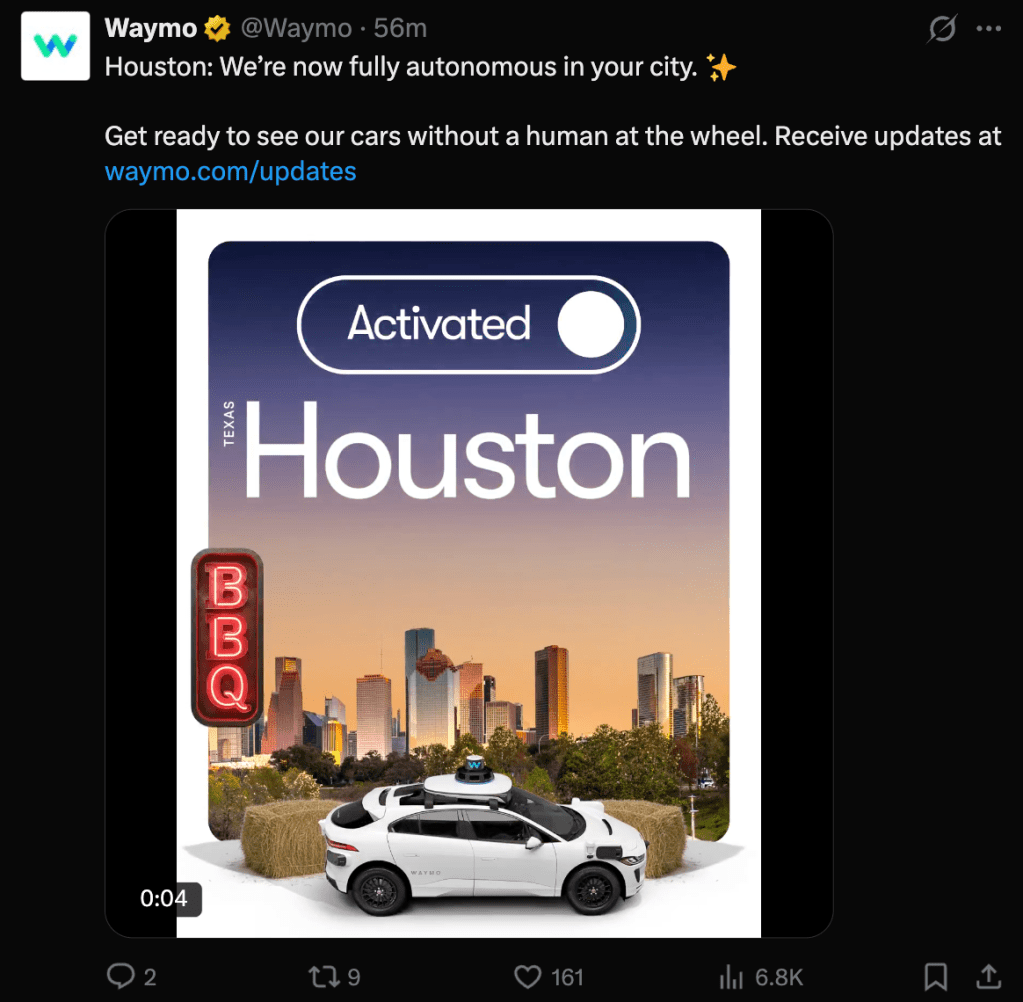

But the fact that they are autonomous isn’t the biggest news here. The biggest news is the timeline.
Waymo only officially began on-road testing with its Jaguar I-Pace fleet in Dallas and Houston around May of 2025. That means it took the Alphabet-owned company roughly six to seven months to go from “wheels on the ground” initial mapping and testing to removing the human driver entirely in two massive, distinct metropolitan areas simultaneously.
To put that in perspective, think about Waymo’s original pilot in Chandler, Arizona. We watched that program iterate for what felt like half a decade before they were confident enough to fully remove the safety drivers. San Francisco was faster, but it was still a long, arduous slog of validation under intense regulatory scrutiny.
This pace in early markets is what fueled the “Waymo can’t scale” argument. Critics looked at the years spent in the Phoenix suburbs and assumed that was the permanent velocity of Waymo’s expansion.
The Texas rollout proves that assumption wrong. What changed? Waymo has achieved what they describe as a “generalizable Waymo Driver.”
Waymo’s AI isn’t relearning the concept of a stop sign or a pedestrian every time it enters a new zip code. It already knows how to drive. When it enters a new market now, it is primarily validating that base knowledge against local flavor, specific types of intersections, regional driving aggression levels, or unique Texas U-turn laws.
The “crutch” of HD mapping, which Tesla CEO Elon Musk once famously called “unscalable,” is proving to be much less of a hurdle than predicted. Waymo has clearly streamlined the process of generating and updating these maps to the point where they can spin up two major U.S. cities in half a year, with many more to come.
Electrek’s Take
I’ve been saying for a while now that the “Waymo is stuck in a geofence” argument was running on fumes, but this Texas news should be the final nail in the coffin.
Now, the other argument that the Tesla crowd is going to cling to is cost. Tesla undoubtedly has a big advantage there, but again, it’s priced lower as a system that hasn’t achieved unsupervised autonomy yet.
Meanwhile, Waymo has reduced the cost of its driver by more than 50% with its 5th-generation system, and it is expected to cost less than $20,000 with the 6th generation in the new Zeeker van. That’s starting to be competitive with Tesla price-wise, and again, with a system that actually has already achieved level 4 autonomy.
The goalposts for AV success are constantly moved by critics, but the speed of deployment was the last verifiable metric where Tesla bulls felt they had the upper hand, theoretically. The idea was that once Tesla “solved” FSD, it would work everywhere instantly, leapfrogging Waymo’s plodding city-by-city approach.
But reality is catching up to theory. While Tesla’s FSD (supervised) is an incredibly impressive driver-assist system, it is still stuck at Level 2, requiring constant human attention after years of “robotaxi next year” promises.
Musk claimed Tesla would remove supervisors from cars in Austin “within a few months”, but it has now been almost 6 months, and the crash rate indicates that Tesla shouldn’t remove the supervisors any time soon.
Meanwhile, on the same timeline, Waymo just dropped into two of the largest, most car-centric cities in America and went fully driverless.
The scoreboard speaks for itself.


FTC: We use income earning auto affiliate links. More.