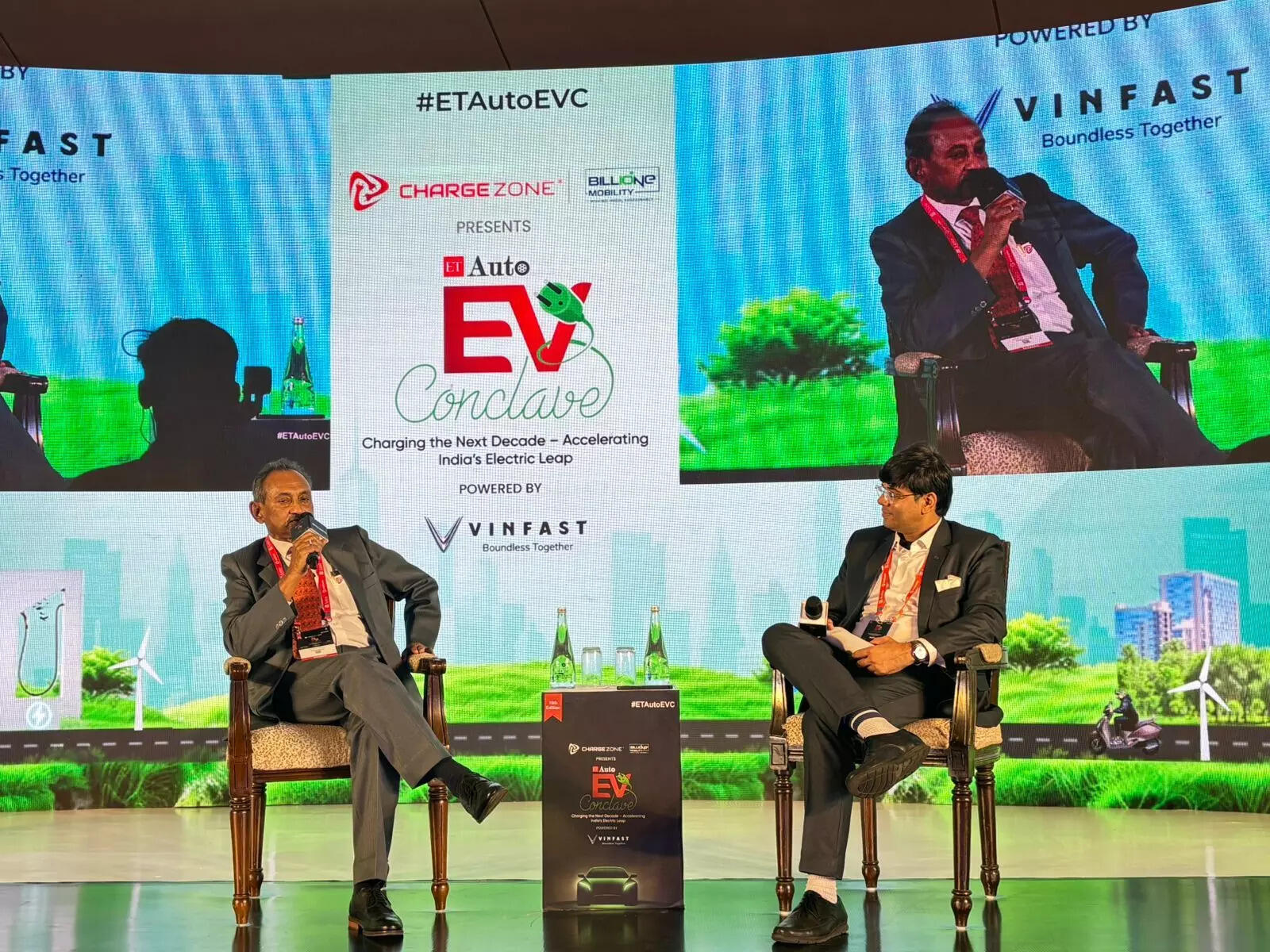
India’s public EV charging network will scale from thousands to lakhs of points only through disciplined execution, digital monitoring and targeted upstream infrastructure support, says ChargeZone Director Ravindra Mohan. At the ETAuto EV Conclave 2025, Mohan outlined how the company has built one of the country’s most reliable charging networks by combining in-house software, multiple business models and a high-uptime engineering culture.
Potential for scaling up
Scaling from dozens of chargers to thousands required distinct business models tailored to different environments, Mohan said. On highways, ChargeZone invests ahead of usage in anticipation of rising long-distance EV travel. In cities, it operates open-access charging hubs that serve fleets from multiple small EV operators, after discovering that captive hubs for individual players left infrastructure underutilised.
Meanwhile, e-bus and e-truck depots operating under gross cost contracts provide steady, predictable revenue. Heavy commercial vehicles, he noted, draw five times more energy per hour than cars, boosting station viability. As a result, utilisation at several sites has risen from 1–2 per cent to 6 per cent, with month-on-month improvements of about 10 per cent since March.
Policy push for mass adoption
Mohan stressed that policy must now shift focus from individual charger subsidies to power infrastructure. “Don’t subsidise us directly we are capable of investing. Subsidise the substation that brings 11 or 33 kV down to 415 volts. Give us reliable power at the last mile, and we will build the rest,” he said. He urged NHAI and state agencies to reserve space for multi-brand “charging plazas” every 100–150 km on highways, while calling for a single-window approval process to cut discom connection time from several months to 30–45 days.