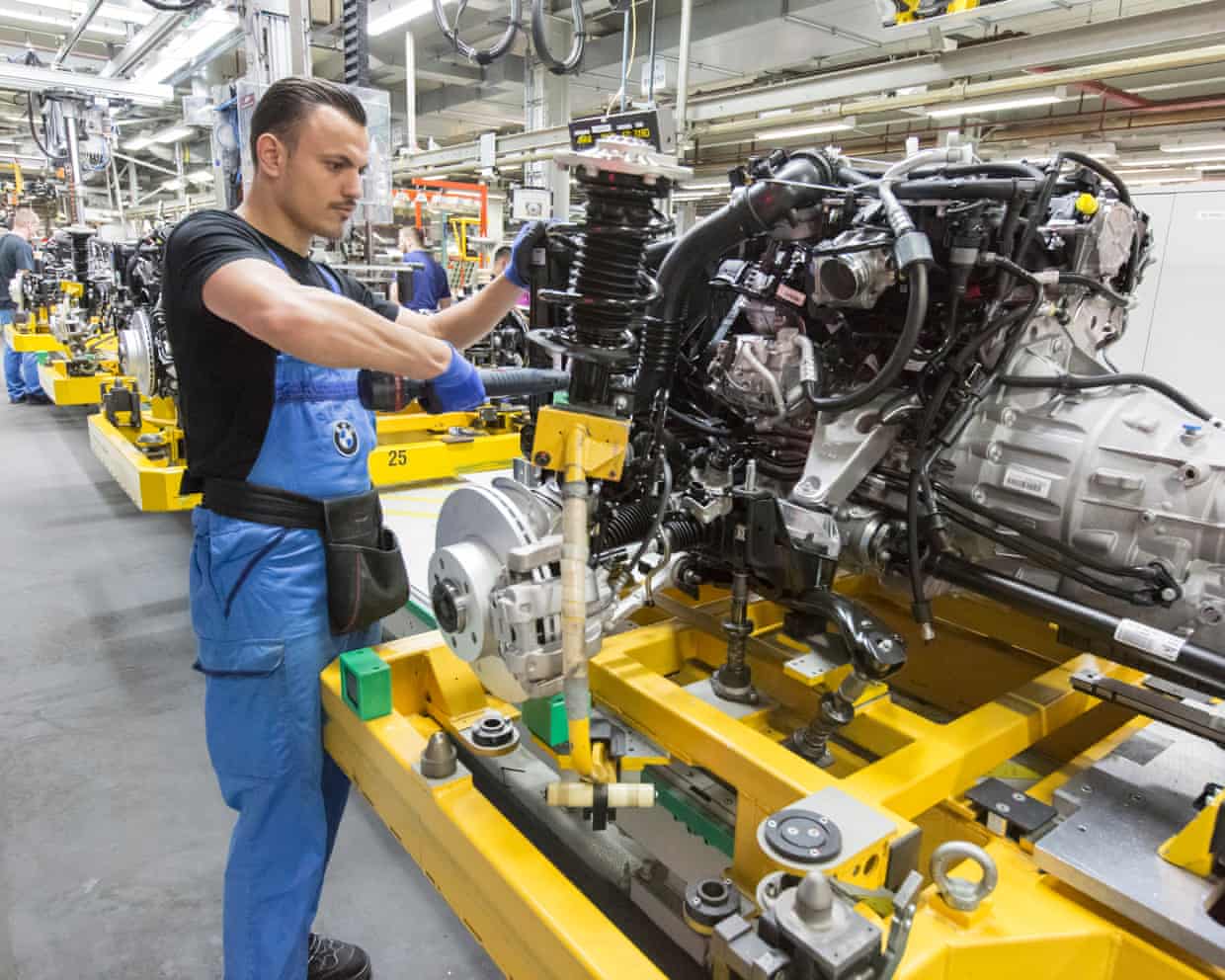
EU’s 2035 petrol and diesel car ban will be watered down, says senior MEP
Decision would anger environmental campaigners, who say it would amount to ‘gutting’ of green deal
The EU’s outright ban on the sale of new petrol and diesel cars from 2035 is poised to be watered down, a senior European parliament politician has said.
The decision, expected to be announced by the European Commission on Tuesday in Strasbourg, would be a divisive move, angering environmental campaigners who argue it would amount to the “gutting” of the EU’s flagship green deal.
The German chancellor, Friedrich Merz, said on Friday he “supported” such a climbdown, having advocated strongly for changes to the rules on the end of the combustion engine for months.
“The reality is that there will still be millions of combustion engine-based cars around the world in 2035, 2040 and 2050,” he said.
Under the existing laws, approved two years ago, all cars coming on the market from 2035 have to be zero CO2 emissions, meaning the end of the road for hybrid vehicles as well as those running solely on fossil fuels.
However, Manfred Weber, an MEP and the president of the European People’s party group of conservative and centrist parties in the European parliament, told Germany’s Bild newspaper that the 2035 cutoff date would be softened next week.
“The technology ban on combustion engines is off the table,” he said. “All engines currently manufactured in Germany can therefore continue to be produced and sold.”
The Italian prime minister, Giorgia Meloni, Merz and most of the car industry have lobbied for the ban to be changed to allow the continued sale of hybrid vehicles.
Reports of a looming rowback on the 2035 ban enraged green campaigners. Colin Walker, the head of transport at the Energy and Climate Intelligence Unit, said if the changes are confirmed next week, it would “keep millions of European families stuck driving dirtier and more expensive petrol cars for longer”. Having hybrid cars as a continued option would merely delay the switch to electric vehicles (EVs), he added.
Some car manufacturers, including Volvo and Polestar, have attacked those calling for a softening of the 2035 cutoff for traditional combustion engines, arguing it would just give further advantage to Chinese rivals.
Weber said the rule change would be an important signal “to the entire automotive industry and secures tens of thousands of industrial jobs”, reflecting concerns over the future of one of Europe’s most important industries.
He suggested the EU would pave the way for the continued sale of plug-in hybrid cars, including a future generation of powerful hybrids with long ranges, but with backup combustion engines for long journeys, for example, more than 373 miles (600km).
“For new registrations from 2035 onwards, a 90% reduction in CO2 emissions will now be mandatory for car manufacturers’ fleet targets, instead of 100%,” Weber told Bild.
A European Commission spokesperson, Paula Pinho, said on Friday that the 2035 deadline was “still being discussed”. She added that the commission president, Ursula von der Leyen, had already said several times that that there was a clear demand for “more flexibility on the CO2 targets”.
Volkswagen, Stellantis, Renault, Mercedes-Benz and BMW have argued in favour of dropping the ban, arguing that consumers are not taking up EVs in the numbers anticipated when the 2035 date was approved in 2022.
According to reports, the EU will also propose a package of measures to incentivise Europeans to make and buy small EVs as part of a new push to dent the growing presence of Chinese electric cars in the bloc.
Incentives for a “made in Europe” small EV would take inspiration from Japan, which offers significant breaks including lower insurance and car tax for those who own electric kei cars, a category of small, lightweight vehicles notable for their boxy appearance.
Norway, which has the highest take-up of electric vehicles in Europe, drove adoption of the zero-emission cars with VAT and purchase tax exemptions along with 50% road toll fees.
It has meant more than 90% of all new cars sold in 2025 were electric, in extraordinary contrast to southern Europe where a lack of infrastructure and incentives has led to a slow take-up of EVs.
In Norway almost 30% of all cars are now electric, compared with Italy where numbers are growing, but still account for only 12% of the market, according to figures for November.