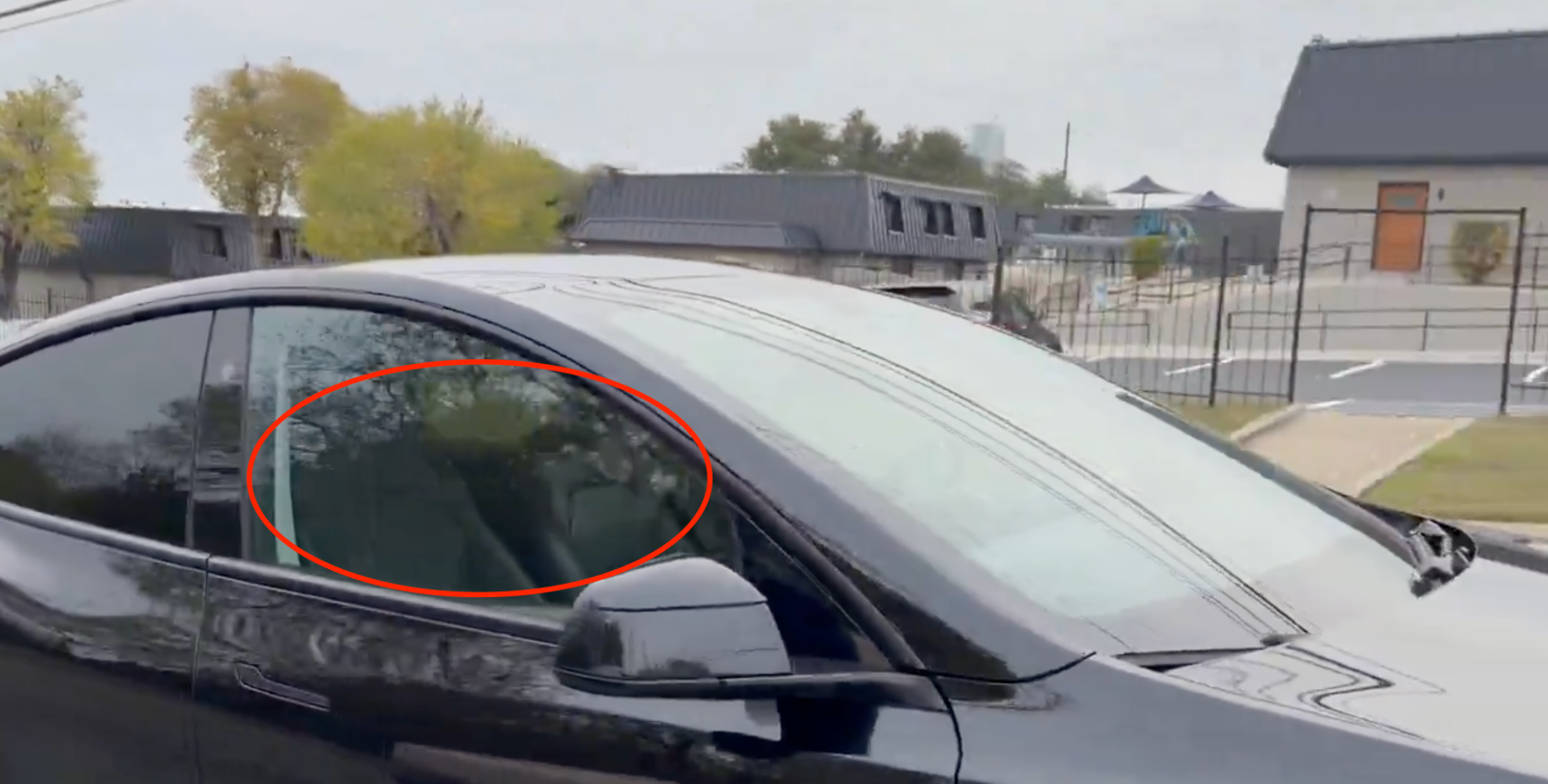
It’s finally happening. After years of promises, missed timelines dating back to the “Autonomy Day” in 2019, and endless iterations of “Full Self-Driving” (FSD), a Tesla vehicle has been spotted driving on public roads in Austin without anyone in the driver’s seat or a safety monitor in the passenger seat.
Elon Musk has confirmed that Robotaxi testing has officially commenced. This is undeniably a step forward for the company’s autonomy ambitions.
But it is also a terrifying leap of faith, given the complete lack of safety data proving the system is ready for this.
The sighting, captured over the weekend by locals in Austin, shows what appears to be a specially outfitted Model Y, presumably a testbed for the upcoming dedicated Robotaxi platform, navigating city streets. The steering wheel is turning, the car is moving, and the driver’s seat and front passenger seat are empty:
Following the online buzz surrounding the sighting, Elon Musk took to X to confirm the obvious:
“Testing is underway with no occupant in the car.”
In isolation, this is exciting news. It suggests Tesla has reached an internal confidence level in their latest FSD builds for Robotaxi (not in consumer vehicles) where they feel comfortable pulling the human monitor.
It’s the tangible progress toward the driverless future many Tesla owners bought into years ago.
However, there’s still a lot of room for concerns.
Tesla has, to date, never released comprehensive, verifiable data proving that its FSD system is safer than a human driver. We get anecdotal evidence, curated video clips, and high-level statistics about “miles driven,” but not the granular disengagement data that competitors like Waymo provide to regulators and the public.
In fact, the data we do have, based on incident reports submitted to the NHTSA under their Standing General Order regarding ADS and ADAS systems, paints a worrying picture.
The data pointed to Tesla’s Robotaxi pilot in Austin having a crash every ~62,000 miles, significantly higher than the human average, despite a safety monitor inside the car that should have prevented further crashes.
CEO Elon Musk said last week that he expects Tesla’s Robotaxi service in Austin will be without a safety monitor within three weeks.
Electrek’s Take
Think about that for a second. The current fleet requires human intervention to avoid crashes. We know this. If human interventions are currently preventing accidents, common sense dictates that removing the human without a massive, documented improvement in the system’s base capability will lead to more incidents.
Tesla seems to be skipping the “prove it’s safe” phase and jumping straight to the “deploy it” phase.
I want Tesla to succeed here. A functional, scalable Robotaxi network would be a civilization-level improvement in transport. Seeing a driverless Tesla on public roads might feel like a visceral milestone, proof that the technology is advancing.
But “advancing” is not the same as “safe.”
I have serious concerns about the fact that Tesla has consistently avoided releasing verifiable, valuable data on the safety of FSD or its Robotaxi pilot program.
We have to try ourselves to match Tesla’s sparse release of Robotaxi mileage to the limited crash data reported to NHTSA. And that doesn’t look very good for Tesla.
So far, and even with this sighting, the Robotaxi program in Austin seems more of a marketing effort than the true first step toward scaling a driverless ride-hailing service. It looks like an effort to manufacture a win while Waymo rapidly scales its commercial driverless system.


FTC: We use income earning auto affiliate links. More.