UK to bring forward review of EV sales targets from 2027 to next year
Ministers hint at further relaxation of zero emission mandate but say will not follow EU over 2035 petrol cars ban
The UK is to bring forward its review of electric vehicle sales targets from 2027 to next year, as the government said it would listen to the concerns of the car industry.
The news came as ministers said they would not weaken plans to ban the sale of new petrol or diesel cars from 2035, after the EU announced plans to water down the timing of the phaseout of new combustion engine vehicles.
The government had said in April it would weaken its zero-emission vehicle (ZEV) mandate – which was brought in to force carmakers to sell more electric cars every year, or face the prospect of steep fines – after lobbying from the car industry.
Carmakers had argued the rules were economically unsustainable, leading the UK to introduce “flexibilities”, with more credits for selling hybrids.
“The ZEV mandate review starts next year … and of course we’d want to complete that review as quickly as we can,” the industry minister, Chris McDonald, told the Financial Times.
Referring to the changes to the rules introduced in the spring, McDonald said: “We’ve got to be responsible to the industry, and we’ve also got to be responsive to where the market is as well.”
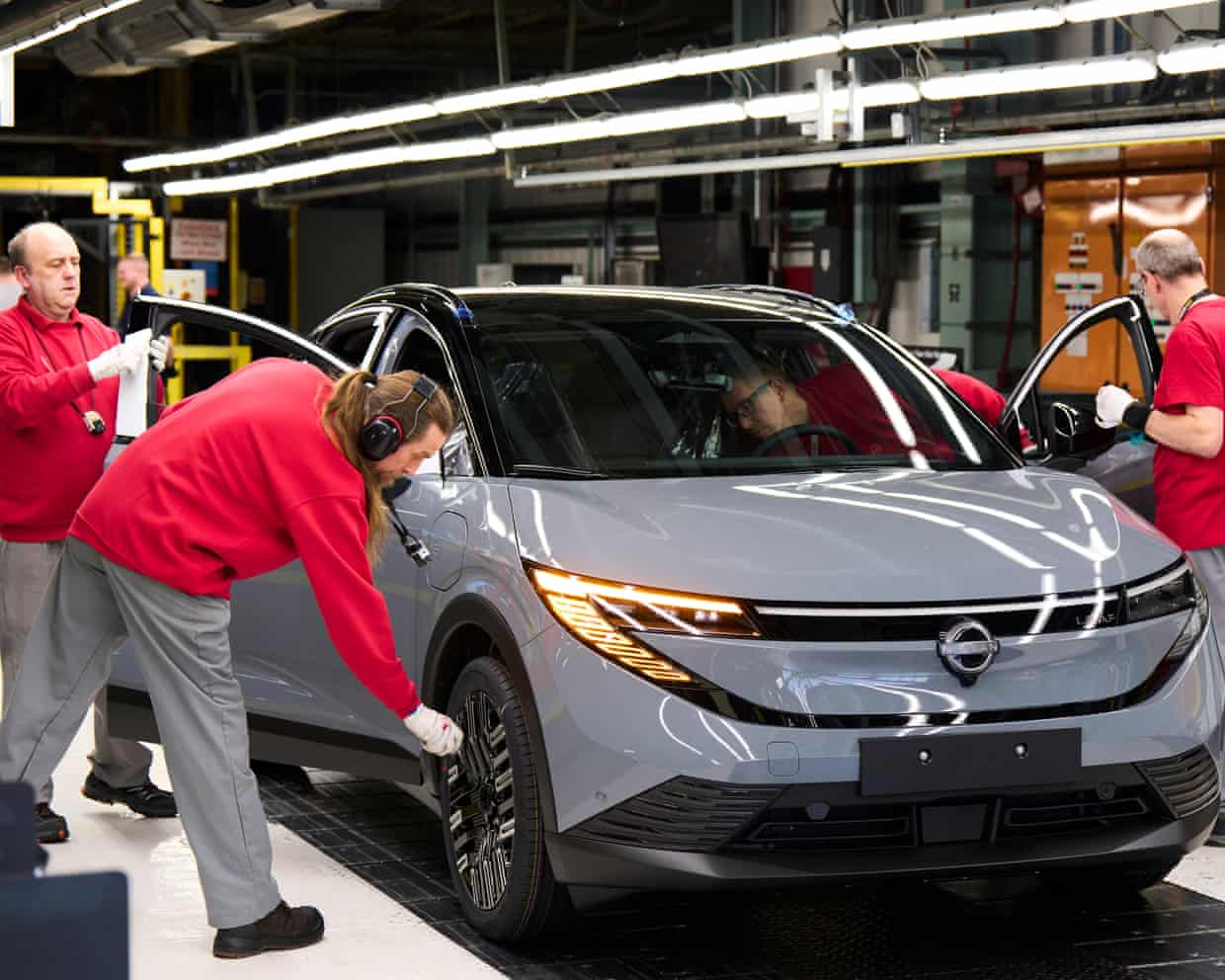
McDonald’s confirmation of the timing change of the review came as he visited Nissan’s factory in Sunderland, where the Japanese carmaker has begun production of its latest electric car.
The launch of the third generation of the Leaf, which was the first mass-market battery electric car to be built in the UK, is seen as a crucial step in the UK car industry’s transition away from petrol and diesel.
Nissan has already produced more than 280,000 Leaf models at the plant in north-east England, which is Britain’s largest car factory.
Electric car sales have increased rapidly in recent years, and represented more than a fifth of the UK market in July.
However, carmakers previously overestimated demand for EVs, meaning they have had to lower their prices in order to attract buyers.
The EU confirmed on Tuesday it would no longer require carmakers to ensure that 100% of cars and vans produced had zero emissions from 2035.
After heavy pressure from the car industry and leaders of several EU member states including Germany and Italy, the European Commission has promised to reduce this requirement to 90%. This will allow 10% of production after 2035 to be plug-in hybrid electric cars, or even pure combustion engine vehicles.
In a trade-off with industry, carmakers will have to compensate with other green measures on the factory floor, including the use of green steel made in Europe or use of biofuels in non-electric vehicles.