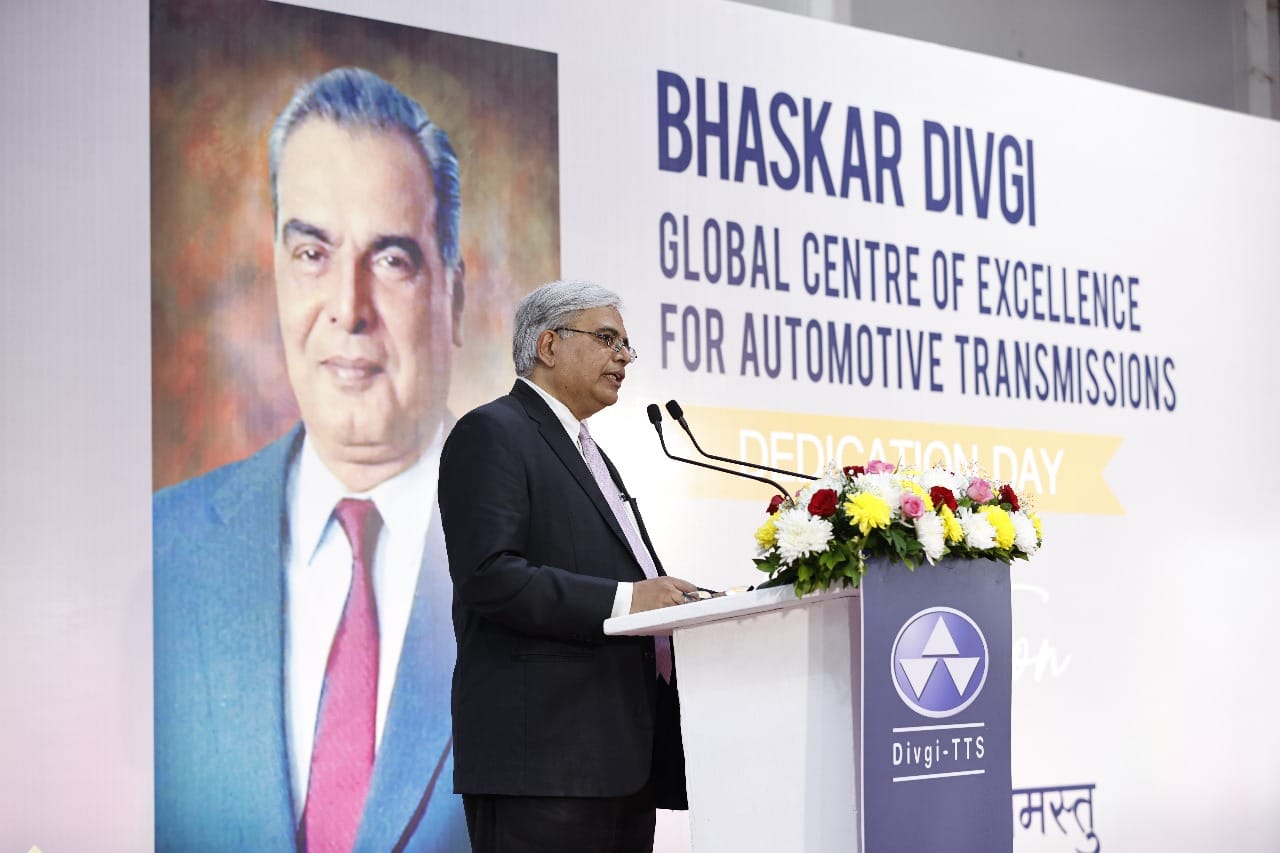
When Divgi TorqTransfer Systems Ltd listed on the stock market in 2023, the move was not driven by short-term capital needs or a desire for visibility. For managing director Jitendra Divgi, the IPO marked the starting line of a much longer race, one aimed at building a ₹1,000 crore drivetrain business by the end of the decade.
“Our goal is certainly to cross the ₹1,000 crore mark. That is roughly a three-times growth from where we are today,” Divgi said in an interview with Autocar Professional.
At first glance, the ambition might appear aggressive for a company whose yearly revenue hover around the ₹300 crore mark. But Divgi’s confidence rests on a deliberate shift in strategy: moving away from being seen as a component supplier and repositioning the company as a system-level drivetrain partner, both in India and overseas.
Why Systems Matter
Over the past three decades, Divgi has built internal benchmarks on what drives sustainable scale in automotive manufacturing. The conclusion, according to its managing director, is clear: systems outperform components on every strategic metric that matters.
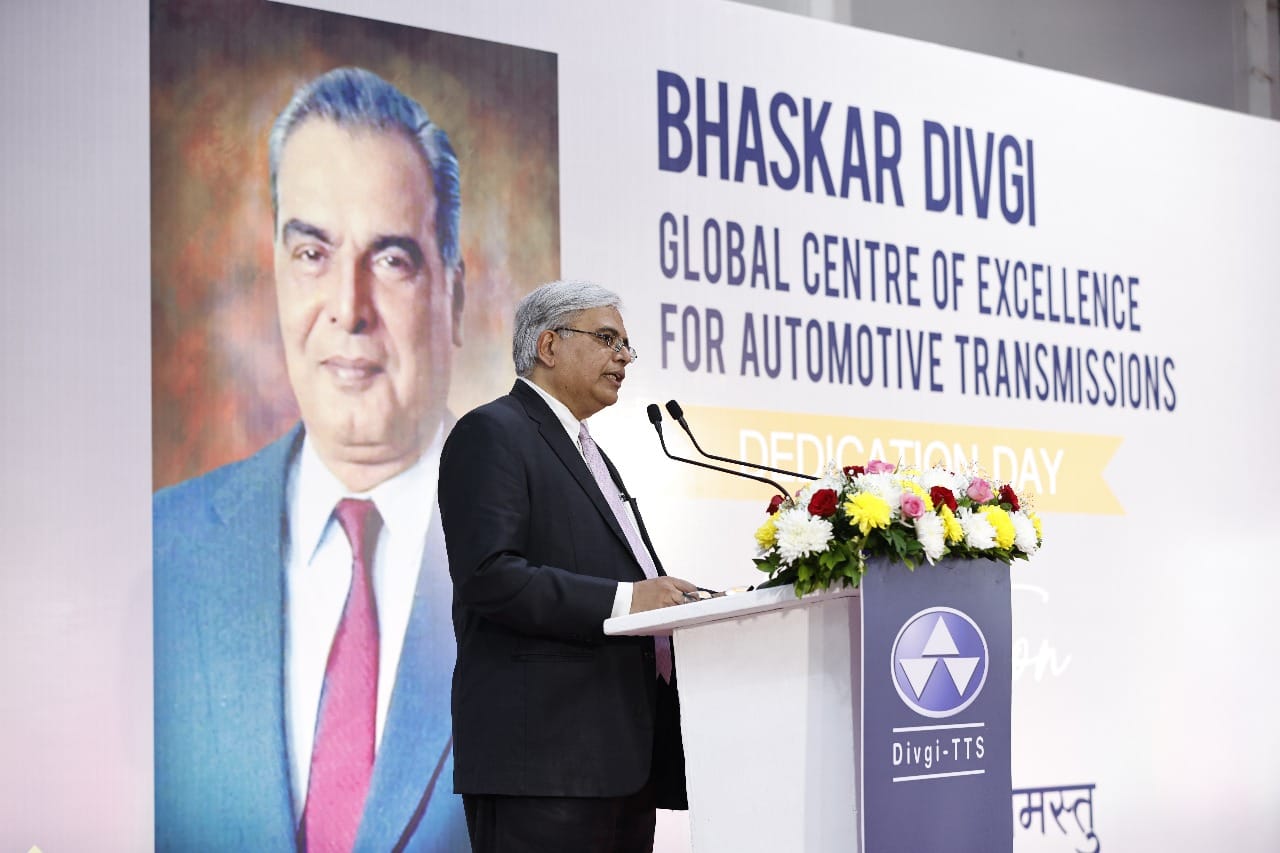
“The route to scaling is to do systems,” Divgi said. “If you hit the sweet spot, your EBITDA margins, your asset turns and your revenue per employee all improve.”
Revenue per employee, in particular, has become a key internal compass. “It is the ultimate determinant of the innovativeness of your business model,” he said. “You may have a great product, but if you don’t know how to position it or market it, you will understate it.”
This thinking explains why Divgi’s growth roadmap increasingly revolves around complete drivetrain systems–dedicated hybrid transmissions, automatic gearboxes and integrated transfer cases–rather than standalone mechanical parts.
Capex to Match Ambition
Scaling systems requires capital, and Divgi is preparing for that. Over the next three to four years, the company plans to invest upwards of ₹250 crore. “If you have to get to that ₹1,000 crore goal, that is what it takes,” Divgi said. The bulk of the capital expenditure will be directed at growth platforms already identified within the business.
Automatics are a near-term priority. “They are here and now,” he said, pointing to the steady rise in automatic penetration across Indian passenger vehicles and SUVs. Rather than follow a step-by-step approach, Divgi has chosen to jump directly to higher-end solutions. “We decided to go straight to eight-speed automatics,” he noted, bypassing incremental six- or seven-speed pathways.
Hybrid transmissions form the second pillar of this investment cycle, aligning with the industry’s push toward lower CO₂ solutions without abandoning internal combustion engines.
Exports: A Reset After Disruption
Exports are central to Divgi’s long-term vision, with a target mix of 30-40% of revenues by 2030. Historically, overseas business formed a significant part of the company’s turnover. “If I look at the last 30 years, other than the last three, exports used to be between 25% and 40%,” Divgi said.
That balance was disrupted sharply over the past few years. Development work in Russia, China and the US ran into a “cruel convergence” of events: COVID-19, the Ukraine war, US product-cycle changes and worsening geopolitics with China. The result was a steep drop in export contribution.
Divgi said the company has since “clawed its way back”, with exports currently running at about 20% on a quarterly basis. “Cumulatively for the year, we haven’t caught up yet,” he said, “but I am very confident that exports will be back above 25%.”
The Toyota Tsusho Multiplier
A key catalyst in Divgi’s export recovery has been its exclusive partnership with Toyota Tsusho, the trading and distribution arm of the Toyota Group. The arrangement gives Divgi access to global warehousing, logistics and OEM ecosystems, particularly across Japanese automakers.
“It is a massive force multiplier,” Divgi said. The partnership has already delivered a breakthrough: Divgi has secured a nomination from a leading Japanese OEM to develop a transfer case for an iconic global pickup truck platform, with start of production slated for the first half of FY28.
While commercial details remain confidential, the significance lies elsewhere. “This is Indian design, Indian technology, Indian IP, Indian development and Indian manufacturing,” Divgi said. “And it is being done in collaboration with Toyota.”
The project begins with localisation for the Indian market, followed by expansion to regional markets once quality and operations stabilise. Divgi described the win as a strong endorsement of Indian engineering capability and a potential gateway to further global opportunities.
Rethinking Global Footprint
As Divgi targets higher export exposure, the question of manufacturing outside India inevitably arises. The company currently produces entirely from India, but that may change.
“In principle, I agree that you need to be closer to the customer,” Divgi said, referring to the trend among Tier 1 suppliers to set up bases nearer to North American OEMs. However, he stressed the importance of timing and context. “What is the tipping point that enables you to do something like this? That is where you need to pay attention.”
Divgi is actively evaluating a presence in the US and expects to conclude a feasibility study by March 2026. Any initial move is likely to be cautious. “Some kind of presence we will definitely have in the next 12 months,” he said. “It may not straight away be manufacturing. It could be an office to take the investigation further.”
He is also clear about how such an expansion would be executed. “I am not in favour of acquisitions,” Divgi said, citing environmental, legal and cultural legacy risks. “It is better to start greenfield. You have no legacy worries, and you can put your culture and quality systems in place.”
A Company Built Around Drivetrains
Founded in 1964 and headquartered in Pune, Divgi TorqTransfer Systems has spent six decades quietly building deep expertise in drivetrain technologies. The company’s core portfolio includes transfer cases, torque couplers, synchronisers, manual and automatic transmission systems, and EV drivetrain solutions. These products sit at the heart of how power is transmitted from engine or motor to wheels–an area that demands precision engineering, durability and integration across vehicle platforms.
In India, Divgi’s name is closely associated with four-wheel-drive and all-wheel-drive systems. Mahindra & Mahindra remains its anchor customer, using Divgi transfer cases across SUVs and commercial vehicles. Tata Motors, and Force Motors are also among its domestic customers. Globally, the company supplies to Tier 1 suppliers such as BorgWarner and Magna, with reach across North America, Europe and Asia.
Yet for all its technical depth, Divgi believes the traditional component-supplier model has limits. “If you just do components, you do not have the same asset turns or revenue per employee,” Divgi said. “These are two critical parameters we monitor.”
Beyond Automotive, But Not Yet
Divgi’s drivetrain capabilities are not limited to passenger vehicles. They can be applied across tractors, construction equipment, defence mobility platforms, rail and even aerospace.
The defence sector, in particular, has already seen tangible engagement. Divgi manufactures transfer cases that are used in armoured and military-grade mobility platforms. These systems are supplied primarily via Indian OEMs, most notably Mahindra, whose defence and armoured vehicle programmes use Divgi’s transfer cases.
However, Divgi made it clear that while defence represents a strategic opportunity, it is not being aggressively scaled yet due to bandwidth constraints and strong growth within automotive. “Our plate is full today,” he said. “We have a rather steep growth curve in front of us.” While conversations are ongoing with defence and aerospace players, Divgi acknowledged that nothing concrete is yet in execution.
FY26: A Strong Inflection Point
Operationally and financially, FY26 has emerged as a defining year for the company. In Q2 FY26, Divgi reported its highest-ever quarterly total income of ₹88 crore. First-half income crossed ₹160 crore, marking a 39% year-on-year increase. EBITDA rose 35% to ₹41 crore, while profit after tax grew 43% to nearly ₹20 crore, supported by better capacity utilisation and cost absorption.
Gross margins remained above 60%, EBITDA margins exceeded 24%, and PAT margins improved to around 12%. Exports contributed nearly 16% in H1 and over 20% in Q2, signalling steady progress toward the company’s medium-term export targets.
Transfer cases, the historical backbone of the business, grew 42% year-on-year in the first half, driven by sustained offtake from Mahindra and incremental volumes from Tata and Force Motors. EV transmission volumes remained modest, reflecting broader market conditions, but are expected to improve as new platforms enter production.
For Divgi TorqTransfer Systems, the next phase is clear. Systems over components, expansion of exports, and scale built patiently rather than acquired hastily. Whether that path leads to ₹1,000 crore by 2030 will depend on execution. What is clear is that the company is no longer content to remain a specialist supplier in the background.