In 1973, when a young engineering graduate named R.K. Behera got a small plot in Jamshedpur from industrial development corporation neither he nor his younger brother S.K. Behera could have imagined that the modest sheet-metal unit they were building would one day become one of India’s respected driveline manufacturers.
With a capital pool that barely touched Rs 1.5 lakh, the enterprise relied on tenacity and an instinctive understanding of what quality meant long before the word became corporate vocabulary.
The early years were difficult. Orders were scarce, engineering credibility had to be earned, and the Behera brothers spent much of the 1970s convincing customers that they could meet global standards. Yet the foundation they laid during those years is the one RSB Group still builds on today: never compromise on quality and on values.
More than fifty years later, that workshop has grown into a diversified group with 15 manufacturing units spread across India, the United States and Mexico. It has a reputation for disciplined engineering, machining, and product development in one of the most demanding parts of the automotive value chain. Now the company is on the brink of a new chapter, one that could reposition it as a global mobility systems player.
Standing at Inflection Point
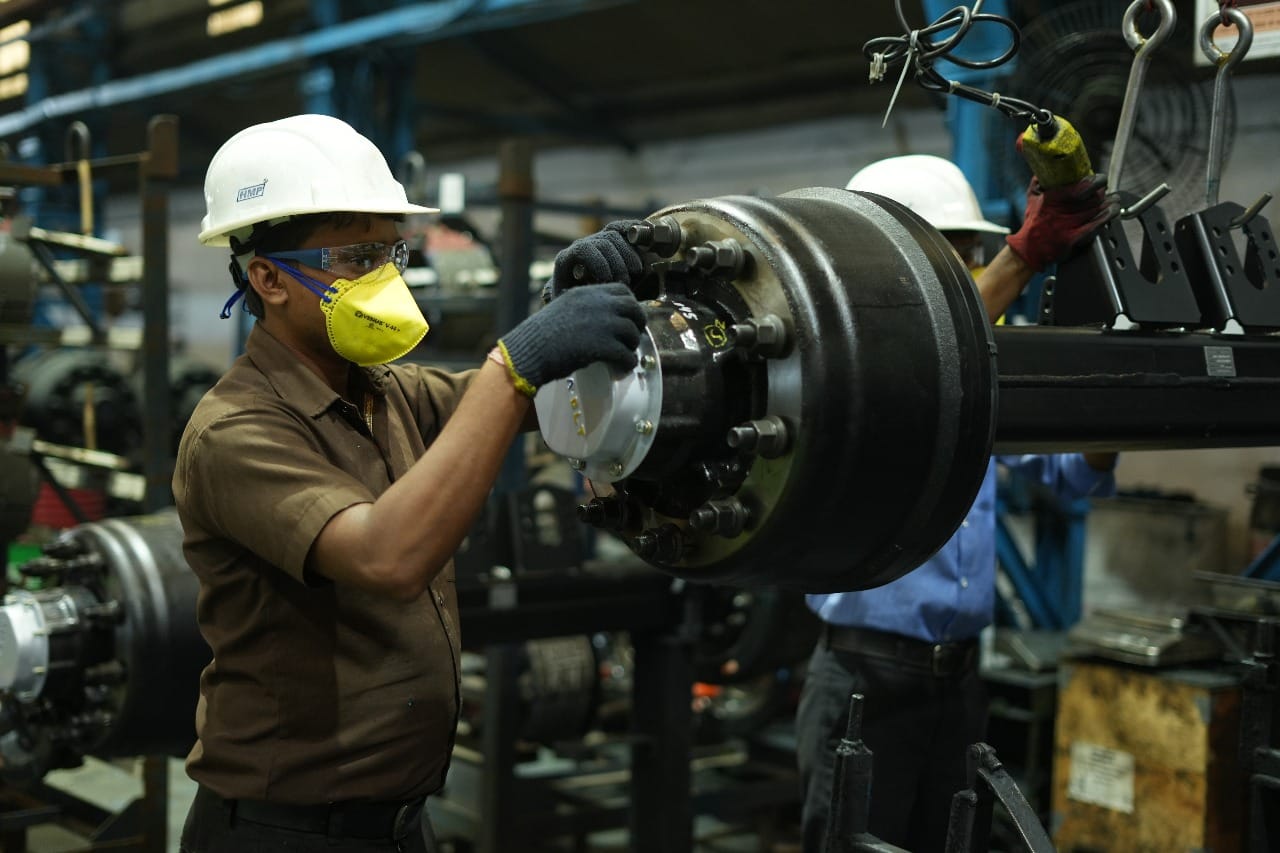
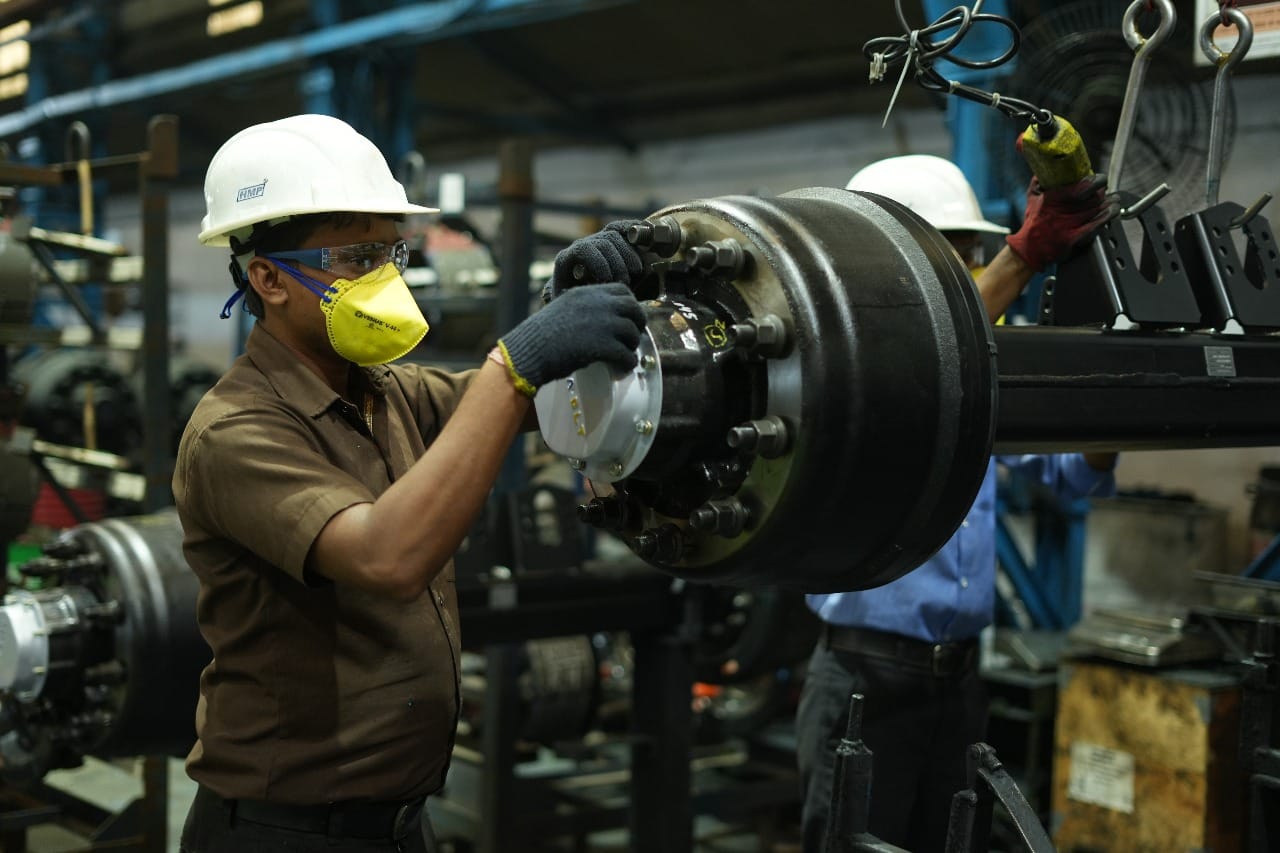 RSB Group today is a business of scale and complexity. Its propeller shafts hold a dominant market share in India’s medium and heavy commercial vehicle segment. Its axles, gears and driveline assemblies form the backbone of marquee truck platforms. Its construction equipment aggregates supply some of the world’s best-known off-highway OEMs. It also produces suspension systems, king pin, fifth wheel coupling, and has casting and forging facilities. Further, the component maker supplies parts for passenger cars, farm equipment and industrial applications.
Yet the company’s ambitions have grown beyond being a domestic champion. It currently operates at a consolidated revenue of over Rs 3,000 crore. In the next five years, it aims to rewrite that number entirely. RSB has set a target of Rs 10,000 crore, a plan to triple topline within five years through a combination of deeper localisation, aggressive exports, a stronger aftermarket sales and selective acquisitions.
“For us, the question is simple. Either you grow, or you stagnate,” says Rajnikant Behera, Executive Director Aftermarket and Corporate Governance. “We have reached a stage where the next leap requires scale, technology, and a global mindset. That is why we needed a partner like Bain Capital.”
New Strategic Muscle
Bain Capital’s investment in 2023 brought more than financial heft. It brought a new rhythm to the organisation. Within a year, Bain and McKinsey worked with RSB to build a structured blueprint for the next decade. The focus is clear: strengthen the core, globalise the footprint, and widen the product canvas.
Behera describes it as a shift from organic evolution to strategic acceleration. “In our first twenty-five years, we built the foundation. In the next twenty-five, we climbed the value chain. The next five years will be about scaling in a way we have never done before.”
The plan involves an annual capex of Rs 100 to 150 crore. This excludes acquisitions, which the company views as essential to compress time-to-market as technologies change. RSB is scanning opportunities in driveline electronics, EV systems, defence components and rail technologies. The deals will be selective and strategically small, designed to add capability rather than bulk.
Building the Future
If the old RSB was built on steel, machining and mechanical precision, the new RSB is being engineered around software-heavy, next-generation electrified systems. The company has already developed its own EV reducers, e-axles, gearbox, motor technologies and pre-axle assemblies for electric commercial vehicles. Several powertrain solutions are under development for light EVs. In the United States, RSB has entered early-stage supply discussions for electric dirt bikes.
“We want to be present where mobility is shifting. Whether it is two-wheelers, three-wheelers, light commercial EVs or advanced hybrids, we have built the engineering bench strength to participate,” Behera says.
The group is also aiming to break into defence and railways. These are highly regulated sectors with long qualification cycles, but RSB believes its precision manufacturing heritage gives it an edge. The company is currently mapping the channel dynamics and tendering mechanisms that define government-led procurement.
The Global Play
RSB’s global presence began with a first-of-its-kind move in 2007 when it acquired Miller Brothers of Michigan. It gave the group a launchpad into the North American market and relationships with Tier-1 giants such as Dana, Eaton and Allison. As many of these customers shifted production to Mexico, RSB followed with a dedicated manufacturing base.
Today, Mexico is a critical part of the company’s export strategy. The US operation serves as an assembly, sales and customer interface hub. Europe is the next frontier. The group already exports to the UK, and internal discussions have begun on whether to establish a physical base somewhere in the continent.
“We are studying FTAs, customer behaviour and regulatory changes. For exports to scale meaningfully, we may need a presence closer to Europe. It has to be backed by strong economics,” Behera says.
How to Survive Cycles
Automotive is cyclical. Commercial vehicles are doubly so. Yet RSB has managed to grow during downturns by adding new products, entering adjacent sectors and building plants close to customers. Flexibility has become a competitive advantage.
The group’s Mexican footprint hedges against US tariffs. Its India operations hedge against Mexico’s cost pressures. Its engineering subsidiary iDesign acts as an internal R&D engine that powers speed-to-market. In a world where volatility has become structural, RSB’s diversified footprint is shaping up as a risk-management model.
The Aftermarket Pivot
For fifty years, the company’s brand recognition has been built inside OEM factories. Now RSB wants that name to resonate in workshops, retail counters and fleet hubs. The aftermarket business, currently a small contributor, is being positioned as a high-margin strategic vertical. The company wants aftermarket to eventually contribute 5 to 15 percent of the business.
“We have done the hardest part. We earned the trust of OEMs. Now we need to take that trust to the aftermarket,” Behera says.
The story of RSB is a story of a company that has moved steadily but consciously toward higher complexity. From sheet metal to machining, from machining to assemblies, from assemblies to complete systems and now to electrified mobility.
Mission 10,000 crore is the next logical leap in that trajectory. It is ambitious, but it is also calculated. It is backed by capital, a global partner with deep M&A capability, a strong engineering backbone and a sector that is transforming faster than ever.
“Our first goal is to lead in the product segments we are in. India first, world next. That is the next five-year view,” Behera says. “After that, strategy evolves. But the intent is clear. We want to build one of India’s strongest engineering companies.”