New Delhi: Municipal Corporation of Delhi (MCD) has chalked out an annual action plan to control air pollution in 2026 and shared it with Union environment minister Bhupender Yadav
“It includes increasing the number of charging stations for electric vehicles, maintenance of roads, improving green cover in the city and strict enforcement of dust-mitigation measures,” corporation commissioner Ashwani Kumar, who presented the plan to Yadav, said.
Along with targeting effective processing of waste, the civic body has set deadlines for flattening Okhla and Bhalswa landfills by next year and Ghazipur landfill by 2027. “The gap in the city’s solid waste processing capacity will be bridged by constructing new plants and enhancing the capacity of existing ones,” Kumar said, adding that 14 mechanical road sweepers will be procured using funds from National CleanAir Programme.
The commissioner said that Yadav stressed the need to address industrial pollution and traffic congestion through strict action against illegal parking and encroachments, while providing viable alternatives.
On Friday, the minister instructed city authorities to take steps to ensure “visible improvement” in air quality across Delhi-NCR within one week. Chairing a high-level meeting to undertake a detailed review of action plans of the govts of Delhi, Haryana and UP, Yadav directed the authorities to remove construction and demolition waste lying along roads, contain biomass burning and strictly enforce the ban on construction during high-pollution periods.
“Individual officers will be responsible for the operation of mechanical road sweeping machines supported by GPS tracking,” the ministry said, adding that directions were issued to remove within 10 days encroachments causing traffic congestion, ensure annual maintenance contracts for pothole-free roads and provide proper drainage to prevent damage to roads during monsoon.
Yadav said that from Jan onwards, action plans will be reviewed every month at the ministerial level. He also spoke in favour of staggered timings in offices, shopping malls and commercial complexes to reduce peak-hour congestion.
“Gurgaon, Faridabad, Ghaziabad and Noida were directed to fast-track the implementation of integrated smart traffic management system, while traffic police were asked to ensure that enforcement checks do not lead to congestion,” said the ministry.
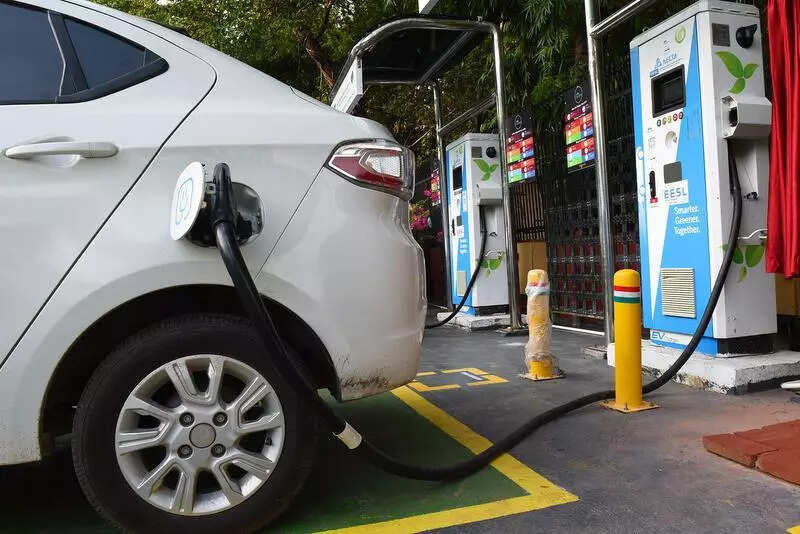
As part of its plan for next year, the corporation aims to increase the total number of EV charging stations to 994 from 422 at present. Public sector undertakings and discoms have been granted permission to establish the remaining stations over the first three-quarters of 2026. The charging stations will be installed at closed dhalaos, surface parking lots and roadside locations. However, in the past, residents have complained about poor maintenance of these facilities.
The plan also highlights measures to ease traffic congestion, another major contributor to air pollution, by increasing parking lots. The corporation, which currently has 419 surface lots and 30 multi-level facilities, plans to construct 10 additional multi-level parking complexes in 2026. Once the locations of the proposed facilities are finalised, the list will be sent to Delhi govt for approval.
As part of its decongestion strategy, the civic body has identified 71 congested points. Of these, 38 need to be cleared of encroachments in the short term. The remaining require long-term measures, including identification of parking sites at 19 locations, shifting markets at three, removal of encroachments at four and addressing bottlenecks caused by handcarts in Sadar Bazar. The corporation has identified land for shifting the markets and developing parking facilities to permanently ease congestion at critical locations.>