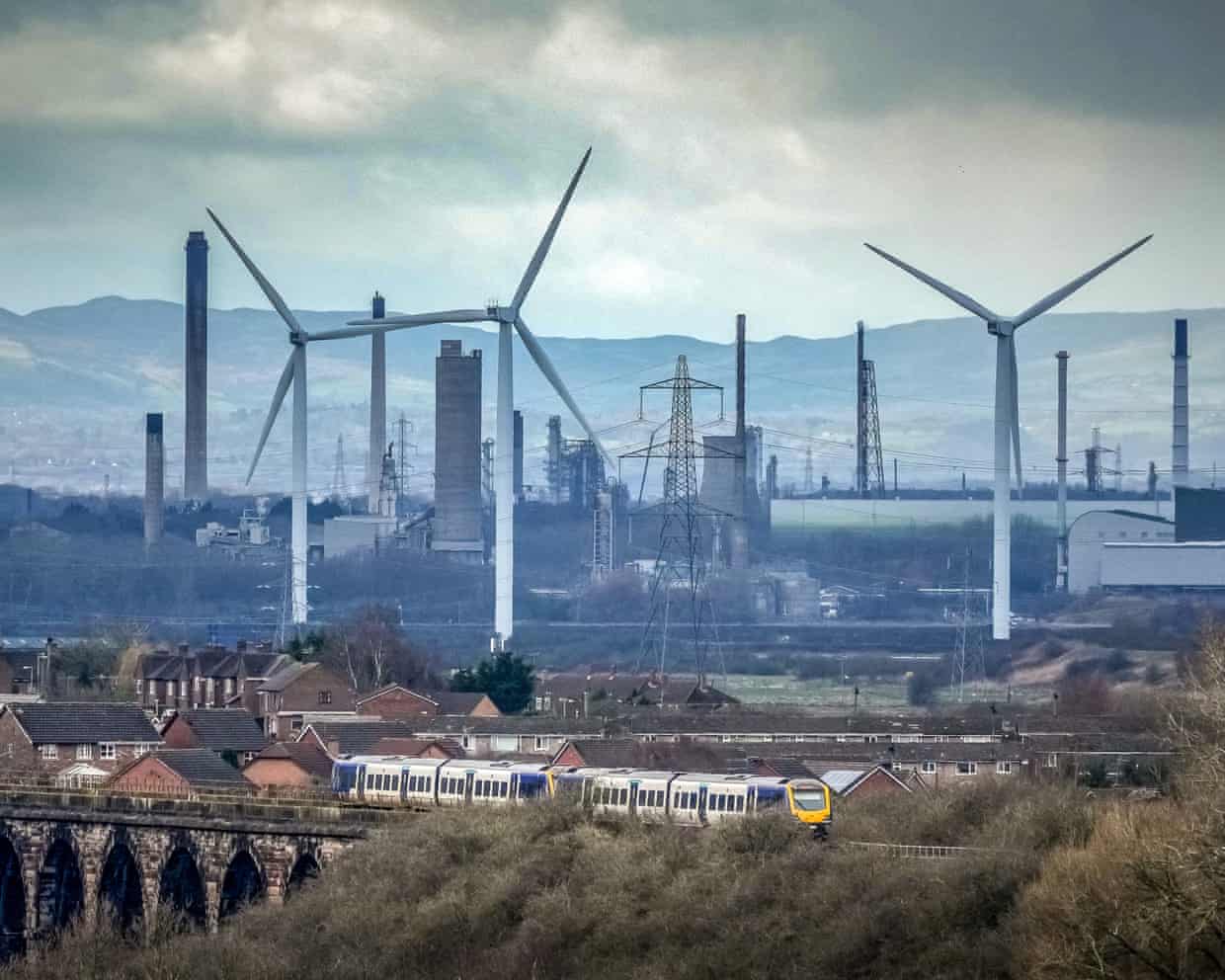
Was 2025 the year that business retreated from net zero?
From retailers to banks, carmakers to councils, the bold pledges for carbon-neutral economies are being watered down or scrapped
Almost a year since Donald Trump returned to the White House with a rallying cry to the fossil fuel industry to “drill baby, drill”, a backlash against net zero appears to be gathering momentum.
More companies have retreated from, or watered down, their pledges to cut carbon emissions, instead prioritising shareholder returns over climate action.
In the UK, the rise of Nigel Farage’s Reform UK has helped fracture the political consensus that had helped make Britain the first big economy to enshrine a commitment to cutting carbon emissions into law, in 2019. Earlier this year, the Conservative party leader, Kemi Badenoch, officially ditched net zero by 2050 as a Tory policy. Labour was even forced to defend its net zero policy after an attack by its former leader, Tony Blair.
Big players in retail and automotive this week became the latest businesses to weaken pledges – a retreat that threatens devastating consequences for the climate.
Running counter to this, many countries – notably China – have continued the march towards renewable power (which surpassed coal generation this year). Investment in clean energy, at $2tn a year, is now double that going into fossil fuels, according to the International Energy Agency.
Here we look at how important industries are treating net zero.
Cars and planes
For a few years after the pandemic, carmakers made bold promises that they would switch their factories to electric cars within a few years. Yet that momentum for change petered out by 2024 amid disappointing growth in battery car sales. In the US, EU and UK the lobbying campaign for weaker regulations has been intense – and successful.
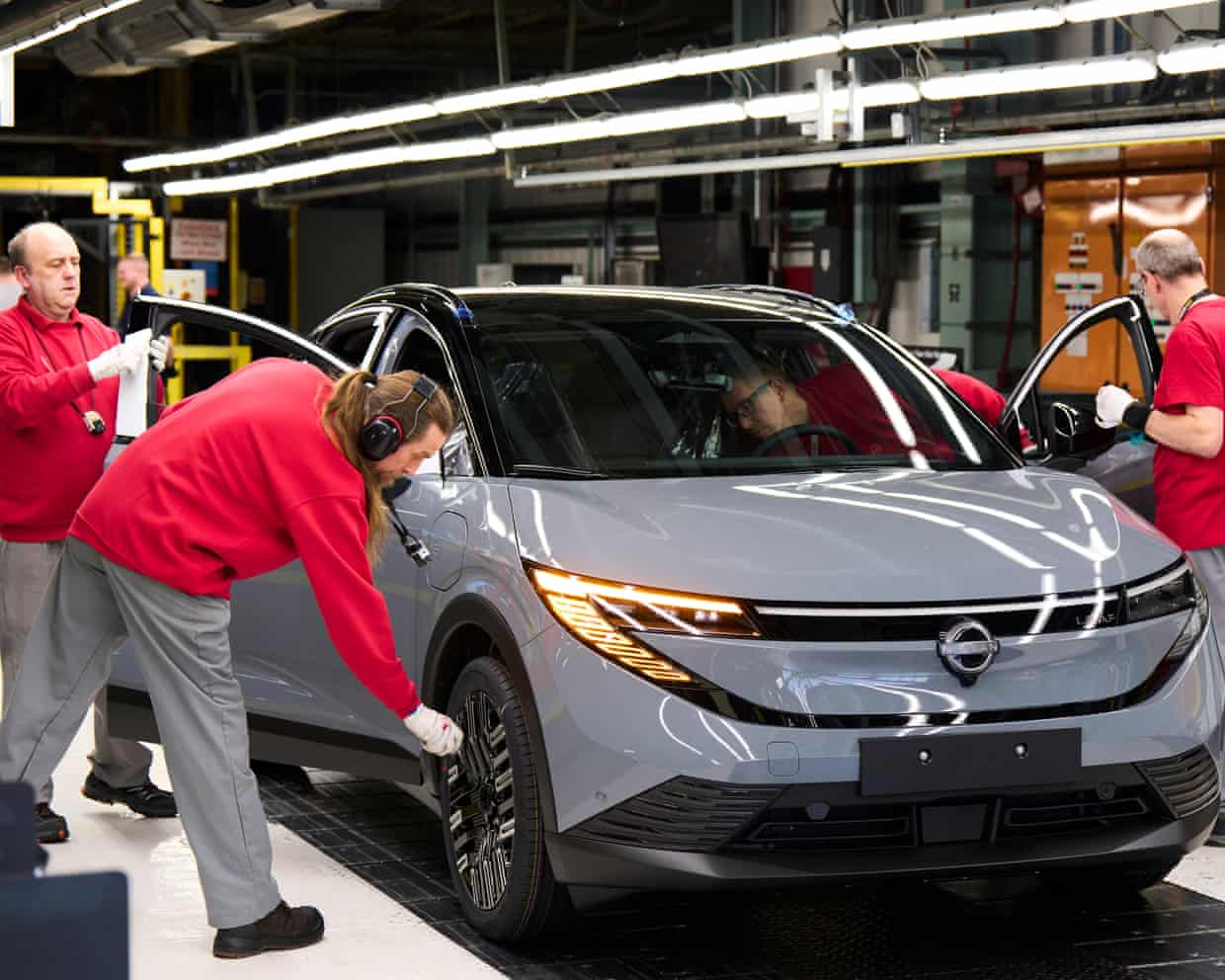
Trump has torn up US electric vehicle subsidies – costing carmakers billions of dollars – and eased emissions rules to allow them to sell more cars with polluting petrol and diesel engines. This week, Ford said it would take a $19.5bn write-down and is scrapping several EV models.
The UK government said in April it would ease its zero-emission (ZEV) mandate. The rules still force carmakers to sell more electric cars each year, but new loopholes mean they can sell more hybrids, which combine a smaller battery with an internal combustion engine.
And the EU this week said that 10% of carmakers’ sales could be petrol or diesel after 2035, in a significant climbdown.
Traditional European carmakers were delighted, but manufacturers focused on electric cars said it would benefit Chinese rivals in the long term. Chris Heron, secretary general of E-Mobility Europe, a lobby group representing electric carmakers such as Tesla, Rivian and Polestar, said: “While China accelerates, Europe is hesitating, and hesitation is not a strategy.”
If the transition is stalling for ground transport, in the air things have not even started to take off. Airbus and Boeing, the global plane-making duopoly, have both made clear that their next planes will use gas turbine engines running on kerosene.
Airbus this year delayed plans to fly a plane using zero-emission “green” hydrogen by 2035, while supplies of sustainable aviation fuel (SAF) – the solution of choice for many in aviation – remain nugatory compared with the vast size of global demand.
Neither did UK government policy on aviation inspire confidence that net zero remained front and centre. Two London airports, Gatwick and Luton, had significant expansion plans signed off by ministers, meaning tens of thousands of additional flights a year at each.
Meanwhile, the chancellor gave resounding backing for Heathrow expansion – despite previous official work making clear that only limited growth, allied with swift progress on decarbonisation, could make a third runway in any way compatible with 2050 targets.
Energy
For now, UK green energy investors remain buoyed up by Labour’s aim to create a virtually carbon-free electricity system by 2030, to stick with the net zero target and its pledge for no new North Sea drilling (with caveats).
However, the government’s green targets were dealt a blow earlier this year when the struggling Danish renewable energy company Ørsted cancelled plans for one of the UK’s largest offshore windfarms, Hornsea 4, off the Yorkshire coast.

Europe’s oil majors, including BP and Shell, have retreated from their climate commitments in favour of refocusing on oil and gas production. BP’s boss, Murray Auchincloss – who was dramatically ousted this week – said the company’s optimism in the energy transition had been “misplaced” and promised the company’s disillusioned shareholders that he would “fundamentally reset” BP’s strategy after its failed attempt to go green. His successor appears unlikely to change tack. Shell set out plans to pump more oil and gas while halving its green spending.
Banks and financial services
A swathe of financial firms have been watering down climate commitments following Trump’s return.
The most public sign of the U-turn has been the collapse of the Net-Zero Banking Alliance (NZBA) in October, after a wave of departures by US banks including JP Morgan, Citigroup and Goldman Sachs, as well as UK lenders Barclays and HSBC. The UN-backed programme, launched in 2021, had committed firms to achieving net zero greenhouse-gas emissions by 2050.

HSBC had months earlier announced it was delaying omportant parts of its climate goals by 20 years and watering down environmental targets in a new long-term bonus plan for its chief executive, Georges Elhedery, who took over last year.
Large investment houses such as Vanguard and BlackRock have also pulled membership from a sister group known as the Net Zero Asset Managers initiative, as the sector comes under pressure from Republican politicians.
Meanwhile, there are fears Labour could water down plans to require FTSE 100 firms and financial services to adopt “credible” climate transition plans, and disclosing their carbon footprints after City lobbying.
Retail
Retailers and their suppliers are among those taking a hard look at net zero ambitions amid rising costs.
Morrisons, the supermarket chain, this week delayed its ambition for net zero by 15 years until 2050, having previously set a deadline of 2035.
The British Retail Consortium industry body set out a roadmap to next zero by 2040 but its latest stocktake indicates the industry has only met the 2025 milestone on one measure – data on logistics. Only 38% of top suppliers have committed to meeting net zero.
Many retailers have reduced emissions in stores – with renewable energy and technology such as LED bulbs and electric vans – but most of their emissions are generated by their suppliers.

Even within stores the cost and complexity of shifting from gas to low-carbon heating , including the higher price of electricity compared with gas, has held back progress.
Local authorities
In the public sector, local councils have often taken net zero more seriously than even central government. Bristol was the first to declare a climate emergency in 2018 – a year before the government – and more than 300 other councils followed, with 90% setting net zero targets.
But as the political landscape has changed with the rise of Reform, some local authorities, led by those dominated by Farage’s party, are rolling back on net zero commitments. In Reform-led Lincolnshire, mayor Andrea Jenkyns has vowed to block any renewables projects in her jurisdiction (putting 12,000 jobs at risk if she succeeds), while Staffordshire county council, also Reform-controlled, has rescinded its declaration of a climate emergency.
Reform-controlled Durham council has scrapped its heat pump and solar panel scheme for government buildings, and energy efficiency upgrades such as insulation have been ditched in Kent, which is also under Reform.
Derbyshire county council disbanded its climate change, biodiversity and carbon reduction committee the week after Reform took power, and West Northamptonshire county council abandoned its net zero target.
However, the Green party has nearly as many councillors as Reform (893 compared with 940) and leads 14 councils compared with Reform’s 10; in those authorities the approach has been “go faster and harder wherever possible”.