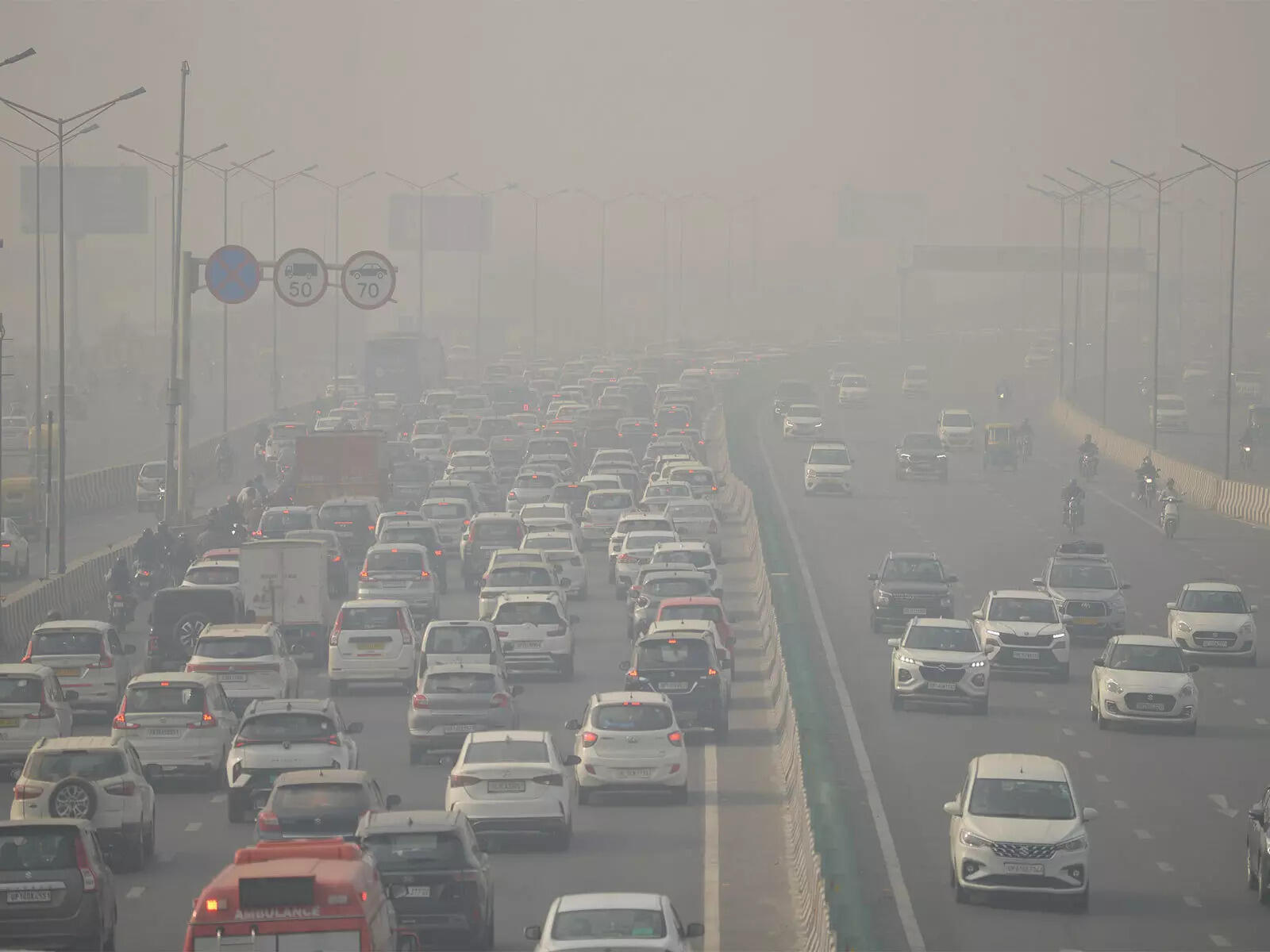
After remaining five straight days in the very poor air quality bracket, the city’s air quality index (AQI) slipped into the poor range. By noon, the AQI stood at 236.
The improvement marks the first break since Dec 21, when pollution levels remained high. AQI readings between Dec 21 and 23 stayed in the very poor category at 328, 331, and 364, respectively.
On Dec 20, the Gurgaon recorded an AQI of 362.
Despite Wednesday’s relief, particulate matter continued to dominate Gurgaon’s pollution profile. PM2.5 remained the primary pollutant across monitoring stations, with sharp variations seen within the city. Teri Gram was the worst affected, recording an AQI of 306, in the very poor range. Sector 51 followed at 281, while NISE Gwalpahari logged 275. Vikas Sadan reported the lowest among the four at 249, though this too remained firmly within the poor category.
Officials attributed the slight improvement to better dispersion conditions during the day. Fog that reduced visibility in the early hours lifted by late morning, and sunny conditions combined with moderate surface winds helped dilute pollutant concentrations. Daytime wind speeds ranged between 15 and 25 kmph, conditions considered relatively favourable for dispersion compared to earlier days.
However, agencies cautioned that the improvement is fragile. Forecasts indicate mist and haze returning at night, with shallow to moderate fog likely during morning hours over the next few days. While maximum temperatures are expected to remain near normal at around 19–22°C, wind speeds are predicted to drop below 10 kmph during evenings and nights, creating unfavourable conditions for pollutant dispersal.
Health advisories remain in force, warning that prolonged exposure to poor air quality can cause breathing discomfort for most people, with heightened risks for children, the elderly, and those with respiratory or cardiac conditions.
The Commission for Air Quality Management (CAQM) in NCR rolled back GRAP Stage-IV restrictions on Wednesday as AQI dropped from the severe range to very poor, aided by strong, dry winds in the region. The removal of the restrictions for now would allow BS-IV petrol LMVs from other states to enter Delhi. All restrictions under GRAP-III — non-linear construction, BS III petrol & BS IV diesel LMVs, etc. — will still hold across Delhi-NCR.
As strong winds significantly improved Delhi’s air quality from ‘severe’ to ‘poor’ within a day, CAQM quickly revoked curbs under Grap 4. With this, BS-IV petrol vehicles from other states can enter the city even as Grap 3 restrictions — bar on non-linear construction, BS-III petrol and BS-IV diesel vehicles — continue.