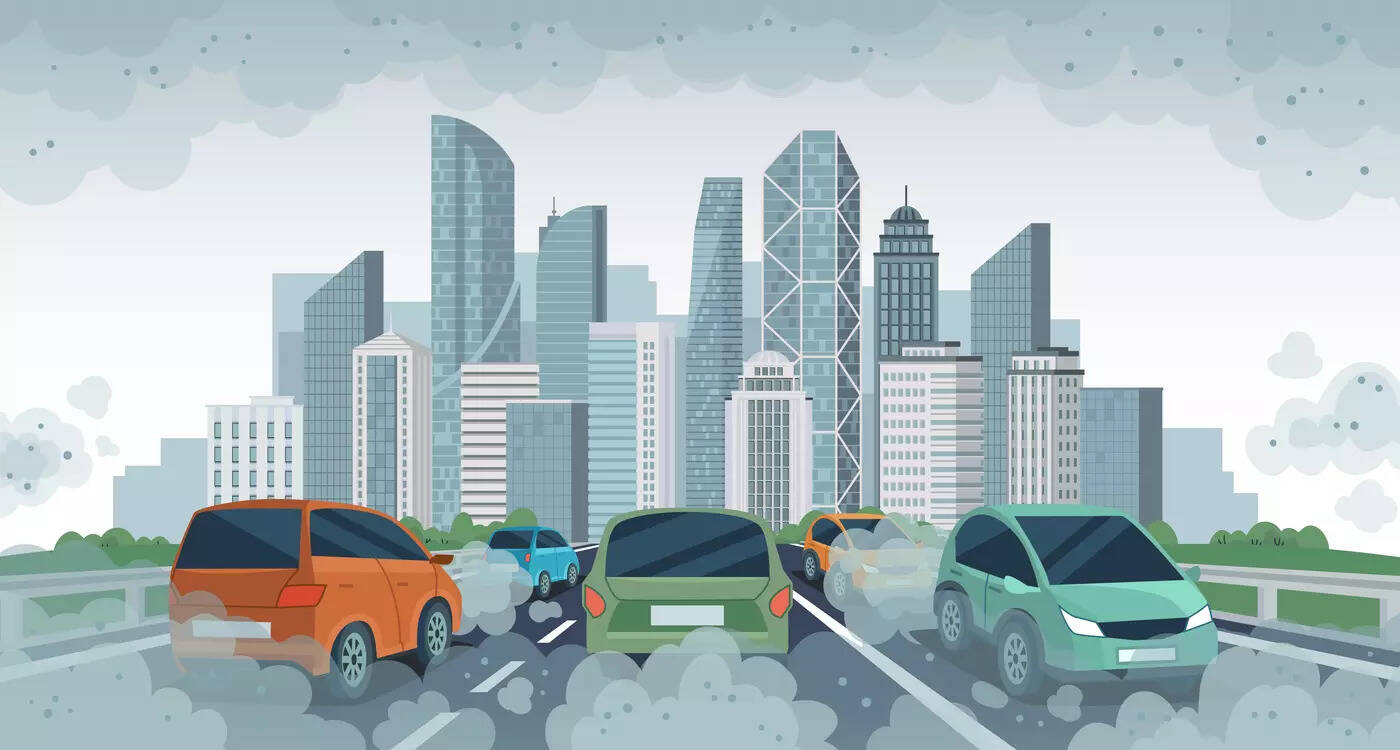
As Visakhapatnam grapples with unprecedented levels of air pollution, with the Air Quality Index (AQI) consistently breaching the 300 mark and remaining in the “very poor” category, concerns over public health are intensifying. The deteriorating air quality is increasingly being attributed to a sharp rise in vehicular density, traffic congestion, ageing vehicle fleets and inadequate emission control practices.
In this context, the AP Pollution Control Board (APPCB), in coordination with the AP transport department, is actively considering a comprehensive, city-wide assessment of vehicular emissions. The proposed exercise aims to scientifically quantify pollution loads emanating from both private and public transport vehicles and identify key contributors to deteriorating ambient air quality.
Speaking to TOI, APPCB chairman Dr P Krishnaiah said: “The PCB is planning to collect the current total vehicle population strength in Visakhapatnam, along with the total number of vehicles which exceeded their life and vehicles nearing the full life and crossed 7 years of life, thereby assessing the amount of pollution emitted by each category of vehicles in the city.”
The assessment is expected to include extensive on-road emission testing, scrutiny of compliance with Bharat Stage (BS) emission norms, and analysis of pollution hotspots such as major traffic junctions, industrial corridors, and densely populated residential zones. Particular focus is likely to be placed on older vehicles, diesel-powered commercial fleets, auto-rickshaws, and poorly maintained public transport vehicles, which are known to emit higher levels of particulate matter (PM2.5 and PM10), nitrogen oxides, and other harmful pollutants.
“Already, Visakhapatnam is positioned as a major industrial hub, and a slew of marquee MNCs are lined up to set up their AI Data Centre Hubs in the port city in the near future, which could potentially aggravate the pollution woes. In this context, the PCB wants to quantify the pollution levels emitted through vehicles and aims to reduce the pollution with technology adoption,” Krishnaiah said.
“We plan to convert the diesel-run vehicles into electric and CNG vehicles through retrofitment. A policy will be framed wherein the govt would provide financial subsidies to private vehicle transport owners such as auto and cab taxi operators to encourage them to convert their vehicles into electric in the city,” Krishnaiah explained.
According to the information, the policy might include stricter enforcement of emission standards, intensified vehicle fitness checks, phased withdrawal of highly polluting vehicles, promotion of electric and cleaner-fuel vehicles, traffic decongestion measures, and strengthening of public transport systems to reduce dependence on private vehicles.