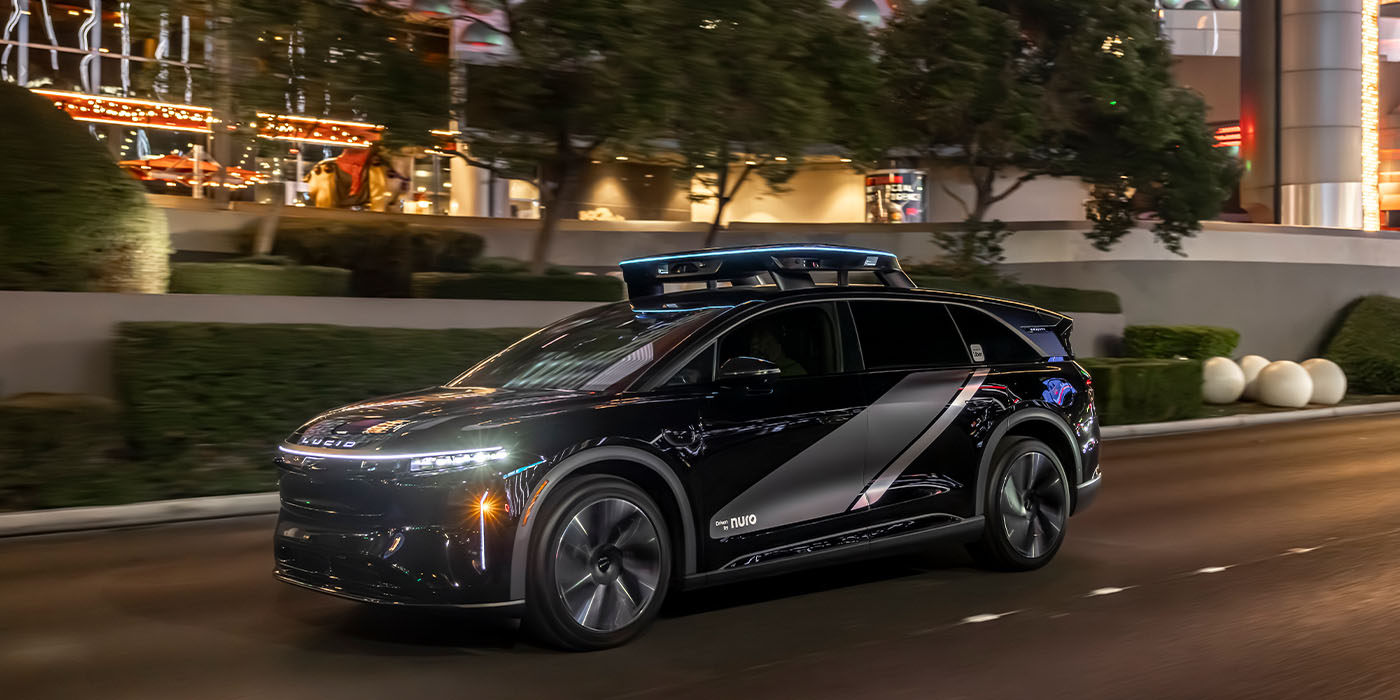
Six months after Uber announced a new business venture with Lucid Group and Nuro to deploy tens of thousands of self-driving Gravity SUVs, the three companies have unveiled their production-intent robotaxi design. The purpose-built Gravity robotaxi is on display at CES in Las Vegas this week, and we’ve learned on-road testing is already underway. View more in the videos below.
Today’s latest robotaxi update stems from a report last July, when Uber Technologies committed to a $300 million investment in Lucid Group (parent company of American EV automaker Lucid Motors), to deploy at least 20,000 Lucid vehicles as robotaxis over the next six years.
Those Lucid vehicles, including its flagship Gravity SUV, will hit public roads equipped with a Level 4 autonomous system called Nuro Driver. Nuro, the third partner in this exciting robotaxi collaboration, is a robotics company specializing in zero-occupant delivery vehicles. It previously operated in a partnership with Uber Eats, aided by a significant (undisclosed) investment from Uber Technologies.
By September 2025, Lucid had delivered its first Gravity SUV to Nuro, marking the beginning of the retrofitting process for the Nuro Driver system to support Uber’s aspirations for this new, higher-end fleet of robotaxis. A month later, Uber announced where the purpose-built vehicles would enter service.
Are you sitting down? It’s the San Francisco Bay Area. Shocker!
All jokes aside, we’ve been waiting on deployment news from any of these companies since Halloween. Although we don’t have a precise start date, we did get some tasty footage of the production-intent robotaxi design, which Lucid, Uber, and Nuro are showcasing this week at CES 2026. Have a look:
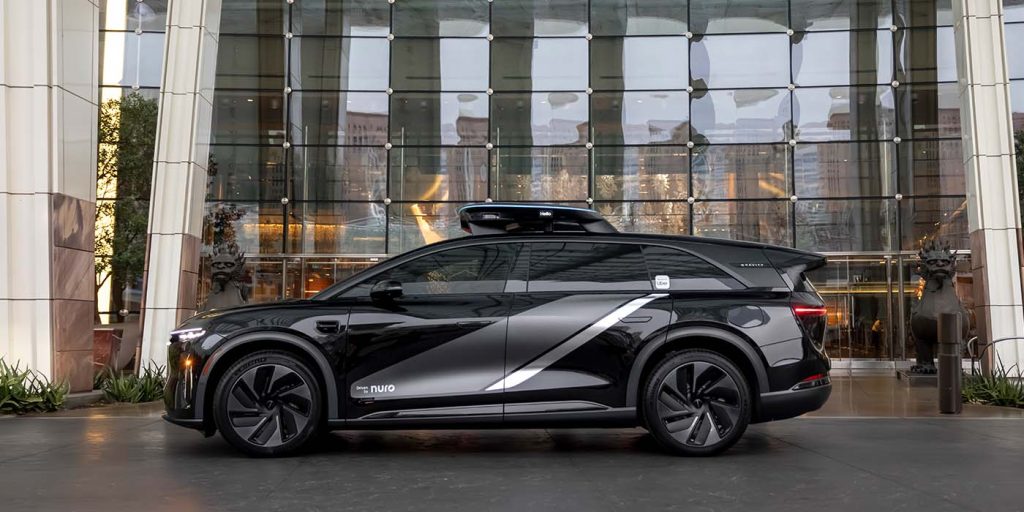
Check out the Lucid Gravity robotaxi at CES (or below)
Uber Technologies, Nuro, and Lucid Group unveiled the production-intent robotaxi design seen above this evening at CES 2026 in Las Vegas. This marks the public’s first up-close look at the new purpose-built robotaxi, which includes Nuro’s next-gen autonomous technology integrated in sleek, unique ways that Lucid excels at.
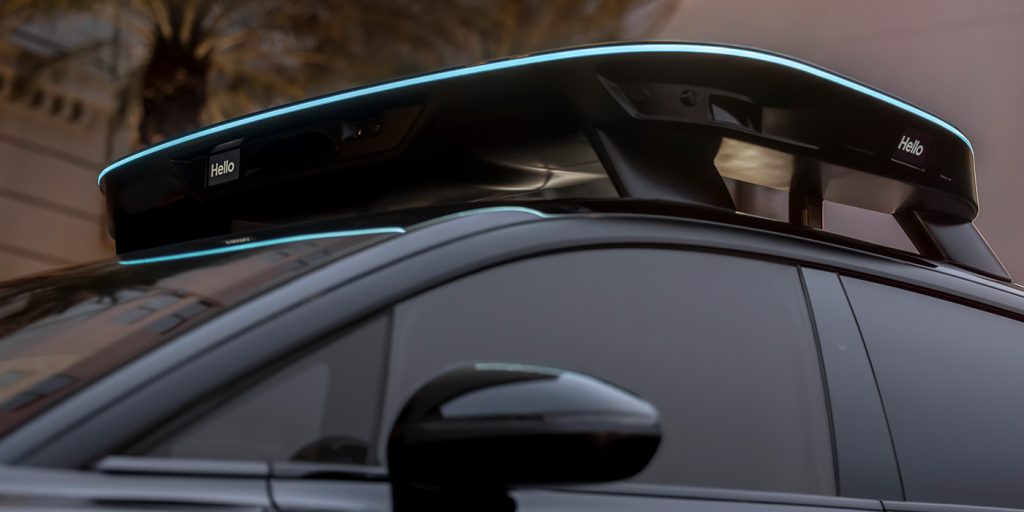
For instance, it’s impossible not to notice the large roof-mounted halo – a vital part of the Nuro Driver sensor array, which also includes high-resolution cameras, solid-state lidar sensors, and radars to provide 360-degree perception. The low-profile halo resembles a cargo rack and is equipped with LEDs (seen in the image above) that greet riders and display their initials to identify which Lucid robotaxi is theirs.
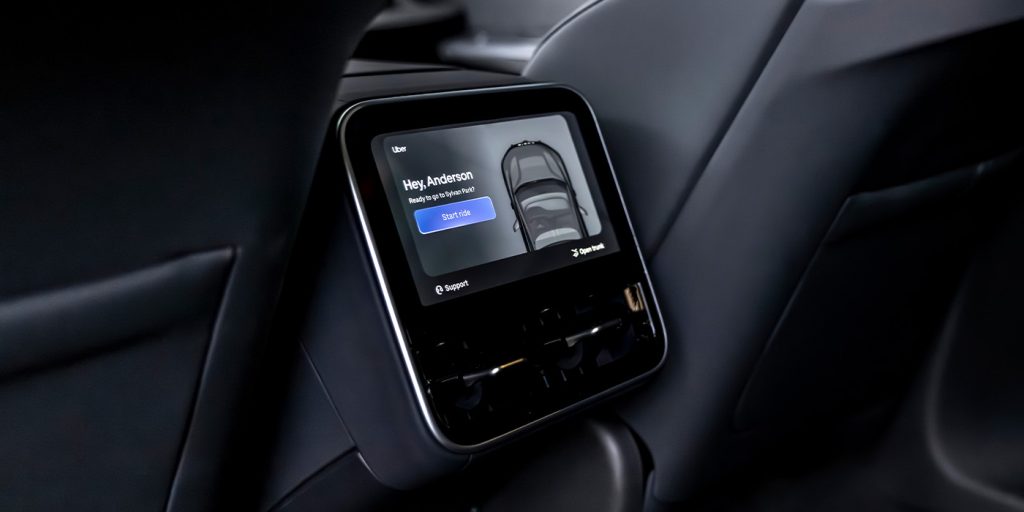
The debut of the production intent design is also our first real look at the UX and in-ride experience, which we’ve learned will include interactive screens that greet riders, enable climate and music controls, and display the robotaxi’s planned route in real-time. According to Uber, riders can also contact support or request the robotaxi to pull over at any time. Here’s a glimpse of how everything was combined:
During the public debut of this robotaxi design, Lucid, Uber, and Nuro announced that on-road testing has been underway since December, paving the way for continued development and validation before the planned launch in San Francisco, as mentioned above. Kay Stepper, Vice President of ADAS and Autonomous at Lucid, spoke about the production intent design and the progress it has made with teams at Uber and Nuro:
Our robotaxi program with Uber and Nuro is a key part of how Lucid is leveraging its technology to create a more sustainable future of mobility that is widely accessible. Our engineering, range and interior comfort offers a unique platform, and when combined with Nuro’s technology and Uber’s scale, we are collectively building an experience like no other.
In addition to on-road testing, Nuro continues to validate the Lucid robotaxis on closed courses and simulations to ensure the safety framework and critical capabilities are acceptable across a range of driving scenarios. Nuro co-founder and co-CEO, Dave Ferguson, also spoke:
The debut of our production intent robotaxi with Lucid and Uber is a significant milestone on our path to delivering autonomy at scale. By bringing together Nuro’s proven level 4 autonomy, Lucid’s advanced vehicle architecture, and Uber’s global reach, we’re building a robotaxi service designed for real-world operations and long-term growth.
According to Uber, robotaxi services using Nuro Driver-equipped Lucid vehicles are expected to begin later this year, following a production-intent start of production at Lucid’s Arizona facility, pending final validation. The Nuro team is currently leading that phase in the Bay Area with engineering prototypes supervised by autonomous vehicle operators.
The production-intent Lucid Gravity robotaxi is currently on display at NVIDIA’s showcase in Vegas at the Fontainbleau Hotel (fourth floor) and can be viewed until Thursday, January 8. Here’s some more video footage of the new robotaxi driving around Las Vegas:


FTC: We use income earning auto affiliate links. More.