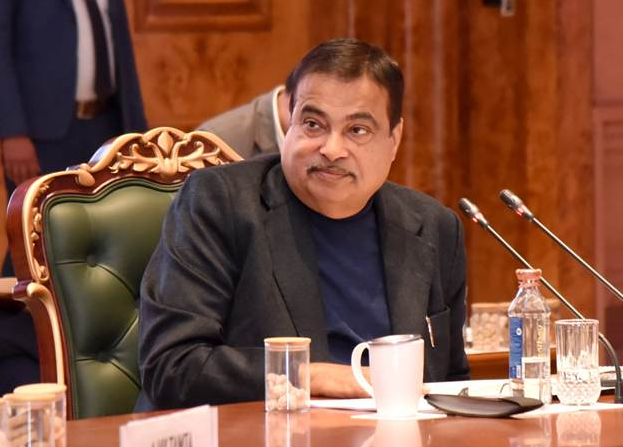
Union Minister for Road Transport and Highways Nitin Gadkari on Thursday said regular consultations between the Centre and states were necessary to ensure policy alignment and coordinated implementation of transport reforms.
Gadkari made the remarks while chairing the Annual Meeting of Transport Ministers from all States and Union Territories in New Delhi. Transport is a concurrent subject under the Constitution, which requires continuous coordination between the Union and state governments, he said.
The meeting focused on road safety, passenger convenience, ease of doing business and automobile regulations, according to the Ministry of Road Transport and Highways.
Two-day workshop on road transport priorities
The annual meeting followed a two-day workshop held on January 7 and 8 at Bharat Mandapam, where central and state officials discussed issues and next steps for the road transport sector. The first day involved transport secretaries from all states and Union territories and was chaired by the road transport secretary.
The second day brought together transport ministers from states and Union territories under Gadkari’s chairmanship. Officials said discussions included road safety measures, including the road safety pledge, and coordination between the Centre and states. The workshop concluded with the 43rd meeting of the Transport Development Council, where representatives from transport organisations, including AIMTC and BOCI, shared suggestions.
Road safety, digitisation and regulatory changes discussed
Officials reviewed progress on digitisation and standardisation of transport services under the Vahan and Sarathi platforms, with a focus on reducing physical visits and introducing uniform workflows. States also examined data quality and data-sharing frameworks for vehicle and driving licence records.
The meeting discussed proposed amendments to the Motor Vehicles Act, including provisions under Jan Vishwas 2.0, aimed at improving regulatory clarity and road safety. Deliberations also covered post-crash care, the use of e-DAR as a single accident data reporting system, and the rollout of a cashless treatment scheme for road accident victims.
Other issues included vehicular safety standards, emissions norms under PUCC 2.0, expansion of vehicle scrapping facilities, intelligent transport systems, e-enforcement, driver training infrastructure and district-level road safety initiatives.
Gadkari said the themes discussed during the workshop needed to be brought together into a cohesive framework to improve transport outcomes for citizens.