The gearbox is fine, too: you don’t have to think about it. Less tangibly, the thing has a sense of occasion – something, say, a BMW X5 will never match. Equally, the economy wasn’t terrible (for the entire trip, the brim-to-brim figure was 30.3mpg), and the 81-litre fuel tank means you can make plenty of uninterrupted progress when needed.
As for proper off-roading in Spain, in the end the Wrangler played a supporting role. You need a permit to access the really horrible tracks that take you up into the wildest valleys in León, so this task was undertaken by our guide’s fabulously trusty and surprisingly comfy Land Cruiser (white with a manual ’box, cloth seats and steelies – the bee’s knees, basically).
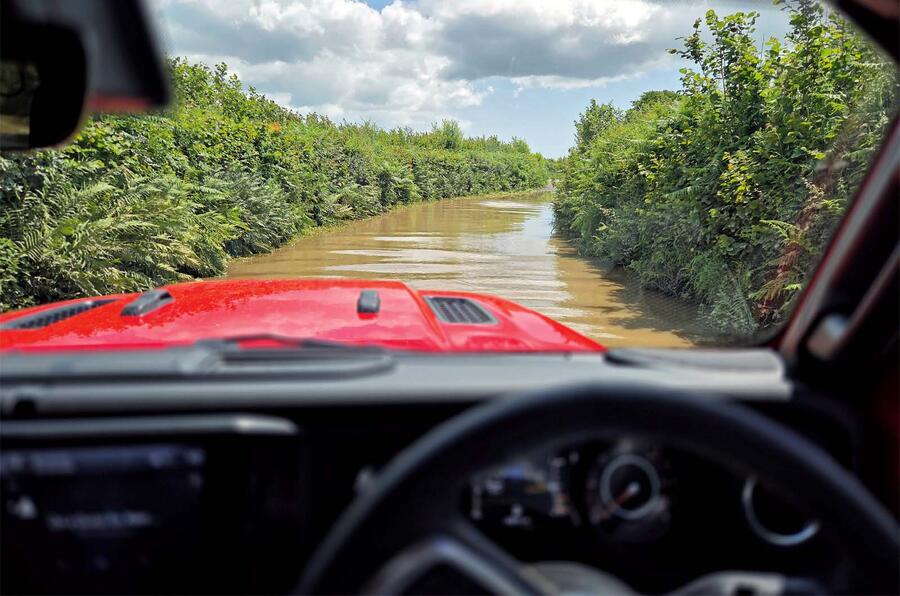
However, there was no question that our Jeep could have scrambled anywhere the Toyota went, had we needed it to. I’ve experienced the colossal toughness and capability that lurks behind the cartoonish looks first hand, having spent three days in the JL-generation car on the axle-breaking Rubicon Trail in 2018 – still perhaps the most memorable and brilliant thing I’ve done in this job.
Unlike the Land Cruiser, the Wrangler’s driveline can also be put into pure rear-wheel-drive mode for better everyday economy and oversteer on damp switchbacks.
So the Wrangler returns from this 2200-mile jaunt with its Swiss Army knife credentials, if anything, enhanced. Honestly, I was surprised how easy it made the mile-bashing, and even a 10-hour blast home from La Rochelle wasn’t knackering (even if the car’s adaptive cruise control simply will not let you sweep around slower motorway traffic smoothly).
I know that, for a price, a Defender would have made life easier still, and we saw quite a few in the Basque Country and around Bordeaux. But, tellingly, seeing the Land Rovers go by through the fly-spattered windscreen of our plodding Wrangler, I wasn’t at all envious.