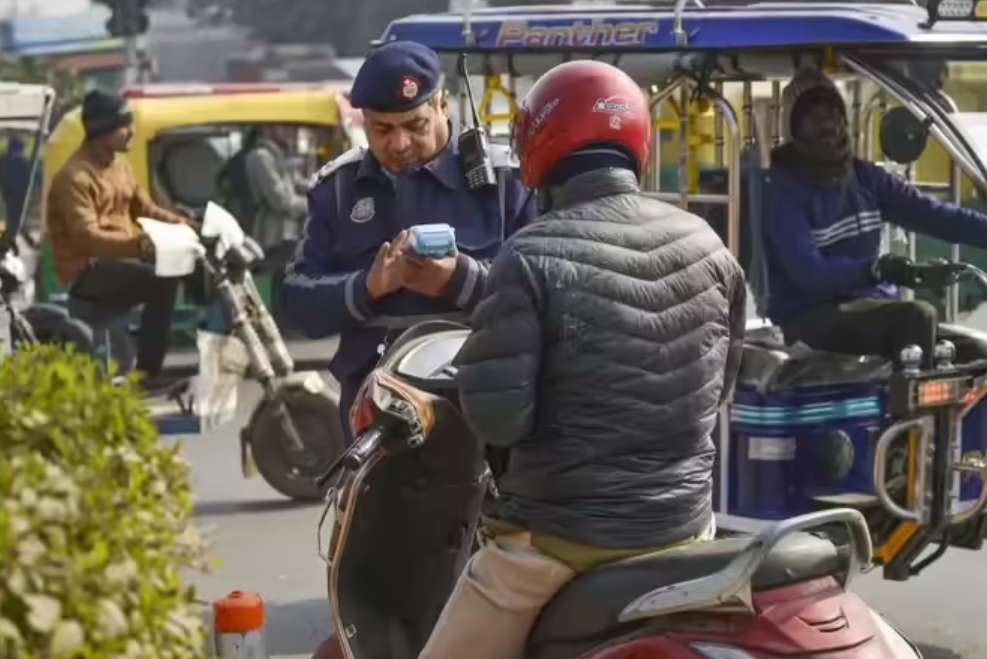
As the city police intensifies efforts to curb wrong-side driving and begins registering FIRs, two-wheelers have emerged as the biggest offenders, accounting for 72% of all prosecutions last year — a 33% increase against 2024.
Data reveals that two-wheeler violations rose sharply from 1,66,023 in 2024 to 2,20,018 in 2025. Violations by three-wheelers also increased from 13,427 to 14,574 while 14,806 e-rickshaws flouted the norm against 12,366. Overall, challans and notices issued for wrong-side driving increased by 23%, climbing from 2,49,244 in 2024 to 3,06,020 in 2025.
According to police, most offenders said they drove on the wrong side to save time amid congestion, often following others. Some cited urgency to reach schools, offices or medical emergencies. An officer noted that two-wheelers, due to their size and manoeuvrability, and three-wheelers and e-rickshaws, driven by time and cost pressures, frequently took risky shortcuts.
In contrast, private cars recorded a slight decline in violations, with cases dropping from 37,597 in 2024 to 35,799 in 2025. Bus-related cases also fell from 749 to 626. Commercial cars and vans showed an upward trend, increasing from 8,671 to 9,545 cases. Goods vehicles registered a marginal decline from 10,198 to 9,917 while Gramin Sewas and those in the other category saw notable increases.
Police started filing FIRs against wrong-side driving from Jan 3 and 89 cases have been registered. Special commissioner of police (traffic) Neeraj Thakur said that, along with legal action, the traffic police was also focusing on creating awareness among motorists. Offenders are being informed about the legal consequences of such violations as well as the grave risks they pose not only to their own lives but also to other road users.
Former deputy commissioner of transport Anil Chhikara said a major reason behind the prevalence of wrong-side driving was a lack of awareness among drivers about its serious consequences. Wrong-way driving prohibition signs were also not prominently displayed in high-risk areas. “Many people simply do not understand the dangers and legal implications of driving on the wrong side of the road. Road safety education must start from when a person learns to drive,” he said.
Rohit Baluja, president of Institute of Road Traffic Education, attributed the persistent problem to a combination of poor traffic engineering and weak enforcement. “It is crucial to understand why road users resort to shortcuts and address those issues through appropriate traffic engineering measures, supported by strict and consistent enforcement,” he said.