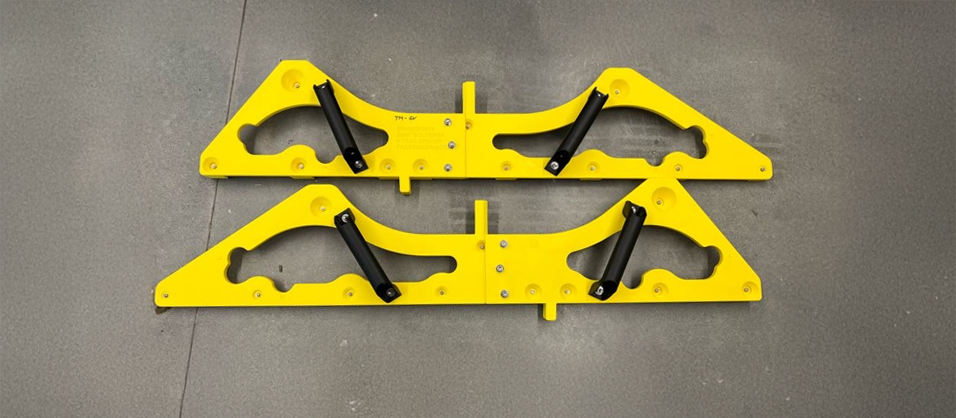
Subaru of America, Inc., the U.S. subsidiary of Japanese automaker Subaru Corporation, has reduced tooling development time by more than 50% and cut fabrication costs by approximately 70% by adopting large-format 3D printing for accessory installation tooling. These changes were enabled through the use of a Stratasys F770 system combined with a higher-throughput T25 print head, supporting faster iteration, insourced production, and just-in-time manufacturing for Subaru vehicles sold in the United States.
Tooling development is handled by Subaru’s Accessories Product Development (APD) team, which designs fixtures and jigs required for the installation of Genuine Subaru Accessories. Prior to introducing additive manufacturing, tooling was produced using conventional machining and outsourced fabrication. That approach resulted in long lead times and high costs, particularly during prototype validation and design iteration. According to the APD team, introducing 3D printing changed how tools were developed, allowing multiple design iterations to be completed in days instead of weeks.
Any capital equipment investment required a clear financial case. Subaru evaluated the cost of traditionally fabricated tooling against the option of internal production and determined that large-format fused deposition modeling could offset those expenses. Approval followed for a Stratasys F770 system, with internal projections indicating cost reductions of roughly 70% for a single tooling program and a return on investment of approximately two years. “We develop specialized tooling and jigs for precise installation of many of our products. The fabrication cost for just one of those developments was so incredibly high, that when we put pen to paper, it was easy to justify a business case for an F770 purchase,” said Matt Daroff, Project Engineering Manager at Subaru. He noted that the system has since been used across multiple vehicle platforms and accessory programs.
Workflow changes proved as significant as cost reductions. Daroff explained that conventional manufacturing limited tool iteration cadence to weeks between prototypes. “Additive reduced this cadence to days. This enabled us to cut our development time on tools for this product line by well over 50%,” he said. Internal production also replaced outsourced batch manufacturing with single-piece, on-demand fabrication, allowing tools to be produced only when needed and reducing dependence on external suppliers.
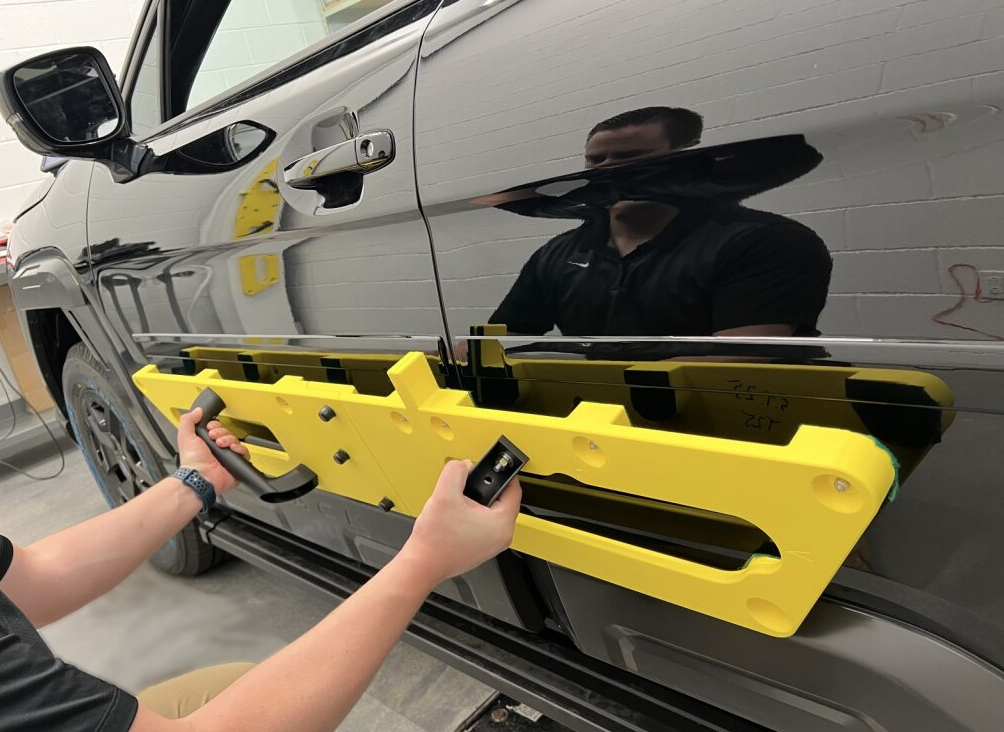
Large-format capability played a central role in that transition. The F770 uses fused deposition modeling technology and provides a build envelope large enough to accommodate full-size installation fixtures. When tools exceeded the system’s 100 cm build length, designers segmented components for printing and assembly. Print duration, however, remained a constraint, as large extrusion-based tools can require extended build times. Production schedules still had to be aligned with printer availability, even as overall costs declined relative to conventional fabrication.
Addressing that limitation led Subaru to evaluate a higher-speed print configuration. A beta test of the T25 print head introduced a faster extrusion option for the F770. The T25 uses a larger nozzle orifice to increase material flow while maintaining the same 0.33 mm layer height as the standard T14 print head. Internal testing conducted by Stratasys, a manufacturer of industrial polymer and metal 3D printing systems, showed print speed increases ranging from 1.86x to 2.27x across multiple geometries. Subaru reported a 1.96x speed increase when producing a 36-inch-long tool, reducing print time by roughly half.
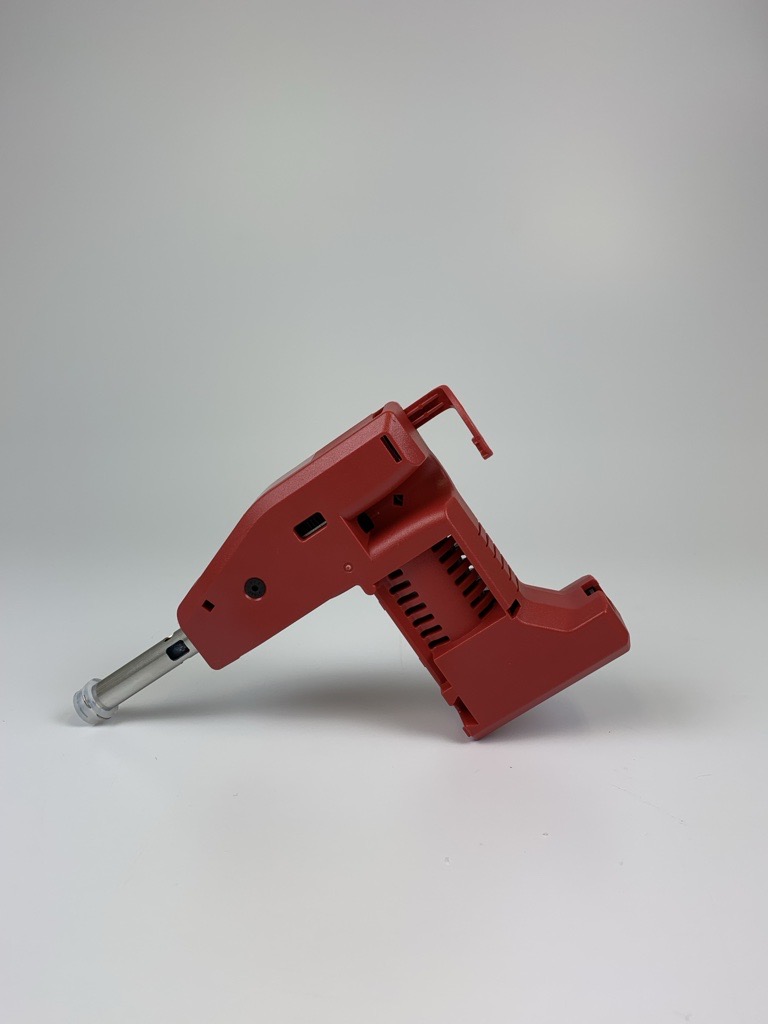
Higher throughput altered equipment utilization within the APD operation. Prior to adopting the faster print head, a second large-format extrusion system was required to meet tooling demand. With increased output from the upgraded configuration, all required tools could be produced on a single F770, allowing the additional printer to be reassigned to other urgent tasks. “When we were presented with the opportunity to explore increasing our F770’s print speed, we were all for it,” Daroff said. “Until now, we were using another machine to pick up the slack. Now we can get all that throughput on a single [F770] machine.”
Faster tooling delivery also affected downstream operations. Subaru identified urgent tooling requests as a recurring risk, particularly when damaged or missing tools delay accessory installation. “Much of our waste is a function of time,” Daroff said. “If our team doesn’t have the tools necessary to install our products with confidence and precision, we will not install them at all.” Shorter turnaround times reduced missed installation opportunities and limited material waste associated with delays.
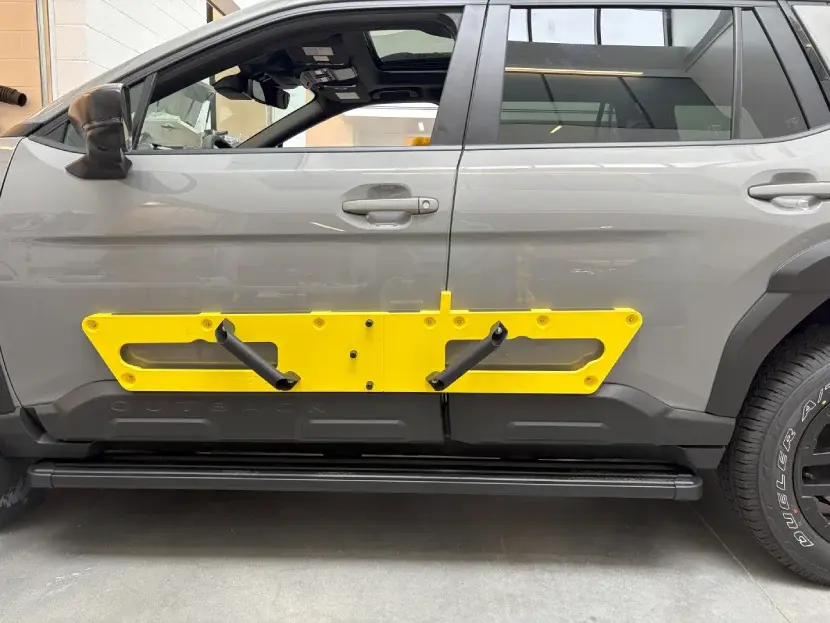
Environmental considerations also factored into the shift. Reduced rework and scrap support Subaru’s zero-landfill manufacturing approach, while faster iteration enables design issues to be identified earlier, minimizing defective output before tools are deployed at scale.
The selection of Stratasys followed an evaluation of multiple large-format extrusion systems from manufacturers worldwide. Although initially excluded due to cost considerations, benchmark parts were requested based on prior experience. After comparing output quality, Subaru concluded that the consistency and durability of the industrial system justified the investment. “Once we saw the delta, the gap of quality and the output of [the Stratasys] machines, we had a powerful enough artifact to show our leadership,” Daroff said.
Help shape the 2025 3D Printing Industry Awards. Sign up for the 3DPI Expert Committee today.
Are you building the next big thing in 3D printing? Join the 3D Printing Industry Start-up of the Year competition and expand your reach.
Subscribe to the 3D Printing Industry newsletter to stay updated with the latest news and insights.
Featured photo shows Subaru engineer positioning a 3D printed installation fixture. Photo via Stratasys.