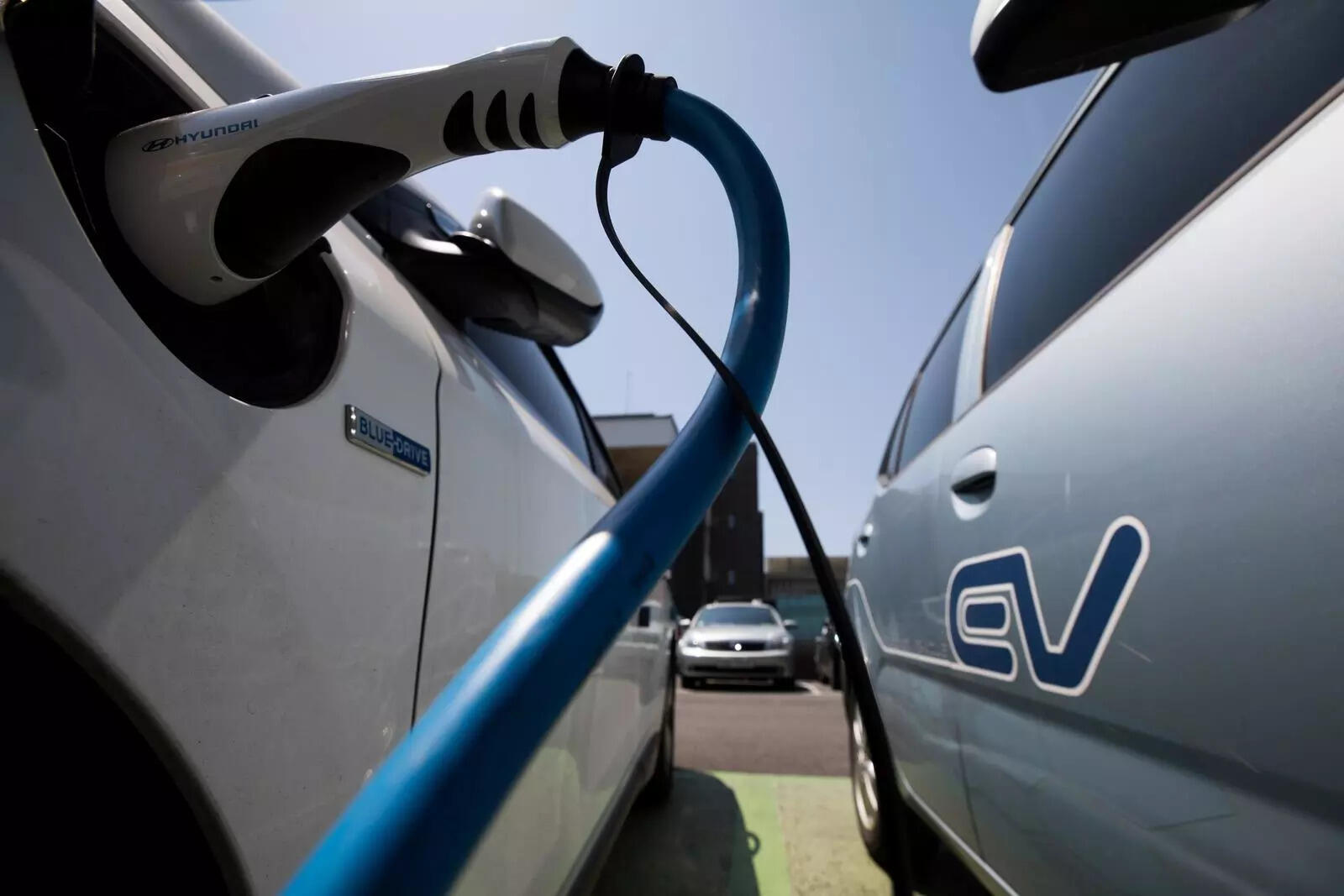
India’s capital is experimenting with EV retrofitting, but the country’s carmakers are not convinced.
The Delhi government’s recent announcement of incentives to encourage electric vehicle (EV) retrofitting has opened a can of worms within India’s auto industry, with major carmakers expressing strong reservations even as startups while independent retrofitters remain excited to tap the opportunity.
Under the policy, the first 1,000 vehicles retrofitted from internal combustion engines to electric powertrains will receive an incentive of Rs 50,000. The initiative is aimed at reducing vehicular pollution by extending the life of older cars while transitioning them to cleaner propulsion.
However, India’s leading automobile manufacturers appear unconvinced. Industry executives, speaking on condition of anonymity, said electric vehicle retrofitting raises serious safety and technical concerns and is not comparable to earlier transitions such as CNG or LPG conversions.
Safety Concerns
Globally, only a few automakers, including Toyota, have expressed some support for EV retrofitting, while most manufacturers cite concerns over structural integrity and safety. Retrofitting is also seen in conflict with automakers’ core business model of selling new vehicles.
Major EV players Tata Motors, Mahindra & Mahindra and JSW MG Motor declined comment on detailed email queries sent by ET.
On condition of anonymity, however, a senior official of a car company said, “In CNG or LPG kits, the basic architecture of the vehicle remains unchanged—the fuel system is the only difference. In EV retrofitting, battery placement, weight distribution, software integration and overall drivability change significantly. This requires platform-level engineering, which is not possible in a retrofit”.
Auto industry veteran Rajeev Chaba said EV retrofitting poses risks that need deeper evaluation. “In EVs, battery integration, software, range, performance and safety are critical. In a retrofitted vehicle, these parameters cannot be fully optimised,” he said.
Most car makers have invested heavily in “born-electric” platforms designed specifically for EVs. Retrofitting older vehicles, they argue, is neither technically viable at scale nor aligned with current safety standards.
Electric Point
Despite resistance from the big automakers, a small group of independent retrofitters believes the segment has potential if supported by policy reforms.
Retrofitting is seen as a way that vehicles already on the road aren’t taken off due to the controversial policy in Delhi that bars petrol vehicles over 15 years and diesel vehicles over 10 years from plying on its roads. EV retrofitting, the reasoning goes, would fit the current policy while taking tailpipe emissions out of the equation in the world’s most polluted city.
Delhi NCR-based Folks Motor is one company operating in the segment. Managing director Nikhil Khurana said EV retrofitting is still not recognised as a distinct product category in India’s automotive policy framework.
“Unless retrofitting is formally recognised, volumes cannot scale. There is no clear GST or regulatory framework,” Khurana said. “The central government’s focus remains on reducing emissions through BS-compliant vehicles rather than encouraging retrofits.”
Khurana said retrofitting should not be limited to end-of-life vehicles. “Even vehicles that are four to five years old can be converted,” he said, noting that states such as Delhi, Maharashtra, Madhya Pradesh and Telangana are offering limited incentives for retrofitting.
Pune-based Suma Japanese Technologies is among the few companies to secure regulatory approvals, having obtained 24 certifications from the Automotive Research Association of India (ARAI) for different car models.
“There was a proposal to extend FAME incentives to EV retrofitting, but it never materialised,” said Jayapal G, managing director of Suma Japanese Technologies. “New EVs attract 5% GST, while retrofitted EVs are taxed at 18%. This makes conversions commercially unviable.”
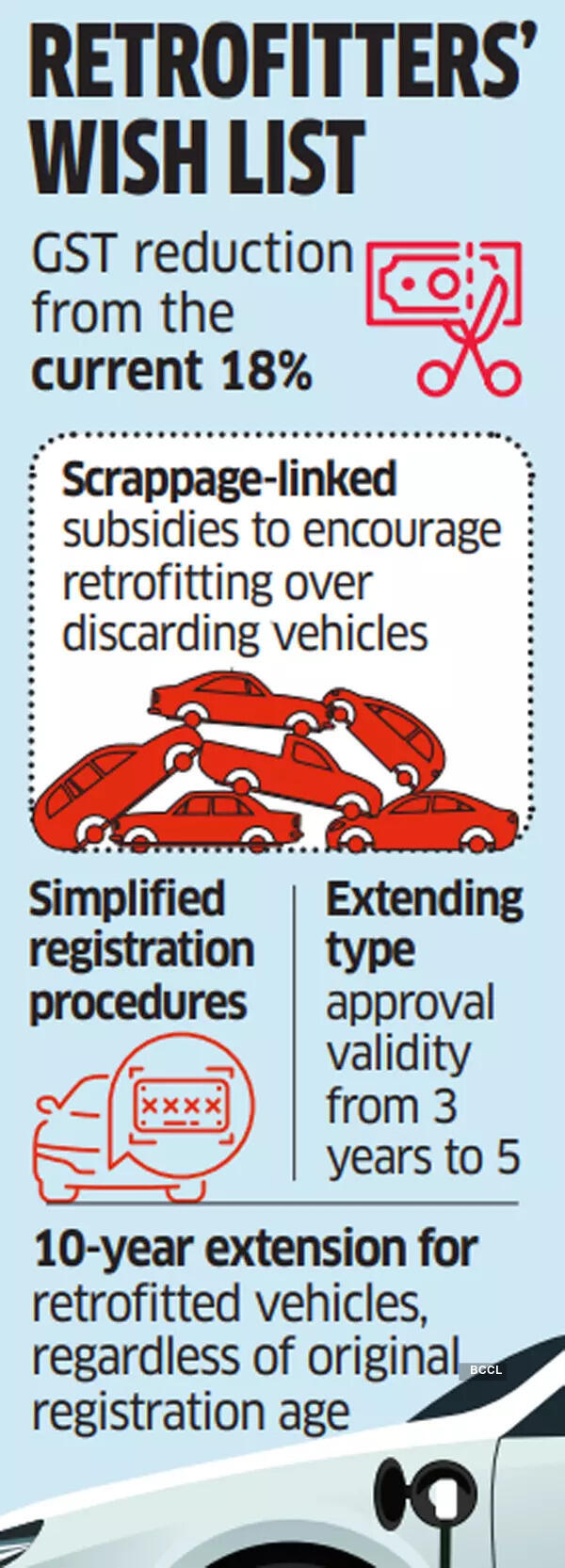
Industry players are now pushing for policy changes to make EV retrofitting viable. Their demands include reducing GST on retrofitted EVs, introducing scrappage-linked subsidies, simplifying registration procedures, extending the validity of type approval certificates from three to five years, and granting an additional 10-year registration extension to retrofitted vehicles.
Jayapal said EV retrofitting is an inventory-intensive business, requiring stocking of lithium-ion batteries, motors and controllers, along with certification for each vehicle variant. “We also need multiple government approvals. That’s why funding is critical,” he said, adding that the company plans to open a franchise in Delhi, encouraged by the state government’s incentive scheme.
While passenger car retrofitting has been slow to take off, conversions are gaining traction in the commercial vehicle segment, particularly in load carriers, where safety regulations are less stringent and cost savings are easier to demonstrate.
“Retrofitting is working better in commercial vehicles than in private cars,” Jayapal said.
As states experiment with incentives, the debate over EV retrofitting highlights a broader tension in India’s transition to clean mobility—between rapid emission reduction through reuse of existing vehicles and the auto industry’s shift towards new, purpose-built electric platforms.