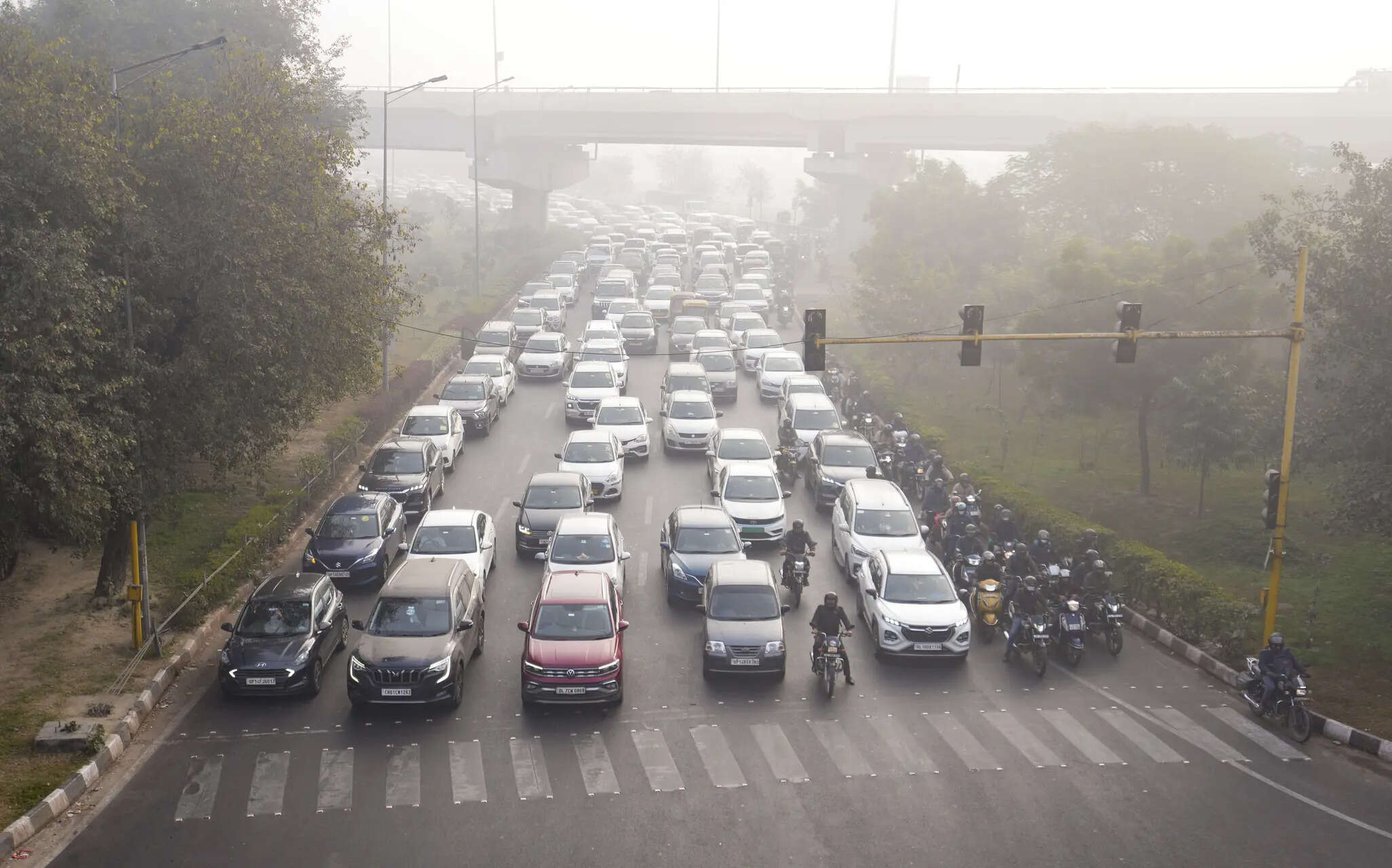
For many parts of the capital, the challenge is no longer just identifying solutions to traffic congestion — it is finding space to implement them. Of the 62 traffic hotspots govt is focusing on, at least 13 planned fixes have been deemed “not feasible” for now because of metro construction, crowded development and roads that cannot be widened.
These hotspots, identified jointly by Delhi Traffic Police (DTP) and corroborated by Public Works Department (PWD), Municipal Corporation of Delhi (MCD), Delhi Metro Rail Corporation (DMRC) and the transport department, are precise points where traffic builds up predictably during peak hours. They cover some of Delhi’s busiest corridors — from the perennially gridlocked Bhavbhuti Marg outside New Delhi Railway Station to Madhuban Chowk in north-west Delhi, Mayur Vihar Phase III in the east, South Extension in south Delhi, Punjabi Bagh in the west and major transit hubs, such as Kashmere Gate and Anand Vihar.
While officials have mapped 215 potential interventions across these points, some solutions that seemed possible on paper have now been dropped, showing that traffic problems are often limited by space.
For instance, at Bhavbhuti Marg, a key artery for Paharganj-bound traffic and central Delhi commuters, pedestrian spillover, autos and random bus stoppages routinely choke the road. The plan for a subway or foot overbridge, originally intended to separate pedestrians from vehicles, was dropped because it clashed with ongoing redevelopment at New Delhi Railway Station.
Boulevard Road, linking Tis Hazari courts to Kashmere Gate, was considered for a flyover to ease court-hour congestion and reduce signal delays. However, the proposal was rejected due to limited road width and complex junction geometry.
In south Delhi, road widening near Max Hospital could not proceed due to a lack of land. At Khanpur, a pedestrian subway is under reconsideration only after DMRC completes its construction, while the Sarai Kale Khan stretch, a crucial Ring Road-ISBT link, remains constrained by a green belt and a drain.
Old Delhi’s Sadar Bazar belt, one of Asia’s largest wholesale markets, presents another unique challenge. At Baratooti Chowk, Qutab Road and Sadar Thana Road, pedestrianisation was suggested to reduce conflicts between shoppers, handcarts, loading vehicles and private traffic. Officials acknowledged that in these narrow, commerce-dependent lanes, no engineering solution could realistically ease congestion without disrupting trade, underlining how economic activity shapes traffic realities.
Across the Yamuna, Seelampur T-point connects dense residential neighbourhoods to arterial routes towards Wazirabad and Shahdara. Here, land scarcity stalled parking and flyover proposals. Similarly, at Azadpur Mandi on GT Karnal Road, a critical freight corridor supplying fruits and vegetables across north India, night-time truck queues spill onto main roads. Plans for an elevated corridor or a flyover were deferred due to ongoing metro construction, while staggered release of trucks from NH-44 was considered impractical.
In west Delhi, congestion between Kohat and Madhuban Chowk, largely driven by Rohini court visitors, was expected to ease with a multilevel parking facility, but the plan couldn’t take off due to space constraints. The Naraina flyover near Rajouri Garden remains hemmed in by surrounding buildings, leaving authorities with limited options beyond traffic management.
Even as a few proposals are deemed unviable, authorities are rolling out more than 200 short- and long-term measures. Additional traffic personnel have been deployed at hotspots during peak hours, including 29 on Boulevard Road, 24 at ISBT Anand Vihar, 20 on Sardar Patel Marg and 12 near Patiala House Court.
Authorities have also cleared encroachments at more than 40 spots and are planning long-term solutions like subways, foot overbridges, underpasses, parking lots and elevated roads at 14 key congestion points.
One official monitoring the interventions said most of them are approved. “So far, only 13 have been listed as unfeasible, but this may be temporary. At some spots, work is ongoing, and where road space is constrained, alternative tasks have been suggested and will be implemented.”