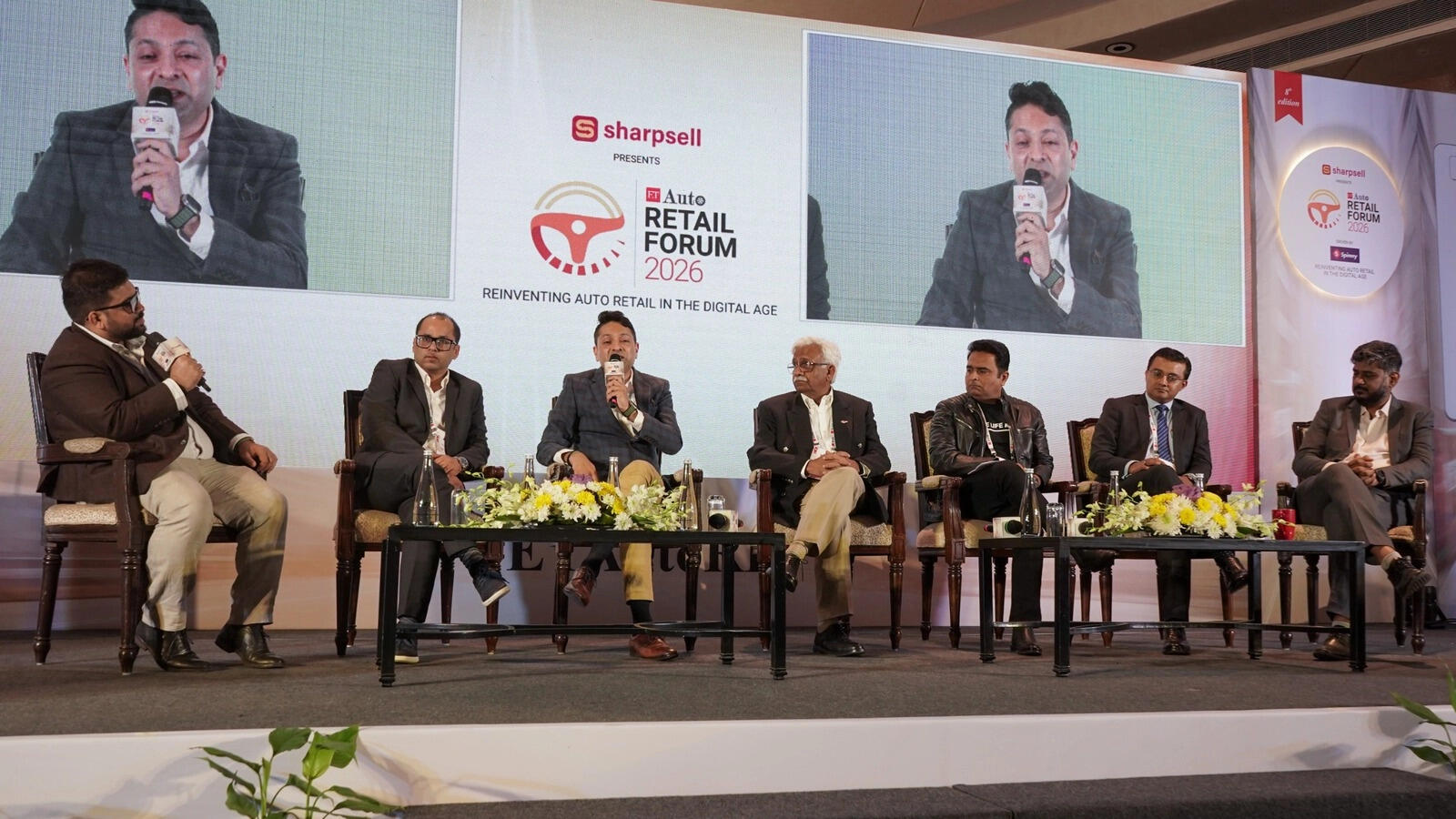
In the automobile customer experience arena, omnichannel strategy has moved from experimentation to execution as buyers now arrive far more informed than before.
At the ETAuto Retail Forum 2026, senior leaders from across the automotive ecosystem converge on a clear reality: customers no longer distinguish between online and offline channels. What matters is a single, consistent experience that begins digitally and is validated seamlessly at the dealership.
Kunal Behl, VP – Marketing & Sales at Honda Cars India, underlined that channel proliferation has shifted power firmly to the customer. “Customer is not bothered about multiple channel, but only about experience,” he said, adding that “the journey starts from digital then physical, so it should be phygital.”
Behl stressed that personalisation is critical at this stage, cautioning against information overload: “It’s not about giving too much information and bombarding the customer with something which he doesn’t want.” Instead, OEMs must use data signals to understand whether a buyer prioritises safety, performance or features, and tailor conversations accordingly.
That expectation places significant responsibility on the dealer and sales consultant. Nikunj Sanghi, managing director of JS Fourwheel Motors, said showroom teams must adapt to better-informed buyers. “We need to train our consultants to listen to the customer more than talk to the customer, and enable him to validate what he has gathered online,” he noted.
Describing the customer journey as a relay race, Sanghi added, “Normally it’s the dealer who gets the baton last, and he needs to be a fantastic finisher.” Equipping frontline teams with updated tools and insights, he argues, can address most customer queries and reduce friction at the point of sale.
From a technology enablement perspective, Arun Subramanian, co-founder of Sharpsell, highlighted the growing need for validation and continuity between digital research and physical experience. “What the customer believes, what they’ve read online, they have to see it in the vehicle — and that validation has to come from the seller,” he said.
Subramanian pointed to hyper-personalised collateral and one-to-one channels as differentiators: “WhatsApp is not the central brand channel, but the individual WhatsApp channel between the seller and the customer ensures the conversation continues and becomes much more personal.” He also outlined the use of AI as a coaching layer rather than a replacement: “You practice with the AI — AI will be the customer, giving feedback on what you’re saying.”
Data and accountability challenge
At an industry level, Rahul Mishra, partner at Bain & Company, frames omnichannel 2.0 as a data and accountability challenge. “The trend is not just integrating platforms, but ensuring one seamless view of the customer across the entire journey,” he said, noting that this improves both lead quality and serviceability. However, Mishra flagged emerging constraints around data governance: “Data also comes with limitations — concerns around purpose and usage will define how responsibly we can use it.”
Luxury and premium segments see even higher stakes for personalisation. Shardendu Chaturvedi, Director at BMW Motorrad India, says aspiration and community make omnichannel continuity essential. “Hyper-personalisation is extremely important, though there’s still a long way to go,” he said, adding that while technology improves efficiency, “human interaction will always matter, and AI is a powerful enabler of communication.”
In lifestyle categories, digital and physical touchpoints must work together long after the purchase, through riding communities and curated experiences.
Virat Khullar, Head of Marketing at Hyundai Motor India, added that the competitive battleground is shifting faster than ever. “Consumers come in either already decided on your brand or comparing two or three brands — what we sometimes miss is comparing ourselves well,” warning that rapid launches and variant proliferation demand sharper execution. Khullar also urged caution with automation: “You need to be very careful of hallucinations and wrong information coming out of AI.”
The consensus among the experts and industry leaders was clear: omnichannel 2.0 is no longer about presence across platforms, but about mastering handoffs. OEMs that combine clean data, personalised content, AI-assisted tools and well-trained dealers will be best positioned to convert digitally mature customers into satisfied, loyal buyers.