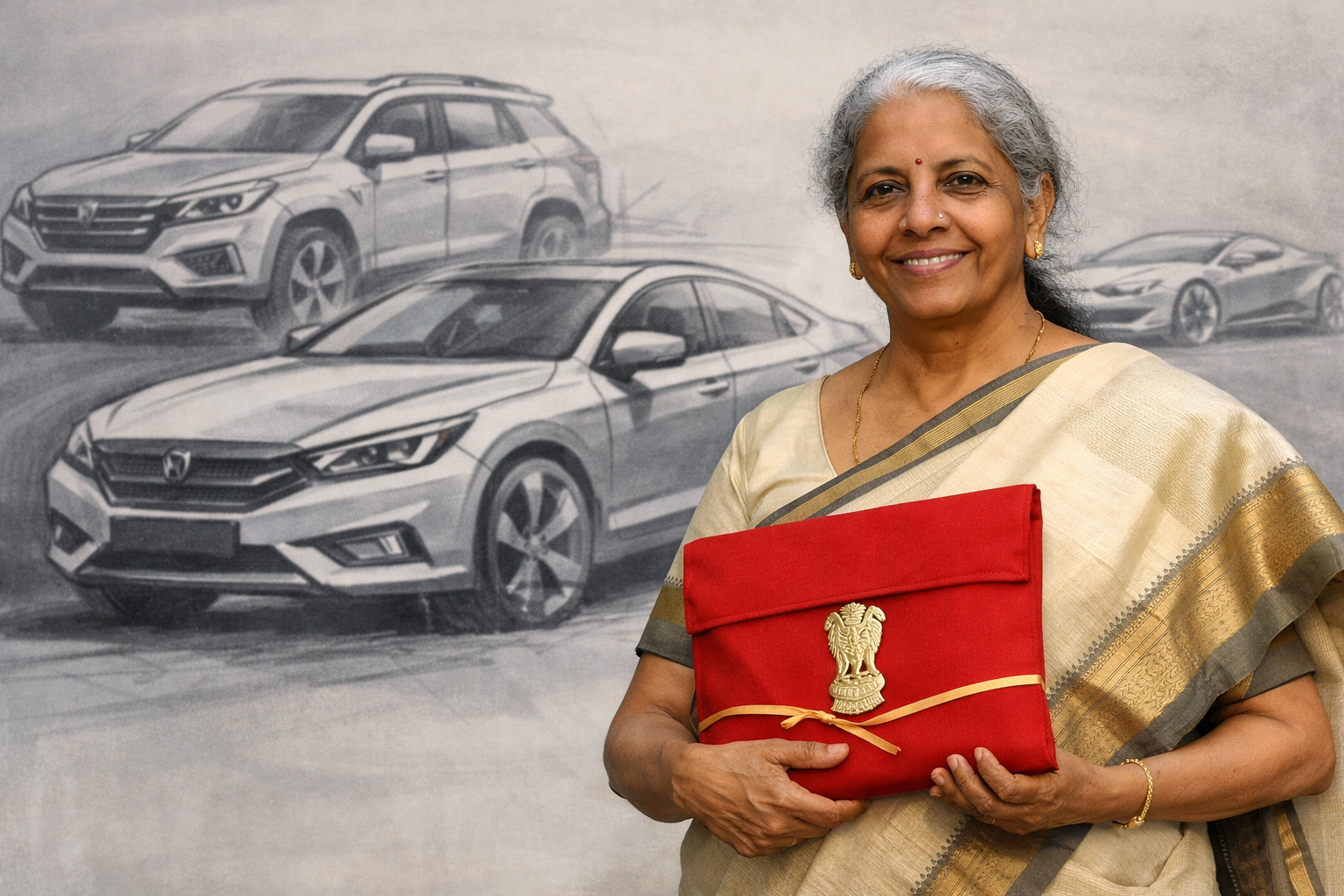
The auto industry received a shot in the arm in September last year in the form of tax rationalisation under GST reforms, resulting in a demand boost across segments. With the Budget 2026 just around the corner, the automobile industry is looking towards the government, seeking deeper structural reforms, including rationalised taxation, affordable financing, sustained EV (electric vehicle) support and long-term policy stability to accelerate India’s mobility transition.
Industry leaders believe such measures are essential to move from early adoption towards sustainable, large-scale transformation.
Strong policy support
“Rationalisation of the duty structure, particularly for the rapidly growing EV segment, along with well-calibrated incentives for global automobile manufacturers investing in sustainable mobility, would serve as strong catalysts for the industry,” said Jyoti Malhotra, Managing Director (MD), Volvo Car India.
Industry executives note that India’s EV adoption is being driven by lower operating costs, reduced maintenance requirements and the integration of smart, connected technologies.
“We also expect better ease of doing business. Rationalising GST and customs duties, resolving inverted duty structures, and offering a stable, predictable tax regime will further enhance the business environment,” said Ravi Mehra, MD, Uno Minda.
The industry is also calling for an expansion of the PLI-Auto scheme to include EV subsystems such as sensors, semiconductors and advanced electronics to strengthen domestic value addition.
“A primary concern for domestic manufacturers is the inverted tax structure. While finished EVs attract a 5 per cent GST, raw materials are taxed at 18 per cent. This 13 percentage point disparity traps working capital, increases production costs and strains liquidity,” said Madhumita Agrawal, Founder and CEO, Oben Electric.
Deepening localisation
Alongside policy reforms, there is a strong push for higher domestic value addition, component manufacturing and supply chain localisation to reduce import dependence.
“The Union Budget 2026–27 should prioritise deeper localisation through component-specific PLI support for battery cells, controllers and power electronics. Rationalising GST on electric two-wheelers and enabling priority-style, low-cost financing can accelerate mass adoption more effectively than one-time incentives,” said Kunal Arya, Co-founder and Managing Director, Zelio E Mobility.
With EV sales crossing 2.3 million units last year, sustaining momentum will require focused investments. “Advancing battery R&D, recycling and localised supply chains will help lower costs, improve sustainability and build a resilient, globally competitive EV ecosystem,” said Sudhir Mehta, Founder and chairman, EKA Mobility.
Electric two-wheeler manufacturers are also seeking continued PM E-DRIVE benefits, along with parity across EV segments to maintain consumer confidence.
“It is important to review the ex-factory price cap of ₹1.5 lakh under PM E-DRIVE. Rising material costs and evolving product requirements mean the cap should reflect today’s realities so that high-quality, made-in-India electric motorbikes are not disadvantaged,” said Mohal Lalbhai, Founder and Group CEO, Matter Motor.
Establishing EV ecosystem
As the industry looks to move beyond pilot projects to mass-market adoption, infrastructure efficiency and commercial viability remain key concerns.
“Support for charging infrastructure through CAPEX incentives and open access to public authority depots would help optimise asset utilisation and reduce upfront barriers. Route-level incentives such as toll exemptions and faster permit clearances can meaningfully strengthen fleet economics,” said Devndra Chawla, MD and CEO, GreenCell Mobility.
Across the country, 39,485 public EV chargers have been installed as of December 2025 under the PM E-DRIVE scheme. The government has targeted to install approximately 72,000 EV public charging stations across the country under the scheme.
Vaibhav Kaushik, Co-founder and CEO, Nawgati, said the challenge lies more in coordination than capacity.
“As India plans for the future of mobility under Union Budget 2026, the focus must shift from how many chargers we build to how efficiently existing infrastructure is utilised,” added Kaushik.
Focus on global integration
To enhance global competitiveness, industry leaders are also calling for export facilitation, trade stability and stronger integration into global supply chains.
“Continued focus on quality infrastructure and logistics will be critical. Amid evolving global trade challenges, policies that support exports and deepen India’s global integration will become increasingly important,” said Raghupati Singhania, chairman and MD, JK Tyre & Industries.
India’s EV momentum is also seen as an opportunity to empower domestic innovation. “A dedicated PLI framework for startups and mid-scale entrepreneurs is essential to help Indian companies compete in an industry dominated by global players, while strengthening domestic manufacturing capacity,” said Ajinkya Firodia, vice-chairman and MD, Kinetic Watts & Volts.
With GST 2.0 already providing a boost to the automobile sector, it remains to be seen which of these industry demands the government addresses in the upcoming policy cycle.