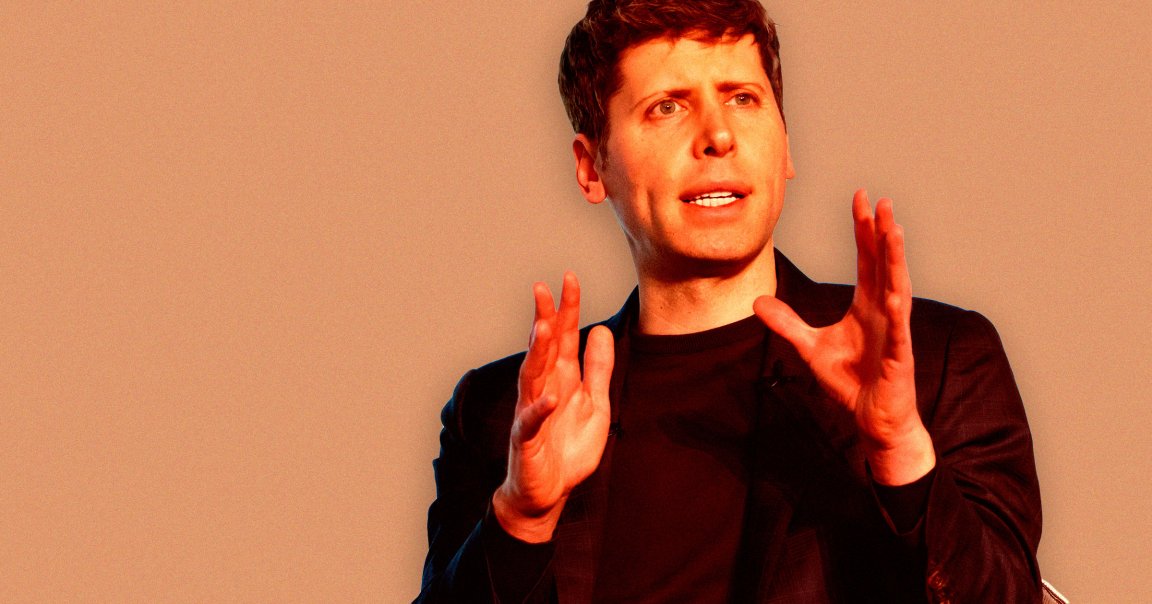
In a memo sent out to staff last month, OpenAI CEO issued a “code red” urging employees to double down on improving the company’s flagship product ChatGPT, as financial pressure loomed and competitors gained ground.
The company continues to frantically chase some much-needed revenue. Despite Altman calling ads a “last resort for us as a business model” in 2024, the company announced earlier this month that ChatGPT will soon start spamming users with them.
Its cash burn rate is immense. The company is planning to spend well over $1 trillion in the coming years on data center infrastructure, despite revenue lagging far behind. Experts have warned that the company could run out of cash within the next 18 months. To its most skeptical critics, it’s an Enron-like financial disaster that’s waiting to happen.
So maybe it’s not surprising that the company is opting to pump the brakes. During a livestreamed town hall event on Monday, Altman said that OpenAI is looking to “dramatically slow down” hiring as the company continues to lose billions of dollars each quarter, as Business Insider reports.
“What I think we shouldn’t do, and what I hope other companies won’t do either, is hire super aggressively, then realize all of a sudden AI can do a lot of stuff, and you need fewer people, and have to have some sort of very uncomfortable conversation,” Altman told attendees. “So I think the right approach for us will be to hire more slowly but keep hiring.”
The news comes amid widespread concerns over soaring unemployment in the US. While consumer spending has increased, the labor market has been hit hard by businesses curbing hiring significantly, often citing heavy investments in AI.
Altman’s admission also suggests that several years of aggressive hiring in the AI sector could be screeching to a halt as the industry continues to face pressure from investors getting antsy about the waning prospects of a return.
The news is particularly notable after years of AI companies embracing an unprecedented hiring spree, desperately trying to poach talent from their competitors by offering them astronomical pay packages.
Whether Altman’s announcement signals that those days are over for good remains to be seen. Big tech’s spending binge is set to drag on in the coming years. Many have already made massive commitments to scale up operations by expanding enormous data centers.
At the same time, selling those future prospects to investors could become more difficult as well. OpenAI, for instance, is already struggling with stalling subscriber growth — and that’s before pestering its users with ads or paywalling existing features behind expensive monthly subscriptions. (The company is currently mulling over how much to charge for ads.)
As former Fidelity manager George Noble fulminated in a scorching thread on X, the AI industry may have already hit a point of diminishing returns. Companies still have a lot to prove — for instance, chatbots still suffer from rampant hallucinations — as the goalposts continue to be moved.
“The low-hanging fruit is gone,” he wrote. “Every incremental improvement now requires exponentially more compute, more data centers, more power.”
Meanwhile, Google — one of OpenAI’s biggest competitors — can rely on an already-established business with existing revenue streams to prop up its AI spending.
In short, Altman’s significant hiring slowdown could be indicative of a tough time ahead. And if critics are to be believed, the wheels could already be starting to come off.
More on OpenAI: Asset Manager Warns That OpenAI Is Likely Headed for Financial Disaster