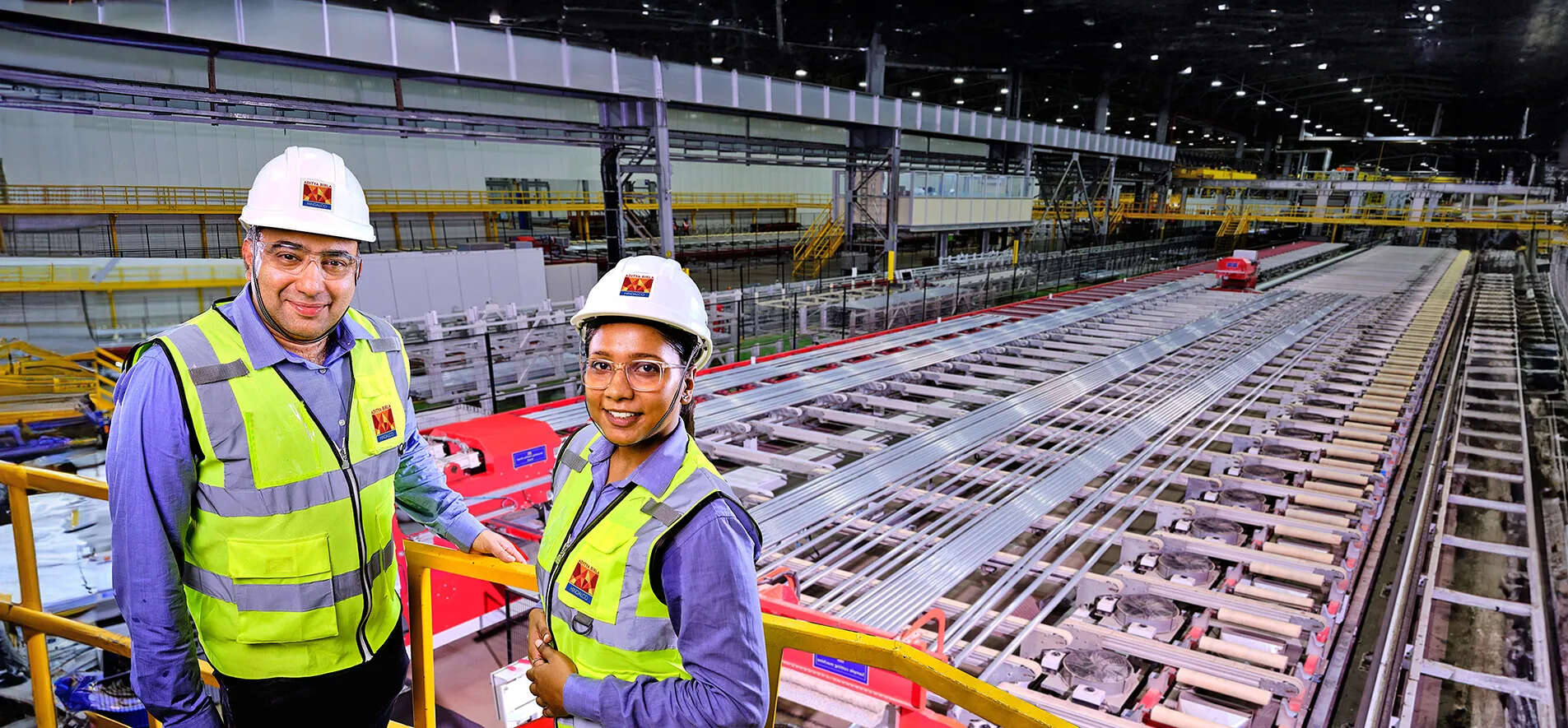
Aditya Birla Group Chairman Kumar Mangalam Birla has outlined a renewed manufacturing and metals expansion strategy for the Aditya Birla Group, anchored by a $6-billion upstream investment plan at Hindalco over the next five years, as India’s industrial and infrastructure momentum reshapes capital allocation decisions across the group.
In his annual reflections for 2025–26, Birla said Hindalco will now move decisively to expand aluminium and copper upstream capacity in India, marking a strategic shift after nearly a decade of downstream-focused investments. The pivot follows stabilising global aluminium prices after China capped primary output, alongside structural improvements in Hindalco’s cost base driven by better access to critical raw materials.
The renewed upstream push comes after Hindalco spent the past five years deliberately building downstream capabilities, positioning itself as the only Indian metals producer with significant depth across value-added products, a move Birla described as counter-cyclical when global metals markets were under pressure.
Manufacturing scale tied to India’s infra
Birla linked the group’s manufacturing expansion directly to India’s infrastructure and industrial acceleration, citing the scale-up of UltraTech Cement as a case in point. UltraTech’s cement capacity has expanded from 60 million tonnes per annum a decade ago to over 190 million tonnes today, making it the largest cement producer by sales volume globally outside China, in step with India’s highway and infrastructure build-out.
India’s national highway network has expanded by nearly 60 per cent over the past decade, with daily construction now running at about 30 kilometres a day, creating sustained demand for construction materials and execution reliability — areas where Birla said group manufacturing businesses have scaled alongside the country’s needs.
Manufacturing strategy shaped by context
Birla emphasised that manufacturing strategy at the group has remained responsive to market cycles rather than fixed to doctrine, noting that upstream investments were consciously paused earlier due to Chinese overcapacity and high input costs. The decision to re-enter upstream metals now reflects a shift in global and domestic conditions rather than a reversal of long-term direction.
“Strategy does not sit above the business. It emerges from it,” Birla noted, adding that capital commitment must retain flexibility as operating realities change
India as anchor for industrial growth
Against an increasingly deal-driven and fragmented global order, Birla described India’s growth as one of the few durable constants, underpinned by infrastructure creation, formalisation and domestic demand. Manufacturing businesses within the group, he said, are positioned not merely as beneficiaries but as active enablers of India’s physical and industrial capacity
The upstream metals expansion, combined with UltraTech’s cement scale-up, signals a renewed confidence in India’s long-cycle manufacturing and infrastructure demand, even as global volatility continues to reshape capital flows and supply chains.