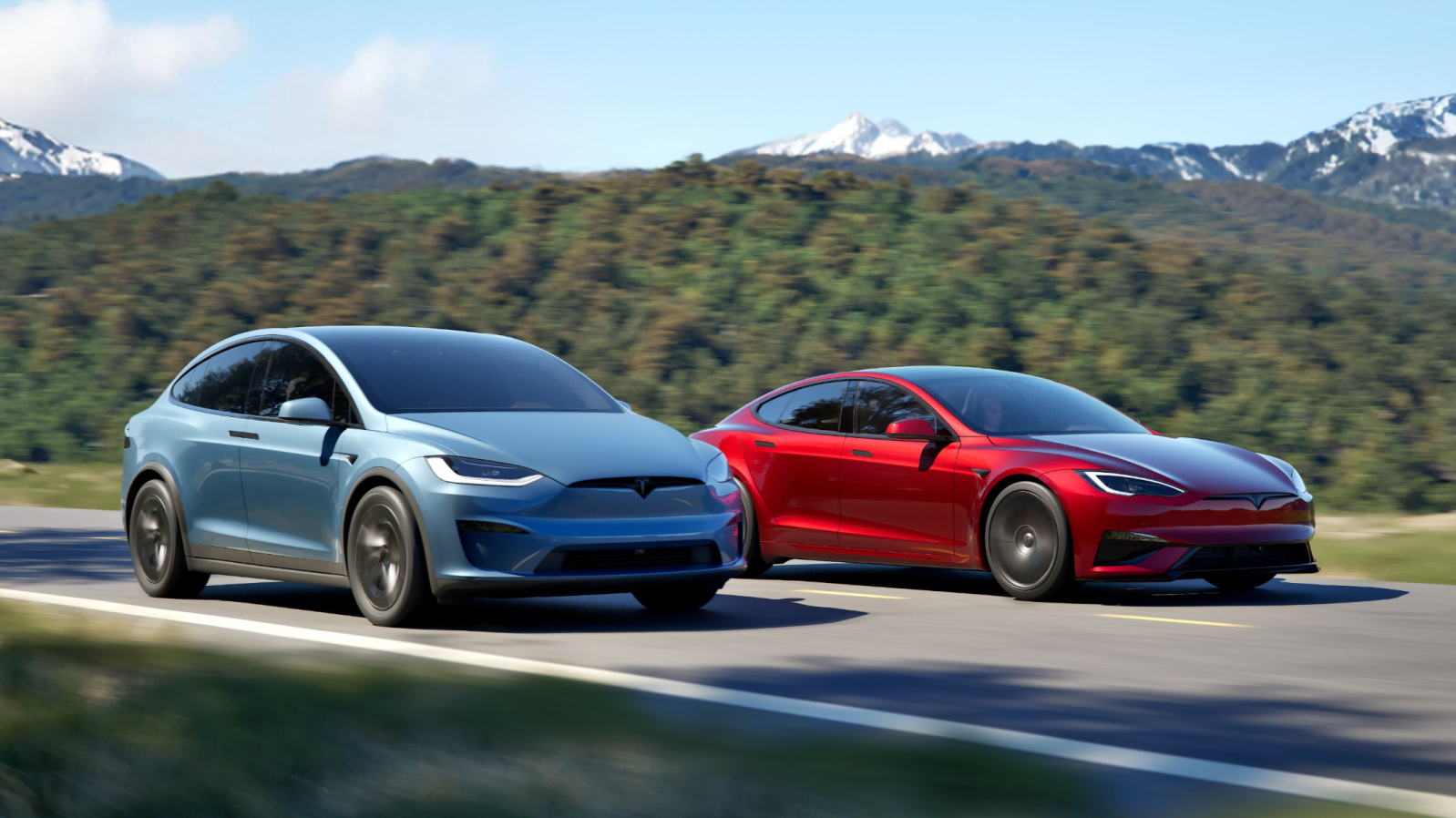
Tesla will discontinue the Model S and Model X by the end of Q2 2026, CEO Elon Musk announced during the company’s Q4 2025 earnings call today.
The decision marks the end of an era for Tesla’s flagship vehicles, the Model S launched in 2012 and the Model X in 2015.
Musk’s reason: “Autonomy.”
A long time coming
The writing has been on the wall for years.
Tesla stopped breaking out Model S and Model X sales separately back in 2023, lumping them into an “other models” category with Cybertruck and Tesla Semi. That made it harder to track just how badly these vehicles were doing.
We’ve been reporting on the decline, when we estimated Model S/X deliveries had dropped over 30% year-over-year. By late 2024, sales were estimated below 50,000 units globally.
The numbers kept getting worse:
| Period | “Other Models” Deliveries |
|---|---|
| Q4 2024 | 23,640 |
| Q1 2025 | 12,881 |
| Q2 2025 | 10,394 |
| Q3 2025 | 15,933 |
| Q4 2025 | 11,642 |
| FY 2025 | 50,850 |
Keep in mind those numbers include Cybertruck and Tesla Semi, not just Model S and X. The actual S/X numbers are far lower, likely in the 30,000 range for all of 2025.
Tesla has 100,000 units of annual production capacity for Model S and Model X at its Fremont factory. It’s been running at a fraction of that for years.
The June “refresh” that wasn’t
Just seven months ago, Tesla launched an updated Model S and Model X that we described as “a very mild update, to say the least.”
The changes included a new paint color, a front bumper camera, slightly improved range, and ambient lighting features that the Model 3 and Model Y already had.
The biggest change? A $5,000 price increase, pushing the Model S to $84,990 and the Model X to $89,990.
We wrote at the time:
When Lars Moravy announced that Tesla would refresh the vehicles later this year, he said that they will show the Model S and Model X lineup “some love,” but that doesn’t look like love to me. It looks like an afterthought.
Turns out it wasn’t just an afterthought, it was a farewell tour.
The original Tesla
The Model S was the car that proved Tesla was real. Before it, Tesla was a startup that made an expensive Lotus-based roadster in tiny numbers. The Model S was a full-size luxury sedan that Tesla designed and built from scratch, and it dominated the EV market for years.
The Model X followed in 2015 with its distinctive falcon-wing doors, becoming one of the first all-electric SUVs on the market.
Together, these vehicles established Tesla as a serious automaker and funded the development of the mass-market Model 3 and Model Y.
But both vehicles are now over a decade old. While Tesla has updated them over the years, most notably with the 2021 interior refresh that added the yoke steering wheel, the fundamental platform hasn’t changed. Competitors caught up, and Tesla’s attention shifted to higher-volume models.
Lucid Air has now surpassed Model S, and Rivian R1S outcompetes Model X.
What replaces Model S/X production line?
Musk claimed the reason for killing Model S and Model X was “autonomy.” This sounds strange considering that those vehicles are equipped with the same auotnomous driving capabilities (Level 2) and hardware.
But it started to make more sense when he said what will replace the production line in Fremont: Optimus production.
Musk said that Tesla is now winding down Model S/X production and will end production completely by the end of Q2 2026.
The production line at the Fremont factory in California will be replaced by a production line for Tesla’s planned humanoid robot.
Electrek’s Take
This was inevitable, but it’s still a significant moment.
The Model S and Model X were proof that EVs could be desirable, not just practical. They won over early adopters, converted skeptics, and showed legacy automakers that they needed to take electric vehicles seriously.
But Tesla stopped caring about these vehicles years ago. The June refresh was embarrassing, a $5,000 price hike for what amounted to a new paint color and some lighting effects. No steer-by-wire. No 48-volt architecture. Nothing that would justify buying an aging platform at nearly $90,000 or more.
At some point, keeping a low-volume vehicle alive isn’t worth the manufacturing complexity. Tesla clearly decided that Fremont’s capacity is better used for… something else. Good luck with those robots.
For those of us who followed Tesla from the early days, this is the end of an era. The Model S was the car that started it all. Now it’s the car that Tesla is leaving behind.
RIP Model S (2012-2026) and Model X (2015-2026).
Is Cybertruck next?


FTC: We use income earning auto affiliate links. More.