US robotaxis undergo training for London’s quirks before planned rollout this year
Waymo cars have been earning their stripes by getting used to zebra crossings while awaiting a government green light
American robotaxis due to be unleashed on London’s streets before the end of the year have been quietly undergoing training to understand the city’s quirks, not least the zebra crossings, their promoters said on Thursday as they showed off one of the UK-specific driverless cars for the first time.
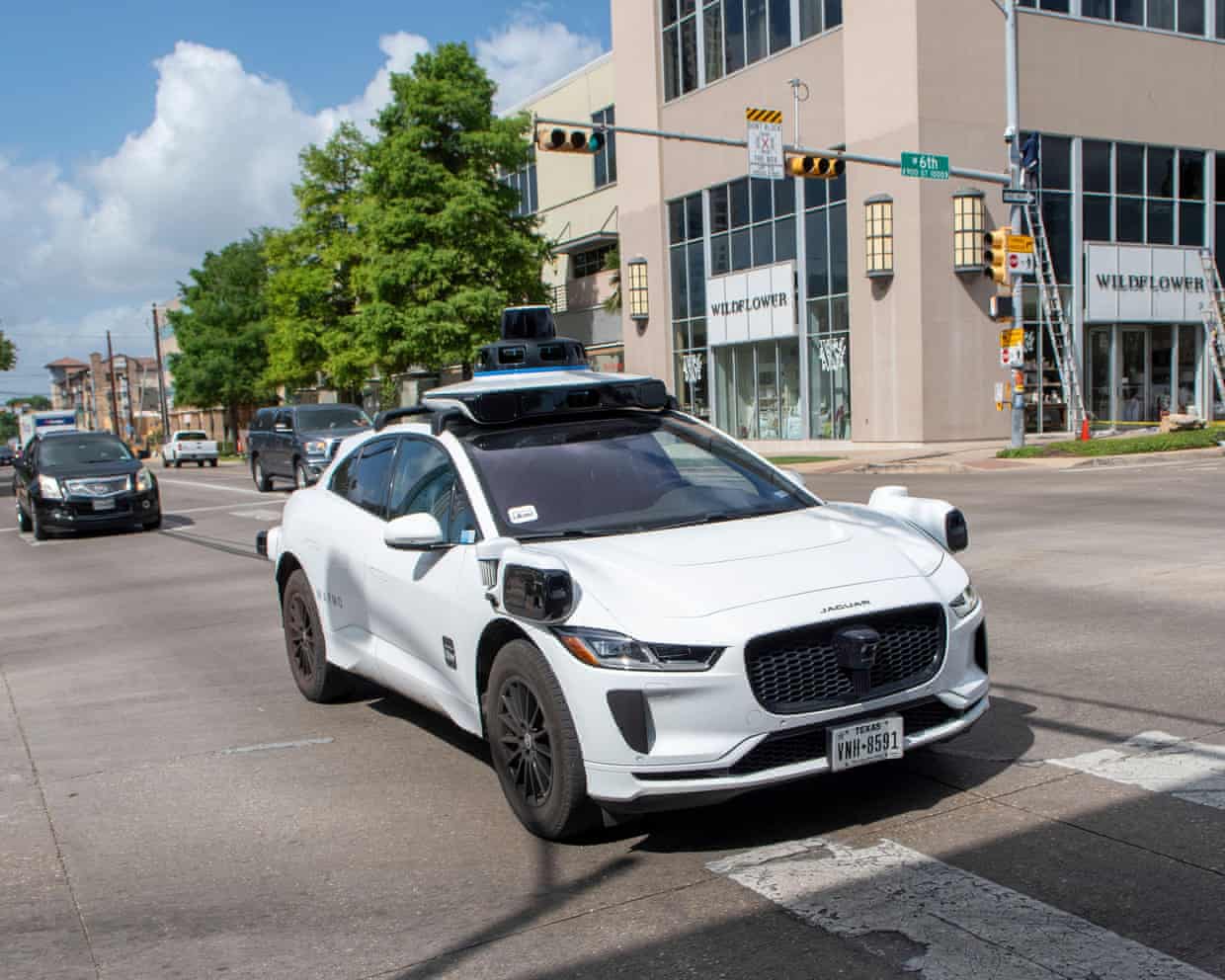
The US self-driving ride-hailing company Waymo has a fleet of about 24 cars in London, each rigged with cameras, radar and lidar (light detection and ranging) sensors.
Waymo’s bosses hope the taxis will be allowed to start taking paying customers in the last quarter of this year – the first rollout of the driverless technology outside the US.
For the last two months the cars have been manually steered around the city to “learn the nuances, learn about the zebra crossings”, said Ben Loewenstein, head of EU and UK policy and government affairs at Waymo.
The schooling comes as the company, which is owned by the Google parent company Alphabet, awaits government legislation permitting driverless cars on UK streets for the first time.
Wayve, a British self-driving taxi company, and Uber are also vying for a slice of the potential London market.
So far, Waymo has operated only in Atlanta, Austin, Los Angeles, Miami, Phoenix and San Francisco, and there has been concern that London’s tighter packed and often medieval streets could be much more challenging for the AI-powered technology.
Zebra crossings, for example, differ considerably from cross-walks in the US. In London they are marked by Belisha beacons – flashing yellow orbs on striped poles – and often rely on a subtle eye contact-based interaction between driver and pedestrian about who has right of way, rather than stop/go lights.
At the London Transport Museum in Covent Garden on Thursday, Waymo unveiled one of the Jaguar cars it hopes to use.
Similar to those in use in the US, it bristles with cameras, radar and lidar sensors which Nicole Gavel, senior director, claimed allowed it to “perceive the world around them more accurately and with more of a field of view than human drivers can”.
The Jaguars are left-hand drive and were built in Europe, then fitted with the self-driving technology in the US and shipped back to the UK.
Asked if the company was planning any public information campaigns to ensure other drivers are not startled by the sight of a car driving with no one at the wheel, a spokesperson conceded that it is “quite novel” but said people soon get used to it.
The Licensed Taxi Drivers’ Association (LTDA), which represents black-cab drivers, opposes the rollout and has called the robotaxis a “fairground ride”.
The Automated Vehicles Act received assent in 2024 and established the foundation of a self-driving safety framework. The government still needs to enact secondary legislation to allow the vehicles to operate.
The Department for Transport confirmed on Thursday that the government intends to launch a passenger piloting scheme this spring enabling operators to run services across Great Britain, subject to safety requirements and consent from local transport authorities.
Lillian Greenwood, minister for local transport, said the government is “supporting Waymo and other operators through our passenger pilots, and pro-innovation regulations to make self-driving cars a reality on British roads”.
She added: “We know that unlike human drivers, automated vehicles don’t get tired, don’t get distracted, and don’t drive under the influence – making them likely to be safer than their human counterparts.
“But this means that each and every self-driving vehicle deployed on our roads must meet strict safety and security standards, including protection from hacking and cyber threats.”
Waymo is in discussions with Transport for London which has previously said there is “considerable uncertainty around the potential for safer driving, for example what new risks will materialise or how the risk profile differs by road type, traffic, or time of day”.
It said similar assessments will need to be made on the impacts on congestion and accessibility.