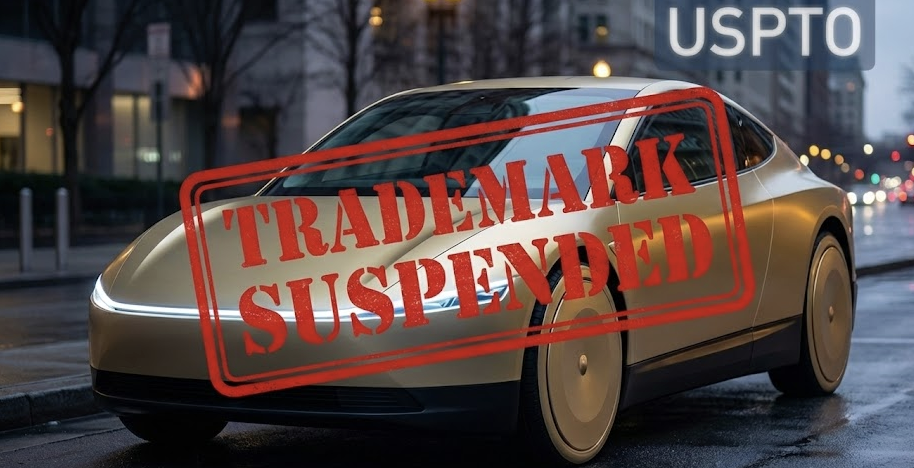
Tesla filed two new trademark applications within 37 seconds of each other last night, moments after Elon Musk used the terms on the company’s Q4 2025 earnings call. It follows Tesla having issues securing the ‘Cybercab’ trademark because of its own tardiness again.
Welcome to Tesla’s new trademark strategy: panic-filing in real time.
The filings
According to USPTO records obtained by Electrek, Tesla filed for two new trademarks on January 28, 2026:
| Mark | Serial Number | Filing Time (ET) |
|---|---|---|
| CYBERCAR | 99620747 | 7:32:54 PM |
| CYBERVEHICLE | 99620749 | 7:33:31 PM |
That’s 37 seconds apart.
Tesla’s Q4 2025 earnings call began at 5:30 PM ET yesterday. By the time these filings hit the USPTO at 7:32-7:33 PM, the call had just wrapped up.
During the call, Tesla CEO Elon Musk said this:
Because that implies that the CyberCab, which is a dedicated two-seater dedicated robo taxi, is a little confusing with the terms robo taxi and CyberCab. Sorry about the confusion. In fact, in some states, we’re not allowed to use the word cab or taxi, so it’s going to get even more strange. It’s going to be like Cybervehicle or something Cybercar. But the CyberCab, which is a specific model that we’re making, does not have a steering wheel or pedals.
The implication is clear: Tesla’s legal team was listening to the earnings call, and the moment Musk uttered new product terminology, they raced to file before anyone else could.
Learned the hard way
This appears to be Tesla’s response to the embarrassing “Cybercab” trademark situation we reported on earlier this month.
Here’s what happened with Cybercab:
- October 10, 2024: Musk unveils “Cybercab” at Tesla’s “We, Robot” event
- October 28, 2024: A French beverage company called Unibev files for the “Cybercab” trademark
- November 2024: Tesla finally gets around to filing its own application
- November 2025: USPTO suspends Tesla’s application, giving priority to Unibev
Because Tesla announced the name publicly before filing the trademark, squatters had a window to beat them to the punch. A seltzer company now has priority over Tesla for the name of its flagship autonomous vehicle.
Tesla also failed to secure “Robotaxi” because the USPTO deemed it too generic.
So now Tesla is stuck: “Robotaxi” is too generic to own, and “Cybercab” is blocked by a company that makes hard seltzer.
Last night’s filings suggest Tesla has learned its lesson, sort of.
Instead of filing trademarks before Musk announces things publicly (the obvious solution), Tesla appears to have rushed lawyers to file applications after Musk said it on a public call.
It’s reactive instead of proactive, but at least it’s fast.
The question now is whether “Cybercar” and “Cybervehicle” will face the same challenges. Given that Tesla already has “Cybertruck” registered, these applications might have an easier path, though the USPTO has previously scrutinized Tesla’s “Cyber” prefix applications.
Electrek’s Take
I genuinely cannot believe this is how a company worth hundreds of billions of dollars handles trademark strategy.
The normal process is simple: you decide on product names internally, file the trademarks, and then announce them publicly. Apple does this. Every major automaker does this. It’s corporate 101.
Tesla’s process appears to be: Musk says whatever comes to mind on a public call, and lawyers scramble to file paperwork before opportunists can beat them to the USPTO.
The fact that Tesla filed two trademarks 37 seconds apart, right as the earnings call was ending, tells you everything you need to know about how this company operates. There’s no coordinated product naming strategy. There’s just Musk improvising and everyone else reacting.


FTC: We use income earning auto affiliate links. More.