There’s a growing consensus in the electric motorcycle world that the key to success when considering the constraints of today’s technology is to target smaller, simpler, more urban electric motorcycles. While much of today’s attention goes to high-tech, high-price electric motorcycles and e-bikes, the real opportunity for electrification may lie at the opposite end of the spectrum: ultra-simple, ultra-affordable machines designed for the masses.
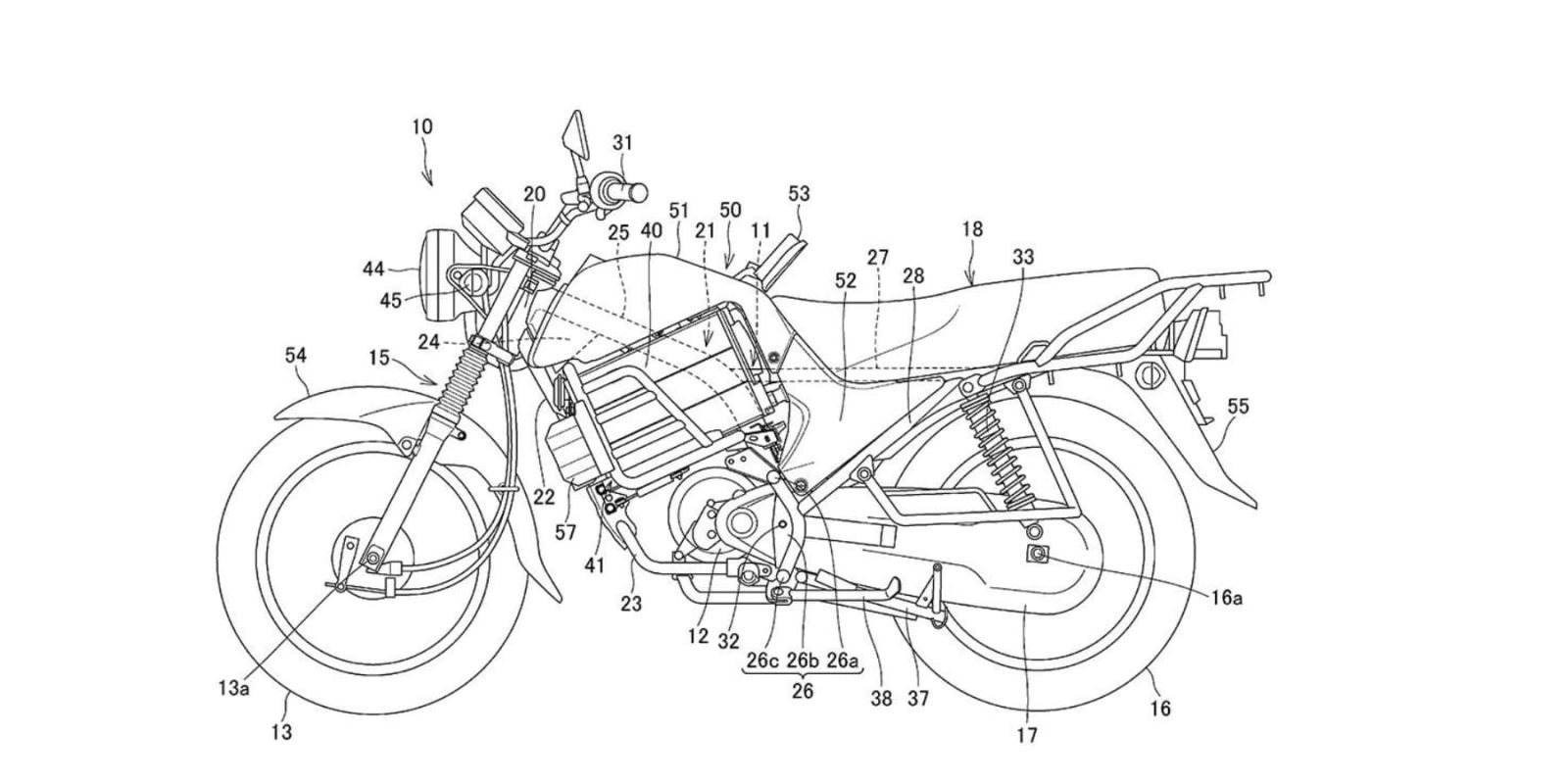
A newly filed patent from Honda offers a glimpse into exactly that philosophy. Spotted by AMCN’s Ben Purvis, the design outlines an extremely basic electric motorcycle that appears aimed squarely at cost-sensitive markets such as India and parts of Africa, where millions of people rely on simple commuter motorcycles as their primary transportation.
The bike itself is refreshingly old school. Instead of aluminum frames, fancy electronics, or high-performance components, the design uses a conventional steel frame paired with the cheapest and most proven parts available. That means classic dual rear shocks, a front cable-operated drum brake, and minimal bodywork. Where you’d normally expect a small air-cooled single-cylinder engine on these types of bikes, however, sits a compact electric motor and a pair of removable batteries.
It’s similar in form and function to a previous patent we saw for a Honda electric motorcycle based on the same frame as the lightweight Honda Shine 100. This time though, the batteries feature a key difference.
In fact, those batteries are the most interesting part of the design, and the main focus of the patent. Rather than being buried inside the frame or bolted permanently in place, each battery sits in a metal cage mounted on either side of the bike. The cages hinge forward, allowing the batteries to swing outward and slide free. Once inserted, the cages hinge back into place, aligning the batteries with cutouts in the bike’s tank-shaped bodywork and locking them securely.
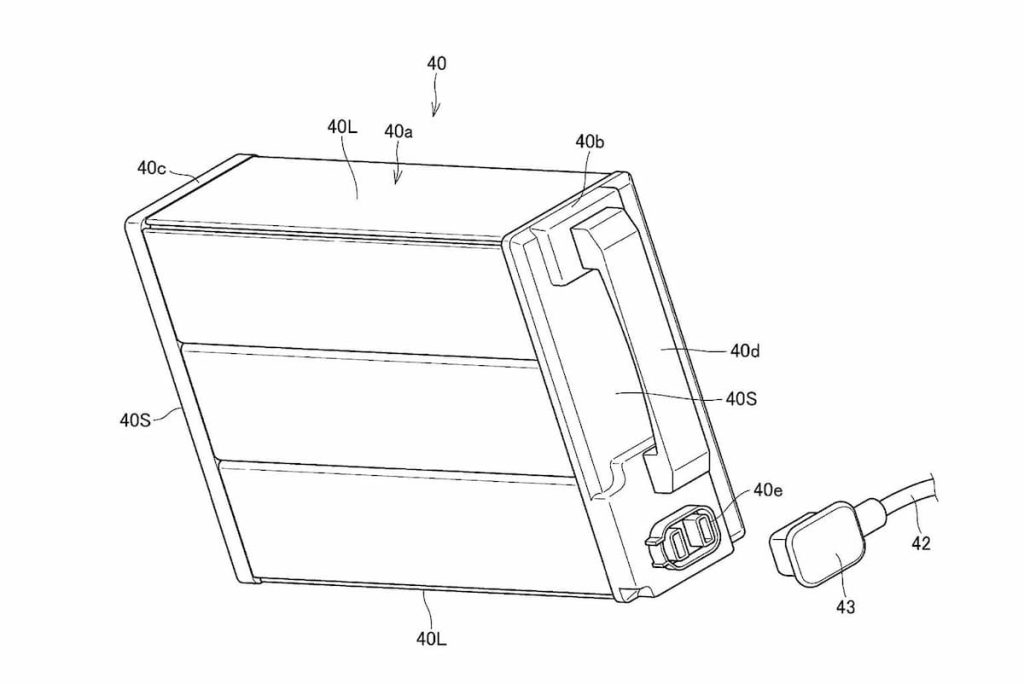
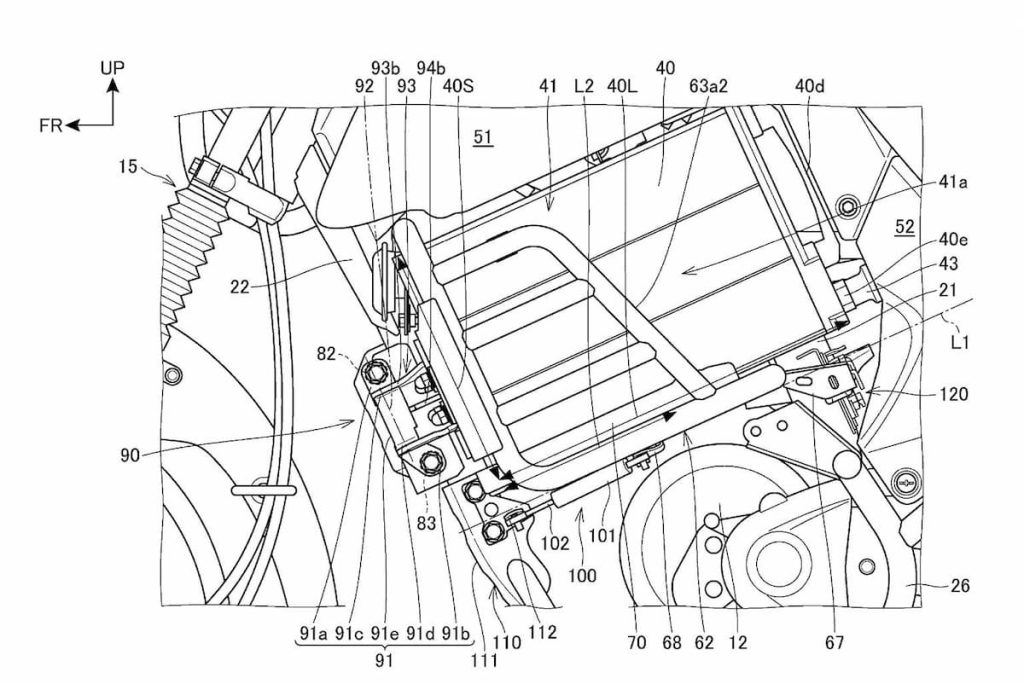
A lockable flap on top of the “tank” hides a simple manual latch, which keeps the battery cages from opening unless you have the key. The bike also uses a traditional ignition key, positioned behind a basic display that will likely show essentials such as speed and state of charge. There’s no onboard charger, no automated connectors, and no complex hardware. When the batteries are installed, they’re simply plugged in with flexible cables. At the end of the day, riders remove them and charge indoors.
It’s an interesting move considering that Honda has its own in-house swappable battery standard that it uses in its own scooters and licenses out for other companies to use, but appears not to have used that form factor in favor of a slimmer profile for the removable batteries. It follows on the heels of another Honda model that was recently unveiled with a fixed battery pack, again eschewing Honda’s own in-house battery swapping standard.
Honda hasn’t disclosed battery chemistry, range, or performance figures, but the intent is clear. By making the electric drivetrain cheaper than the small gasoline engine it replaces, the company could deliver a genuinely affordable electric motorcycle. There’s no indication that the model shown in the patent will hit the production floor, but it appears to be a highly developed design and is thus likely not much more than a corporate green light away from a future model year. Even if it doesn’t make it to production though, it’s a reminder that sometimes, the fastest path to electrification isn’t more tech – it’s less!


FTC: We use income earning auto affiliate links. More.