In an increasingly mobile-first digital purchase process, car buyers are researching their next purchase outside of normal business hours. Buyers bounce around the internet looking at manufacturer and dealer websites, YouTube reviews and social media to inform their purchase decisions. When an enquiry comes to the dealer, it is essential that they are responded to… Continue reading Are dealers moving to a 24 hour retail environment?
Tag: Strategy
Congestion pricing is the only way to fix our broken transportation system
Last week, Los Angeles’s Metro board, which oversees the second-largest transportation system in the country, discussed a proposal to charge drivers to use LA’s busiest and most traffic-clogged roads, a concept known as congestion pricing. One by one, the board members voiced their opposition to such a policy. “I am deeply concerned.” “It seems punitive.”… Continue reading Congestion pricing is the only way to fix our broken transportation system
Chevron Invests In Natron To Develop ESS For EV Charging Stations
Chevron will be engaged in battery energy storage for EV chargers? Interesting news comes from Chevron, which through Chevron Technology Ventures (CTV) made a strategic investment in Natron Energy (formerly Alveo Energy) – an energy storage company that is developing a new high power, long cycle life, low-cost battery. Area of interest for CTV are… Continue reading Chevron Invests In Natron To Develop ESS For EV Charging Stations
Carlos Ghosn claims ‘plot and treason’ led to arrest
Kyodo | Reuters
A court sketch, drawn by Nobutoshi Katsuyama, shows ousted Nissan Motor Chairman Carlos Ghosn during a January open hearing to hear the reason for his continued detention, at Tokyo District Court in Tokyo, Japan.
Speaking from his Tokyo prison, the former Chairman of Renault-Nissan Carlos Ghosn told Japanese media that “plot and treason” by Nissan management led to his arrest.
In his first interview since being jailed, Ghosn told the Nikkei Asian Review on Wednesday that his plan to further integrate the automakers Nissan, Renault and Mitsubishi had triggered his downfall.
Ghosn said closer integration had been discussed with Nissan President Hiroto Saikawa in September but Saikawa had excluded Mitsubishi's CEO from the talks.
The tycoon reportedly said he had “no doubt” the legal charges against him were a result of “plot and treason” by Nissan management who opposed the strategy.
According to Ghosn, people who wanted to remove him from his role had also created a false image that his reign was a dictatorship.
“People translated strong leadership to dictator, to distort reality,” Ghosn said.
Nissan confirms SEC inquiry into company payment practices
7:29 AM ET Mon, 28 Jan 2019 | 00:38
Ghosn, along with former Nissan Director Greg Kelly, have now spent more than 70 days in jail.
Japanese prosecutors claimed the pair failed to declare around $43 million in deferred compensation between the years of 2010 and 2015. Ghosn is also accused of transferring personal trading losses to the company books.
Nissan has also separately accused Ghosn of receiving improper payments as well as using a third-party to purchase luxury properties in Rio de Janeiro and Beirut. The Brazilian-born businessman denies all the charges.
When asked about his health, the 64-year-old said he was “doing fine” and that life in the detention center was “up and down.”
On suggestions that he is being kept in prison as he is considered a flight risk, Ghosn responded: “I won't flee, I will defend (myself).”
French auto firm Renault holds a 43 percent stake in Nissan, while Nissan holds 15 percent of Renaults stock and a 34 percent stake in Mitsubushi Motors.
For more on this story please click here.
VW aims to open e-vehicle platform to competitors – Tagesspiegel
FILE PHOTO: Volkswagen logos are pictured during the media day of the Salao do Automovel International Auto Show in Sao Paulo, Brazil November 6, 2018. REUTERS/Paulo Whitaker/File Photo BERLIN (Reuters) – Volkswagen is in advanced talks with competitors over opening its modular MEB platform for the mass production of electric vehicles to rivals, German paper… Continue reading VW aims to open e-vehicle platform to competitors – Tagesspiegel
UPDATE 1-Scout24 rejects approach for car unit from Auto1 – sources
* Scout24 turned down approach by Auto1, sources say * Company previously turned down billion euro takover bid (Adds detail, background) FRANKFURT, Jan 30 (Reuters) – German online classifieds company Scout24 AG has rejected an expression of interest for one of its businesses from a rival, people close to the matter said. German used-car dealing… Continue reading UPDATE 1-Scout24 rejects approach for car unit from Auto1 – sources
Mitsubishi Motors Carves a New Creation for Geneva
TOKYO–(BUSINESS WIRE)–Mitsubishi Motors is famous for carving its own niche. Soon its latest creation will be revealed, bringing more SUV capability, EV efficiency, technology and style to the lineup. Named after a beautiful, rugged Alpine town with a history of sporting success, the MITSUBISHI ENGELBERG TOURER will make its debut at the Geneva International Motor… Continue reading Mitsubishi Motors Carves a New Creation for Geneva
Enterprise Completes Acquisition of Deem
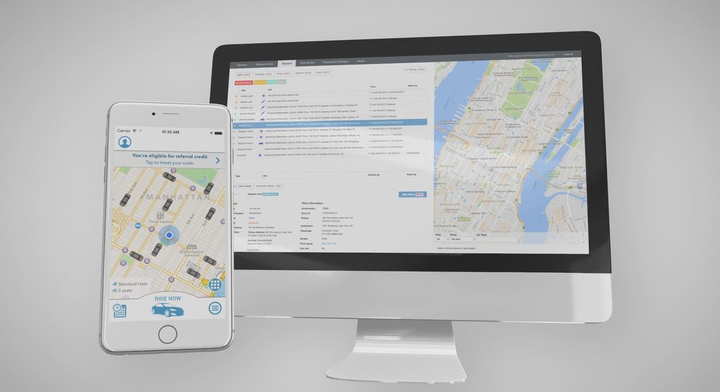
Under Enterprise Holdings, Deem now has access to an infusion of capital and resources to help further expand its product roadmap and increase the pace of product development and enhancements. Screenshot via Deem. Enterprise Holdings today completed the purchase of Deem, a managed-travel technology platform. The Deem platform includes Deem Work Fource and Deem Ground Work, a suite of online… Continue reading Enterprise Completes Acquisition of Deem
Rules to rein in ride-hailing apps coming to Barcelona
Catalonia’s regional government in Spain has agreed new rules to regulate the vehicle for hire (VTCs) sector that will require ride-hailing companies such as Uber and Cabify to substantially change how they operate in Barcelona and other local cities as soon as this week. The changes have been agreed by decree, ahead of a planned… Continue reading Rules to rein in ride-hailing apps coming to Barcelona
Mazda rotary range-extended EV and diesel engine both coming, but no US hybrids for now
Follow Bengt
2019 Mazda 3 underhood
A look under the hood of Mazda’s future includes a patchwork of “what if” possibilities and a series of juggled timelines.
Mazda is in a tough spot right now with regulators and in finding its place across many global markets. Part of the issue is that Mazda is considered an Intermediate-size manufacturer and subject to California’s ZEV mandate, requiring a certain percentage of its sales volume to be electric cars, plug-in hybrids, or hydrogen vehicles.
Unlike some other small or intermediate carmakers, it doesn’t have any overarching major-automaker partnerships (except for a development venture for EVs with Toyota), and its sales aren’t heavily biased toward a single market.
DON’T MISS: 2020 Mazda electric car to share Toyota underpinnings, technology
Of a global sales total of about 1.6 million vehicles last year, Mazda sold just over 300,000 vehicles in the U.S.; compare that to Subaru, which is in a similar predicament but made just over a million vehicles last year, selling 680,000 of them in the U.S.
Mazda is under pressure to produce some plug-in vehicle, if only for California ZEV states by the end of the year. So it's moving along with work on its electric vehicle, supported by a Wankel rotary-engine range-extender, confirmed Mazda’s vice president of R&D and design, Masashi Otsuka, last week, at a backgrounder and early drive for the 2019 Mazda 3, which arrives at dealerships in March.
Mazda Sustainable Zoom-Zoom 2030
Some of the development work for the plug-in is being done in the U.S., Otsuka confirmed, and the automaker will have more news about this model later in the calendar year.
Zooming toward CO2 reductions
It all fits into Mazda’s “Sustainable Zoom-Zoom 2030” plan, a long-term vision announced in 2017 for how the carmaker will continue to provide enjoyable vehicles while also reducing its corporate average carbon dioxide emissions—as considered on a “well-to-wheel” basis, including life-cycle emissions—by 50 percent from 2010 levels by 2030.
To achieve this, Mazda is one of the few carmakers that has no intent to freeze the evolution of the gasoline engine; it includes the continued improvement of the internal combustion engine in its big-picture efficiency initiative.
CHECK OUT: 2019 Mazda 3 sedan and hatch aim for an X factor—and that’s not electric
The plan also included the announcement that beginning in 2019 it would “start introducing electric vehicles and other electric drive technologies in regions that use a high ratio of clean energy for power generation or restrict certain vehicles to reduce air pollution.”
Mazda future powertrains
Even within the U.S., Mazda, like other automakers, faces some differing priorities. Mazda’s sales aren’t as geographically skewed toward the coasts as some other automakers either, which makes building market share challenging.
To help with that, starting this year Mazda is making all-wheel drive widely available in its Mazda 3 lineup. And it’s perfectly clear that it hasn’t given up on diesel for the U.S. market. The automaker’s timeline for its long-delayed Skyactiv-D diesel-engine rollout, according to company officials, will be clarified with a product-related announcement at the New York auto show in April.
As another official hinted, the strategy we may instead see for diesel is a limited rollout for something like a half-dozen states—a way to provide a high-efficiency counterpoint to plug-ins, wherever it might go over well.
Page 1 of 2
1
2
Next >