Ford announces new in‑vehicle apps designed to help drivers – including those in larger commercial vehicles – navigate to new destinations quickly, confidently and accurately Sygic Truck Navigation app is for the first time integrated into an infotainment system, helps commercial vehicle drivers avoid getting stuck along narrow roads or under low bridges what3words –… Continue reading Ford Helps Point Businesses in the Right Direction with New Connected Vehicle Navigation Apps at MWC Barcelona 2019
Tag: Waymo/Google
Elon Musk is ‘almost unethical,’ says outgoing AutoNation CEO
Musk is over-promising on autonomous vehicles, says AutoNation CEO Mike Jackson
10:45 AM ET Fri, 22 Feb 2019 | 00:57
Tesla CEO Elon Musk acts in an “almost unethical” way, the outgoing CEO of the largest U.S. auto dealer chain told CNBC on Friday.
Musk recently said he expects Tesla to have all the features needed for fully self-driving cars by the end of the year. That seems like an almost impossible goal, Cox Automotive executive publisher Karl Brauer said Wednesday on CNBC's “The Exchange.” Other companies working on autonomous driving technology, such as Waymo, are not making such bold predictions.
“I think he is overpromising on autonomous vehicles in an almost unethical way,” AutoNation CEO Mike Jackson said on “Squawk Box,” referring to Musk.
Jackson has long been a Tesla critic and has accused Musk of using “bait-and-switch” tactics on consumers, making commitments he cannot keep, and has said the electric car maker's business will not be sustainable over the long term.
In the interview Friday, Jackson once again criticized Tesla's practice of taking orders on the midsize Tesla Model 3 sedan, saying the cars Tesla has been building are different from the ones the company had said it planned to build. Tesla initially advertised its Model 3 at a price of $35,000 but has so far sold only more expensive versions.
“There's not another retailer in America that could get away with that bait and switch,” Jackson said. Currently the cheapest Model 3 starts at $42,900. Musk has said that despite the originally advertised price, Tesla has had to prioritize the production of more expensive versions to keep margins high. At one point, Tesla had more than 400,000 reservations for the the Model 3.
Tesla has faced political and legal battles in several states over its decision to eschew the traditional dealership model in favor of a direct model that sells to customers.
AutoNation reported earnings of $1.10 on Friday, missing a consensus estimate by 4 cents. The dealership chain also said Jackson will end his long tenure in the top job in March, and Carl Liebert will succeed him on March 11. Liebert was formerly chief operating officer at financial services company USAA. He was also executive vice president of stores at home improvement retailer Home Depot.
AutoNation shares sank 6 percent in early trading Friday. Tesla's stock was up 1.2 percent.
“It was a challenging quarter, no question,” Jackson said. New vehicle sales across the industry were down 10 percent in California, and environments in Texas and Florida were also problems.
“But even beyond those two explanations, I think retail automotive is getting more difficult,” he said, attributing the challenges in part to the cyclical nature of the business.
Jackson said he expects a gradual downturn across the industry. He expects sales in 2019 to be about 16.8 million vehicles, down from 17.2 million in 2018.
Tesla did not immediately respond to CNBC's request for comment about Jackson's remarks.
Elon Musk: Full Self-Driving Teslas This Year, “Unequivocal” Tesla Autopilot Improves Safety
InvestElectric CarsElectric Car BenefitsElectric Car SalesSolar Energy RocksRSSAdvertisePrivacy Policy
Autonomous Vehicles Published on February 20th, 2019 | by Steve Hanley
Elon Musk: Full Self-Driving Teslas This Year, “Unequivocal” Tesla Autopilot Improves SafetyTwitterLinkedInFacebookFebruary 20th, 2019 by Steve Hanley
Credit: ARK Invest via Twitter
Elon Musk sat down with Tasha Keeney and Cathie Wood of ARK Invest February 19 for a podcast session that focused primarily on Tesla’s Autopilot technology and when Musk sees it being capable of driving cars with no human interaction.
ARK Invest is a financial management company whose stated mission is identifying “disruptive innovation in the public markets,” according to its website. “We research a global universe that spans sectors and market capitalizations to offer investment solutions with low correlation to traditional index-based strategies, because we believe innovation is key to growth.” Currently, about 8% of ARK’s portfolio is invested in Tesla. The group’s target price for the stock in the long term is a highly aggressive $4,000 per share.
“I think we will be feature complete — full self-driving — this year,” Musk said in the podcast interview. “Meaning the car will be able to find you in a parking lot, pick you up, and take you all the way to your destination without an intervention, this year. I would say I am certain of that. That is not a question mark. However, people sometimes will extrapolate that to mean now it works with 100 percent certainty, requires no observation, perfectly. This is not the case.”
In other words, he is talking about Level 4 autonomy not Level 5, which presupposes that the car can do everything a human driver can do under all conditions. That goal is still a few years away, Musk suggests, and depends on certain factors over which Tesla has no direct control, such as state and federal regulators. “My guess as to when we would think it is safe for somebody to essentially fall asleep and wake up at their destination? Probably towards the end of next year. That is when I think it would be safe enough for that.”
Autonomous cars are the holy grail for most automakers today, as well as Waymo, the self-driving arm of Google (er, Alphabet). What makes Tesla so sure it is able to keep up with all those heavy hitters? “The reason Tesla is making rapid progress is because we have vastly more data, and this is increasing exponentially.” As each new Tesla hits the road, its onboard computer begins sending streams of data back to Tesla, where engineers can use it to verify the functionality of Autopilot and compare upgrades that are in the works with real-world experience.
Musk has stated repeatedly that Autopilot is already safer than a human driver and will only get better over time. “No matter how you slice the data, it is unequivocal at this point that it’s safer to have autopilot on.” Finally, Musk told Tasha and Cathi, “People think sometimes that I’m like a business person or finance person, or something like that. I’m an engineer. I do engineering, always have.” Seems to be working out reasonably well for him so far.
About the AuthorSteve Hanley Steve writes about the interface between technology and sustainability from his home in Rhode Island and anywhere else the Singularity may lead him. His motto is, “Life is not measured by how many breaths we take but by the number of moments that take our breath away!” You can follow him on Google + and on Twitter.
Back to Top ↑AdvertisementAdvertise with CleanTechnica to get your company in front of our readers.
CleanTechnica Clothing & Cups Top News On CleanTechnica Join CleanTechnica Today!
AdvertisementAdvertisementFollow CleanTechnicaFollow @cleantechnica
Our Electric Car Driver Report Read & share our new report on “electric car drivers, what they desire, and what the demand.”The EV Safety Advantage
Read & share our free report on EV safety, “The EV Safety Advantage.”EV Charging Guidelines for Cities
Share our free report on EV charging guidelines for cities, “Electric Vehicle Charging Infrastructure: Guidelines For Cities.”30 Electric Car Benefits Our Electric Vehicle Reviews
Tesla News
Cleantech Press Releases Let Them Speak! Why The Solutions Project Is Funding Renewable Energy Innovation Led By Women & People Of Color | #CleanTechnica Exclusive New Research Shows That Only Two Large Petroleum Companies Have Meaningful Emission Reduction Targets Koben Announces EVOLVE EVSF —Grid-Friendly Modular EV Store & Forward System38 Anti-Cleantech Myths Wind & Solar Prices Beat Fossils Cost of Solar Panels Collapses
© 2018 Sustainable Enterprises Media, Inc.
InvestElectric CarsElectric Car BenefitsElectric Car SalesSolar Energy RocksRSSAdvertisePrivacy Policy
This site uses cookies: Find out more.Okay, thanks
Elon Musk: Teslas Will Be Fully Self-Driving By Next Year
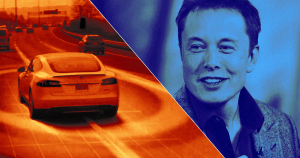
Tesla/Ramin Talaie/Corbis via Getty Images Full Autonomy According to Elon Musk, Tesla’s cars are nearly ready for fully autonomous driving. “I think we will be feature complete — full self-driving — this year,” Musk told Cathie Wood and Tasha Keeney of ARK Invest in a podcast on Tuesday. “Meaning the car will be able to find you… Continue reading Elon Musk: Teslas Will Be Fully Self-Driving By Next Year
Electric truck start-up Rivian announces $700 million investment round led by Amazon
Source: Rivian
Rivian R1T electric pickup truck
Electric truck start-up and potential Tesla rival Rivian announced a $700 million investment round led by Amazon on Friday.
The announcement comes just months after the Michigan-based company unveiled both an electric pickup truck and sport utility vehicle at the LA Auto Show in November.
“This investment is an important milestone for Rivian and the shift to sustainable mobility,” said RJ Scaringe, Rivian Founder and CEO. “Beyond simply eliminating compromises that exist around performance, capability and efficiency, we are working to drive innovation across the entire customer experience. Delivering on this vision requires the right partners, and we are excited to have Amazon with us on our journey to create products, technology and experiences that reset expectations of what is possible.”
The news confirms a Reuters report on Tuesday that Amazon had invested in the firm. Reuters had also reported that automaker General Motors had made an investment in Rivian, but neither GM nor Rivian has confirmed this yet.
The round included investments from Rivian's existing shareholders. It will remain an independent company. Rivian currently has more than 750 employees located in several locations, including Plymouth, Michigan; San Jose and Irvine, California; Normal, Illinois; and Surrey, England.
It plans to launch its R1T pickup truck and R1S sport utility in the U.S. in 2020, and begin introducing them overseas in 2021. The company has modeled both vehicles on what it calls a “skateboard” platform, which it says it flexible enough to accommodate several different vehicle body styles.
Some industry analysts have speculated that Amazon could be interested in Rivian's platform for developing vehicles for its massive global logistics needs.
“We're inspired by Rivian's vision for the future of electric transportation,” said Jeff Wilke, Amazon CEO Worldwide Consumer. “RJ has built an impressive organization, with a product portfolio and technology to match. We're thrilled to invest in such an innovative company.”
This is Amazon's second investment in transportation this month. The online giant recently put money into Aurora, an autonomous vehicle technology company run by Waymo and Tesla alumni.
Trucks and SUVs are also increasingly more popular with U.S. consumers than cars, and customers seem willing to pay more for them, meaning more profits for automakers. The business case for an electric pickup or SUV could be stronger than one for a sedan, given how much money companies have had to sink into electric batteries and motors and how difficult it has been for companies to make money on electric cars.
Morgan Stanley analyst Adam Jonas said in a note this week that a successful electric pickup from an upstart such as Rivian or Tesla could pose a serious threat to Detroit automakers, who depend heavily on sales of truck-based vehicles.
This is breaking news. Please check back for updates.
Carmakers cut their PCP prices to kickstart Q1
Car manufacturers have adjusted their retail offer strategies to kickstart the year with a 4.4% drop in the average monthly prices of PCP deals, to £311.40, according to AM’s latest quarterly data. The increased affordability across manufacturers’ model ranges is in contrast to the 5.5% quarterly rise seen in Q4 2018. AM’s analysis of 259… Continue reading Carmakers cut their PCP prices to kickstart Q1
Waymo Tops Self-Driving Car ‘Disengagement’ Stats As GM Cruise Gains And Tesla Is AWOL – Forbes
A Cruise self-driving car doing a test route in San Francisco in January 2019.Getty Images It’s tough to know for sure which companies really have the best self-driving car technology, though Alphabet Inc.’s Waymo and General Motors Cruise can point to the only public data available in the U.S. that compares dozens of programs testing… Continue reading Waymo Tops Self-Driving Car ‘Disengagement’ Stats As GM Cruise Gains And Tesla Is AWOL – Forbes
Driverless truck startup TuSimple raises $95 million at $1 billion valuation – VentureBeat
There’s a healthy demand for driverless trucks. It’s an industry predicted to reach 6,700 units globally, totaling $54.23 billion this year, and one that stands to save the logistics and shipping industry $70 billion annually while boosting productivity by 30 percent. Besides cost savings, the growth is driven in part by a shortage of human drivers. In 2018,… Continue reading Driverless truck startup TuSimple raises $95 million at $1 billion valuation – VentureBeat
Self-driving truck start-up achieves unicorn status in funding round that values it at $1 billion
Imaginechina | AP Images
A self-driving TuSimple truck is on display during 2018 World Artificial Intelligence Conference in Shanghai, China.
Autonomous trucking company TuSimple has achieved unicorn status on Wall Street with a fresh funding round that values the start-up at $1 billion.
The company said Wednesday it raised $95 million in a series D funding led by Sina Corp. and Composite Capital, a Hong Kong-based investment firm, as it prepares to expand its testing of self-driving semis on highways in Arizona, New Mexico and Texas.
“By the end of 2020 or early 2021 we think we think we can take the driver out of the cab on trucks,” said Chuck Price, chief product officer of TuSimple.
San Diego-based TuSimple is developing technology to allow shipping companies to operate self-driving class 8 tractor-trailers, potentially eliminating the need for drivers, the biggest expense facing trucking firms today, especially in a tight labor market. On average, shipping firms spend $2 per mile hauling goods, a cost TuSimple believes it could cut by 30 percent by eliminating the driver with autonomous trucks.
The money will help TuSimple expand its fleet of 12 test trucks to more than 50 by June. The company is currently testing autonomous semis on routes between Phoenix and Dallas.”
The extra cash will also help the company develop joint production of autonomous semis with truck manufacturers. TuSimple is currently working with two tractor-trailer makers, which it is not naming.
There are just under 3.5 million semis on the road in the U.S., according the American Trucking Association. They are the heartbeat of an $800 billion freight shipping industry TuSimple executives believe will continue growing.
“With e-commerce growing by double digits every year, freight shipping is not slowing down,” said Cheng Lu, CFO of TuSimple
Most of the attention surrounding the development of autonomous vehicles has been focused on self-driving cars and the race to build autonomous ride-hailing companies. Alphabet subsidiary Waymo, General Motors subsidiary Cruise and Uber are just a few of the companies that have dominated headlines with their work on self-driving cars. By comparison, the potential of autonomous semis has not received as much attention.
That could change as TuSimple and others demonstrate tractor-trailers can drive autonomously from shipping depot to shipping depot. “A big milestone will be showing that on one route we can take out the driver completely,” said Price.
TuSimple is not alone in the push to develop self-driving semis. Embark Trucks, Ike, Starsky Robotics, Thor Trucks and Udelv are also working on autonomous trucks.
Correction: This story was revised to correct the date of TuSimple's announcement to Wednesday.
An update on Waymo disengagements in California

An update on Waymo disengagements in California Waymo TeamBlockedUnblockFollowFollowingFeb 13 Each year California requires companies with AV testing permits in the state to report on their disengagements. These reports assist the state in its understanding of how well a self-driving car is doing its job. Today the California Department of Motor Vehicles (DMV) published Waymo’s… Continue reading An update on Waymo disengagements in California