InvestElectric CarsElectric Car BenefitsElectric Car SalesSolar Energy RocksRSSAdvertisePrivacy Policy
Cars Published on February 6th, 2019 | by Zachary Shahan
Tesla Model 3 Price Inches Down To $43,000 — Or $35,000 With Estimated $8,000 In Incentives & SavingsTwitterLinkedInFacebookFebruary 6th, 2019 by Zachary Shahan
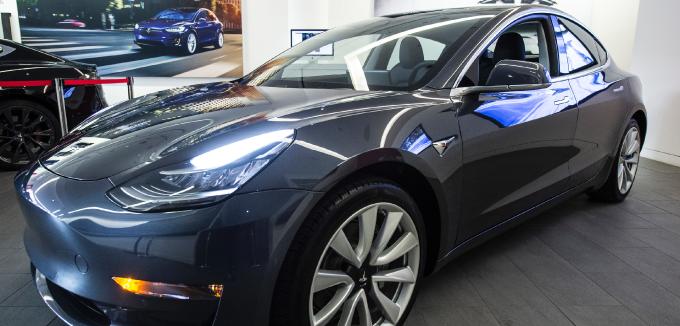
It seems that one of Elon Musk’s most urgent tasks this quarter is to get the base price of the Tesla Model 3 down to a number much closer to $35,000. It is not lost on anyone that a key feature of the Model 3 has always been its planned base price of $35,000, and that even though the Model 3 has been on the market for approximately a year and a half, we’re still several thousand dollars away from that base price.
Due to lower operational and maintenance costs, the total cost of ownership of a Model 3 could be similar to a Toyota Camry or Honda Accord, but that doesn’t change that many people simply don’t have the cash or credit capacity to get a $43,000 car — or just can’t swallow paying so much for a people mover.
$42,900 is now the base price for a Model 3, after the price dropped $1,100 in the past few hours. You can confirm that and configure a car here.
Interestingly, if you do go to that order page, you’ll see that the price of the car after estimated savings is now $34,850. Coincidence?
The price cut reportedly comes from Tesla nixing its referral program, which Elon Musk recently tweeted was “adding too much cost to the cars, especially Model 3.”
That $42,900 base price is for a rear-wheel drive version of the Model 3 with 264 miles of range on a full charge (EPA rating). It still includes the $5,000 premium package. If Tesla dropped that premium package (which comes with various goodies, including the wonderful glass roof, super soft vegan leather seats, a premium sound system, heated seating, and more), the base price could be down to $37,900.
As you can see, that would get Tesla mighty close to the targeted $35,000 base price, but it also means Tesla has to change up its manufacturing lines (which adds temporary costs and production delays). Tesla would have to get used to putting different seats, sound systems, and roofs in the cars. I imagine the production crew isn’t eager to change all those things up while it tries to get production to a steady 7,000 Model 3s per week.
If you want all-wheel drive and 310 miles of range, the base price is now $49,900, and the Performance trim ups the ante to $60,900 before savings. (Yes, that’s where Tesla really boosts its gross margin.) But hey, that’s the price of going from 0 to 60 mph in 3.3 seconds instead of 5.6 or 4.5 seconds — and getting some red calipers to go along with the speed bonus. If you’ve got the money, I’d say it’s worth it.
For those of you keeping score at home, as our own Tina Casey likes to say, Tesla already reduced the price of the Model 3 by $2,000 at the beginning of January. If Tesla cuts the price of the Model 3 another $3,100 in the next two months, then we’re down to $39,800, which would be cut to $34,800 if you dropped the $5,000 premium package.
Of course, there’s another matter we haven’t discussed at all yet. The current $42,900 price isn’t just the base model plus the premium package. It also has more battery capacity and range than you’re supposed to get in the base model. Aside from cutting $5,000 for the premium upgrades, you should theoretically cut something for the big drop in battery capacity planned for the Model 3 Standard Range. If the price cut for the 220 mile battery that replaces the 310 mile battery is $2,900, then it seems Tesla could already produce the $35,000 Model 3 and make money on it — if the company was ready for that.
Naturally, due to the tight financial situation Tesla is still in (in order to avoid taking any more money from Wall Street banks that haven’t been playing nice in the past year or two), the company’s going to produce and quickly sell as many Performance and Long Range models as it can before opening up the floodgates with the Model 3 Standard Range. The plan for months has been that Tesla will ship these higher-trim, higher-margin options to Europe and Asia before shipping the base Model 3 to US customers around the middle of this year.
Tesla’s pricing can change pretty frequently, and the price drop this week following the price drop just a month is a good example of that. Whether Tesla will keep stepping down the price in $1,000–2,000 increments remains to be seen. The other possibility is that the Silicon Valley company will stick with this price for the next few months before producing the base Model 3 and slashing the lowest possible cash price to $35,000.
As far as other pricing matters, remember that Tesla charges extra for any color other than black. Dark grey/silver and blue add $1,500 to the cost, white adds $2,000, and red adds $2,500 — for the time being.
The prettier rims also add $1,500. (Or, if you don’t like the aero rims, the wheels look pretty cool if you simply take the rims off.)
The beautiful and super soft vegan white interior adds another $1,000 if you don’t want the black seats.
The biggest add-on is Enhanced Autopilot at $5,000 (or $7,000 if you add it after you purchase the car).
If you just have to have all the most expensive things (red paint, white seats, prettier rims, Enhanced Autopilot) but you start with the current base version of the car, then you get up to $52,900 at the register, a full $10,000 more than if you stick with all the defaults (black paint, black seats, aero rims).
Just remember that the US federal tax credit could knock $3,750 off any of those prices (at the time that you file your 2019 taxes, and only if you have that much tax liability) and there are other state, province, and utility incentives out there. Also, as highlighted on the Tesla order pages, there are operational savings that lower the Model 3’s cost relative to gasoline cars. It’s logical to crunch the numbers yourself and see what that does for your pocketbook.
How long till we can buy the $35,000 Model 3 before incentives? Hopefully just a matter of months. Tesla’s working on it. In the meantime, check out some pics of beautiful Model 3s taken by CleanTechnica writers around the US and see if they don’t make you click the “Place Order” button.
About the AuthorZachary Shahan Zach is tryin' to help society help itself (and other species). He spends most of his time here on CleanTechnica as its director and chief editor. He's also the president of Important Media and the director/founder of EV Obsession and Solar Love. Zach is recognized globally as an electric vehicle, solar energy, and energy storage expert. He has presented about cleantech at conferences in India, the UAE, Ukraine, Poland, Germany, the Netherlands, the USA, and Canada. Zach has long-term investments in TSLA, FSLR, SPWR, SEDG, & ABB — after years of covering solar and EVs, he simply has a lot of faith in these particular companies and feels like they are good cleantech companies to invest in. But he offers no professional investment advice and would rather not be responsible for you losing money, so don't jump to conclusions.
Back to Top ↑AdvertisementAdvertise with CleanTechnica to get your company in front of our readers.
CleanTechnica Clothing & Cups Top News On CleanTechnica Join CleanTechnica Today!
AdvertisementAdvertisementFollow CleanTechnicaFollow @cleantechnica
Our New Electric Car Driver Report Read & share our new report on “electric car drivers, what they desire, and what the demand.”The EV Safety Advantage
Read & share our free report on EV safety, “The EV Safety Advantage.”EV Charging Guidelines for Cities
Share our free report on EV charging guidelines for cities, “Electric Vehicle Charging Infrastructure: Guidelines For Cities.”30 Electric Car Benefits Our Electric Vehicle Reviews
Tesla News
Cleantech Press Releases New Research Shows That Only Two Large Petroleum Companies Have Meaningful Emission Reduction Targets Koben Announces EVOLVE EVSF —Grid-Friendly Modular EV Store & Forward System The New Danish Climate Plan — Together For A Greener Future38 Anti-Cleantech Myths Wind & Solar Prices Beat Fossils Cost of Solar Panels Collapses
© 2018 Sustainable Enterprises Media, Inc.
InvestElectric CarsElectric Car BenefitsElectric Car SalesSolar Energy RocksRSSAdvertisePrivacy Policy
This site uses cookies: Find out more.Okay, thanks