No ‘sound investor’ would want Elon Musk to remain CEO of Tesla, says former GM exec Bob Lutz

If Elon Musk left Tesla, the stock would go up: Expert
4 Hours Ago | 06:14

For the good of Tesla, Elon Musk should step aside, former vice chairman of General Motors Bob Lutz told CNBC on Friday.

“I can't imagine any sound investor who has money in the company or any independent board member would want him to remain as CEO in light of recent performance,” Lutz said on CNBC's “Closing Bell.”

The New York Times published an extended interview with Musk on Friday in which he said the past year has been “excruciating” and “the most difficult and painful” of his career. The interview follows months of erratic behavior on Musk's part, both on and off social media. Most recently, the CEO tweeted that he would take Tesla private at $420 per share and had “funding secured,” which has invited scrutiny from the Securities and Exchange Commission.

Musk took to Twitter in July to call a British cave diver who assisted in the rescue of a Thai boys soccer team a “pedo guy.” During Tesla's first-quarter earnings call in May, Musk dissed analysts, cutting off Sanford Bernstein's Toni Sacconaghi because of what he called a “boring, bonehead” question. Musk later apologized to Sacconaghi and to the diver, Vernon Unsworth, for his comments.

“Elon is tired, he's worn out. He's obviously got some emotional problems. He's self medicating. He has shown some disturbing signs of being somewhat volatile and unstable,” Lutz said. “I think the right solution for Tesla at this point is to move him aside from day-to-day operation.”

Lutz, an automotive industry veteran who has also served in top roles at BMW, Chrysler and Ford, has been a huge critic of Tesla in the past. In November of last year he said Tesla is “going out of business.” Although he wasn't quite as critical this time around, he did raise some of the same issues, saying Tesla was “bleeding” profitability and “will probably have to go back to the capital markets for more money.”

“In my personal judgment, the board should take action and find a CEO. Not get rid of Elon — keep him as the visionary, keep him as the titular head of the company, and give him the honor and respect the founder of the company deserves,” Lutz said. “But that company needs professional management, and it needs it now.”

J.P. Eggers, associate professor at New York University's Stern School of Business, agreed, saying it is likely there are many other things Musk would rather spend his time on than Model 3 production goals.

“We see this all the time with … start-up founders or early leaders in these firms, where what they really want to do is do the vision, do the growth, build the … reputation of the company. And when it comes to actually executing on the vision, they aren't always the best ones for that,” Eggers said Friday on “Closing Bell.”

As much as it might be better for Tesla — and its stock price — were Musk to step aside as CEO, Eggers said, he's not so sure Musk would be willing to stay on with the company in a secondary role.

“I have a hard time seeing him doing anything other than being completely involved or walking completely away. He's tenacious; that's what's made him successful to this point,” Eggers said.
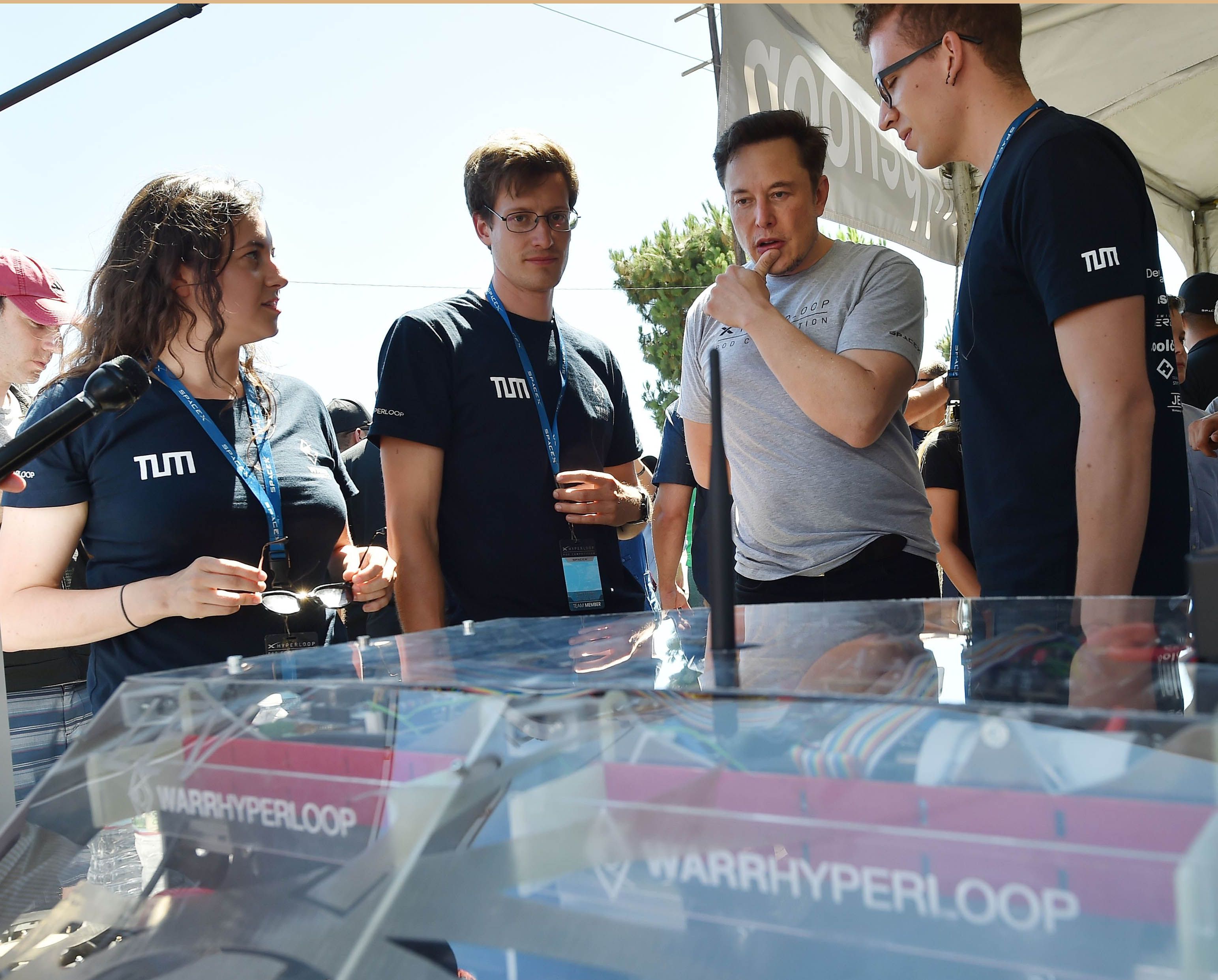

Could Musk's tweet about taking Tesla private lead to legal trouble?

Could Musk's tweet about taking Tesla private lead to legal trouble?Nine words tweeted by Tesla CEO Elon Musk Tuesday afternoon raised questions for the outspoken auto executive.
At 12:48 p.m. Musk tweeted: “Am considering taking Tesla private at $420. Funding secured.”
The tweet caused a stir in the stock market. Tesla shares spiked 11 percent to close at $379.57 after trading was halted for part of the afternoon while investors awaited clarification. The stock's record high was $389.61 on Sept. 18, 2017.
But the tweet could be in violation of state and federal laws, said a former federal prosecutor.
“You’re not allowed to issue misleading information that investors could act on, and it looks like investors acted on it,” said Peter Henning, a professor at Wayne State University Law School specializing in securities law.
Read more:
Musk: Tesla hit weekly Model 3 production goal
Tesla CEO's tweets cause stir in Flint
Legally, shareholders could sue Musk for a breach of fiduciary responsibility, said Henning. If the tweet gives an impression that Musk is trying to “stampede the board,” that’s a violation of state fiduciary duty of directors, Henning said.
“You’re not allowed to strong-arm the directors, even if you are a 20 percent stakeholder” as Musk is, Henning said.
If the Securities and Exchange Commission believes Musk's tweet misled shareholders, the SEC could deem it a violation of anti-fraud prohibition in the federal securities law, said Henning.
“I suspect the corporate lawyers are scrambling right now and hoping the SEC doesn’t go after him and the company, because it could be viewed as a statement from Tesla,” said Henning. “If it misleads investors, the SEC can bring a case even if no one’s been harmed.”
The SEC in 2013 did say that companies can use social media such as Facebook and Twitter to announce key information so long as investors have been alerted about which social media will be used to disseminate the information.
Musk offered some clarification to his tweet later, saying the “only reason why this is not certain is that it’s contingent on a shareholder vote.”
Musk, whose tweets initially caused confusion as some investors questioned whether he had been hacked, later confirmed his thinking through Tesla's official website.
“I think this is the best path forward,” he said in an email to employees, further clarifying that “a final decision has not yet been made, but the reason for doing this is all about creating the environment for Tesla to operate best.”
The explanation could have been late, said Henning. Corporate governance requires a company officer to first notify the board of directors of any deals, then negotiate a deal with the board.
“The tweet is potentially misleading. It didn’t give the kind of details that shareholders would want. The key detail being that it’s not a done deal. It sounded like, 'We’ve got the financing and we’re done.' That’s not how it works.”
He added, “If an analyst said, 'Musk should take the company private,' people would shrug their shoulders. It’s much different when the CEO says it. The law is protective of shareholders. You have to get them the best deal, and whether $420 is a fair price or not? We don’t know.”
Contact Jamie L. LaReau at 313-222-2149 or jlareau@freepress.com. Nathan Bomey of USA Today contributed to this report.
Read or Share this story: https://on.freep.com/2nmksgG

Bollinger Asks Tesla If It Can Use Superchargers

8 M BY MARK KANE Bollinger Motors B1 electric truck at a Tesla Supercharger? That might become a sight in the near future if the startup truck maker gets an answer from Tesla. Bollinger Motors could become the first electric vehicle manufacturer to get access to the massive Tesla Supercharging network, this biggest plus in… Continue reading Bollinger Asks Tesla If It Can Use Superchargers

Elon Musk Details ‘Excruciating’ Personal Toll of Tesla Turmoil

Elon Musk was at home in Los Angeles, struggling to maintain his composure. “This past year has been the most difficult and painful year of my career,” he said. “It was excruciating.” The year has only gotten more intense for Mr. Musk, the chairman and chief executive of the electric-car maker Tesla, since he abruptly… Continue reading Elon Musk Details ‘Excruciating’ Personal Toll of Tesla Turmoil

EV startup Bollinger wants to use Tesla’s Supercharger network

Bollinger Motors, a New York-based EV startup developing an all-electric utility truck, reached out to Tesla CEO Elon Musk to inquire about the possibility of them having access to Tesla’s Supercharger network. For years now, Tesla officials have been talking about the possibility of opening up their Supercharger network to other automakers, but it hasn’t resulted… Continue reading EV startup Bollinger wants to use Tesla’s Supercharger network

For Tesla, ‘going dark’ might not be as easy as just turning off the lights

Simon Dawson | Bloomberg | Getty Images
Elon Musk, billionaire, co-founder and chief executive officer of Tesla Motors Inc.

Elon Musk still hasn't made a formal proposal to take Tesla private, an idea he floated last week in a series of tweets he has since attempted to clarify.

Many questions remain about his plan, chief among them how he would pull off taking private a $60 billion publicly traded company.

Lawyers and advisors tell CNBC it's not going to be as simple as “going dark,” as smaller companies have done in a big wave in the decade since the financial crisis. In order to pull that off, a company has to have fewer than 300 shareholders (or 500 in some cases). The process involves filing a few forms with the Securities and Exchange Commission and removing the shares from the exchange where they were listed.

It has been an escape for hundreds of companies over the last decade that found themselves crippled by the pressures of having to meet rigorous public financial disclosure requirements. But Tesla is a big company, and removing itself from the public market is a lot more complicated.

“No one has done it on this large a scale,” said Peter Bible, chief risk officer of EisnerAmper and a former chief accounting officer of General Motors.

Usually, the investing public waits impatiently for the next hot initial public offering, but Silicon Valley's tech elite has been disappointing those expectations lately. Many are content to stay private. CB Insights counts 260 $1 billion-plus “unicorns” with a combined private valuation of $840 billion. Last year, there were 160 IPOs versus 486 in 1999 at the height of the dot-com frenzy, according to Statista.

Constant pressure from shareholders and analysts about near-term performance was enough to drive companies like Dell and Tibco to move in the opposite direction and go private, but through the traditional buyout route where shareholders are cashed out.

Tibco, a business intelligence software maker, delisted from Nasdaq in 2014 and went private through a $4.3 billion deal with Vista Equity Partners. “Private provides you with the leeway you do't have in a public setting,” its chief technology officer told Britain's CIO magazine at the time.

Tesla debuted on the Nasdaq in 2010, raising $226 million as its shares jumped 41 percent on their first day of trading, and it has returned to the market several times since then issuing more shares. Musk's personal stake in the company has risen in value from $512 million at the time of the IPO to $12.8 billion.

But the electric car company's founder and CEO has complained that being publicly traded invites distracting focus on short-term financial goals and makes Tesla the target of traders who attack the company in order to profit from a decline in its shares.

How it's done

Simply going dark is a multistep process. The exchanges need several days notice of the plan, and the public has to be informed at the same time. Then forms are filed with the SEC, one to notify it of the delisting and another to deregister the shares if the company has 300 or fewer shareholders. But if the shareholders aren't bought out with cash, the shares continue to trade, moving over to the more thinly traded over-the-counter market.

Going private requires cash to buy out the minority shareholders, usually through a merger, tender offer or reverse stock split.

But Musk's proposal adds a complicating factor.

He has said he wants to preserve a broad ownership of Tesla as a private company. That might be impossible for the mom and pop investors in the stock now who don't qualify to invest in private companies as accredited investors. If they want to keep their ownership, it might have to be through a special purpose fund, something Musk has mentioned.

And that special purpose fund might have to be publicly traded, Morningstar's David Whiston said.

“Issues around regulatory approval come to mind because it is unclear how Tesla will allow retail investors who are not accredited investors to own stakes in a private Tesla,” he wrote in a note this week. “That issue is why we think the special-purpose vehicle Musk pointed to in the Aug. 7 email may have to be publicly traded.”

Tesla said Tuesday its board has set up a special committee to examine Musk's idea. Lawyers for the committee and the company have been hired, and Musk has tweeted that he has his own advisors, including the private equity firm Silver Lake, which is said to be interested in a possible investment.

The special board committee, including directors Brad Buss, Robyn Denholm and Linda Johnson Rice, hadn't reached any conclusions about “the advisability or feasibility” of a transaction and that it could consider alternatives, Tesla said Tuesday. Shareholders would also have to vote on a transaction, lawyers and advisors said.

That's another complicating factor, lawyers said. There's no guarantee that enough shareholders will agree or that enough will want to sell their shares at Musk's suggested $420 price to get Tesla's shareholder count low enough to deregister the shares. Whiston estimates about 40 percent of the shareholders might take the money, and that would cost about $28.7 billion.

Depending on state law, he'd have to get a super majority of shareholders (in Delaware, it's 90 percent) to be able to squeeze out any holdouts, lawyers said. But Musk has said there will be no forced sales.

Its biggest investors, aside from Musk himself, are mutual funds and money managers in addition to China's Tencent and Saudi Arabia's sovereign wealth fund. Collectively this group holds about 66 percent of the shares. About 17 percent are owned by investors who are too small (either in the amount of Tesla they own or the size of their portfolios) to have to report their stakes. Musk has said he believes two-thirds of Tesla's shareholders will stick with it as a private company.

The deal could turn out to be as unique as the collection of space transportation, electric automobile, high-speed transportation and solar power generation projects Musk has cobbled together in his business empire.

“There is a recipe for going private, but like everything else, Elon Musk does it his own way,” said Barry Genkin, a partner at law firm Blank Rome. “He hasn't put any meat on the bones and everyone is scratching their heads about what he means.”

A choked up Elon Musk says his health has suffered and that he believes ‘the worst is yet to come’

Elon Musk was at home in Los Angeles, struggling to maintain his composure. “This past year has been the most difficult and painful year of my career,” he said. “It was excruciating.” The year has only gotten more intense for Mr. Musk, the chairman and chief executive of the electric-car maker Tesla, since he abruptly… Continue reading A choked up Elon Musk says his health has suffered and that
he believes ‘the worst is yet to come’

UPDATE 1-SEC pressing Tesla directors for details on communications with Musk – WSJ

(Reuters) – Federal regulators are pressing Tesla Inc’s (TSLA.O) directors for details on how much information Chief Executive Elon Musk shared with them before he tweeted last week about a potential deal to take the company private, the Wall Street Journal reported on Thursday, citing a person familiar with the matter. FILE PHOTO: Tesla Motors… Continue reading UPDATE 1-SEC pressing Tesla directors for details on communications with Musk – WSJ

SEC pressing Tesla directors for details on communications with Musk: Wall Street Journal

(Reuters) – Federal regulators are pressing Tesla Inc’s (TSLA.O) directors for details on how much information Chief Executive Elon Musk shared with them before he tweeted last week about a potential deal to take the company private, the Wall Street Journal reported on Thursday, citing a person familiar with the matter. FILE PHOTO: Tesla Motors… Continue reading SEC pressing Tesla directors for details on communications with Musk: Wall Street Journal