Original Article
Tag: VW
Chinese rideshare giant Didi Chuxing makes big move in driverless car race
A logo of ride-hailing giant Didi Chuxing displayed on a building in Hangzhou in China's eastern Zhejiang province.STR | AFP | Getty ImagesChinese ride-hailing giant Didi Chuxing ( “Didi”) has amassed more than 550 million users and 31 million drivers since taking to the streets of Beijing seven years ago. In the past three years, the global rideshare giant has devoted close attention to its autonomous driving unit. That unit became an independent company on Monday in a move designed to focus and designate more resources toward business development and product innovation.
The Uber-competitor established its autonomous driving team in 2016 and has since employed more than 200 people in China, as well as at its Mountain View, California research facility, where it has been working with various auto manufacturers like Volkswagen and Toyota Motors to test core innovative technologies.
Last month, Didi Chuxing received $600 million in corporate financing from Toyota, which includes directly establishing a joint venture with GAC Toyota, a joint venture between Toyota and a Chinese car maker. The new funds come as Didi continues heavy expansion in several new overseas markets, where it hopes to challenge Uber and other ride-hailing giants like India's Ola, Brazil's Easy Taxi and Singapore's Grab — a three-time CNBC Disruptor 50 company.
Didi Chuxing is also a notable Disruptor 50 company, breaking the top 10 at No. 4 in 2018 and No. 2 in 2019.
“Autonomous driving will greatly enhance the safety and efficiency of travel,” said Didi Chairman and CEO Cheng Wei in a release. “In the future, people's transportation needs … will be met by the combination of seamless autonomous driving technology and human driving services that are indispensable for their quality and warmth.”
To fund the new driverless car company, Didi is in new talks with SoftBank, according to a report from The Information. The Japanese tech and telecom giant has previously made multiple, large investments in the ride-hailing company. Based on the most recent funding round, Didi Chuxing has raised $22.74 billion and is valued at $57.6 billion.
In 2016, the same year that Didi's autonomous driving unit was established, SoftBank played an influential role in Uber's decision to sell its China business to Didi, notably pushing the U.S. ride-hailing giant out of the region and exposing Didi to their customer base outside of China for the first time.
Investors want clearer profit pathAsad Hussain, a PitchBook analyst and an expert in mobility, ride-sharing and autonomous vehicles, sees the company's decision as part of a broader trend consistent with the challenges that self-driving technology presents.
“Spinning out autonomous divisions enables these companies to raise outside capital and offers investors a more targeted bet on self-driving relative to investing in the parent entity,” he said. “We think this is a logical move for Didi and other ride-sharing companies facing pressure from investors to streamline costs and show a clear path to profitability.”
Didi went through a major round of layoffs earlier this year, according to multiple reports, as it continues to lose money, like its competitors. Uber recently announced 400 job cuts in its marketing team.
Waymo, Alphabet's autonomous vehicle unit, also announced that it would raise outside capital for the first time this past March, positioning itself to cut costs and limit downside risks.
Didi's Chief Technology Officer (CTO) will head the new autonomous driving company as CEO. In an email to CNBC, a communications representative for Didi said that the company does not currently have plans for an IPO.
Uber and Lyft, the U.S. rideshare leaders with heavy investments in driverless vehicles, have fared poorly after highly anticipated IPOs earlier this year as investors doubt how quickly they can become profitable.
VIDEO2:4902:49There will be consolidation in the driverless car industry: Pony.aiSquawk Box AsiaIn a recent survey, auto and tech industry experts predicted it will be at least 12 years before fully autonomous vehicles are being sold to private buyers. While Tesla CEO Elon Musk says 1 million Teslas capable of being robotaxis will be on the road by the end of next year, industry experts say robotaxis will not be ready for widespread public use until 2025.
Last week, General Motors subsidiary Cruise, postponed a planned launch of an autonomous ride-share service as it continues developing, validating and making sure its self-driving cars are ready.
“What's most important when we do launch this service is that we do it the right way,” Cruise CEO Dan Ammann said.
EU engine-tech project could help gas catch up with gasoline
Some biofuels, like biogas from landfills—or synthetic methane—are attractive for use in vehicles as they have a potentially low energy cost to produce. They also have lower criteria emissions, of the sort that affect human health and cause smog.
These engines should easily be cross-compatible with those using compressed natural gas (CNG). Up until now, however, passenger-car engines haven’t been optimized for these fuels (even natural gas, in most cases) and those designed to burn these fuels have often been adapted versions of gasoline engines, with some traits of diesels added.
As a result, gaseous-fuel-burning engines have lagged gasoline engines in thermal efficiency, despite their potential to do better than gasoline.
Tech talk-through for gaseous-fuels emissions reduction
That was the subject of a $26 million EU project called Gas On. The four-year project just concluded in March, with more results revealed in May. The goal was to design a gas-only internal combustion engine that reduced carbon-dioxide emissions (and thus fuel consumption) by 20 percent compared to best-in-class 2014 vehicles using compressed natural gas (CNG), with a “gasoline-like vehicle driving range.”
Aiming to step up efficiency for light vehicles
The project included a consortium of 20 members, including Volkswagen Group, Ford, Renault, and Fiat, and it sought innovative concepts for direct injection, ignition, and boosting systems, advanced exhaust aftertreatment, and systems that detect the gas composition and quality.
Volkswagen Group Lean CNG Combustion Concept
The best engine achieved the targeted 20-percent reduction in fuel consumption (based on WLTP-cycle calculations for a mid-size passenger car), with a peak efficiency of more than 45 percent and more than 40 percent efficiency reached over a wide operating range.
The efficiency gains are a step in the right direction, if the technology ever stands a chance, as gasoline development keeps nudging efficiency upward, battery electrics catch on, and energy experts continue to point to larger utility-scale power production as the best hope for these gaseous fuels.
Could be a hard sell for consumers, companies
With major gains for gasoline engines on one side, and growing momentum around electric vehicles on the other side, the industry faces some challenges for deploying biogas vehicles on any large scale.
2016 Toyota Prius Unveiling
The arrival of the fourth-generation 2016 Prius signalled the latest round of improvements for gasoline engines, as Toyota claimed a 40-percent thermal efficiency for its engine. The Hyundai Ioniq and Kia Niro that soon followed also claimed 40 percent. And now the Dynamic Force Engine that’s being installed in the new Camry and RAV4, among others, is rated at 40 percent in standard versions and 41 percent in hybrids.
Hyundai is reportedly targeting 50 percent for at least one next-generation engine. Meanwhile Mazda has claimed a thermal efficiency of up to 44 percent for its Skyactiv-X engine, which is likely to come to the U.S. in the next year or two, and it anticipates—from some reports—an efficiency in the range of as high as 56 percent for the next generation of its Skyactiv gasoline technology.
Better used for power generation?
Thermal efficiency is directly related to fuel economy and emissions and, simply put, how much work is produced from the fuel energy input. Natural-gas powered plants, while controversial at times, can already approach 60 percent efficiency.
2012 Honda Civic Natural Gas
Real-life use is also an important point. According to the EPA, EVs actually convert 59 to 62 percent of grid energy to power at the wheels, but typical internal combustion engines convert 17-21 percent. For some of those hybrids with the most efficient engines, the total-vehicle figure may be close to 30 percent today.
While the official part of the Gas On project is over, the next step will be for the automakers to conduct some real-world testing with fleets—echoing what happened about a decade ago when the last round of light-duty natural-gas vehicles, like the Honda Civic Natural Gas.
With electric cars more widely seen as a future replacing internal combustion gasoline tech, it’s going to be an even tougher argument this time around.
Porsche’s Cayenne Turbo S E-Hybrid makes a quick SUV even quicker
The Porsche Cayenne Hybrid is an outstanding SUV. It’s quick, agile and sort of tricks you into thinking you’re driving a smaller vehicle. But Porsche being Porsche the automaker wasn’t happy to leave the vehicle be. So they introduced the Cayenne Turbo S E-Hybrid an even faster sort of eco-friendly sports utility vehicle. Gallery: 2020… Continue reading Porsche’s Cayenne Turbo S E-Hybrid makes a quick SUV even quicker
Porsche packs the power into its newest Cayenne plug-in hybrids
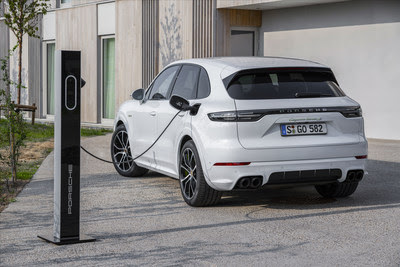
Porsche is upping its plug-in hybrid game with several new vehicles added to its lineup, including a power-packing 2020 Cayenne Turbo S E-Hybrid. The plug-in version of this flagship SUV combines a 14.1-kilowatt-hour battery and 134-horsepower electric motor with a 4.0-liter twin turbocharged V8 engine found in the traditional gas-powered Cayenne Turbo. The electric motor… Continue reading Porsche packs the power into its newest Cayenne plug-in hybrids
The most powerful Porsche Cayenne is a plug-in hybrid
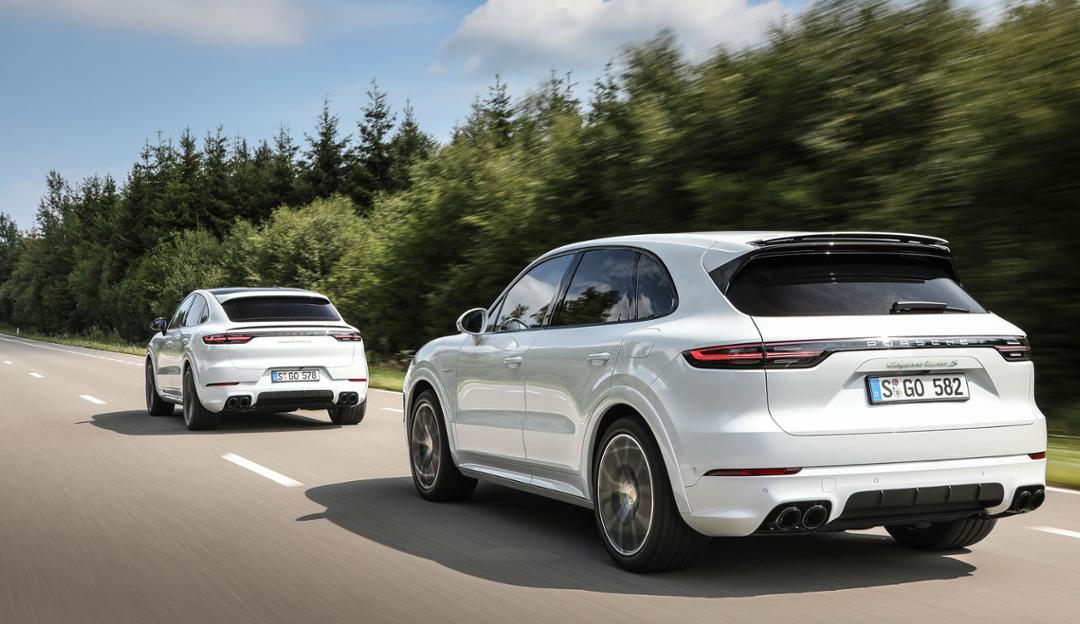
All Cayenne models feature LED headlights, a cruise control system with speed limiter function, camera-based pedestrian protection and Park Assist at the front and rear – including a rear-view camera system in the Cayenne Coupé. Optional extras include LED matrix beam headlights, a head-up display, Night Vision with thermal imaging camera, and the Porsche InnoDrive… Continue reading The most powerful Porsche Cayenne is a plug-in hybrid
VW says system can detect pedestrians as long as car isn't going too fast
Original Article
French company makes EV conversions easy for old clunkers
Off-the-shelf EV conversions aren't just for classic cars like Prince Harry's Jaguar anymore.
French startup Transition One plans to make it easy to convert a wide variety of average old cars in the country to electric power by building a standard conversion kit. The company says the kit will fit several top-selling models in Europe, including the Renault Twingo II, Fiat 500, Citroën C1, Peugeot 107, Toyota Aygo, and VW Polo.
The kit will sell for about $9,400 (8,500 Euros), and buyers can receive a 3,500 Euro tax credit in France, bringing the equivalent cost down to about $5,500. The company plans to complete each conversion in about four hours, once production is up and running.
The company has started by building a prototype electric car from a 2009 Renault Twingo, a small hatchback about the size of a Toyota Yaris. It uses Tesla battery modules in three packs under the hood, along with the motor and power electronics, and two more battery packs where the gas tank once sat.
Classic Mini Cooper electric conversion by Swind
The packs weigh 265 pounds, giving it about 18 kilowatt-hours of energy, which the company says will deliver about 112 miles of range in the Twingo.
In an interview with Bloomberg, company founder Aymeric Libeau said, “I’m selling to people who can’t afford a brand new 20,000 Euro [$22,200] electric car.”
The plan might be compared to that of Montreal's Ecotuned—aiming to convert old Ford F-150s with dying gas powertrains to electric power for fleets. The types of large, body-on-frame trucks that Ecotuned converts are as plentiful in North America as the small cars that Transition One plans to convert are in Europe. Other conversion companies—and some automakers—have begun focused conversion efforts on certain classics, such as the Jaguar E-Type, Porsche 911, and the original Mini Cooper.
Libeau still needs to get his conversions approved by European regulators, which he says he expects to receive by the end of the year. Transition One is also seeking financing to buy a factory to produce up to 400 of the conversions a year, and plans to open orders in September to test the market demand.
Automotive supplier tests immersion-cooled batteries for EVs
The two biggest challenges for electric cars—battery life and charge times—come down to battery cooling.
Now British auto parts supplier Ricardo is working with partners to come up with a new type of cooling technology that the company hopes will allow automakers to pack more energy into cars' batteries and to charge them faster. The technology, called immersion cooling relies on coating the batteries with dielectric cooling gel, called MIVOLT, used as electrical insulation in other applications.
If it's successful, the technology could prolong battery life in electric cars and accept higher current rates while charging without overheating them, and potentially bring charge times down closer to the time it takes to refill a gas tank.
The i-CoBat immersion cooling project aims to reduce the size and cost of cooling systems to allow automakers to build denser battery packs without increasing the heat buildup.
2019 Audi e-tron battery pack
Today's liquid cooling systems rely on cooling plates with pumps to circulate ethylene glycol or another coolant. If it proves effective, the immersive cooling technology could split the difference between those bulky, heavy systems and simpler air-cooled systems such as in the Nissan Leaf, which has been more prone to heat-related battery issues than other electric cars.
Nissan, for instance, has limited the number of times the cars could fast-charge to prevent damage to the batteries, which made it difficult to take the cars on long trips that would require more than one or two DC fast charges, although the cars were equipped with CHAdeMO fast-charge ports. (Nissan has since issued a software update for the cars to allow them to use DC fast chargers more frequently.)
With simpler, cheaper cooling systems, electric cars could use bigger batteries that charge faster and last longer. The MiVOLT immersive coolant is also biodegradable, unlike ethylene glycol, which is also used as coolant in most gas engines.
Nissan electric-car battery
Ricardo is working on the project with British materials company M&I Materials and WMG, a manufacturing effort of the University of Warwick, in Britain as part of the British government's Faraday Challenge.
The project isn't the first to work on immersive cooling systems. A similar project launched in Taiwan in 2017.
“Power, performance, practicality such as fast charging times, and price are key determinants in persuading consumers to opt for an EV rather than a liquid-fueled vehicle when they next change their car,” said Neville Jackson, Ricardo's Chief Technology and Innovation Officer. “With current cell technologies, thermal management is a crucial enabler for improvements in these areas in order to reduce or eliminate range anxiety, and promote consumer acceptance of electric cars.”
Porsche Is Reinventing Its Main Plant To Handle Taycan Production
Porsche Taycan to be produced on multiple floors and in different building complexes using a flexi-line with driverless transport systems that move automatically from station to station. The introduction of the all-electric Porsche Taycan turns out to be an unprecedented challenge for the German manufacturer. Porsche is investing roughly €1 billion in its main production… Continue reading Porsche Is Reinventing Its Main Plant To Handle Taycan Production