In a battle for dominance against rival Uber, Ola had previously registered losses of US$736.2 million. Go to Source
Tag: Uber
VW buggy, Porsche 911 Hybrid, Shell chargers, Tesla profits: Today’s Car News
2018 Tesla Model S and 2018 Tesla Model X
Tesla reported profits, and revealed new model lineups for its Model S and Model X—and another price cut. Volkswagen announced it will build a concept electric dune buggy for the Geneva auto show. Details of the upcoming Porsche 911 Hybrid have emerged. And Shell has bought its first charging network in North America. All this and more on Green Car Reports.
Profit reports are key, especially for a company like Tesla that has built a following of evangelists hoping to change the world, but whose ability to survive hinges on shoring up its shaky finances. In its most recent quarterly earnings call, Tesla revealed that it turned a profit and built up its cash reserves in the last quarter of 2018, while producing more cars than ever before.
The company also cut prices and introduced new base versions of the Model S sedan and Model X SUV with shorter range batteries limited by software, not cells.
VW will add to its portfolio of throwback electric models, at least in concept, with a new concept version of the classic Meyers Manx dune buggy based on the company's new “affordable electric” MEB architecture. It will reveal the concept at the Geneva auto show in March, and is considering putting it into production.
U.S. charging network operator Greenlots announced it has been bought by oil giant Shell. Shell has been gradually expanding into the electric-car charging business, but Greenlots chargers will be its first in the U.S.
Details have leaked out about two new hybrid systems that Porsche plans to put in its new 911. Unlike Porsche's other models, however, neither will plug in.
The Chinese company that builds electric Saabs, NEVS, bought a large stake in Swedish exotic carmaker Koenigsegg, which leads to speculation about more upcoming electric supercars.
Finally, there could be some consolation this weekend for fans whose team loses the Superbowl. Ride sharing service Uber is offering free rides in Los Angeles or Boston if their team loses the big game.
_______________________________________
Follow Green Car Reports on Facebook and Twitter
Uber’s transit offering just went live in Denver
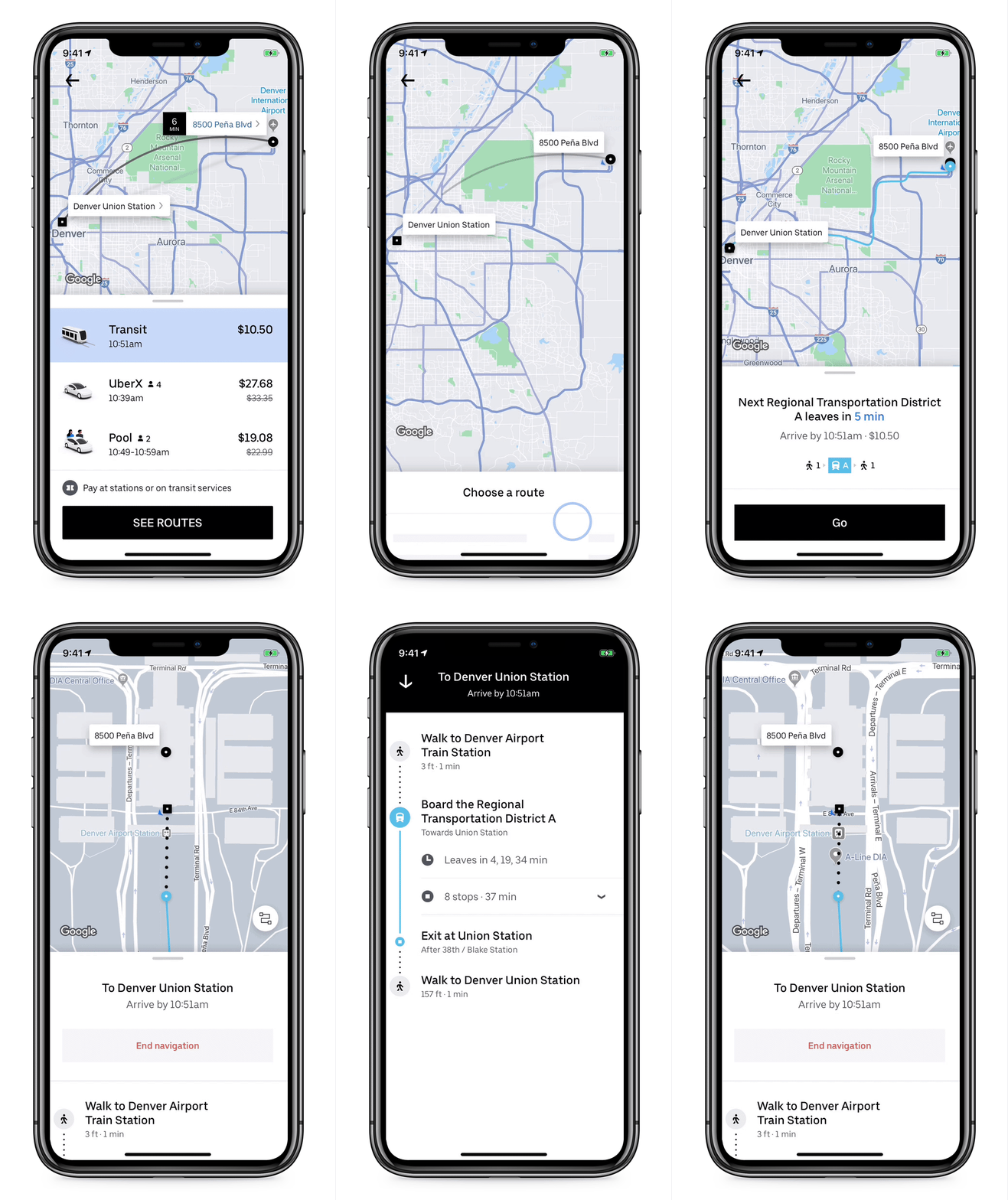
Uber, after announcing its intentions to get into public transit last April, is ready to launch in Denver. In partnership with the Regional Transportation District and transit data provider Moovit, residents of Denver will now be able to navigate public transportation within the Uber app. For transit, Uber is serving two sets of customers: agencies… Continue reading Uber’s transit offering just went live in Denver
Uber new feature will let you pay transit fares through its app
With options to rent scooters and electric bikes via its Jump subsidiary, a ride with Uber today doesn’t always mean getting in a car. Now, thanks to a new feature, it may soon mean hopping onto a train. Today, Uber will launch a new Transit feature in Denver that allows users to plan their trips… Continue reading Uber new feature will let you pay transit fares through its app
Uber just added public transportation to its app
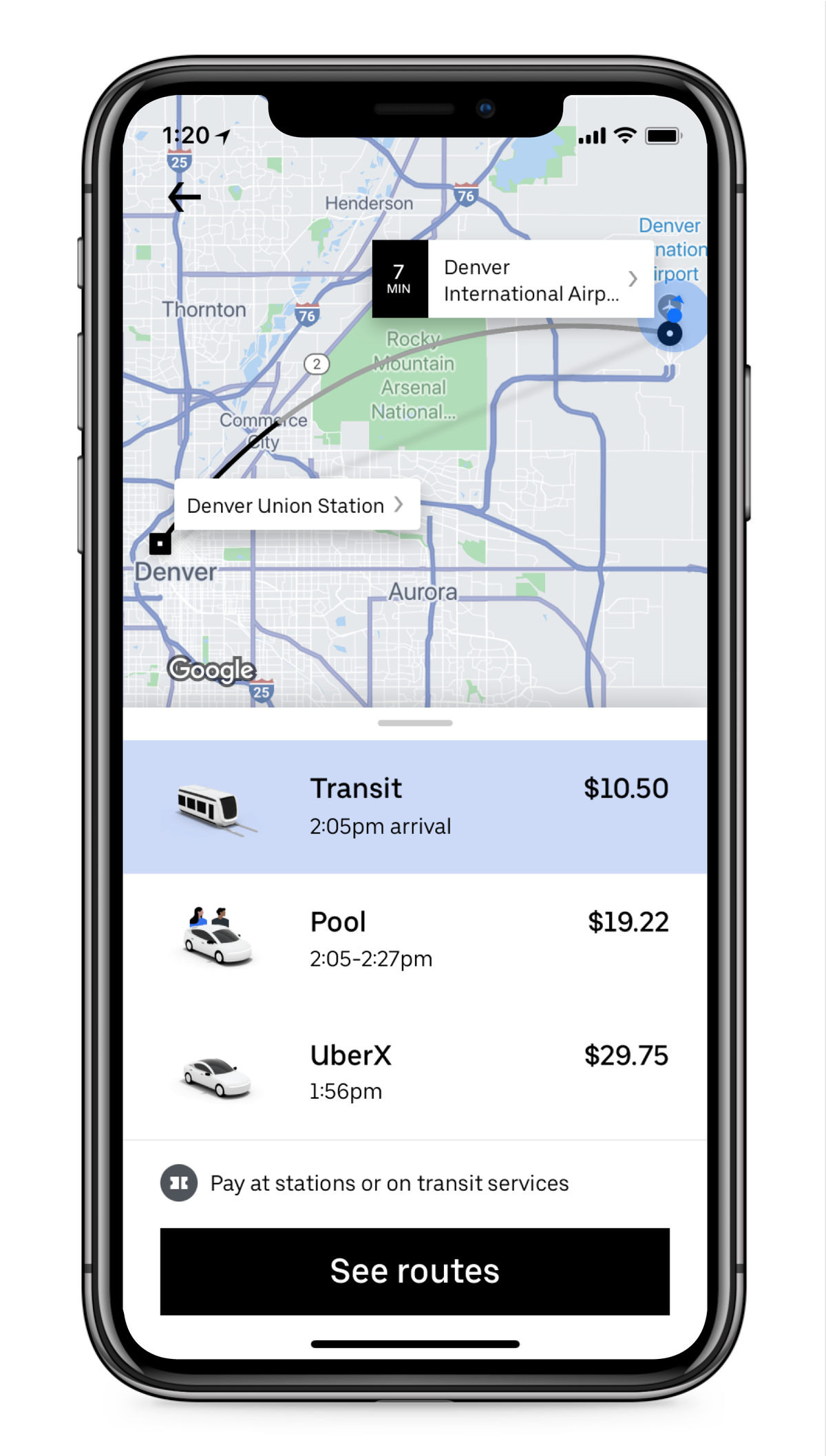
Uber customers who live in Denver may notice something strange when they open the company’s app today: a tiny train car with the word “transit” next to it, sitting atop the list of usual ride-hailing options. A quick tap produces a list of bus or train routes as well as the expected fare price and… Continue reading Uber just added public transportation to its app
Tencent moves into automotive with $150M joint venture
China’s internet firms are getting pally with giant state-owned automakers as they look to deploy their artificial intelligence and cloud computing services across traditional industries. Ride-hailing startup Didi Chuxing, which owns Uber China, announced earlier this week a new joint venture with state-owned BAIC. Hot on the heels came another entity set up between Tencent and the… Continue reading Tencent moves into automotive with $150M joint venture
Uber driven out of Barcelona again
Uber is suspending its professional taxi service in Barcelona from tomorrow almost a year after it re-entered the Catalan capital. The move follows the regional government agreeing new regulations for the vehicle for hire (VTC) sector aimed at making sure they do not compete directly with taxis. “The new restrictions approved by the Catalan Government… Continue reading Uber driven out of Barcelona again
Uber services suspended in Barcelona
Ride-hailing company Uber says it has suspended its services in the Spanish city of Barcelona because of new regulations. The decision comes after the Catalan government insisted on imposing a 15-minute delay before passengers could be picked up. Uber has been the target of protests by taxi drivers in Barcelona who say their business is… Continue reading Uber services suspended in Barcelona
Ride-hailing companies suspend Barcelona services after new regulations
MADRID (Reuters) – Ride-hailing companies Uber and Cabify are to suspend their services in Barcelona in response to the regional government’s imposition of limits on how they operate in the city. FILE PHOTO – The Uber application is seen on a mobile phone in London, Britain, September 14, 2018. REUTERS/Hannah McKay The Catalan government ruled… Continue reading Ride-hailing companies suspend Barcelona services after new regulations
UPDATE 1-China’s Didi weighs job cuts in support functions – The Information
FILE PHOTO: The logo of Didi Chuxing is seen at its headquarters building in Beijing, China, May 18, 2016. REUTERS/Kim Kyung-Hoon/File Photo REUTERS/Stringer BEIJING (Reuters) – Chinese ride-hailing company Didi Chuxing is looking at cutting headcount in some departments by up to 20 percent, technology news website The Information reported, citing a source. The layoffs… Continue reading UPDATE 1-China’s Didi weighs job cuts in support functions – The Information