First quarter revenue grew to $776 million, up 95% year-over-yearActive Riders grew to over 20.5 million in the quarter SAN FRANCISCO, May 07, 2019 (GLOBE NEWSWIRE) — Lyft, Inc. (Nasdaq:LYFT) today announced financial results for its first quarter ended March 31, 2019. “The first quarter was a strong start to an important year, our first… Continue reading Lyft Announces Record First Quarter Results
Tag: Mobility
Automotive News Covers Velodyne SVP Mircea Gradu’s Push to Standardize Automotive Safety Regulations
Automotive News Covers Velodyne SVP Mircea Gradu’s Push to Standardize Automotive Safety RegulationsAugust 9, 2019|In Media Coverage|By Albie Jarvis
Adopting standardized safety regulations will help
automakers reduce the cost and complexity of vehicle autonomy and driver
assistance and make it easier for consumers to understand how the capabilities
work.
That was a key theme of a presentation by Velodyne Lidar Senior
Vice President of Quality and Validation Mircea Gradu at the 2019 CAR
Management Briefing Seminars, according to an Automotive
News story by Richard Truett.
The story noted:
“Having one global standard would allow suppliers and
automakers to cut development cost and product complexity. For example, some
countries require a driver’s hands to always be on the steering wheel in a
vehicle that can steer itself, while other countries do not, he (Gradu) pointed
out.”
All vehicle autonomy and driver assistance capabilities need
to be assessed by the same safety gauge to benefit both the industry and
consumers.
To read the complete Automotive News story, please go
here:
https://www.autonews.com/management-briefing-seminars/agree-1-set-self-driving-rules-velodynes-gradu-urges-automakers
That was a key theme of a presentation by Velodyne Lidar Senior
Vice President of Quality and Validation Mircea Gradu at the 2019 CAR
Management Briefing Seminars, according to an Automotive
News story by Richard Truett.
The story noted:
“Having one global standard would allow suppliers and
automakers to cut development cost and product complexity. For example, some
countries require a driver’s hands to always be on the steering wheel in a
vehicle that can steer itself, while other countries do not, he (Gradu) pointed
out.”
All vehicle autonomy and driver assistance capabilities need
to be assessed by the same safety gauge to benefit both the industry and
consumers.
To read the complete Automotive News story, please go
here: https://www.autonews.com/management-briefing-seminars/agree-1-set-self-driving-rules-velodynes-gradu-urges-automakers
The most powerful Porsche Cayenne is a plug-in hybrid
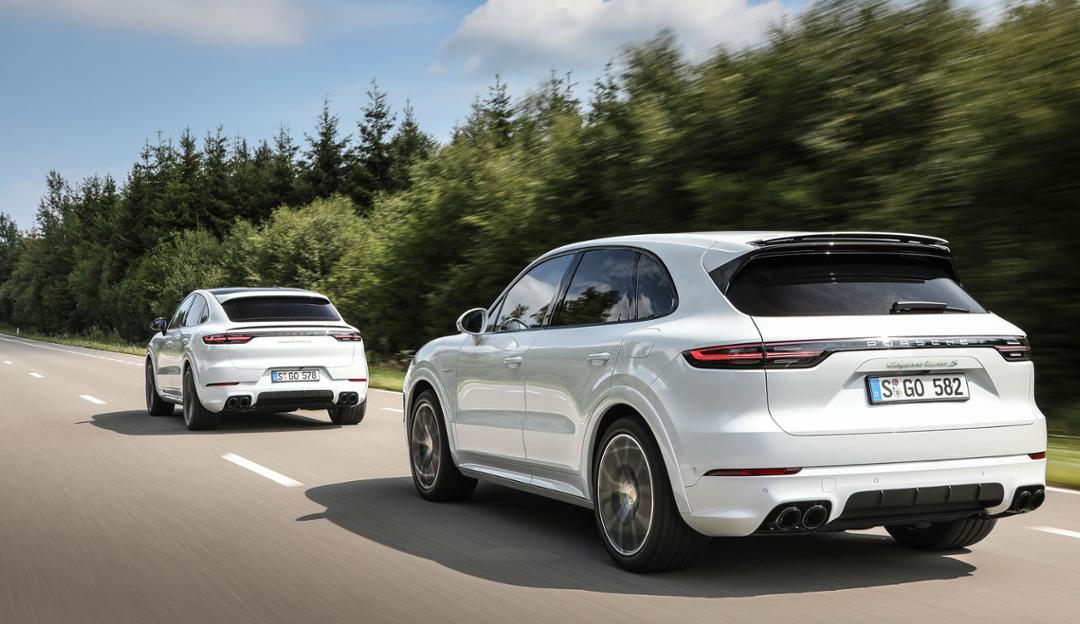
All Cayenne models feature LED headlights, a cruise control system with speed limiter function, camera-based pedestrian protection and Park Assist at the front and rear – including a rear-view camera system in the Cayenne Coupé. Optional extras include LED matrix beam headlights, a head-up display, Night Vision with thermal imaging camera, and the Porsche InnoDrive… Continue reading The most powerful Porsche Cayenne is a plug-in hybrid
Uber lost more than $5B last quarter
Uber has disclosed earnings for the second time since becoming a public company, reporting revenues of $3.16 billion on losses of $5.2 billion for the second quarter of 2019. Uber (NYSE: UBER) closed up more than 9% Thursday at $42.98 per share, just below its $45 IPO price, but took a nose dive of more… Continue reading Uber lost more than $5B last quarter
Moon Walks, Woodstock and the Ford Capri; Celebrating the 50th Anniversary of an Iconic Sports Car
Next
Previous
Home
News
Moon Walks, Woodstock and the Ford Capri; Celebrating the 50th Anniversary of an Iconic Sports Car
It was the year man walked on the moon for the first time, the legendary Woodstock festival took place and the very first Boeing 747s reached for the skies. In that same year, half a century ago, Ford’s Capri hit Europe’s roads for the first time.
When it launched in 1969, it was billed as “the car you always promised yourself” and more than 1.8 million people would make good on that promise. The demand saw Ford’s Cologne plant in Germany produce Capris for the next 17 years, through three generations, until 1986. Since then countless drivers have continued to own, drive and enjoy one of Europe’s most recognisable sports cars.
A new video to mark the model’s 50th birthday takes a rare RS2600 Capri on a nostalgic trip; from its birthplace to the forests of the nearby Eifel mountains – where extensive testing occurred before launch – and then on..
Electrify America to deploy commercial robotic chargers
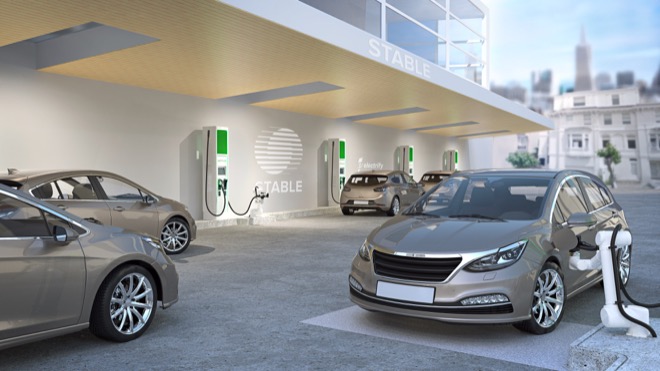
Charging network operator Electrify America and fleet charging company Stable Auto are launching a robotic charging pilot for self-driving vehicles in San Francisco. The pilot will aim to charge autonomous EVs without human intervention using robots attached to 150 kW DC fast chargers. Vehicles can park anywhere within a designated parking space and the robot… Continue reading Electrify America to deploy commercial robotic chargers
Porsche Is Reinventing Its Main Plant To Handle Taycan Production
Porsche Taycan to be produced on multiple floors and in different building complexes using a flexi-line with driverless transport systems that move automatically from station to station. The introduction of the all-electric Porsche Taycan turns out to be an unprecedented challenge for the German manufacturer. Porsche is investing roughly €1 billion in its main production… Continue reading Porsche Is Reinventing Its Main Plant To Handle Taycan Production
NIO Inc. Provides July 2019 Monthly Delivery Update
Delivered 837 vehicles in July 2019, consisting of 673 ES6s and 164 ES8s Cumulative deliveries of ES8 and ES6 reached 19,727 SHANGHAI, China, Aug. 12, 2019 (GLOBE NEWSWIRE) — NIO Inc. (“NIO” or the “Company”) (NYSE: NIO), a pioneer in China’s premium electric vehicle market, today provided its July 2019 delivery results. NIO delivered 837 vehicles… Continue reading NIO Inc. Provides July 2019 Monthly Delivery Update
Bosch is working on glasses-free 3D displays for in-car use
German auto industry giant Bosch is developing new technology that will add glasses-free 3D imaging to future versions of its in-car digital display technology. These 3D displays use passive 3D tech, which means you won’t need to wear glasses to see the effect, and it also skips eye tracking, which is a key ingredient for… Continue reading Bosch is working on glasses-free 3D displays for in-car use
Velodyne Lidar introduces new sensor for low speed autonomous markets
Velodyne Lidar introduces new sensor for low speed autonomous markets