Lyft has filed a draft registration statement with the U.S. Securities and Exchange Commission for its long-awaited initial public offering, Lyft wrote in a press release today. However, the exact timing of the offering is unclear. In a confidential filing with the SEC, Lyft did not state the number of shares it expects to offer,… Continue reading Lyft files IPO documents with SEC
Tag: Mobility
FreeWire Raises $15 Million In Financing For Mobile Fast Charging
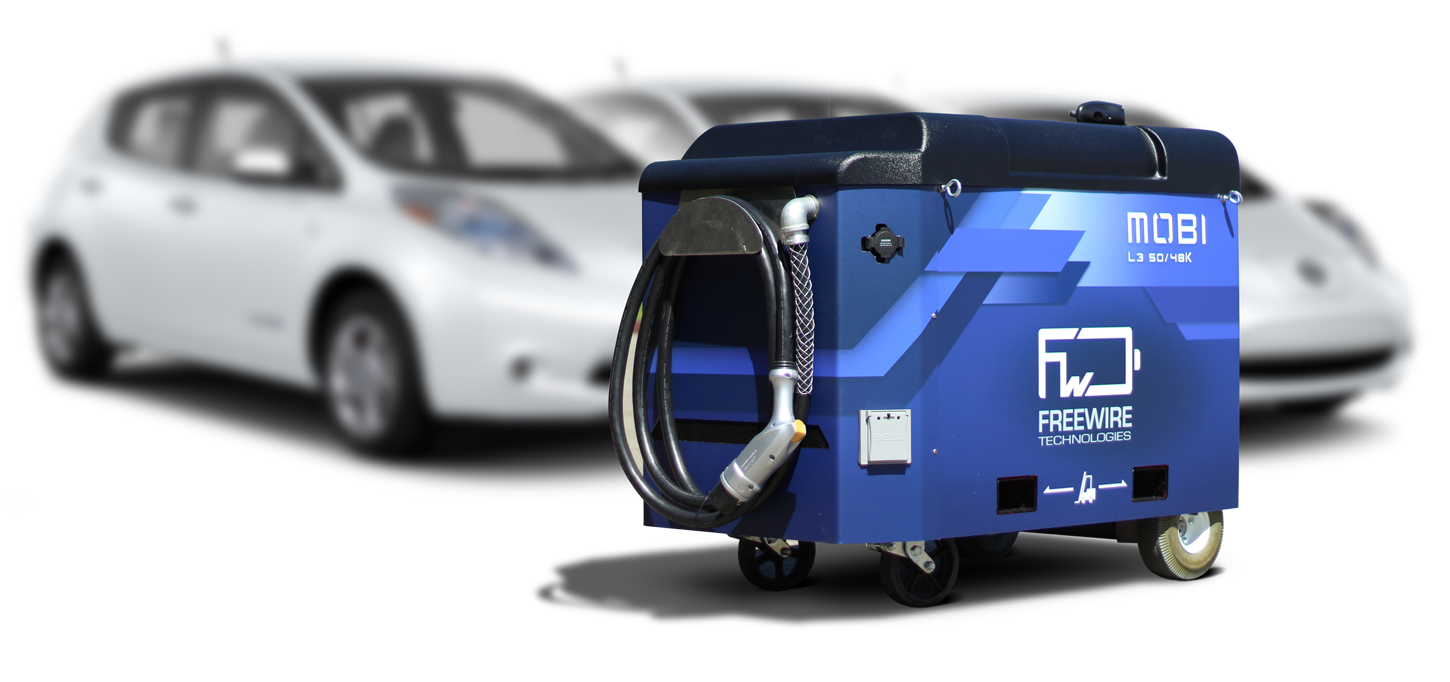
12 M BY MARK KANE FreeWire is not alone in believing that mobile fast charging is a good idea. FreeWire Technologies, the California start-up known mostly from its mobile electric vehicle charging systems, announced the successful closing of its $15 million Series A financing. “The financing will support the commercialization of FreeWire’s ultrafast EV charging… Continue reading FreeWire Raises $15 Million In Financing For Mobile Fast Charging
Lyft Inc confidentially files for IPO
An illuminated sign appears in a Lyft ride-hailing car in Los Angeles, California, U.S. September 21, 2017. Picture taken September 21, 2017. REUTERS/Chris Helgren (Reuters) – Ride-hailing company Lyft Inc on Thursday confidentially filed a statement with the U.S. Securities and Exchange Commission for an initial public offering. It did not specify the number of… Continue reading Lyft Inc confidentially files for IPO
Volkswagen brand to speed up operating return
Operating return of at least 6 percent as early as 2022 Numerous additional measures to improve efficiency planned Future investments of over €11 billion through 2023, of which over €9 billion to be spent on e-mobility COO Ralf Brandstätter: “We must force the pace of our transformation” The Volkswagen brand is to significantly improve its… Continue reading Volkswagen brand to speed up operating return
Excess plant capacity helps hasten GM cuts
Excess plant capacity helps hasten GM cutsGeneral Motors Co. and Ford Motor Co. both are cutting slow-selling sedans from their U.S. lineups, but only GM is threatening to close at least five plants here and in Canada to make it happen.
The difference lies, in part, in a wonkish industry term that means the difference between profit and loss, jobs or the road to unemployment in modern auto plants: “capacity utilization.” That's the percentage of a plant's maximum capacity being used to build vehicles. Break-even is considered 80 percent, and GM has a lot more U.S. plants running below that threshold than rivals Ford and Fiat Chrysler Automobiles.
Eight of 12 GM assembly plants in the U.S. were operating at 80 percent capacity or less this year, according to data from LMC Automotive. That's a stark contrast with crosstown rivals Ford and Fiat Chrysler Automobiles. Only three of Ford's nine U.S. assembly plants were running below 80 percent of capacity in 2018; two of Fiat Chrysler's six plants were below that same threshold.
“There's no question that when you look across the region, GM's (plant utilization) is behind both” Ford and Fiat Chrysler, said Jeff Schuster, an analyst with LMC Automotive. “We've been flagging that as a warning sign…They got caught with more of a car-capacity. Their scale led to this, and they also had too much on the car side.”
As a result, GM is forced to make painful moves to brace for an uncertain future. The automaker last week announced it would idle four U.S. facilities in 2019 as it gears up to spend billions preparing for the electric and autonomous vehicles of the future.
Ford and Fiat Chrysler also assemble more of their top-selling vehicles trucks and SUVs exclusively in the United States than GM, according to LMC data. GM's San Luis Potosi plant in Mexico that produces GM's second-best selling vehicle, the Equinox, has run at 91 percent capacity utilization this year; its Silao, Mexico, plant is running at 145 percent building the four-door Silverado and Sierra. Automakers can run above 100 percent capacity utilization by running extra shifts.
“Some of it is due to what the types of products in those plants are,” said Kristin Dziczek, vice president of the Ann Arbor-based Center for Automotive Research. “GM has a dedicated plant for Corvette…”
Ahead of the curve
Ford and Fiat Chrysler closed plants and cut UAW workers a decade ago, ahead of the recession. GM closed plants then, too.
But now, as U.S. vehicle sales flatten after an extended period of growth — and as U.S. consumers increasingly turn away from sedans — under-utilization of plants became a problem for GM. Some of the Detroit automaker's under-producing plants have been operating below 80 percent capacity since 2016.
Of the eight GM U.S. plants running at 80 percent or lower, six build sedans or compact cars. That wouldn't be a problem if GM was gearing up to build new SUVs or trucks in those facilities, experts said. But the automaker has yet to announce plans for such vehicles, leaving the plants “unallocated,” an industry term that essentially means a plant has no product to build — the first step toward closure.
“GM is spread out with more facilities,” said Dziczek. “Ford builds more of what it sells in the U.S. in the U.S.” That includes its best-selling F-Series pickups, all of which are built in the United States.
For now, that's keeping Ford and Fiat Chrysler safe from President Donald Trump's scrutiny. “They haven't been tweeted at, have they?” Dziczek asked.
GM CEO Mary Barra's austerity measures drew the ire of the president and other politicians, and left the United Auto Workers and hourly employees boiling. GM expects to cut 8,000 salaried positions by January — some 3,300 hourly employees are at risk due to the plant idlings tied to sedan cuts announced last week.
Preparing for future
GM says its restructuring actions are proactive steps to prepare for the future. It plans to idle four U.S. plants at the height of national contract negotiations next year with the UAW. And that would cut some of its money-losing sedans after the plants building the Buick Lacrosse, Cadillac CT6 and Chevrolet Impala and Volt stop production.
“We continuously look at our operations for opportunities to improve our efficiency and capacity utilization,” Kimberly Carpenter, head of GM labor communications, said in a statement. “We believe the recent actions move us in the right direction based on changing market conditions and customer preferences.”
Former Fiat Chrysler CEO Sergio Marchionne saw the sedan's decline coming more than three years ago. Fiat Chrysler in 2016 began expanding capacity for Jeeps and trucks after it decided to cut most of its sedans. Its plants are running so near capacity that the automaker has trouble shutting down facilities to retool for profitable new products.
Ford said in April it plans to drop five sedans by the beginning of the next decade. It already had plans to build SUVs and trucks in their place in the U.S.
Ford hasn't said officially how large its headcount reduction will be. Ford says the cuts it made a decade ago to its plants went deep enough. GM has argued it is trying to avoid those deep cuts this time with proactive measures like those announced a week ago.
Products, products, products
Product allocation is likely to take center stage in GM's negotiations with the UAW next year, as the union fights to keep plants open. Ford negotiated most of that during the last round of UAW negotiations in 2015, Ford officials said.
“Forecasting and planning made that happen,” Ford President of Global Operations Joe Hinrichs said. “It was really important that these manufacturing sites have the kind of utilization that we're talking about, because that's what protects the jobs. We do that by filling up the plants with products that people want.”
Ford's Michigan Assembly plant had a 25 percent utilization rate through November this year. In October, the Wayne plant began making the the 2019 Ranger — a product Ford says will sell better than the Focus and C-Max they'd been building there.
UAW Vice President Rory Gamble said in a statement Wednesday that a big part of the collective bargaining process is understanding plant utilization. The automakers and the UAW will begin to negotiate a new four-year contract in late 2019.
“A major part of collective bargaining is to pay attention to plant utilization and product footprint,” Gamble said. “This is a long-term process that involves strategic investment decisions by the company…”
Experts and officials told The News that no automaker plans for a plant to go down to one shift for any extended period of time. It demonstrates a flaw in product planning, though several factors could have held up GM's ability to better allocate products in the U.S., or close unnecessary plants sooner.
“There's skill and luck here,” LMC analyst Jeff Schuster said. “FCA made some of the tough decisions sooner, which at the time cost them volume. They made those decisions, and had the market not done what it has done since then, they might have been caught from a competitive standpoint. Call it foresight or luck or a combination of both, but from a management standpoint, they got there sooner.”
ithibodeau@detroitnews.com
Twitter: @Ian_Thibodeau
Detroit News staff writer Nora Naughton contributed
Read or Share this story: https://www.detroitnews.com/story/business/autos/general-motors/2018/12/06/excess-plant-capacity-hastens-gm-cuts/2162582002/
Avis Highlights Benefits of Connected Vehicles

Avis Budget Group has been working with automakers to complete its goal of a fleet comprised solely of connected vehicles. In March, Avis and Toyota deployed 10,000 connected vehicles and in October, Avis and Ford deployed 35,000. “Connected cars allow Avis customers to manage their entire rental through our app, including locking and unlocking car… Continue reading Avis Highlights Benefits of Connected Vehicles
And Uber is going with . . . Bird (looks like)
Five months ago, the Bay Area-based electric scooter rental company Lime joined forces with the ride-hailing giant Uber, which both invested in the company as part of a $335 million round and said it was going to promote Lime in its mobile app. It’s looking now like that may have been a mistake for Lime. Though… Continue reading And Uber is going with . . . Bird (looks like)
Barra stands firm on GM austerity plans in DC meetings
Barra stands firm on GM austerity plans in DC meetingsWashington — General Motors Co. Chairman Mary Barra stood firm on plans to idle five plants, lay off 6,000 salaried employees and imperil the jobs of 3,300 hourly workers as she met Wednesday with Ohio's U.S. senators and several of Michigan's newly elected U.S. members.
Speaking with reporters after a closed-door meeting with Barra at the U.S. Capitol on Wednesday, Ohio Sens. Sherrod Brown and Rob Portman said the GM chief committed to trying to expedite negotiations with the United Auto Workers union on the future of the company's recented “unallocated” plants, including the Lordstown Assembly plant in northeast Ohio. But they said Barra did not reverse course on the decisions as they would have preferred.
“Both of us want to be sure that both the company and the UAW expedite that as much as possible and get to a decision to provide some potential certainty,” said Portman, a Republican. “She agreed that's a potential opportunity. Also, she has said to us that she is going to keep an open mind, but she does not want to raise expectations.”
Brown, a Democrat who is being mentioned as a potential presidential candidate, said of the Lordstown plant: “Are they going to bring an electric vehicle? Are they going to retool their plant and maybe look at one of their SUVs moving into this plant? They can do that. They've been the beneficiary of a tax bill that has produced some dollars for them to reinvest. Some of it is stock buybacks, but a lot of it can go to reinvesting in this plant.”
Lawmakers are furious at GM for moving to cease production next year at Lordstown, at its Detroit-Hamtramck and Warren Transmission plants in Michigan, at Oshawa Assembly in Ontario and at Baltimore Operations in Maryland. Work will stop next year at predetermined dates, but plants will not officially close. The future of those facilities will be determined during 2019 negotiations with the United Auto Workers union.
The company is planning to lay off nearly 6,000 salaried workers next year after a buyout program last month only had 2,250 takers, according to a memo sent to employees by CEO Mary Barra and obtained by The Detroit News. The salaried buyouts and the layoffs together will affect 8,000 North American employees and a number of global executives, none of whom are part of the senior leadership team.
Barra on Wednesday at the same press conference defended the decisions as a response to market conditions that have resulted of a shifting U.S. consumer preferences that have made sedans tough to sell.
“We are in an industry that is transforming faster than I've ever seen in my 38 year career,” she said. “What we are trying to is make sure that General Motors is strong and that we're in a leadership position with technologies like electrification and autonomous vehicles and connectivity, because that's what customers want. That's where industry is going.”
Barra deflected criticism of GM's decision that invokes the company's receipt of nearly $50 billion in federal assistance in the 2008 and 2009 auto bailouts, which the company notes has repaid.
“Since 2009, we have invested $22 billion in the United States, and in the last couple of years we've invested several more billions of dollars and we'll continue to do that,” Barra said.
“We will be forever grateful for the assistance that the U.S. government provided General Motors, and we're trying to make sure we're good corporate citizens and continue to provide jobs and and provide vehicles and transportation that consumers want in this country,” she continued. “That's what I think is the most responsible thing that we can do to thank the American taxpayers for what they did for us.”
Barra also met Wednesday with incoming U.S. representatives from Michigan. Rashida Tlaib, Haley Stevens, Elissa Slotkin and Andy Levin, all Democrat, will be in Boston for training and can't attend the Barra's meeting on Thursday with Michigan lawmakers in person. Michigan's congressional delegation will meet with her at 2 p.m.
Tlaib said in a statement after the meeting: “From the 1,300 homes, churches, and shops in Poletown that were seized and bulldozed to build the Detroit-Hamtramck plant, to the $51 billion public bailout that lost hardworking taxpayers more than $11 billion, we have paid a terribly steep price to placate and keep GM afloat.
“Now, as we fight to rebuild our regional economy and create living-wage jobs, GM is repaying our sacrifice and investment by slashing thousands of jobs and closing the plant an entire neighborhood was torn down to build,” Tlaib continued. “I’ll always stand in solidarity with workers and for what’s right and this is simply wrong. GM's announcement reaffirms my commitment to demanding binding community benefits agreements whenever a wealthy corporation is lining up for public subsidies.”
klaing@detroitnews.com
(202) 662-8735
Twitter: @Keith_Laing
Read or Share this story: https://www.detroitnews.com/story/business/autos/general-motors/2018/12/05/barra-stands-firm-gm-austerity-plans-dc/2217522002/
Neuron Mobility raises $3.7M to bring e-scooters to Southeast Asia’s cities
Despite the rise in electric scooters in the U.S., you’d be forgiven for thinking that Asia — the region where bike-sharing foreshadowed the rise of e-scooters — has been left off the party. But e-scooters have quietly been in the region for some time and now they are beginning to ramp up. Singapore-based Neuron Mobility is… Continue reading Neuron Mobility raises $3.7M to bring e-scooters to Southeast Asia’s cities
Volkswagen Will Launch Its Last Gas-Powered Cars in 2026
Goodbye Gas-Guzzlers One of the world’s largest carmakers is going all-in on electric vehicles. According to a Reuters story, Volkswagen’s strategy chief, Michael Jost, told attendees at the Handelsblatt automotive summit conference on Tuesday that the company will launch its last generation of gas-powered cars in 2026. After that, he said, it will focus on EVs.… Continue reading Volkswagen Will Launch Its Last Gas-Powered Cars in 2026