AMSTERDAM (Reuters) – TomTom is considering selling its fleet-management business to concentrate on competing head-to-head with Google in car navigation software, it said on Thursday. TomTom navigation are seen in front of TomTom displayed logo in this illustration taken July 28, 2017. REUTERS/Dado Ruvic Shares in the Dutch company jumped by 17 percent to 7.25… Continue reading UPDATE 2-TomTom plans fleet-management sale to focus on maps battle with Google
Tag: Mobility
Toyota to Supply its Hydrogen Fuel Cell Technology to Caetanobus SA in Portugal
Toyota system to be used in Caetanobus’s first hydrogen-fuelled FCEV1 city buses Caetanobus to launch hydrogen demonstration city bus in autumn 2019 Toyota has taken another important step towards achieving a broader hydrogen society with the announcement it will provide its hydrogen fuel cell technology to Caetanobus SA in Portugal. In line with its vision… Continue reading Toyota to Supply its Hydrogen Fuel Cell Technology to Caetanobus SA in Portugal
Ford, Lyft, and Uber to Share Data to Improve Urban Mobility

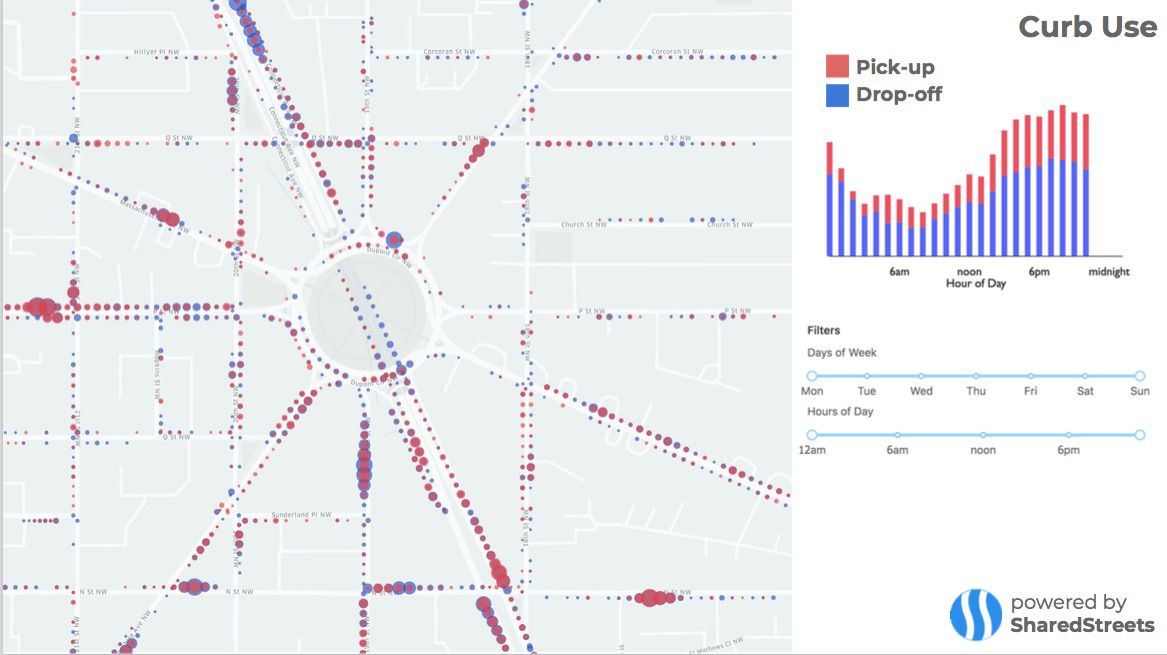
The partnership gives mayors unparalleled access to road traffic data, allowing them to make better planning and investment decisions as shared and autonomous mobility arrive in their cities. Photo courtesy of Ford. Ford Motor Company, Uber, and Lyft have announced a commitment to SharedStreets, a new data platform designed to make it easier for the private sector to work with cities around… Continue reading Ford, Lyft, and Uber to Share Data to Improve Urban Mobility
Toyota invests in ride-hailing, eyeing future of cars
Original Article
Uber to pay $148 million to settle data breach cover-up with U.S. states
SAN FRANCISCO (Reuters) – Uber Technologies Inc [UBER.UL] will pay $148 million for failing to disclose a massive data breach in 2016, marking a costly resolution to one of the biggest embarrassments and legal tangles the ride-hailing company has suffered. The Uber application is seen on a mobile phone in London, Britain, September 14, 2018.… Continue reading Uber to pay $148 million to settle data breach cover-up with U.S. states
Uber commits $10 million to sustainable transportation
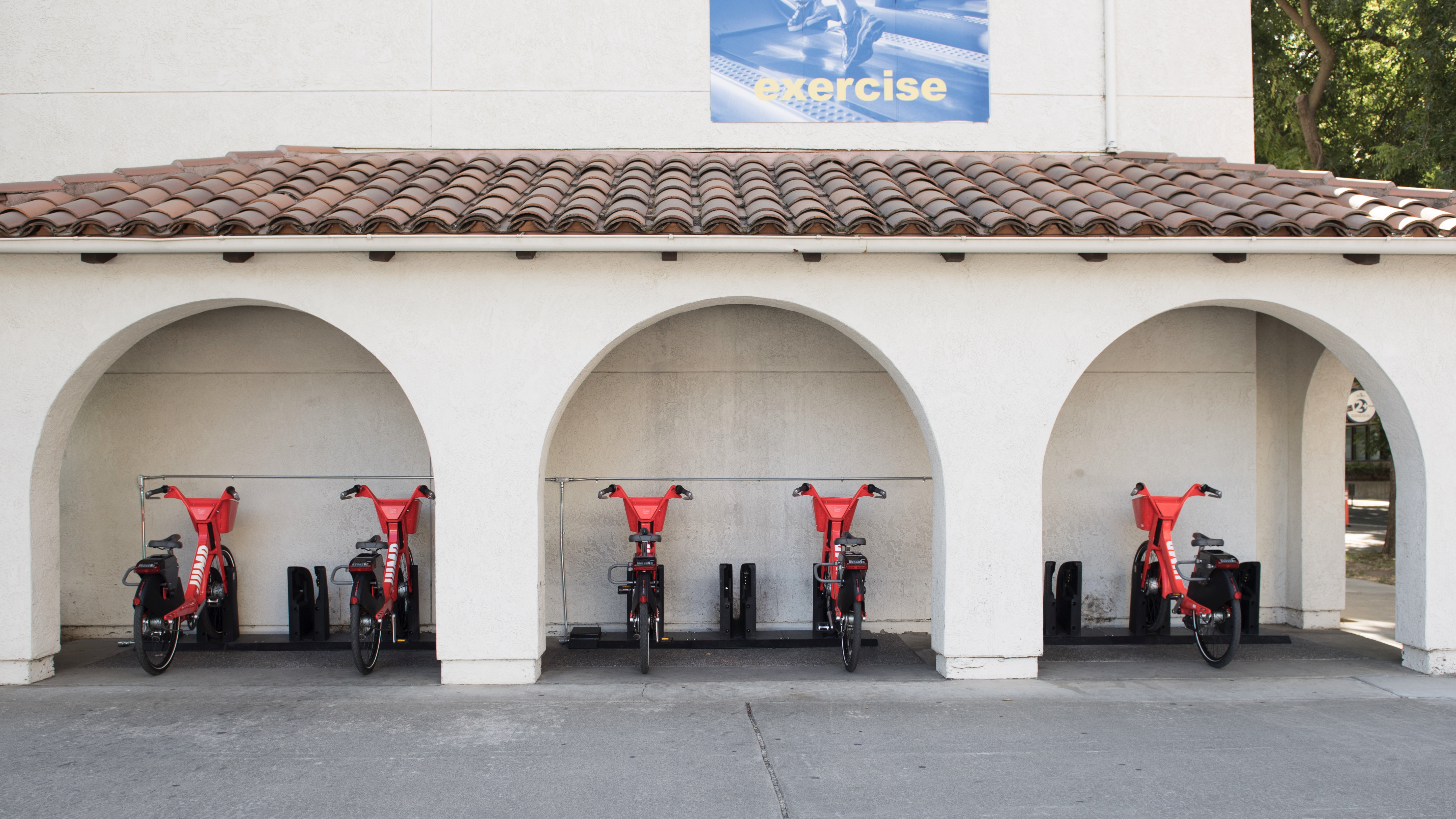
Uber is putting $10 million behind sustainable transportation over the next three years. As part of the fund, Uber is donating $250,000 to SharedStreets, a nonprofit organization focused on creating a shared standard for public streets and data sharing. Lyft, also in the name of environmental impact, invested millions of dollars in carbon offsets earlier… Continue reading Uber commits $10 million to sustainable transportation
Uber makes $10M bet on bikes and transit
Ride-hailing giant Uber, which helped jumpstart the ongoing revolution in mobile technology and urban transit by popularizing a new way to move about cities, has decided cars aren’t always the best way to get around. In a blog post, Uber CEO Dara Khosrowshahi announced a three-tiered plan to support sustainable mobility by reducing congestion, supporting… Continue reading Uber makes $10M bet on bikes and transit
Renault plans Europe’s largest battery storage network
Renault utility storage network to deploy used electric car batteries in France and Germany
European electric-carmaker Renault plans to build the continent's largest stationary battery storage network next year using old electric-car batteries.
Renault announced on Tuesday that it will install used (and some new) electric car batteries in three locations: two Renault factories in France, and the site of a former coal-fired power plant in Germany.
The company says the battery storage network will be expanded gradually over time.
DON'T MISS: (Reverse) Engineering Explained: What happens to old electric car batteries?
By 2020, Renault says the network will deliver 70 megawatts of power and store at least 60 megawatt-hours of energy storage to smooth out supply from solar and wind power to make them available at peak times when consumers need it.
The stationary battery storage network will use batteries from 2,000 of the company's European electric cars—the Renault Zoe and Twingo and the Nissan Leaf, among others—built into containers.
The network will comprise used batteries from the cars as well as some new electric-car batteries that have been inventoried as replacement packs for older models but never sold.
Renault Zoe and Kangoo ZE electric cars on the Outer Hebrides
Inside the containers, the batteries will be installed on racks. Each container will also include charge controllers and battery monitoring systems.
Once built, the batteries will provide enough power for 5,000 homes.
The system is designed to target a weak spot in the grid, where power consumption exceeding supply has often compromised the stability of the grid.
CHECK OUT: As used electric-car batteries set to flood market, Automakers ramp up reuse efforts
“One of the main challenges when it comes to increasing the share of renewable sources in the energy mix is to manage the discrepancies between electricity consumption and electricity production at a given moment,” Nicolas Schottey, Renault’s director of new energy business, said in a statement.
“Our energy stationary storage system solution helps to compensate for those gaps: it delivers its energy reserves at the exact moment an imbalance occurs in order to mitigate its effects,” he said.
READ MORE: Renault plans huge energy storage plant using old Zoe electric-car battery packs
The system was originally planned to be even bigger, with up to 100 megawatts of storage, but Renault alludes to potential future expansion under the existing plan.
Renault says its goal is to create Europe's largest stationary energy storage system to encourage the growth of renewable energy sources on the grid.
The network will be operated by Renault partner Mobility House.
Tariffs cost Ford $1 billion in profit and hurt sales in China
Luke Sharrett | Bloomberg | Getty Images
An employee works on a Ford Expedition sports utility vehicle on the assembly line at the Ford Kentucky Truck Plant in Louisville, Kentucky.
President Donald Trump's tariffs are hitting Ford's finances hard.
The second-largest U.S. automaker has suffered $1 billion in lost profits from tariffs on metals imported to the United States, said Ford CEO Jim Hackett in an interview with Bloomberg TV on Wednesday.
The U.S. has a 25 percent tariff on steel and a 10 percent tariff on aluminum imported from several countries, an early step in an escalating trade war that threatens to raise prices on goods and deal a blow to firms in a wide range of industries, including autos.
The tariffs come at a time when Ford is trying to improve its financial health, raise its share price and sink money into developing new propulsion technologies, such as electric powertrains, autonomous driving technology, cloud computing technology for transportation and other mobility businesses.
Ford shares were down nearly one percent Wednesday morning.
“From Ford's perspective, the metals tariffs took about $1 billion profit from us,” he added. “The irony is, we source most of that in the U.S. today anyways. So we are in a good place right now, but if it goes on longer there will be more damage.”
The trade war is also creating difficulties for Ford's U.S. factories. Ford exports Lincoln vehicles from a plant in Louisville, Kentucky to China, where Hackett said the brand is popular. China's tit-for-tat 25 percent tariff hike, which raises the total duty to 40 percent on U.S. autos, has raised the price of the Lincoln MKC sport utility vehicle in China.
In July, Ford cut its full-year outlook, citing in part heavy losses in China in the second quarter.
“We have had to move people in that factory to other functions because of that trade problem,” he said.
A LiDAR Revolution: RoboSense Launches Intelligent Autonomous Driving LiDAR System With "Gaze" Function Similar To Human Eyes
Original Article