skip to Main ContentHuman drivers confront and handle an incredible variety of situations and scenarios—terrain, roadway types, traffic conditions, weather conditions—for which autonomous vehicle technology needs to navigate both safely, and efficiently. These are edge cases, and they occur with surprising frequency. In order to achieve advanced levels of autonomy or breakthrough ADAS features, these edge cases must be addressed. In this series, we explore common, real-world scenarios that are difficult for today’s conventional perception solutions to handle reliably. We’ll then describe how AEye’s software definable iDAR™ (Intelligent Detection and Ranging) successfully perceives and responds to these challenges, improving overall safety.
Download AEye Edge Case: Obstacle Avoidance [pdf]
Challenge: Black Trash Can on RoadwayA vehicle equipped with an advanced driver assistance system (ADAS) is cruising down a city street at 35mph. Its driver is somewhat distracted and also driving too close to the vehicle ahead. Suddenly, the vehicle ahead swerves out of the lane, narrowly avoiding a black trash can that has fallen off a garbage truck. To avoid collision, the ADAS system must make a quick series of assessments. It must not only detect the trash can, it must also classify it and gauge its size and threat level. Then, it can decide whether to brake quickly or plan a safe path around it while avoiding a collision with parallel traffic.
How Current Solutions Fall ShortToday’s advanced driver assistance systems (ADAS) will experience great difficulty detecting the trash can and/or classifying it fast enough to react in the safest way possible. Typically, ADAS vehicle systems are trained to avoid activating the brakes for every anomaly on the road. As a result, in many cases they will simply drive into objects. In contrast, level 4 or 5 self-driving vehicles are biased toward avoiding collisions. In this scenario, they’ll either undertake evasive maneuvers or slam on the brakes, which could create a nuisance or cause an accident.
Camera. A perception system must be comprehensively trained to interpret all pixels of an image. In order to solve this edge case, the perception system would need to be trained on every possible permutation of objects lying in the road under every possible lighting condition. Achieving this goal is particularly difficult because objects can appear in an almost infinite array of shapes, forms, and colors. Moreover, the black trash can on black asphalt will further challenge the camera, especially at night and during low visibility and glare conditions.
Radar. Radar performance is poor when objects are made of plastic, rubber, and other non-metallic materials. As such, a black plastic trash can is difficult for radar to detect.
Camera + Radar. In many cases, a system using camera and radar would be unable to detect the black trash can at all. Moreover, a vehicle that constantly brakes for every road anomaly creates a nuisance and can cause a rear end accident. So, an ADAS system equipped with camera plus radar would typically be trained to ignore the trash can in an effort to avoid false positives when encountering objects like speed bumps and small debris.
LiDAR. LiDAR would detect the trash can regardless of perception training, lighting conditions, or its position on the road. At issue here is the low resolution of today’s LiDAR systems. A four-channel LiDAR completes a scan of the surroundings every 100 milliseconds. At this rate, LiDAR would be not be able to achieve the required number of shots on the trash can to register a valid detection. It would take 0.5 seconds before the trash can was even considered an object of interest. Even 16-channel LiDAR would struggle to get five points fast enough.
Successfully Resolving the Challenge with iDARAs soon as the trash can appears in the road ahead, iDAR’s first priority is classification. One of iDAR’s biggest advantages is that it is agile in nature. It can adjust laser scan patterns in real time, selectively targeting specific objects in the environment and dynamically changing scan density to learn more about them. This ability to instantaneously increase resolution is a critical ability that enables it to classify the trash can quickly. During this process, iDAR simultaneously keeps tabs on everything else. Once the trash can is classified, the domain controller uses what it already knows about the surrounding environment to respond in the safest way possible.
Software ComponentsComputer Vision. iDAR is designed with computer vision that creates a smarter, more focused LiDAR point cloud. In order to effectively “see” the trash can, iDAR combines the camera’s 2D pixels with the LiDAR’s 3D voxels to create Dynamic Vixels. This combination helps the AI refine the LiDAR point clouds around the trash can, effectively eliminating all the irrelevant points and leaving only its edges.
Cueing. For safety purposes, it’s essential to classify objects at range because their identities determine the vehicle’s specific and immediate response. To generate a dataset that is rich enough to apply perception algorithms for classification, as soon as LiDAR detects the trash can, it will cue the camera for deeper real-time analysis about its color, size, and shape. The camera will then review the pixels, running algorithms to define its possible identities. If it needs more information, the camera may then cue the LiDAR to allocate additional shots.
Feedback Loops. Intelligent iDAR sensors are capable of cueing themselves. If the camera lacks data, the LiDAR will generate a feedback loop that tells itself to “paint” the trash can with a dense pattern of laser pulses. This enables it to gather enough information for the LiDAR to run algorithms to effectively guess what it is. At the same time, it can also collect information about the intensity of laser light reflecting back. Because a plastic trash can is more reflective than the road, the laser light bouncing off of it will be more intense. Thus, the perception system can better distinguish it.
The Value of AEye’s iDARLiDAR sensors embedded with AI for intelligent perception are very different than those that passively collect data. When iDAR registers a single detection of an object in the road, its priority is to determine its size and identify it. iDAR will schedule a series of LiDAR shots in that area and combine that data with camera pixels. iDAR can flexibly adjust point cloud density around objects, using classification algorithms at the edge of the network before anything is sent to the domain controller. This ensures that there’s greatly reduced latency and that only the most important data is used to determine whether the vehicle should brake or swerve.
Obstacle Avoidance —AEye Wins Award for Most Innovative Autonomous Driving Platform at AutoSens BrusselsAEye Team Profile: Aravind RatnamAEye Team Profile: Ove SalomonssonLeading Global Automotive Supplier Aisin Invests in AEye through Pegasus Tech VenturesCargo Protruding from VehicleAEye Team Profile: Indu VijayanThe Human Classification Framework: Search, Acquire, and ActAEye: Developing Artificial Perception Technologies That Exceed Human PerceptionAEye Team Profile: Jim Robnettprevious post: Previousnext post: Next ← Flatbed Trailer Across Roadway ← Abrupt Stop DetectionAbout Management Team Advisory Board InvestorsiDAR Agile LiDAR Dynamic Vixels AI & Software Definability iDAR in ActionProducts AE110 AE200 iDAR Select Partner ProgramNews Press Releases AEye in the News Events AwardsLibrary Technology News & Views Profiles Videos BlogCareersSupportContact Back To Top
Category: Official Press Release
NVIDIA and Microsoft Team Up to Aid AI Startups
NVIDIA and Microsoft are teaming up to provide the world’s most innovative young companies with access to their respective accelerator programs for AI startups. Members of NVIDIA Inception and Microsoft for Startups can now receive all the benefits of both programs — including technology, training, go-to-market support and NVIDIA GPU credits in the Azure cloud… Continue reading NVIDIA and Microsoft Team Up to Aid AI Startups
@FCA: FCA Statement in Response to GM Lawsuit
Privacy Statement Legal Notices and Terms © 2019 FCA US LLC. All Rights Reserved.Chrysler, Dodge, Jeep, Ram, Mopar and SRT are registered trademarks of FCA US LLC.ALFA ROMEO and FIAT are registered trademarks of FCA Group Marketing S.p.A., used with permission. Go to Source
Faraday Future Reveals Its New Concept of the Third Internet Living Space
Revolutionary user experience designed to create a mobile, connected and luxury third internet living spaceSignificant product innovations, including an all-in-one car with smart mobility and advanced artificial intelligenceIntegrated internet and AI applications including voice controls, predictive interfaces and autonomous driving capabilitiesLOS ANGELES, Nov. 19, 2019 (GLOBE NEWSWIRE) — Faraday Future (FF), a California-based global shared… Continue reading Faraday Future Reveals Its New Concept of the Third Internet Living Space
@Groupe PSA: Groupe PSA: The Trémery Plant in France’s Grand Est Region Is at the Forefront of Groupe PSA’s Energy Transition
RUEIL-MALMAISON, France–(BUSINESS WIRE)–Regulatory News: Yann Vincent, Executive Vice President, Manufacturing & Supply Chain for Groupe PSA (Paris:UG) said, “Years ago we made the decision to invest in the energy transition and make our plants more flexible, as illustrated by the Trémery plant. We are very proud of all our plant employees in the Grand Est… Continue reading @Groupe PSA: Groupe PSA: The Trémery Plant in France’s Grand Est Region Is at the Forefront of Groupe PSA’s Energy Transition
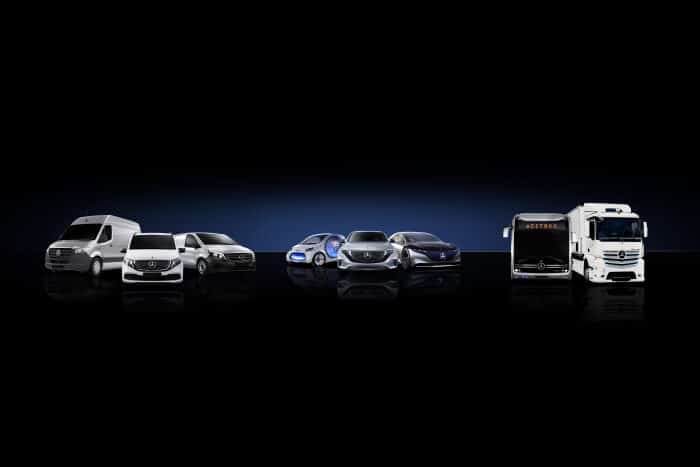
Further milestones of the Daimler sustainability initiative: Daimler Sustainability Dialogue
20.
November 2019
Stuttgart
Press Contact (6)
Silke Mockert
Integrity and Legal Affairs Communications
silke.mockert@daimler.com
Tel: +49 711 17-25518
Fax: +49 711 17790-42238
Heike Rombach
Manager International Business Communications Mercedes-Benz Cars
Procurement & Supplier Quality
heike.rombach@daimler.com
Tel: +49 711 17-35012
Fax: +49 711 1779031880
Birgit Zaiser
Manager International Business Communication Mercedes-Benz Cars Production & Supply Chain Management
birgit.zaiser@daimler.com
Tel: +49 160 8614753
Fax: +49 711 1779012269
Christoph Johannes Sedlmayr
Manager Communications Vehicle R&D and Sustainable Mobility
christoph.sedlmayr@daimler.com
Tel: +49 711 17-91404
Fax: .
Peter Smodej
Daimler Trucks Technologies & Regulations
peter.smodej@daimler.com
Tel: +49 711 17-53230
Fax: +49 711 17-79078088
Vera Pfister
Spokesperson Van Technology Communications – Sustainability and Environment
vera.pfister@daimler.com
Tel: +49 (0)711 17-54029
Fax: +49 (0)711 17-52030
Download
Filter
Settings
Do you really want to delete the data record?
Please wait a moment …
Please wait a moment …
Please wait a moment …
Please wait a moment …
Creating lasting values with sustainable mobility: Short version: 12. Daimler Sustainability Dialogue
Stuttgart, Nov 20, 2019
Science Based Targets Initiative (SBTI) defines CO2 targets that support the Paris Climate Accord: Transparency initiative in climate protection & prevention of air pollution
Stuttgart, Nov 20, 2019
From 2022 European Daimler plants will produce on a CO2-neutral basis: Production
Stuttgart, Nov 20, 2019
The EQC as the trailblazer for the electric car initiative: 360° environmental check
Stuttgart, Nov 20, 2019
The path to sustainable global transport of goods and passengers: Daimler Trucks & Buses
Stuttgart, Nov 20, 2019
Smart mobility for a better quality of life in the cities: Mercedes-Benz Vans
Stuttgart, Nov 20, 2019
Loading
Towards a ‘sustainable agriculture’
Towards a ‘sustainable agriculture’ — European Environment Agency Do something for our planet, print this page only if needed. Even a small action can make an enormous difference when millions of people do it! Climate change adaptation in the agriculture sector in Europe Go to Source
Safeguarding citizens from environment-related pressures and risks to health is a priority at EU level
Many people still associate mercury with thermometers and most also know that it is toxic. The EU has taken measures to reduce mercury use and emissions. Despite this, mercury continues to circulate in our air, water, soil and ecosystems due to the global nature of mercury pollution. Find out what is being done about it.… Continue reading Safeguarding citizens from environment-related pressures and risks to health is a priority at EU level
Sustainability transitions
The European Union and its neighbours have in recent decades achieved remarkable progress in socio-economic well-being and prosperity while taking actions that are cognisant of planet earth’s ecological limits. At the same time, as it is widely acknowledged, Europe and the rest of the world still face fundamental environmental and sustainability challenges of unprecedented scale… Continue reading Sustainability transitions
Lyft: Lyft Supports Shopping Small in New York City
Small businesses are the heart of New York City, anchoring communities and employing nearly half of the city’s workforce.1 To help support these businesses on Small Business Saturday® (Nov. 30), we’ve teamed up with neighborhoods throughout the city to offer shoppers 20% off 2 rides to or from their favorite businesses. Choose your neighborhood below… Continue reading Lyft: Lyft Supports Shopping Small in New York City