Reality check: CHAdeMO fast-charging stations still outnumber CCS ones

Five years ago, a frequent matter of debate here at Green Car Reports was whether CCS or ChAdeMO would become the electric-car DC fast-charging standard of choice in the U.S.

Soon after that it became quite clear that CCS, with the weight of the European and U.S. auto industry behind it—and then the Korean industry joining later—was going to win.

And yet today, when you look at the actual numbers, as tallied by the U.S. government’s Alternative Fuels Data Center, you’ll find that even now, in the second half of 2019, there are still more places to fast-charge CHAdeMO vehicles than those with CCS.

CHAdeMO, CCS, and Supercharger – Alternative Fuels Data Center, Aug. 20, 2019

As of August 20, 2019, there are 2,140 charging stations and 3,010 connectors with CHAdeMO fast charging. CCS still lags behind CHAdeMO in the number of stations by more than 250, while it has about 500 more connectors. And Tesla has 678 Supercharger locations with 6,340 connectors. The Nissan Leaf lineup is the only one still on the market to primarily use the CHAdeMO standard.

When the first Combined Charging System (CCS) fast charging station finally arrived in the U.S. in October 2013, it was a couple of years behind the rollout of stations using the CHAdeMO standard championed by Japanese automakers and more than a year behind the first Tesla Superchargers.

In 2014 and 2015, Europe stormed ahead with CCS fast-charging infrastructure, and essentially moved to make it the dominant standard, while the U.S. lagged behind in deploying the hardware.

Chevrolet Spark EV at CCS fast charging station in San Diego.

Although the 2014 Chevrolet Spark EV was the first model available in the U.S. with CCS, GM stubbornly maintained that it wouldn’t fund CCS fast-charging sites for its Chevrolet Bolt. Meanwhile, Nissan helped subsidize the growth of a CHAdeMO network. So had early federal and state funding to build “electric highways” with carefully spaced fast chargers, that had been approved (and in some cases completed) before CCS even existed.

Part of the reason why CCS hasn’t gained ground is that, as called out in the Partial Consent Decree of the Volkswagen diesel settlement, Electrify America has to future-proof its stations by operating across different charging standards. Therefore, all public-facing fast chargers will include a CHAdeMO connector—just one, in most cases, running at 50 kw instead of the CCS connectors’ 150 kw or 350 kw.

It’s unlikely that CCS will take the lead for stations/locations this decade. Nationally, Electrify America’s Cycle 2 plan anticipates that just 40 to 50 of about 215 new 150-kw and 350-kw DC fast chargers will be operational by the end of 2019. Meanwhile, under an EVgo plan to install more 100-kw CHAdeMO hardware—jointly announced with Nissan earlier this month, will keep nudging both ahead, as that hardware will also be CCS-compatible.

Tesla Model S with CHAdeMO adapter

U.S. Tesla drivers also can opt for a CHAdeMO adapter, for access to those stations, which tend to be better-located for urban and suburban charging—as opposed to Tesla’s chargers, which tend to be at strategic points for road-trip potential.

Tesla drivers are again the winners. If it weren’t for the terms of the diesel settlement, Nissan and others might not have kept expanding the CHAdeMO network. Add the two standards together and Tesla owners have 2,818 charging locations and 9,350 connectors.

The higher-power CCS chargers (350 kw especially) will start influencing the market more eventually. But in this era of accessibility and cross-compatibility, it's now looking like both standards will be around for a long time.
Zomato partners with tech startup FarEye

FarEye said with its machine learning platform, it will help Zomato gain end-to-end visibility of logistics activities and boost KPI management of third-party logistics providers. CHENNAI: Zomato has partnered with FarEye, a digital logistics company, to help restaurants stay compliant with Food Safety and Standards Authority of India’s (FSSAI) guidelines. FarEye, which facilitates over 10… Continue reading Zomato partners with tech startup FarEye

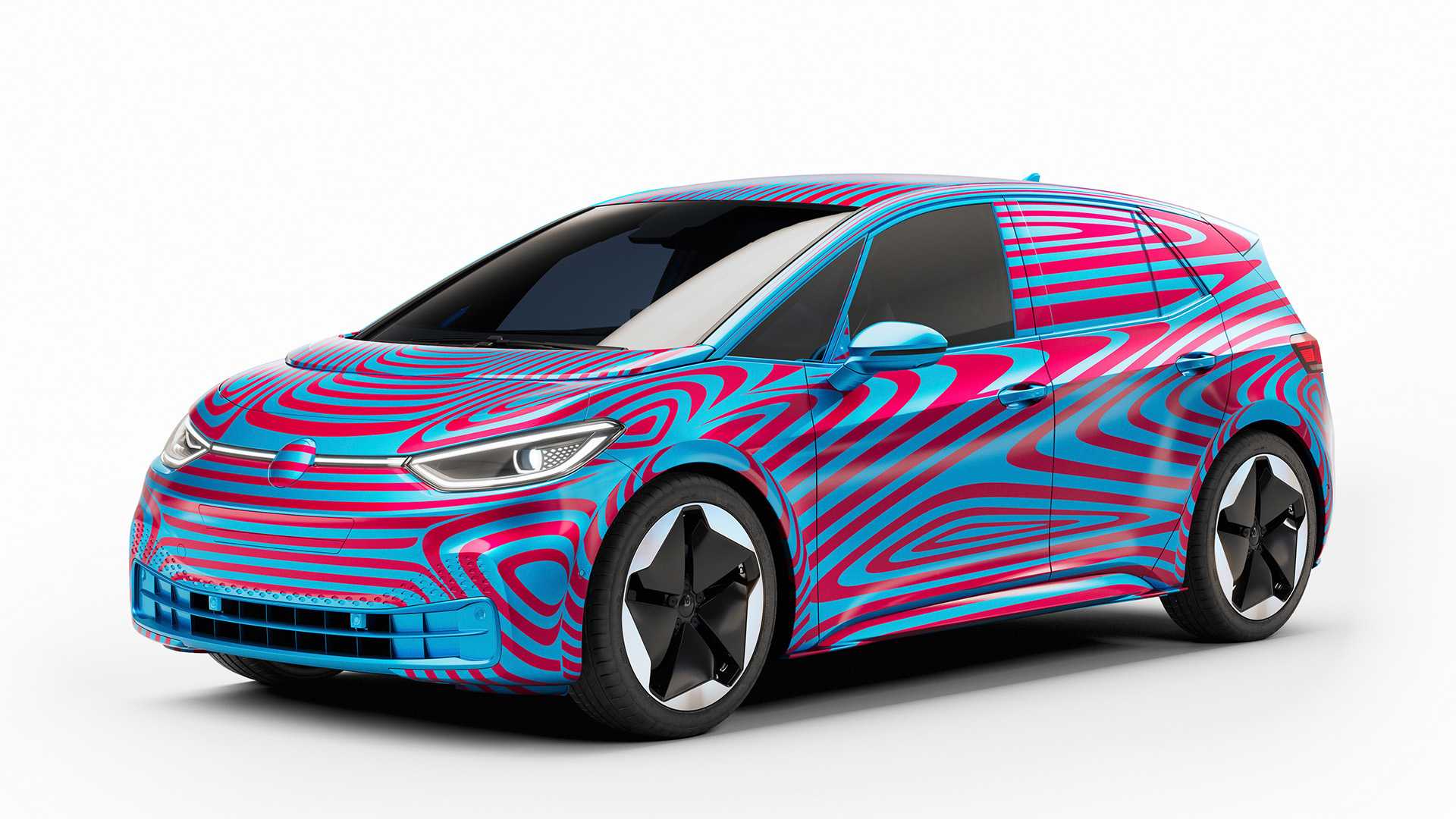
Volkswagen ID.3 Reservations Exceed 27,000

Less than 3,000 Volkswagen ID.3 1ST are left for reservation (out of 30,000 available). According to the most recent Automobil Woche article, Volkswagen has received more than 27,000 reservations for the 1ST launch edition of the Volkswagen ID.3. As the plan is to offer a limited number of 30,000 1ST, less than 3,000 (or 10%… Continue reading Volkswagen ID.3 Reservations Exceed 27,000

70% of petrol car line up turned into BS-VI: Maruti Suzuki

NEW DELHI: Maruti Suzuki on Tuesday announced the company has converted 70% of its petrol car line up to BS-VI compliance.Maruti Suzuki currently sells half a dozen BS-VI compliant models including Alto 800, WagonR (1.2L), Swift, Baleno, Dzire and Ertiga. Baleno, upgraded to BS-VI compliance in April 2019, was first to witness the change. The… Continue reading 70% of petrol car line up turned into BS-VI: Maruti Suzuki

Jaguar Land Rover is working on 3D tech that will alert drivers to road hazards

The interior of a 2020 Jaguar XE sports sedan is seen during a Jaguar Land Rover Automotive PLC event in New York, U.S., on Tuesday, April 16, 2019.David Dlegado | Bloomberg | Getty ImagesEngineers at Jaguar Land Rover are developing 3D, “head up” technology that could project real-time safety alerts to drivers.
The car manufacturer is working with researchers from the University of Cambridge on the technology, it said in an announcement Tuesday.
The research is aiming to create an immersive display that would “closely match” real world experiences, which would in turn enable drivers to react to prompts and hazards in a more natural way.
If implemented, the display could provide drivers with information on lane departures, satellite navigation directions and road hazards.
“This program is at the forefront of development in the virtual reality space,” the University of Cambridge's Daping Chu said in a statement.
“We're looking at concepts and components which will set the scene for the connected, shared and autonomous cars of the future,” Chu, who is director of both the Centre for Photonic Devices and Sensors and the Centre for Advanced Photonics and Electronics, added.
As technology develops and vehicles become increasingly connected, manufacturers are working on a number of innovative systems to improve safety.
In March, for example, Volvo Cars announced it would be installing in-car cameras and sensors to check drivers for signs of intoxication and distraction.
The firm said the technology would be used to monitor drivers and, when needed, enable the car “to intervene if a clearly intoxicated or distracted driver does not respond to warning signals and is risking an accident involving serious injury or death.”
Actions the car could take include limiting speed to slowing down and then parking the car in a safe place. Installation of the technology will start in the early 2020s.

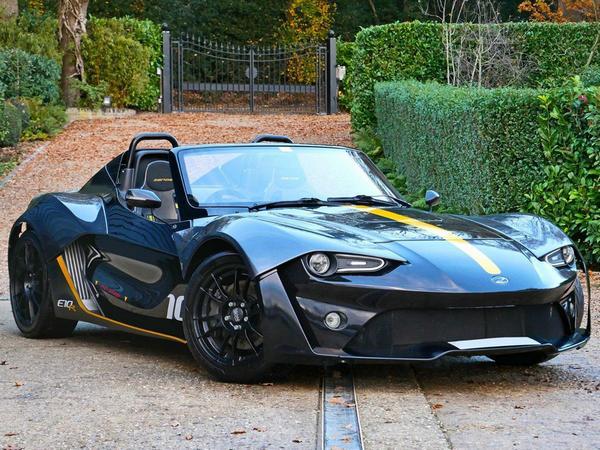
Zenos E10R: Spotted – Pistonheads.com

So much of the Zenos plan seemed so good: there was expertise in the team, a clever idea on the drawing board and a proven set of mechanicals underneath. The E10 was a modern, innovative, original take on the lightweight British track special, and showed huge promise. The standard car was really good straight out… Continue reading Zenos E10R: Spotted – Pistonheads.com

Our Journey to Driverless Cars

Two years ago, we launched our first-generation fleet of self-driving cars at a small retirement community in San Jose. It blows my mind to think how far Voyage has come since then. Today, Voyage’s self-driving technology is robust, reliable, and capable of complex interactions and maneuvers. We launched our second-generation fleet of self-driving cars with… Continue reading Our Journey to Driverless Cars

Building Self-Driving Cars by Embracing Remote Engineering

Work from anywhere in the U.S. and engineer truly driverless cars at Voyage Billy Okal, a remote Voyage engineer Building a self-driving car has always been regarded as a hands-on exercise. It’s easy to imagine why, with state-of-the-art autonomous vehicles containing dozens of hardware components interacting with many layers of complex software. This delicate dance has resulted… Continue reading Building Self-Driving Cars by Embracing Remote Engineering

Why Retirement Communities Are Perfect for Self-Driving Cars

Today’s car is built for the average driver. The average driver can demonstrate reasonable reflexes, agility and vision. However, as we age, our reflexes, agility and vision begin to suffer. When they do, the confidence we once felt while driving quickly disappears. This can be incredibly debilitating. As driving becomes a struggle, many senior citizens… Continue reading Why Retirement Communities Are Perfect for Self-Driving Cars

Bike taxi startup Rapido acqui-hires analytics startup Vahanalytics

Bike taxi app Rapido has acqui-hired Mumbai-based Vahanalytics, a data analytics startup that allows organizations to track their vehicle fleet operations, according to the company’s filings with the ministry of corporate affairs (MCA), sourced from business information platform Paper.vc. The value of the deal was undisclosed. However, a person aware of the deal told Mint… Continue reading Bike taxi startup Rapido acqui-hires analytics startup Vahanalytics