Hyundai plans to take hydrogen fuel-cell systems beyond vehicles

Follow Bengt

Hyundai Mobis fuel cell announcement
Hyundai sees a lot of potential in hydrogen fuel-cell technology. And it may find success with it by looking well past cars and SUVs—to other uses that could, as the company puts it, “transcend the transportation sector.”

With this week’s opening of a second plant making fuel-cell systems, in Chungju, South Korea, Hyundai's Mobis unit will increase its annual production of fuel-cell systems from its current 3,000 annual units to 40,000 units by 2022.

DON’T MISS: 2019 Hyundai Nexo: first drive of 380-mile fuel-cell crossover utility

The plan, called FCEV Vision 2030, highlights the parent company’s “commitment to accelerate the development of a hydrogen society.”

By 2030, Hyundai Motor Group aims to make 700,000 fuel-cell systems annually, of which 500,000 would be units for personal-use and commercial fuel-cell electric vehicles. That leaves 200,000 units for drones, vessels, and forklifts and other uses outside transportation such as power generation and energy storage systems.

That’s still a very small portion of what the company currently produces; in 2018 it expected 7.7 million worldwide vehicle sales across Hyundai and Kia.

CHECK OUT: 2019 Hyundai Nexo hydrogen fuel-cell vehicle pricing: Puzzling economics

To accomplish this plan, Hyundai established a dedicated division for fuel-cell business this month. Under the program, the Hyundai Motor Group and its suppliers plan to invest $6.8 billion to expand R&D operations and facilities, with an estimated 51,000 new jobs created.

Hyundai justifies the very steep growth curve by citing a McKinsey & Company study, pointing to an estimated global demand for up to 6.5 million fuel cell systems by 2030.

Hyundai Nexo

The 2019 Hyundai Nexo, which showcases the potential of a new generation of fuel-cell tech from the brand, with an estimated 380-mile range, will be available by sale or lease starting in January—albeit only in California, where a nascent commercial fueling infrastructure exists. That model is going to be the first test vehicle for a Level 4 automated-driving project with the autonomous-vehicle tech company Aurora.

READ MORE: Toyota enters $82 million partnership to roll out hydrogen trucks in Los Angeles port

Honda and GM continue to work on a next-generation fuel-cell system that will be produced in Michigan, and Toyota has confirmed that it’s looking to put the technology into more affordable, mass-market vehicles as well as commercial trucks and buses.

There’s another reason why Hyundai should be so bullish on fuel cells. The South Korean government is subsidizing a $2.3 billion plan to support various stages of the hydrogen fuel-cell development chain, including automakers, as well as 310 new hydrogen fueling stations.

Given the biggest limitation for fuel-cell technology in the U.S. today—a lack of hydrogen fueling infrastructure—aiming the growth of the technology toward commercial uses and very well-defined use cases could be a good plan to play on its strengths.
Porsche already has a prototype that will charge faster than its 350-kw Taycan

Follow Bengt

FastCharge 450-kilowatt charging station prototype
The Porsche Taycan, when it arrives toward the end of 2019, will likely have the quickest, highest-power DC fast charging of any production vehicle.

But Porsche apparently is already setting its sights higher. Yesterday, as part of a research consortium that includes BMW, it presented a prototype for using CCS-standard charging hardware at up to 450 kw at 800 volts, which can also operate at 400 volts for cars that don't have 800-volt systems. Porsche says that the new hardware promises charging rates three to nine times faster than what’s currently available.

DON’T MISS: Porsche Taycan specs trickle out ahead of debut next year

Although charging-station operators would have to make big plans for siting such stations, the hardware doesn’t need to make as much of a leap. Most makers of fast-charging hardware have already targeted charging up to 460 kw, or as high as 500 kw, depending on the maker, at a maximum of 920 to 1,000 volts. The system uses the liquid-cooled cables intended for 150 kw and beyond, and the same connector used by other CCS hardware.

FastCharge 450-kilowatt charging station prototype

In the research prototype, a Cayenne SUV, Porsche points to the “innovative cooling system” that provides “even, gentle temperature control in the battery cells” as one of the keys to the vehicle’s high charging capacity. It does not clarify whether it’s the same system as what’s to be used in the Taycan (and subsequent Audi e-tron GT).

CHECK OUT: Audi e-tron GT electric sports car is its take on Porsche Taycan

The vehicle, with a 90-kwh battery pack, was put to the test at over 400 kw, which Porsche says allowed it to regain the first 62 miles of range in less than three minutes. Given that one piece of information, and the way that higher-power DC charging often works with current cell technology, it’s likely that the system tapers its power down significantly after that.

A BMW i3 prototype with a 57-kwh battery pack, however, did charge with the system from 10 percent up to 80 percent state of charge—about 165 miles of added range, based on EPA ratings, in just 15 minutes.

The prototype is on a real stretch of German autobahn, and the project is funded by the German government, as part of an $8.9 million Fast Charge research project that started in July 2016. The related consortium includes the BMW Group, Allego, Phoenix Contact, and Siemens, as well as Porsche.

Electrify America makes second-cycle investment in BTC Power

Thanks to Volkswagen’s former bad habits, Electrify America has $2-billion to invest in EV infrastructure, $800 of that earmarked for California. In order to future-proof its network, EA has wisely divided its investment into four phases. The company is now beginning to announce plans for its second $200-million round of investment in the Golden State,… Continue reading Electrify America makes second-cycle investment in BTC Power

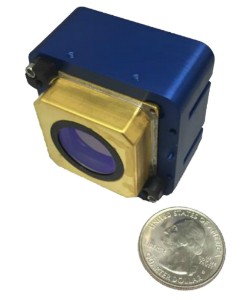
High-definition SWIR camera developed by Quantum Imaging

Quantum Imaging at the 2018 AUSA convention in Washington, D.C., USA, introduced the QI-SWIR-HD10 camera. The new SWIR camera features a 1280 x 1024 format InGaAs detector with 10 x 10 µm pixel pitch, programmable on-chip features, read noise of less than 40 rms, and extended spectral range from 0.5 µm to 1,7 µm. [Native… Continue reading High-definition SWIR camera developed by Quantum Imaging

Toyota recalls 70K vehicles over air bag inflators

Toyota recalls 70K vehicles over air bag inflatorsDetroit – Toyota is recalling about 70,000 Toyota and Lexus brand vehicles in North America to replace air bag inflators that could explode and hurl shrapnel at drivers and passengers.
The recall covers the 2003 to 2005 Corolla, the 2002 to 2005 Sequoia, the 2003 to 2005 Tundra and the 2002 to 2005 Lexus SC.
Takata uses the chemical ammonium nitrate to create a small explosion and inflate the bags. But it can deteriorate and burn too fast, blowing apart a metal canister.
The Toyota and Lexus vehicles were recalled previously and the inflators replaced with new ones that still used ammonium nitrate. In the latest recall, Toyota will use inflators made by another company with a safer chemical.
Owners will be notified early next year. Toyota says it has replacement parts available.
About 65,000 of the recalled vehicles are in the U.S.
Toyota says it’s doing the recall a year ahead of a schedule set by the U.S. National Highway Traffic Safety Administration.
At least 23 people have died worldwide due to the problem caused by inflators made by Takata Corp., resulting in the largest series of auto recalls in U.S. history. They cover 37 million vehicles and about 50 million inflators in the U.S. About 100 million inflators are being recalled worldwide.
The recalls forced Takata of Japan to seek bankruptcy protection.
Read or Share this story: https://www.detroitnews.com/story/business/autos/foreign/2018/12/12/toyota-recall-replace-air-bag-inflators/38723663/

Feds: FCA spent $15K on steak dinners for UAW

Feds: FCA spent $15K on steak dinners for UAWDetroit — Senior United Auto Workers leaders launched 2015 UAW contract negotiations with an $8,494 meal at a Detroit steakhouse paid for by Fiat Chrysler Automobiles, according to a new federal court filing.
And once negotiations with Fiat Chrysler appeared to be wrapped, officials book-ended the talks with a second lavish meal paid for by the carmaker at the same restaurant.
After UAW leaders ate, drank and smoked $15,000 worth of filet, liquor and cigars for the two meals paid for by the rival across the negotiating table, rank-and-file union members at Fiat Chrysler voted down the proposed contract.
Federal officials say the meals are examples of corruption surrounding the 2015 Fiat Chrysler-UAW contract negotiations.
U.S. District Attorneys David Gardey and Erin Shaw wrote in a court filing that spending on meals such as those at the London Chop House in downtown Detroit corrupted the bargaining process, and the “freebies” and “lavish entertainment” UAW officials allowed Fiat Chrysler to pay for were “the rule rather than the exception.”
The UAW officials violated the Labor Management Relations Act of 1947 when they let the automaker pay for those meals, the attorneys wrote.
The details emerged as the UAW and Detroit automakers are poised to negotiate new contracts next year at a time when both General Motors Co. and Ford Motor Co. are pruning excess white-collar workers, and GM is signaling the possibility of closing U.S. plants.
Prosecutors leveled the allegations Wednesday while urging a judge to sentence one of those high-ranking UAW leaders to federal prison for one year. That official, Nancy Adams Johnson, has emerged as a pivotal participant and witness to a years-long conspiracy involving Fiat Chrysler and the UAW, and she has linked former union President Dennis Williams to the scandal.
UAW spokesman Brian Rothenberg said in a statement that the UAW confronted Johnson when they found out she “had stolen thousands of dollars” from the union's National Training Center.
“The UAW also provided information about Ms. Johnson’s illegal conduct to the federal prosecutors at that time,” Rothenberg said. “The money Ms. Johnson stole and misused belonged to the NTC, not to Chrysler — and the NTC has filed papers with the Judge in Ms. Johnson’s case seeking to recover the money she stole from it. The UAW is confident that Ms. Johnson’s misconduct had no effect on the collective bargaining agreement between the UAW and Chrysler – which has numerous checks and balances and requires a vote by the entire membership, among other things.”
Fiat Chrysler did not immediately respond to request for comment.
No Fiat Chrysler officials were present for either meal, according to court documents filed Wednesday in U.S. District Court, and the meal had “nothing to do with the National Training Center.” The UAW had used a National Training Center credit card to pay for the two meals.
“These corrosive and poisoning circumstances are exactly what the Taft-Hartley Act (Labor Management Relations Act of 1947) was intended to avoid,” Assistant U.S. Attorney David Gardey wrote in the court filing.
“Over 45,000 hourly employees for FCA were represented by the UAW during the period of the conspiracy. These men and women believed that their union leaders were looking out for their best interests and negotiating in good faith, not double dealing them for personal gain.”
Adams Johnson was the UAW's No. 2 official in the union's Fiat Chrysler department, serving as the top administrative assistant to UAW Vice President Norwood Jewell.
Jewell tapped a training fund to pay for more than $10,000 worth of golf resort accommodations in Palm Springs, California, and Disney World tickets, a spending spree that is the focus of the ongoing investigation, sources told The Detroit News.
In July, Adams Johnson entered a guilty plea, telling U.S. District Judge Paul Borman she violated a federal law prohibiting labor officials from receiving cash and valuable items from employers. In this case, she received tens of thousands of dollars in illegal payments and benefits from Fiat Chrysler during the conspiracy, including $1,100 designer shoes, first-class flights to California, resort stays and limousine rides, according to federal prosecutors.
Adams Johnson was the seventh person to plead guilty in the widening scandal.
She could be sentenced to as much as 18 months in prison for her role in a widening corruption scandal involving Fiat Chrysler Automobiles and its contract negotiations with the UAW, according to the filing. Johnson's lawyer, Harold Gurewitz, is requesting a lighter “non-custodial” sentence that is not “greater than necessary.”
Adams Johnson, 58, at the direction of more senior UAW officials “directed tens of thousands of dollars of prohibited payments from Fiat Chrysler for the personal benefit of those senior UAW officials and for the personal benefit of other UAW officials,” according to Wednesday's sentencing memorandum.
Gardey writes that Johnson betrayed thousands of UAW members and their families through her actions in 2015, and the “court needs to deter other union officials from engaging in similar misconduct.”
Gardey also requested Johnson's sentence be delayed six months so that she could continue to cooperate in the ongoing federal investigation into the 2015 UAW contract negotiations federal prosecutors have said Fiat Chrysler and the UAW conspired to corrupt.
ithibodeau@detroitnews.com
Twitter: @Ian_Thibodeau
Staff writer Rob Snell contributed.
Read or Share this story: https://www.detroitnews.com/story/business/autos/chrysler/2018/12/12/fiat-chrysler-spent-15-thousand-uaw-steak-dinners/2291277002/