VW to invest $50B in electric and autonomous techFrankfurt, Germany – Volkswagen AG, which is negotiating investments and tie-ups with Ford Motor Co., intends to invest 44 billion euros ($50 billion) in the electric and autonomous car technologies expected to reshape the industry. The German carmaker also said it would make battery-powered vehicles more accessible to mass-market auto buyers by selling its new I.D. compact for about what a Golf diesel costs.
The investment plans for the next five years aim to make Volkswagen “a worldwide supplier of sustainable mobility,” Chairman Hans Dieter Poetsch said Friday. He added that the company is in talks with Ford Motor Co. about possible cooperation in making light commercial vehicles.
The Detroit News has previously reported on those talks on global partnerships between Volkswagen and Ford, as well as negotiations with Volkswagen to invest potentially more than $1 billion in Argo AI, the robotics and technology company majority-owned by Ford. Volkswagen also is considering a separate investment in Ford’s in-house autonomous vehicle business.
Established automakers as well as several U.S. startups are rolling out electric models to compete with Tesla , currently the market leader. Auto companies need electrics to meet new environmental standards in many countries.
In Europe, manufacturers need to sell more battery-powered cars to meet tougher EU limits on carbon dioxide emissions that come into force 2021 and aim to fight global warming. Automakers like Volkswagen, Daimler and BMW risk penalties of thousands of euros per vehicle if they can’t meet requirements for lower average emissions.
Authorities in China, where Volkswagen gets much of its profit, have also mandated a bigger share of electrics and hybrids.
Yet right now, such vehicles remain a niche market due to higher price and lack of places to charge. Battery-only vehicles were only 0.6 percent of the market in the European Union last year. They are running from 1 to 2 percent of U.S. new-vehicle sales so far this year.
Major new models unveiled in recent weeks from Daimler’s Mercedes-Benz and Volkswagen’s Audi brand have been expensive SUVs; Audi’s e-tron starts at a German price of 80,000 euros. The starting price for Tesla’s Model X is around $80,700 while the Model S starts around $74,500.
VW’s upcoming I.D. compact could take mass-market buyers from Tesla’s Model 3, a mass-market car with a base price of $35,000 before tax credits. In reality, though, you can’t order one yet for less than $46,000.
Poetsch said the I.D. compact would be about the cost of a Golf diesel today, which is priced at 23,875 euros in Germany, according to Volkswagen’s website, and goes up as options are added. The next model up the scale starts at 30,625 euros.
General Motors, Nissan and Mitsubishi already are selling mass-market electric vehicles, but they’re still more costly than cars with gasoline engines, and they haven’t sold in great numbers.
Higher cost is one reason consumers are not yet buying purely electric vehicles in large numbers. The lack of charging points is another, leaving many owners of electric vehicles to use them mainly in cities or for shorter trips. Volkswagen and other automakers are working together on building a freeway network of fast-charging stations to enable longer trips with battery powered cars.
Chinese automakers as well as U.S. startup companies also are getting into the electric car market. Rivian, a Detroit-area company, plans to unveil a high-end electric pickup and SUV later this month, to go on sale in late 2020. Lucid Motors, a Newark, California, startup whose leadership includes six former Tesla executives, plans to deliver its first cars in 2020 as well.
The shift to electric cars is a big one for a company the size of Volkswagen, which has over 600,000 employees and makes about 10 million vehicles a year.
It is converting three of its German plants from internal combustion to battery car production as it pivots away from diesel vehicles in the wake of its emissions scandal. It says it will increase the number of electric models from six now to more than 50 by 2025.
Ian Thiboudeau of The Detroit News contributed.
Copyright 2018 The Associated Press. All rights reserved. This material may not be published, broadcast, rewritten or redistributed.
Read or Share this story: https://www.detroitnews.com/story/business/autos/mobility/2018/11/16/vw-invest-electric-autonomous-tech/38545307/
Category: News Site
Wrangler-flipper improves productivity at Jeep plant
Wrangler-flipper improves productivity at Jeep plantToledo — The rotisserie skillet at Fiat Chrysler Automobiles NV's Toledo North Assembly Plant isn't as appetizing as it sounds.
Moving platforms on an assembly line for the Jeep Wrangler JL are equipped with rotating “skillets” that flip partly built Jeeps 90 degrees onto their sides. That allows line workers to install components in the roof and underbody without raising their arms above their head or bending at the waist, movements that line operators say cause long-term repetitive stress injuries.
Other skillets in the industry often move up and down, but don't flip onto their sides like these. Fiat Chrysler says the technology isn't found anywhere else in the auto industry — one reason the automaker invited media to the Toledo plant Friday to tout its efficiencies and manufacturing processes in Jeep's historic hometown.
The Wrangler poses a particularly unique challenge for line operators at the roof and underbody installation stations, because the open roof and off-road capabilities under the car put components in harder-to-reach places. That spot on the assembly line was previously one of the least popular, said Tom Hall, a Toledo North worker who helped lead the assembly launch for the Wrangler JL.
“What would happen is … the harder areas would be lower-seniority employees,” he said. “Those would be the areas operators would want to (get out) of.”
When the Wrangler JL moved to the Toledo North plant, operators shared these concerns with the automaker's manufacturing and engineering teams, and worked together to come up with the rotisserie skillet.
“Every time an operator has to do an irregular movement — bend, stretch, turn — that’s not value added to the vehicle,” Hall said. “So what we tried to do is reduce the movement of the operator to be more efficient.”
Using the rotating skillet for the roof and underbody systems for the Wrangler JL eliminated 500 possible risks — situations where the line operator is in an awkward, uncomfortable or potentially unsafe position — to which operators otherwise would have been exposed.
And making the line safer also makes business sense. Fiat Chrysler says workers on the part of the line that uses the rotating skillet are 59 percent more efficient.
The workers “definitely love it,” Hall said. “Before, they were overhead-working all day long, head craned back. So this does make a difference.”
Workers who interact with the rotisserie skillet now stand in one location, with the parts and tools directly in front of them. They ride the moving platforms about 20 feet down the line until they are done installing and then move back to the station where they started.
Making those comfort improvements can attract more skilled workers to that part of the line, said Kristin Dziczek, vice president of Ann Arbor-based Center for Automotive Research.
“If it's a job that no one wants to do — that's uncomfortable — you will get the least experienced people doing that job,” she said. “Making it a better job can eliminate that, and it can make the line more accessible to different body types.”
nnaughton@detroitnews.com
Twitter: @NoraNaughton
Read or Share this story: https://www.detroitnews.com/story/business/autos/chrysler/2018/11/16/wrangler-flipper-improves-productivity-toledo-jeep-plant/1982421002/
GM closures to kill Impala, Volt, Cruze sedan
GM closures to kill Impala, Volt, Cruze sedanGM plans to undergo a restructuring plan that the automaker says will save $6 billion by 2020 – but to do so, it will have to kill some of its classic models.
The plants that will cease production next year are Detroit-Hamtramck, Warren Transmission, Lordstown Assembly in Ohio, Oshawa Assembly in Ontario and Baltimore Operations in Maryland. Work will stop, but plants will not officially close. The future of those facilities will be determined during 2019 negotiations with the United Auto Workers.
GM said the plants ceasing production in 2019 will also signal the end of the products made there.
Oshawa is the only plant building the Cadillac XTS sedan. Detroit-Hamtramck and Oshawa are the only plants building the Chevy Impala. Detroit-Hamtramck is the only producer of the Cadillac CT6, Chevy Volt and Buick LaCrosse as well. Lordstown only makes the Chevy Cruze sedan; the hatchback model is made in Mexico.
Read: GM stopping work at 5 plants, laying off salaried workers
Read or Share this story: https://www.detroitnews.com/story/business/autos/general-motors/2018/11/26/general-motors-plant-closures-kill-impala-volt-cruze-sedan/2114930002/
Chinese company begins production of solid-state batteries, possibly for cars
Fisker solid state electrode material – from @henrikfisker
As scientists and companies around the world pour years and millions of dollars into solid-state batteries, many disagree on how soon they could make it into cars on the road.
Now the Chinese Xinhua news agency reports that a startup company in China, Qing Tao (Kunshan) Energy Development Company has begun production of solid-state batteries in the Chinese city of Kunshan.
According to Xinhua, the company has set up a solid-state battery production line capable of producing 100 megawatt-hours worth of batteries for a year, which it expects to expand to 700 megawatt-hours by 2020.
DON'T MISS: Fisker gets Caterpillar investment for solid-state battery tech
The plant reportedly cost $144 million.
Solid-state batteries are expected to be the next major technological breakthrough for electric cars because they can be lighter, longer-lasting, and safer than today's batteries which use a flammable organic liquid lithium salt solution.
CHECK OUT: Dyson plans to build electric-car test track in Britain
It's not clear, given Qing Tao's modest production, whether its batteries are destined for electric cars or for consumer electronics such as laptops or cell phones.
Qing Tao claims its batteries have an energy density of 400 watt-hours per kilogram, about 30 to 40 percent higher than today's commercial automotive lithium-ion batteries.
READ THIS: VW confirms it’s planning for solid-state batteries by 2025
Other companies staking early claims to building solid-state batteries include Fisker Inc., which says it will have solid-state batteries in its first car by 2022 (a couple of years after it says the car will go on sale), and British vacuum-cleaner and electronics company Dyson, which is reportedly working on its own electric car.
Volkswagen also says it plans to have solid-state batteries in production for its cars, in relatively low numbers, around 2025.
Other battery makers such as Panasonic, the world's largest producer of lithium-ion batteries, say solid-state batteries won't make it onto the road until closer to 2030.
Fiat Chrysler aims to boost margins, keep jobs with European production plan
MILAN (Reuters) – Fiat Chrysler (FCA) (FCHA.MI) is expected to commit to producing a raft of new models in Italy, including Jeeps and an Alfa Romeo SUV, union sources said, as the carmaker strives to fill underutilized plants and lift profit margins in Europe. FILE PHOTO: A logo of Fiat is pictured on the Fiat… Continue reading Fiat Chrysler aims to boost margins, keep jobs with European production plan
Carlos Ghosn no longer capable of leading Renault, French finance minister says
Patrick T. Fallon | Bloomberg | Getty Images
Carlos Ghosn, chairman and chief executive officer of Nissan Motor Co. and Renault SA, speaks during the 2017 Consumer Electronics Show (CES) in Las Vegas, Nevada, U.S., on Thursday, Jan. 5, 2017.
Carlos Ghosn isn't currently fit to lead Renault following his arrest in Japan, French Finance Minister Bruno Le Maire has said.
Ghosn, who acts as CEO of Renault and chairman of both Renault and Nissan, was placed under arrest in Japan on Monday after he allegedly violated Japanese financial law. The arrest followed an investigation by a select number of people at Nissan.
The Japanese carmaker has said it will recommend that Ghosn be removed from his role and now attention has turned to what position Renault will take.
The French government has a 15 percent stake in Renault, which in turn holds a 43.4% stake in Nissan. French Finance Minister Bruno Le Maire has said Renault should now set up an interim management structure.
“Carlos Ghosn is no longer in a position capable of leading Renault,” Mr Le Maire told France Info radio on Tuesday.
Le Maire added that the French government had already investigated Ghosn's tax affairs but had found nothing wrong.
Nissan's Carlos Ghosn throws future of auto alliance into question
5:44 AM ET Tue, 20 Nov 2018 | 03:09
Overnight, shares of Nissan tumbled by 5.45 percent, while Mitsubishi, a third party in the auto alliance, tanked 6.85 percent. At the last check Renault shares were down more than 2 percent in European trade on Monday.
Ghosn joined Renault in 1996, then spearheaded the Renault – Nissan alliance in 2005 and led both firms through a turnaround. In 2016, Mitsubishi's inclusion helped expand the alliance. The three firms together account for one in every nine cars produced around the world.
Attention will now turn to how Renault treats the allegations of financial misconduct laid by both Nissan's executives and Japan's public prosecutor.
The company has confirmed to CNBC it will now meet on Tuesday night and also issued a short statement, defending its alliance with the Japanese firm.
“Pending provision of precise information from Carlos Ghosn, Chairman and Chief Executive Officer of Renault, the above directors wish to express their dedication to the defense of Renault's interest in the Alliance. The Board of Directors of Renault will be convened very shortly,” the statement read.
Auto alliance’s step not to back Ghosn could be key to its survival, says economist
5:36 AM ET Tue, 20 Nov 2018 | 02:35
Ana Nicholls, Managing Editor, Industry Briefing at the Economist Intelligence Unit told CNBC's Street Signs on Tuesday that Renault's apparent reluctance to back Ghosn would suggest that the alliance looks set to be protected.
Nicholls said she spoke to Ghosn last week and, coincidentally, discussed how the alliance would be shaped once he stepped down as the most senior executive.
“He said there was obviously other people within the group who had experience on both sides of the alliance who could take over,” she said.
Nicholls added that one obvious candidate to take over, at least at Renault, was Thierry Bollore, currently the French firm's chief operating officer.
The autos watcher added that within the overall alliance, the makeup of executives is currently “French heavy” and that could be set for change.
Fears that the Nissan scandal could threaten its global alliance are ‘overly alarmist’
Akio Kon | Bloomberg | Getty Images
Carlos Ghosn, chairman of Nissan Motor Co., speaks during an interview in Yokohama, Japan, on Thursday, Feb. 23, 2017.
The arrest of Carlos Ghosn, chairman of Nissan and a board member at Mitsubishi, has also thrown into question the future of the two companies' global alliance with French automaker Renault. But analysts say that's not likely.
Ghosn was arrested Monday amid allegations of financial misconduct, sending shares of the Japanese automakers on a downward spiral on Tuesday.
Nissan said in a statement Monday that “over many years,” Ghosn and board director, Greg Kelly, had been under-reporting compensation amounts to the Tokyo Stock Exchange securities report. According to Reuters, Japanese media said Ghosn had reported about 10 billion yen ($88.9 million) of annualcompensation as about 5 billion yen for several years.
Nissan Chief Executive Hiroto Saikawa, said at a Monday press conference that both men had been arrested and he was planning to propose to the board on Thursday to remove them from their roles. Mitsubishi also said that it would seek to remove Ghosn, who sits on its board of directors, from his current position at the company.
“We find media headlines saying that the alliance may fall to be overly alarmist.”
-Richard Hilgert, Morningstar
Shares of Nissan tumbled by 5.45 percent on Tuesday, while Mitsubishi tanked 6.85 percent. Renault shares were down more than 8 percent in European trade on Monday.
Alliance will likely continue
Ghosn is also the chairman and CEO Renault, and his arrest has thrown into question the future of the company's alliance with Nissan and Mitsubishi. He is also chairman and CEO of the alliance.
Renault owns 43.4 percent of Nissan, while Nissan owns 15 percent of Renault, with no voting rights in a partnership that began in 1999. Since 2016, Nissan has held a 34 percent controlling stake in its smaller Japanese rival, Mitsubishi.
Nissan Chairman Carlos Ghosn arrested for violating Japanese financial law
12:48 PM ET Mon, 19 Nov 2018 | 01:09
“While we view the allegations against Ghosn as a serious breach of shareholder trust in the senior leadership of not only Nissan but also the entire alliance, we find media headlines saying that the alliance may fall to be overly alarmist,” Richard Hilgert, a senior equity analyst at Morningstar, said in a note.
“The scandal represents substantial key-man risk to the alliance but, in our opinion, the risk does not rise to the level of existential,” he said.
Another analyst also told CNBC's that the alliance will likely continue despite Ghosn's arrest.
“Our belief is that the alliance will continue to pursue the joint activities,” said Janet Lewis, head of industrials research, Asia, at Macquarie Capital Securities on “Squawk Box” Tuesday. “It did not depend on one person, there are hundreds of Renault and Mistubishi and Nissan employees working together on these projects.”
“The degree of integration at lower levels is substantial, nobody wins if they decide to, to move away,” she said.
'Truly shocking'
The latest fiasco surprised some analysts.
“It's truly shocking,” Rebecca Lindland, executive analyst at Kelley Blue Book, told CNBC's “Street Signs” Tuesday in response to the allegations against Ghosn.
“To see this, to hear this unfold. It's just, it's terrible,” she added. “It's such … a disgrace in many ways and such a waste of an incredible career.”
Morningstar's Hilgert echoed Lindland's sentiment.
“The news was a complete shock to us,” Hilgert said in his note. “We had respected Ghosn as an adept industry operator and credit him with an impressive turnaround at Nissan in the early 2000s, as well as building the Renault- Nissan-Mitsubishi alliance.”
— CNBC's David Reid and Robert Ferris, and Reuters contributed to this report.
Don’t fear the robots or the foreigners, they will make us richer
A production line at the Nedcar car plant
Robots and foreigners have been taking over Dutch jobs for 50 years – but more people than ever are working, says economist Mathijs Bouman. And the bottom line is, we are all getting richer because of it.
In 1969 Jan Wolkers wrote Turkish Delight, the Beatles recorded Abbey Road and Neil Armstrong walked on the moon. Piet de Jong was our prime minister, ruling a country with a flourishing manufacturing industry. Of a working population of around 5.3 million, 1.3 million people worked in manufacturing or industry (including energy and water) – around 25% of the total
Now, almost half a century later, in the year of De Wereld volgens Gijp and Marco Borsato and exactly zero men on the moon, industry has stopped generating jobs. The working population has grown to nine million of whom only 9% works in industry. In absolute terms this means that of the 1.3 million industrial jobs in 1969 only 800,000 are left. Meanwhile industrial production has doubled.
GDP
Labour intensive factories became largely automated. But there is another reason why there are fewer factory workers compared to 1969: the relative importance of industry nose-dived. As industrial production doubled, GDP tripled. The Netherlands was de-industrialising because mass production was moving to low wage countries.
To all who are worried about the present trends of globalisation, robotisation and what they mean for employment I say: your worst fears have been coming true for the last 50 years. Machines and foreigners have been stealing our jobs for years.
Jobs not only evaporated in manufacturing. In construction the jobs total went down from over 550,000 in 1969 to 460,000 in 2017. Agriculture gave work to 275,000 people then and 195,000 now. Industry, construction and agriculture accounted for 40% of employment when Abbey Road hit the charts. In the Borsato era it’s 17%. And yet structural mass unemployment did not happen. On the contrary, more people than ever are working.
Civil service
So where did all these people go? They went to work for the government, in care, or opted for the business services industry. (Local) government jobs and the care sector accounted for 20% of the jobs total in 1969. That has been going up, slowly but surely, to 27%.
In business services (comprising lawyers, architects, consultants, designers, researchers but also cleaners and security personnel) job growth was even more impressive. It went from 9% in 1969 to 21% in 2017.
Automation and robotisation and cheaper foreign production mean jobs are lost. But it also means lower prices and more spending power. The new prosperity create a demand for new products and services and hence a higher demand for labour from companies that provide these products and services. In the end labour market equilibrium is restored.
Change of profession
Yes, it’s textbook economics. But in times of robot fear and foreigner anxiety I’m happy to repeat it. According to recent research by McKinsey, robotisation and automation will swallow up between 75 million and 375 million jobs worldwide between now and 2030.
Or, in the kindly words of McKinsey, that is the number of people that will have consider a change of profession. Some 3% to 14% of all working people will be affected.
China will have to absorb the biggest shock but in the West too the labour market will feel some hefty tremors. People will need help to face the transition. The need for re-training and additional training is evident but in some cases income support will be necessary, as McKinsey says.
It will be a major transition, no doubt about it. But as the last 50 years show, coping with transition is something we are good at.
This article appeared earlier in the Financieele Dagblad
DutchNews.nl has been free for 12 years, but now we are asking our readers to help. Your donation will enable us to keep providing you with fair and accurate news and features about all things Dutch.
Donate via Ideal, credit card or Paypal.
Volvo’s autonomous trucks tackle mining operations
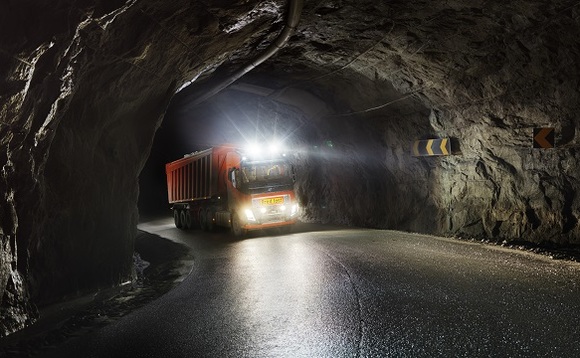
Six autonomous trucks will move limestone about 5km from the pit to the crusher, through outdoor and enclosed spaces It might not be as flashy as a supercharged Tesla racing up the motorway with no hands on the wheel, but Volvo Trucks’ new contract to haul limestone at a mine in Norway could be more impactful.… Continue reading Volvo’s autonomous trucks tackle mining operations
Ghosn's alleged scheme cost Nisson 'millions'
Ghosn's alleged scheme cost Nisson 'millions'Yokohama, Japan – Nissan Chairman Carlos Ghosn, who became one of the auto industry’s most powerful executives by engineering a turnaround at the Japanese manufacturer, was arrested Monday and will be fired for allegedly underreporting his income and misusing company funds, the automaker said.
The scandal reverberated across the globe and abruptly threw into question Ghosn’s future as leader of the Renault-Nissan-Mitsubishi alliance, which sold 10.6 million cars last year, more than any other manufacturer.
Nissan CEO Hiroto Saikawa said Ghosn was taken into custody after being questioned by prosecutors upon arriving in Japan earlier in the day. Ghosn is of French, Brazilian and Lebanese background and lives in both France and Japan.
Nissan said Ghosn, 64, and another senior executive, Greg Kelly, were accused of offenses involving millions of dollars that were discovered during a monthslong investigation set off by a whistleblower. Kelly was also arrested.
“Beyond being sorry I feel great disappointment, frustration, despair, indignation and resentment,” Saikawa said, apologizing for a full seven minutes at the outset of a news conference.
Yokohama-based Nissan Motor said it is cooperating with prosecutors in their investigation.
Read: Disgraced pioneering UAW official faces reckoning
Saikawa said Nissan’s board will vote Thursday on dismissing Ghosn and Kelly, whom he described as the mastermind of the alleged abuses.
“This is an act that cannot be tolerated by the company,” he said. “This is serious misconduct.”
Saikawa said three major types of misconduct were found: underreporting income to financial authorities, using investment funds for personal gain and illicit use of company expenses.
He said that because of the continuing investigation, he could not disclose many details. But he promised to tighten internal controls, saying the problems may have happened because too much power was concentrated in one person.
“We need to really look back at what happened, take it seriously and take fundamental countermeasures,” he said.
Read: Corrupt Fiat Chrysler exec gets 5.5 years in prison
Ghosn officially still leads the Renault-Nissan-Mitsubishi alliance as CEO and chairman. But experts said it is unlikely he will be able to stay on there or at Renault, where he is also CEO. Renault said its board will hold an emergency meeting soon.
“The last thing one of the world’s biggest automakers needs is the disruption caused by an investigation into the behavior of a man who has towered over the global auto sector,” said Michael Hewson, chief market analyst at CMC Markets in London.
The companies in the alliance own parts of each other and share investments in new technologies, among other things. Renault owns 43 percent of Nissan, which owns 15 percent of Renault and 34 percent of Mitsubishi.
Renault SA stock plunged more than 8 percent in France. Japanese markets had already closed when the scandal broke.
Ghosn was at Nissan for 19 years and signed a contract this year that would have run through 2022. His compensation, high by Japanese standards, has been a source of controversy over the years.
According to NHK and the Kyodo News Service, Nissan paid Ghosn nearly 10 billion yen ($89 million) over five years through March 2015, including salary and other income, but he reported receiving only about half that amount.
The allegations are a serious blow at a time when Nissan is still getting over a scandal in which it admitted altering the results of emission and fuel economy tests on vehicles sold in Japan.
Ghosn is credited with helping bring about a remarkable turnaround at Nissan, resuscitating it from near bankruptcy by cutting thousands of jobs and shutting plants. His triumph made him something of a national hero in a country where foreign CEOs of major Japanese companies are relatively rare.
He also looms large in France, where he previously turned Renault around and made it into a global player, notably in electric vehicles. He led the French carmaker through major job cuts and an expensive and contentious bailout, earning the nickname “Le Cost Cutter.”
Ghosn became a nemesis of French unions and left-wing politicians, who saw him as a symbol of capitalism’s excesses, particularly its rich executive pay packages.
Renault shareholders in 2016 voted against Ghosn’s pay package as too generous, but the board ignored the move.
That angered then-President Francois Hollande. Hollande’s socialist government imposed limits on executive pay at state-run companies and tried to do the same in the private sector but backed down amid concerns such action would scare away foreign investment.
Ghosn served as Nissan’s chief executive from 2001 until last April. He became chief executive of Renault in 2005, leading the two major automakers simultaneously. In 2016, he became Mitsubishi Motors’ chairman.
Saikawa said the scandal was a “negative outcome of the long regime of Mr. Ghosn.”
Mari Yamaguchi in Tokyo and Angela Charlton in Paris contributed to this report.
Read or Share this story: https://www.detroitnews.com/story/business/autos/foreign/2018/11/19/nissan-dismiss-ghosn-misconduct/38562173/