CARACAS (Reuters) – Ford Motor Co (F.N) is offering buy-outs to staff at its moribund plant in Venezuela to reduce its payroll, two union leaders said, as the U.S. automaker seeks to streamline its money-losing South America operations. FILE PHOTO: The corporate logo of Ford is seen on a billboard at the facilities of the… Continue reading Ford’s Venezuela unit offers buyouts as output dwindles -sources
Category: News Site
Google’s robotic spinoff launches ride-hailing service
Google’s robotic spinoff launches ride-hailing serviceSan Francisco – Google’s self-driving car spinoff is finally ready to try to profit from its nearly decade-old technology.
Waymo is introducing a small-scale ride-hailing service in the Phoenix area that will include a human behind the wheel in case the robotic vehicles malfunction.
The service debuting Wednesday marks a significant milestone for Waymo, a company that began as a secretive project within Google in 2009. Since then, its cars have robotically logged more 10 million miles on public roads in 25 cities in California, Arizona, Washington, Michigan and Georgia while getting into only a few accidents – mostly fender benders.
The company is initially operating the new service cautiously, underscoring the challenges still facing its autonomous vehicles as they navigate around vehicles with human drivers that don’t always follow the same rules as robots.
The service, dubbed Waymo One, at first will only be available to a couple hundred riders, all of whom had already been participating in a free pilot program that began in April 2017. It will be confined to a roughly 100-square-mile area in and around Phoenix, including the neighboring cities of Chandler, Tempe, Mesa, and Gilbert.
Although Waymo has been driving passengers without any humans behind the wheel in its free pilot program, it decided to be less daring with the new commercial service.
“Self-driving technology is new to many, so we’re proceeding carefully with the comfort and convenience of our riders in mind,” Waymo CEO John Krafcik wrote in Wednesday blog post heralding the arrival of the new service.
The ride-hailing service is launching in the same area where a car using robotic technology from ride-hailing service Uber hit and killed a pedestrian crossing a darkened street in Tempe, Arizona seven months ago. That fatal collision attracted worldwide attention that cast a pall over the entire self-driving car industry as more people began to publicly question the safety of the vehicles.
“I suspect the Uber fatality has caused Waymo to slow down its pace a bit” and use human safety drivers in its ride-hailing service,” said Navigant Research analyst Sam Abuelsamid. “If people keep dying, there will be a bigger backlash against these vehicles.”
The Uber robotic car had a human safety driver behind the wheel, but that wasn’t enough to prevent its lethal accident in March.
Waymo’s self-driving vehicles are still susceptible to glitches, as an Associated Press reporter experienced during a mid-October ride in an autonomous minivan alongside Krafcik near company’s Mountain View, California, headquarters.
The minivan performed smoothly, even stopping for a jaywalker, before abruptly pulling to the right side of the road. Ahead was a left-turning FedEx delivery truck. In a digital message to the two human backup drivers, the van said it “detected an issue” and it would connect to a rider support agent. Rider support didn’t respond, so they switched to manual mode and returned to Waymo headquarters.
At that time, Krafcik conceded to the AP that Waymo’s self-driving vehicles were still encountering occasional problems negotiating left-hand turns at complicated intersections.
“I think the things that humans have challenges with, we’re challenged with as well,” Krafcik said. “So sometimes unprotected lefts are super challenging for a human, sometimes they’re super challenging for us.”
Waymo eventually plans to open its new ride-hailing app to all comers in the Phoenix area, although it won’t say when. It also wants to expand its service to other cities, but isn’t saying where. When that happens, it could pose a threat to Uber and the second most popular U.S. ride-hailing service, Lyft, especially since it should be able charge lower prices without the need to share revenue with a human driver in control at all times.
General Motors also is gearing up to begin offering a ride-hailing service through its Cruise subsidiary under the management of a new CEO, Dan Ammann, who has been the Detroit automaker’s No. 2 executive. Cruise plans to start its ride-hailing service at some point next year in at least one U.S. city. Another self-driving car company, Drive.ai, has been giving short-distance rides to all comers within Frisco, Texas and Arlington, Texas since the summer.
–––
AP Auto Writer Tom Krisher in Detroit contributed to this story.
Read or Share this story: https://www.detroitnews.com/story/business/autos/mobility/2018/12/05/google-robotic-spinoff-launches/38676567/
VW says combustion cars will fade away after 2026
VW says combustion cars will fade away after 2026Volkswagen AG expects the era of the combustion car to fade away after it rolls out its next-generation gasoline and diesel cars beginning in 2026.
Traditional automakers are under increasing pressure from regulators to reduce carbon-dioxide emissions to combat climate change, prompting Volkswagen to pursue a radical shift to electric vehicles.
“Our colleagues are working on the last platform for vehicles that aren’t CO2 neutral,” Michael Jost, strategy chief for Volkswagen’s namesake brand, said Tuesday at an industry conference near the company’s headquarters in Wolfsburg, Germany. “We’re gradually fading out combustion engines to the absolute minimum.”
The world’s largest automaker has started to introduce its first wave of electric cars, including next year’s Porsche Taycan. The rollout across its stable of 12 automotive brands is forecast to comprise about 15 million vehicles, as the company earmarks $50 billion over the next five years to spend on its transformation to self-driving, electric cars.
Production of the VW brand’s I.D. Neo hatchback will start in 12 months in Germany, followed by other models from the I.D. line assembled at two sites in China as of 2020. VW plans to launch fully or partly electric versions across its lineup of more than 300 cars, vans, trucks and motorbikes by 2030.
Fully committed
VW will continue to modify its combustion engine technology after the new platform is introduced next decade. After 2050, there may still be some gasoline and diesel models in regions where there is insufficient charging infrastructure, according to Jost.
Problems with diesel pollution in cities can be resolved with cleaner engines, but the much bigger threat in the long run is CO2 emissions, which contribute to global warming, the VW executive said.
The German manufacturer is “fully committed” to the goals outlined in the Paris climate accord, which calls for accelerating the rollout of vehicles that lower or eliminate harmful emissions, he said at an industry conference organized by daily Handelsblatt.
The gradual exit of combustion engines marks a sea change for Volkswagen, which became the poster child of car pollution after it admitted to cheating on emissions tests in a scandal involving 11 million vehicles worldwide.
“Yes, we have a clear responsibility here,” Jost said. “We made mistakes.”
Read or Share this story: https://www.detroitnews.com/story/business/autos/foreign/2018/12/05/vw-says-combustion-cars-will-fade-away/38677503/
Koenigsegg Produces First Regera Using KNC – Koenigsegg Naked Carbon
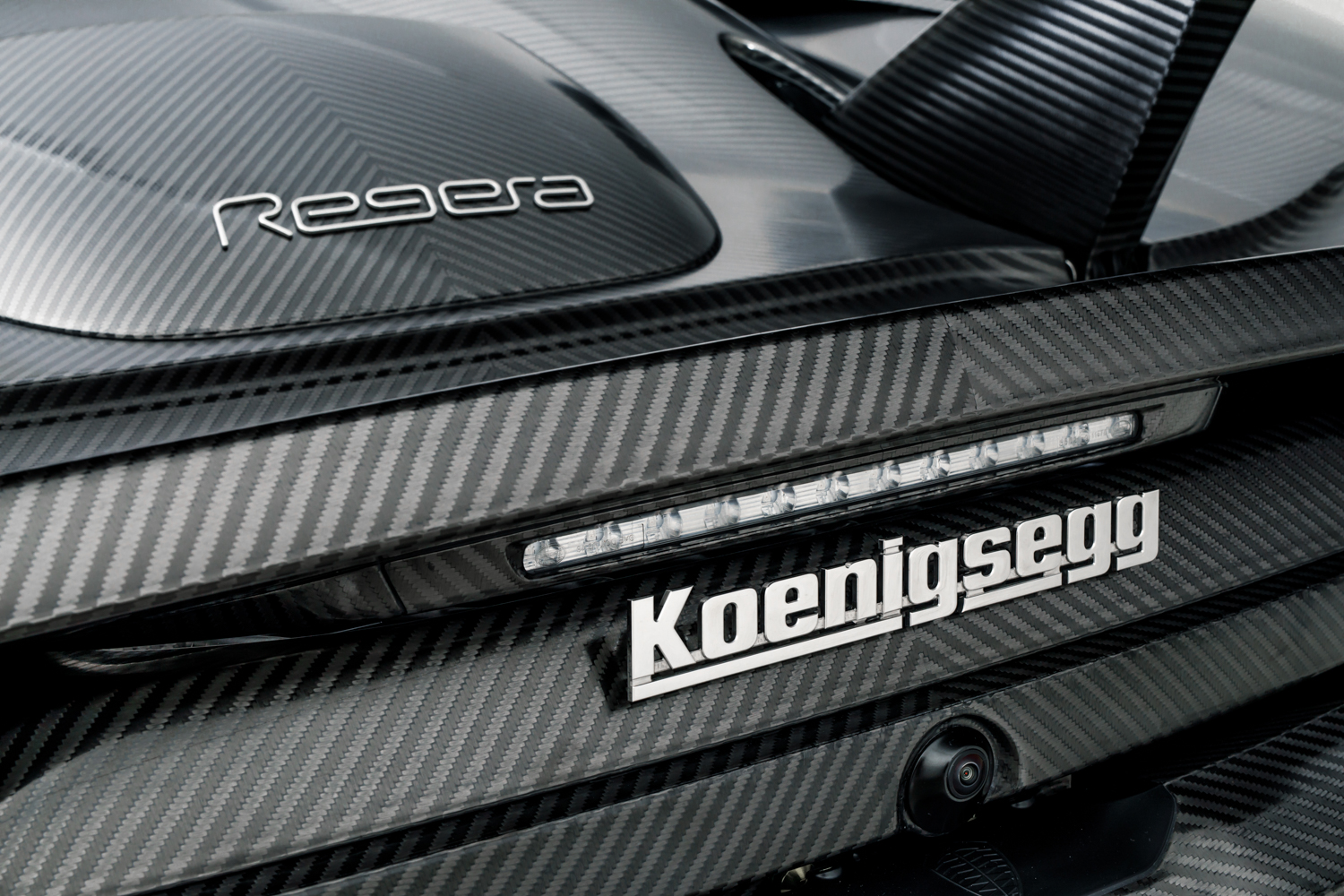
Koenigsegg has produced the world’s first ever car finished completely in Koenigsegg Naked Carbon – KNC. KNC involves no lacquer, varnish or alternative coating being used on top of the carbon surface. The thin layer of epoxy that normally covers a high-end autoclaved cured carbon piece is carefully removed by hand polishing. This is an… Continue reading Koenigsegg Produces First Regera Using KNC – Koenigsegg Naked Carbon
Detroit automakers luring tech talent with these workplace perks
Original Article
Hoarding for Brexit sparks race for warehouse space in Britain
LEIGHTON BUZZARD, England (Reuters) – In a vast warehouse complex 40 miles north of London, staff are wrestling with ways to cram in more goods after a surge in demand from companies building stockpiles ahead of Brexit. An employee looks up at goods at the Miniclipper Logistics warehouse in Leighton Buzzard, Britain December 3, 2018.… Continue reading Hoarding for Brexit sparks race for warehouse space in Britain
Hyundai plans low-wage plant in bid to slash costs
Carmaker sparks anger with plan for factory that will pay workers half as much as peers Go to Source
Waymo starts commercial ride-share service
Geoff Robins | AFP | Getty Images
John Krafcik, CEO of Waymo speaks at a press conference at the 2017 North American International Auto Show in Detroit, Michigan, January 8, 2017.
After months of testing and millions of miles developing self-driving vehicle technology, Waymo has officially launched the country's first commercial autonomous ride-share service.
The company's Waymo One program will give customers rides in self-driving vehicles 24 hours a day. Initially, the service will be limited to cities surrounding Phoenix, including Tempe, Mesa and Chandler.
While there may be many potential customers who want to ride in an autonomous vehicle, the Waymo One service will initially be offered to a limited number of people. Those customers will include hundreds of people in the Phoenix area who were test users of the Waymo self-driving vehicle fleet that has been in development since April 2017.
“Self-driving technology is new to many, so we're proceeding carefully with the comfort and convenience of our riders in mind,” said Waymo CEO John Krafcik. One example of Waymo taking a cautious approach rolling out its ride-share service is the company's use of safety drivers to supervise the rides, at least initially. In addition, the company's app and consoles in the Waymo One vehicles will allow riders to instantly connect with support agents who can assist riders with questions.
Alphabet's Waymo One marks the start of the race by automakers, tech companies and other firms to launch autonomous ride-share services. General Motors subsidiary Cruise plans to launch a similar service using self-driving vehicles next year.
What's driving the competition? The pursuit of greater profits. Studies of have shown the biggest cost for ride-share operations is the expense of paying a driver. General Motors estimates it costs ride -share companies more than $3 per mile in San Francisco. However, GM believes that cost could drop to roughly $1 per mile by 2025 with driverless vehicles in ride-share fleets.
Waymo has said it expects the cost to consumers for using Waymo One to be competitive with Uber, Lyft and other ride-hailing services.
Fiat Panda scores zero stars in Euro NCAP test
Fiat Panda scores zero stars in Euro NCAP test
Waymo launches self-driving car service Waymo One
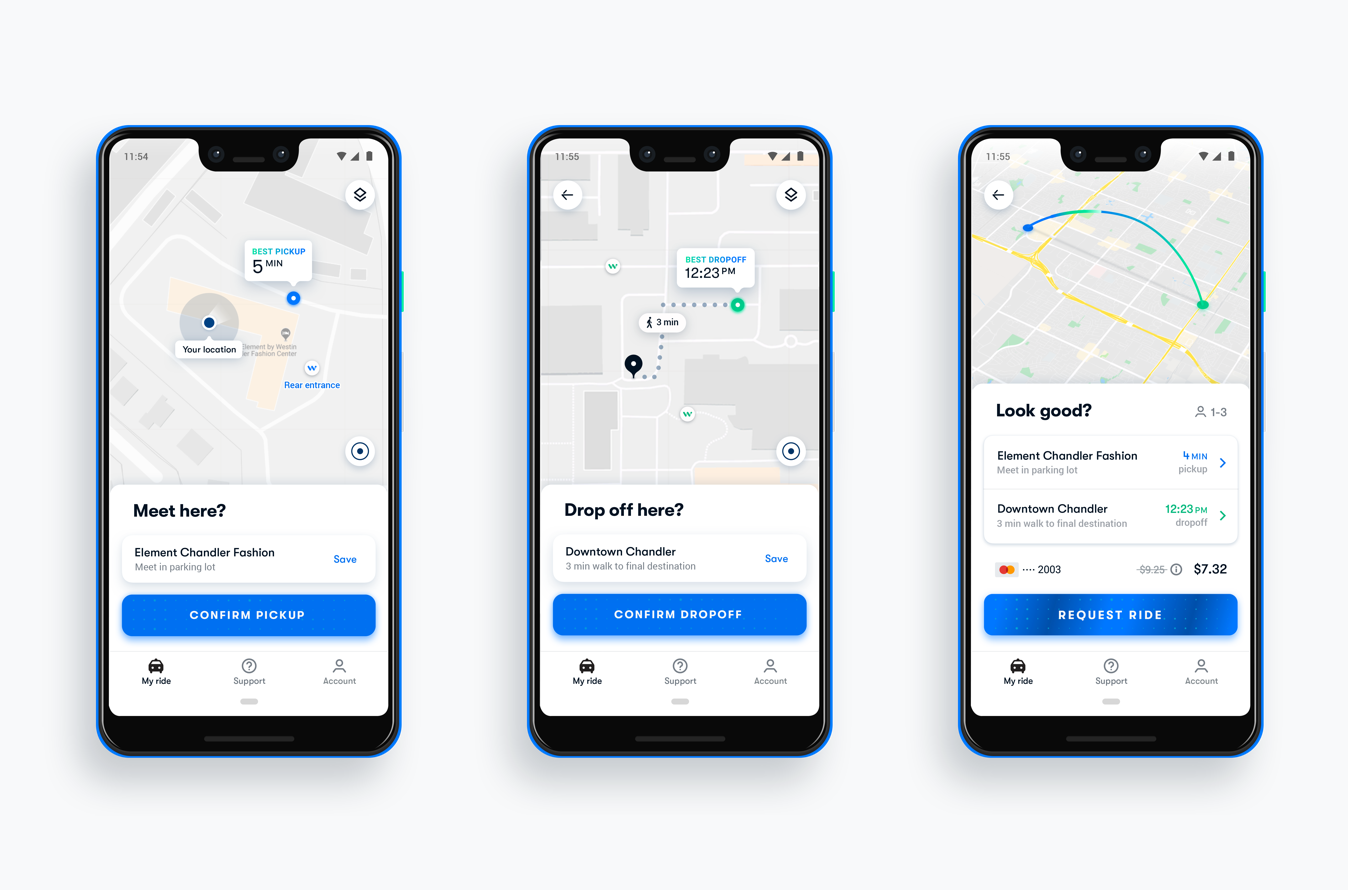
Waymo, the former Google self-driving project owned by parent company Alphabet, is launching a commercial robotaxi service in the Phoenix area dubbed Waymo One. This milestone, for the company and nascent self-driving technology industry, comes with caveats. The Waymo One self-driving car service, and accompanying app, won’t be available to just anyone. And for now,… Continue reading Waymo launches self-driving car service Waymo One