Corrupt FCA exec reported to Marchionne amid schemeDetroit — Federal prosecutors Monday drew a direct line between former Fiat Chrysler CEO Sergio Marchionne and Alphons Iacobelli amid a multimillion-dollar conspiracy to corrupt labor negotiations with the United Auto Workers.
In a federal court filing, prosecutors noted that Iacobelli, as Fiat Chrysler's top labor negotiator, reported directly to Marchionne regarding certain aspects of Fiat Chrysler's negotiations and relationship with the UAW.
It was the first time the government referred to Marchionne by title and served as the government's strongest statement about the late auto CEO and a years-long criminal conspiracy designed to wring concessions from the UAW by funneling money and illegal gifts to labor leaders. Those illegal payments included $1,000 pairs of designer shoes, first-class travel, furniture, lavish meals, parties, jewelry and custom-made Italian watches.
The conspiracy continued after Iacobelli left Fiat Chrysler in 2015, prosecutors said while adding that the former labor negotiator has helped expose “vast labor-management corruption” and is “assisting in efforts to end it.”
“The seriousness of the corruption of the labor-management relationship cannot be overstated,” Assistant U.S. Attorney David Gardey wrote in the filing. “Because of FCA’s conduct, through Iacobelli and others, tens of thousands of hourly UAW workers were deprived of the representation that they deserved and paid for in union dues.”
Prosecutors made the allegations in a federal court filing ahead of Iacobelli's sentencing for violating federal labor laws and a tax crime. The government wants Iacobelli, 59, of Rochester Hills, to spend more than six years in federal prison when U.S. District Judge Paul Borman sentences the former auto executive Aug. 27.
The filing came four days after The News reported that Marchionne gave an expensive Italian watch to United Auto Workers Vice President General Holiefield and failed to disclose the gift while being questioned by federal investigators.
In the filing Monday, prosecutors noted that UAW officials received multiple “custom-made Italian watches,” but stopped short of saying Marchionne gave the gifts.
Marchionne, 66, was never charged with a crime before he died July 25 in a Zurich hospital.
A Fiat Chrysler spokeswoman declined to comment on the federal filing.
The watches, money and illegal gifts were part of a conspiracy to buy labor peace from a cash-strapped UAW, prosecutors said.
Iacobelli is the highest-ranking Fiat Chrysler official convicted in the conspiracy. Seven people have been convicted, including Holiefield's widow, Monica Morgan-Holiefield, who was sentenced to 18 months in federal prison last month.
Iacobelli funneled millions to UAW officials through the jointly operated UAW-Chrysler National Training Center.
He also enjoyed a lavish lifestyle bankrolled by Fiat Chrysler cash.
“This additional income that Iacobelli received took many forms, including a Ferrari, jewel-encrusted pens, hundreds of thousands of dollars in improvements and additions to the pool at his residence, personal spending on his credit cards, and more,” the prosecutor wrote.
The filing Monday also came one week after Iacobelli's lawyer pushed the judge to sentence the auto executive to less than four years in prison.
Iacobelli could be sentenced to eight years in prison under terms of a plea deal. But prosecutors said he deserves a break for admitting responsibility and cooperating with the ongoing investigation.
“. . . the sentence also should account for Iacobelli’s acceptance of responsibility and his sincere efforts at revealing vast labor-management corruption and assisting in efforts to end it,” Gardey wrote.
According to prosecutors, one scheme that continued after Iacobelli's departure was reimbursing the UAW for salaries and benefits of labor officials assigned to the training center. The reimbursement is called a “chargeback.”
A “large number” of UAW officials provided little, if any, work at the training center, according to the government, which called the practice a “political gift” from Fiat Chrysler to the union.
“It was merely a corrupt mechanism whereby FCA money could be used by the UAW to keep the UAW’s costs down,” the prosecutor wrote.
From 2009 to last year, the chargebacks saved the UAW more than $9 million, according to the government.
rsnell@detroitnews.com
(313) 222-2486
Twitter: @robertsnellnews
Read or Share this story: https://detne.ws/2vYYDs4
Category: News Site
US carmakers must win in China, but it's going to get more difficult
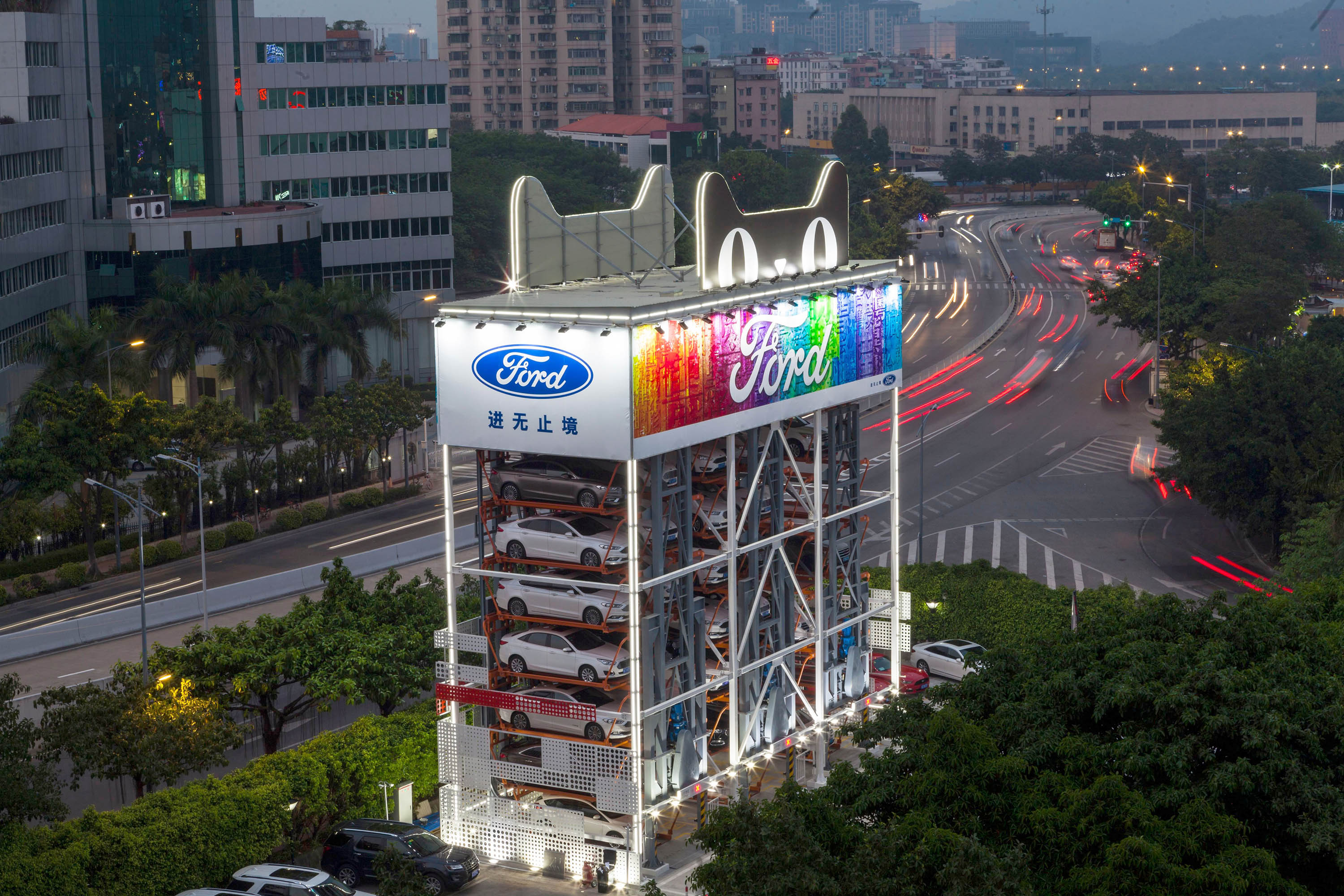
US carmakers must win in China, but it's going to get more difficultThe fortunes of Detroit automakers increasingly lie some 7,000 miles to the east — in China.
China is already the world's largest car market, selling 29 million light vehicles a year. By 2025, China's new car sales will be double those of the United States, analysts said. To put that in perspective, about 17.2 million new light vehicles were sold last year in the U.S., according to Kelley Blue Book data.
And while new car sales are ballooning in China, they have leveled in the U.S.
This puts Detroit's car companies at a critical juncture. They must focus on growing their sales in China if they want to sustain total profits enough to succeed elsewhere in the world.
Yet Ford and Fiat Chrysler struggled in China in the second quarter, and it isn't getting any easier in the future for them and General Motors.
“It's going to get more and more difficult to compete in China,” said John Bonnell, senior adviser of ZoZo Go, an investment advisory firm specializing in China's electric and autonomous vehicle industries. “With the heavy competition, demand for more electric vehicles, trade wars … it's not an easy business there.”
Also on Freep.com:
U.S. automaker see profits dip, predict pitfalls
Ford profit drops $1B due to China, tariffs
Detroit's reality checkThe Chinese car market is intensely competitive given the rising success of some Chinese car companies in the last few years. Then there is the looming threat of President Donald Trump's proposed 25 percent tariffs on imported cars and parts, which could inflate prices across the board.
But carmakers that succeed in China will gain a big advantage in other markets, said Bonnell.
“It will impact their performance here, eventually,” said Bonnell. “If you just have the U.S., you wouldn't have those million-dollar sales to spread to your tooling costs” and to cover other research and development expenses.
In fact, said Bonnell, looking at Volkswagen's success in China, “Its market share in Europe, since they have succeeded in China, has gone straight up.”
But the Chinese consumer has distinct needs and requires products tailored to them, said Jeremy Acevedo, manager of data strategy with Edmunds. Therefore, product becomes king if Detroit carmakers are to attract new buyers there. “They can't rely on shopper loyalty in the booming Chinese auto market,” said Acevedo.
As for Trump's proposed tariff hike and retaliation by the Chinese, Detroit Three exports to China are not a factor because they account for less than 5 percent of sales, Michael Dunne, CEO of ZoZo Go, wrote in a newsletter.
“But if tensions escalate, Chinese leaders could steer consumers away from American-brand cars,” wrote Dunne.
He noted Chinese leaders did just that in the past with Korean and Japanese cars to “great effect” when political relations soured.
“So, a reality check is in order,” said Dunne. “Intensifying competition from Chinese automakers, plus a dose of acute consumer nationalism, could spell the beginning of the end of Detroit in China.”
China salesBesides fierce competition in China — about 110 car brands are sold in China, 60 of which are Chinese — the Chinese government is also pushing automakers for more electric vehicle production by 2020, said Bonnell. It has set strict regulations around EVs, he said.
As Ford and FCA try to compete, they are already behind the curve. Through June, Ford had sold 313,000 vehicles, down 38 percent from the same period a year ago giving it a 2 percent market share in China, said Bonnell, who references data from LMC Automotive.
In that same period, FCA's Jeep brand was down 34 percent to 115,000 units. It sells such a small number of vehicles, though, that FCA's market share is negligible, said Bonnell.
For GM, through June, sales of its Buick, Chevrolet, Cadillac brands were 960,000, up 10 percent from the same period a year ago. Including GM's minority share in SAIC GM Wuling, GM's sales through June totaled 2 million, up 7 percent from the same year ago period, said Bonnell.
GM President Dan Ammann told Wall Street analysts Thursday that GM is successful in China because it has invested in the product and the dealer network there for many years.
But the market in China has been intensely competitive, Ammann said. GM continues to invest in its business there and, “Make sure we’re prepared for the next phase of the market there” as it pushes for more electric vehicles and strict emissions.
The strongest non-Chinese automaker is Volkswagen, which has seen consistent growth in China.
“They were the first one to set up in the mid-'80s and they have strong partners and worked hard to get their brand established and dealer network established,” said Bonnell. “Being the first mover offered a big advantage for them.”
Volkswagen had sold 2.1 million cars through June in China, up 7 percent from the year-ago period, he said.
Ford's problemsFord China has struggled with an aging product portfolio and a thin, unprofitable dealer network. In the second quarter, it lost $483 million, a decline of $506 million from last year, Ford's CFO Bob Shanks said in a call with analysts.
Current products in the showroom are dated. Five new models, arriving this autumn, should help, but there is a lot of lost ground to make up. Ford China sales this year could fall 25 percent below their 2016 peak of 1.2 million. That's a 300,000-vehicle hole to dig out of, Shanks said.
Shanks blamed unfavorable market factors for Ford and Lincoln imports into China, and lower net pricing, some of which is related to tariff changes.
But Ford's Jim Farley said the deterioration of Ford's business in China has been swift.
“I can assure you, we understand the importance of getting our China business back on track,” Farley, Ford's executive vice president and president of Global Markets, told analysts.
Ford will launch a new, low-priced, midsize sport utility vehicle called Territory in China early next year, Farley said. The SUV will be built in China and was developed strictly for that market. It will give Ford a better chance to compete against lower priced vehicles than it had in the past there, said Farley.
Ford combats China struggles with low-cost SUV
Ford has serious shortfalls in its go-to-market capabilities, “including inadequate dealer profitability, excess stock including our high-volume (compact) cars,” Farley said. “We haven't maintained a fresh enough product lineup for this rapidly changing and dynamic China market.”
Those missteps along with an uncompetitive cost structure hurt Ford China, and Farley said Ford is taking “urgent action.”
By the end of next year, 60 percent of Ford China's vehicle lineup will be refreshed or new, said Farley. He said Ford is improving its competitiveness with aggressive cost cuts and more localized product such as the Explorer.
“We're close to hiring a new CEO for Ford China and we have already onboarded a number of local Chinese talent in key management positions such as marketing and sales leads for both Ford and Lincoln to drive not only our strategy but they're already reinvigorating our sales,” said Farley.
But until all of Ford's SUVs are launched in China, he warned, “We'll continue to face this mix deficit.”
GM's successFord's new products will be competing against several new products from GM China, which already has a strong foothold in the market.
In the second half of the year, GM China will introduce 10 new models including the Cadillac XT4 small SUV.
“The focus is on high-demand segments including SUVs and multipurpose vehicles and luxury vehicles,” GM CEO Mary Barra said in an analyst call.
GM China reported record results in the second quarter with equity income of $600 million, up $100 million year-over-year. The bulk of those sales are from Baojun, Cadillac and Chevrolet, and GM said it had a “continued focus on cost efficiencies” there.
GM will incur higher costs in the second half because of the cost to launch new vehicles. With competitors launching new vehicles, pricing will come under pressure too, she said.
“But we remain confident in our 20 years of market strength in China,” said Barra. “Due to established local and U.S. brands and our strong Chinese partner, our current outlook does not assume any comprehensive impact in China beyond existing trade flows.”
Still, GM's growth is driven by the affordable Baojun (pronounced bow joon) brand and the surging Cadillac brand. Buick and Chevrolet are “crimped at the edges and stalling,” wrote Dunne.
Baojun is GM's ultrasubcompact that costs less than $15,000. It will account for one in every four GM China sales this year, said Dunne.
But Dunne wrote that the “squeeze on Chevy and Buick reveals a larger, deeper threat to the Detroit Three in China.” Consumers there are much less attracted to mass market global brands than they were a few years ago. Instead, they are switching to Chinese brands such as Great Wall, BYD and Geely, wrote Dunne.
Geely is China's largest private automaker. It will sell almost twice as many cars in China as FCA and Ford combined this year, said Dunne.
FCA's futureIn Fiat Chrysler's second-quarter earnings call, CEO Mike Manley acknowledged that “the biggest challenges we face, and frankly we're going to continue to face to some extent for the balance of the year, are all focused in China.”
Changes in the tariff drove down sales of Maserati cars and shipments to dealers, Manley said. But he was quick to add, “With all of these duty changes behind us, I'm clearly expecting improved sales performance,” Manley said.
That's provided that FCA manages inventory to meet demand ahead of the transition to China's tougher emission regulations, he said. FCA has lowered its expected..
Self-driving car is actually a tiny hotel suite on wheels
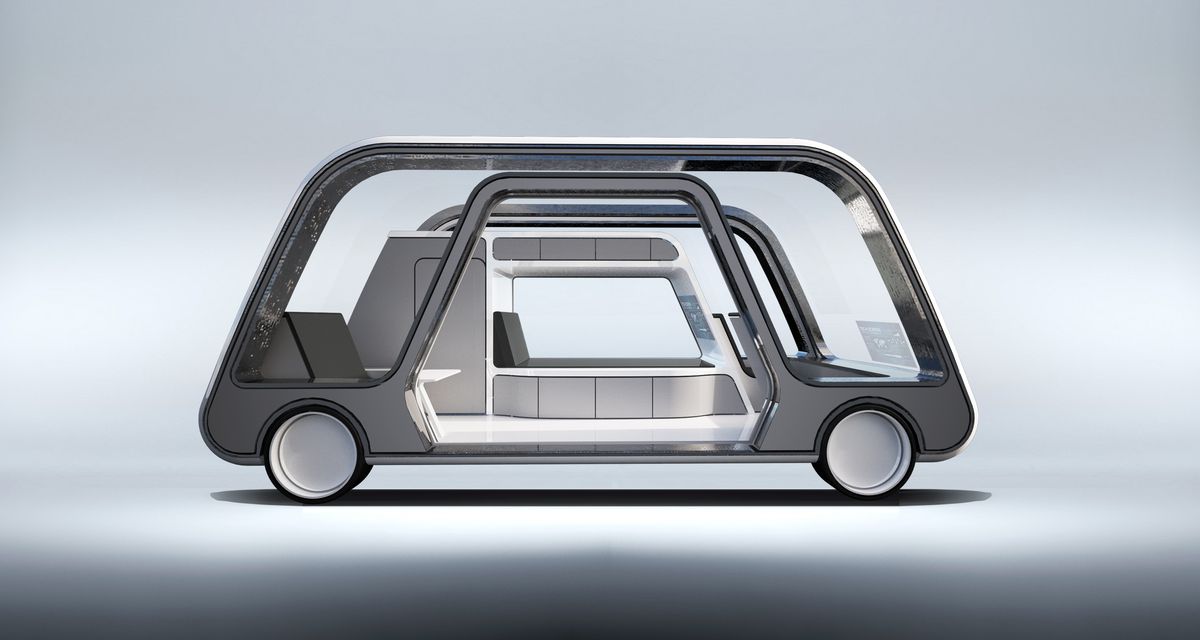
The future of travel may be in outer space, or it could be in a self-driving car. That’s the hope of the Autonomous Travel Suite, a driverless mobile hotel room that provides door to door transportation. Recently named one of three finalists in this year’s Radical Innovation Awards, the Autonomous Travel Suite was developed by… Continue reading Self-driving car is actually a tiny hotel suite on wheels
After fatal accident, Uber’s vision of self-driving cars begins to blur
Getty Images
An Uber self-driving car drives down 5th Street on March 28, 2017 in San Francisco, California.
SAN FRANCISCO — After Dara Khosrowshahi took over as Uber's chief executive last August, he considered shutting the company's money-losing autonomous vehicle division. A visit to Pittsburgh this spring changed that.
In town for a leadership summit, Mr. Khosrowshahi and other Uber executives were briefed on the state of the company's self-driving vehicle research, which is based in Pittsburgh. The group was impressed by the progress its autonomous division had made in testing driverless cars in Pittsburgh and in Arizona, according to three people familiar with the ride-hailing company, who were not authorized to speak publicly. They left the meeting energized, convinced that Uber needed to forge ahead with self-driving cars, the people said.
But days after the summit, one of Uber's autonomous cars struck and killed a woman who was pushing a bicycle across a street in Tempe, Ariz. Video from the March 18 collision showed a distracted safety driver failing to react in time as the vehicle barreled into the pedestrian, Elaine Herzberg.
The accident threw Uber's autonomous vehicle efforts into flux, immediately forcing the suspension of its self-driving car tests in cities including Tempe, Pittsburgh and Toronto. Months later, Uber's executives are divided over what to do with the autonomous business, according to the people familiar with the company. While one camp is pushing Mr. Khosrowshahi to seek partnerships or even a potential sale of the unit, known as the Advanced Technologies Group, a rival contingent is arguing that developing self-driving technology is crucial to Uber's future, the people said.
Mr. Khosrowshahi remains undecided, the people said, though he has expressed a desire to partner with other companies on autonomous technologies. In recent months, Uber has started talking with a few auto manufacturers about potential partnerships, including supplying Uber's autonomous driving technology for use in Toyota's minivans, according to one person familiar with the talks. Toyota declined to comment.
More from The New York Times:
Alexa vs. Siri vs. Google: Which Can Carry on a Conversation Best?
Google Employees Protest Secret Work on Censored Search Engine for China
After the Cryptocurrency Boom: Hard Lessons for New Investors
The internal debates are unfolding at a time when many companies can ill afford to pause on autonomous technology given stiff competition from carmakers and other tech companies. In recent months, top engineers have left Uber's self-driving project for lucrative opportunities elsewhere. Uber's self-driving cars recently returned to the road in Pittsburgh but with human drivers at the wheel, meaning employees are driving around like any other motorist — except their vehicles are carrying hundreds of thousands of dollars in technology.
The issue of whether to retain or sell A.T.G. is complicated by Uber's stated intention to go public by the end of 2019. The company, valued at $62 billion, has racked up billions of dollars in losses since it was founded in 2009 and needs to persuade investors that it can eventually create a sustainably profitable business. The self-driving efforts, which have been losing $100 million to $200 million a quarter, do little to help that case. And Mr. Khosrowshahi has been shedding money-losing businesses since he joined Uber.
At a meeting in Pittsburgh on Aug. 8, according to a person briefed on the event, Mr. Khosrowshahi did not address what he would do with the self-driving efforts but told employees there that it ''is a big-time hardware manufacturing, software problem at scale. Lots of tech companies out there are going after this problem, but I think there are very few companies who are taking this on end-to-end at scale the way we are.''
In a statement, Uber said: ''Right now the entire team is focused on safely and responsibly returning to the road in autonomous mode. That's our No. 1 objective, and we have every confidence in the work they are doing to get us there.''
Uber first made its interest in self-driving cars public when it hired about 40 researchers and scientists from the National Robotics Engineering Center at Carnegie Mellon University in 2015. At the time, the company's chief executive was one of the founders of Uber, Travis Kalanick, who had decided to bet big on self-driving vehicles. He wanted to prepare Uber for a future when fleets of driverless cars could move passengers efficiently and safely around the clock.
In 2016, Uber acquired Otto, a self-driving truck start-up whose founders had decamped from Google. The deal later spurred a trade-secrets-theft lawsuit from Google's onetime self-driving car unit, Waymo. The case briefly went to trial this year, generating headlines and embarrassing revelations, before Uber settled with Waymo in February.
In its rush to get on the road with driverless cars, Uber also ran afoul of regulators. The company started testing its autonomous vehicles in San Francisco in 2016, without a permit from California's Division of Motor Vehicles. The state agency ordered Uber to apply for a permit, but the company refused, saying permits were not necessary since safety drivers were monitoring the cars. The D.M.V. ultimately revoked the registrations for the 16 self-driving cars that Uber was testing in the city.
By early this year, Uber's self-driving division was preparing to ramp up development, pushing its testing cars in Arizona to tally more miles. The goal, according to internal documents reviewed by The New York Times, was for Uber to win regulatory approval to start testing a self-driving car service in Arizona before the end of this year.
But the crash in March — the first known fatality involving a pedestrian and an autonomous car — altered everything. Since then, Uber has steadily narrowed the scope of its autonomous vehicle operations.
In May, Uber announced that it was shutting its driverless testing hub in Arizona and laying off 300 employees. A day later, preliminary findings from federal regulators investigating the crash confirmed what many self-driving car experts suspected: Uber's self-driving car should have detected a pedestrian with enough time to stop, but it failed to do so. Uber has begun a safety review and plans to publish its assessment in the coming months.
Mr. Khosrowshahi has started to subtly de-emphasize the company's role in developing driverless technology.
At a conference last year, he said it was a ''huge advantage'' for Uber to have its own autonomous technology while operating a global ride-sharing network. But this May, Mr. Khosrowshahi said that while Uber needed to have access to autonomous technology, it aimed to be ''neutral.'' He said Uber would be open to licensing its own technology or building around alternatives from other companies — a stark contrast to the company's previous approach of owning and operating the entire self-driving ''stack'' of technology and hardware.
And in July, Uber announced that it was closing its autonomous trucking business. The company instead said it would focus exclusively on building self-driving cars.
''For now, we need the focus of one team, with one clear objective,'' Eric Meyhofer, who leads Uber's driverless car efforts, wrote in an email to employees.
In the preceding months, some senior engineers and executives with expertise in self-driving vehicles had already left. One of those was Don Burnette, one of Otto's founders, who became the chief executive of a new self-driving company called Kodiak, which focuses on long-haul trucking.
''I really wanted to focus on the trucking problem, and there was not as much focus on that at Uber,'' Mr. Burnette said.
He added that Uber would most likely continue to pursue its vision of driverless cars because it and other companies ''have been working on it for so long, promising this for so long, and they have a tremendous amount of money behind them.''
Interested in All Things Tech? Get the Bits newsletter delivered to your inbox weekly for the latest from Silicon Valley and the technology industry.
Bird and Lime are protesting Santa Monica’s electric scooter recommendations
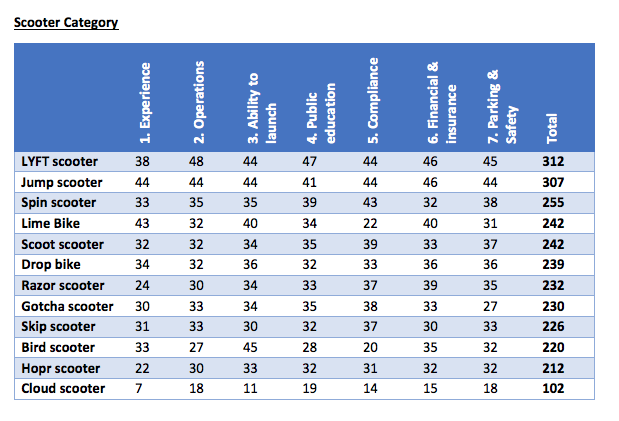
Lime and Bird are protesting recommendations in Santa Monica, Calif. that would prevent the electric scooter companies from operating in the Southern California city. We first saw the news over on Curbed LA, which reported both Lime and Bird are temporarily halting their services in Santa Monica. Last week, Santa Monica’s shared mobility device selection committee… Continue reading Bird and Lime are protesting Santa Monica’s electric scooter recommendations
Tesla loses two more chip architects ahead of Autopilot 3.0 hardware launch
Earlier this month, Tesla claimed to have the ‘world’s most advanced computer for autonomous driving’ with its Autopilot 3.0 hardware update coming next year. Now we’ve learned that the automaker is losing two of the chip architects behind the project. Back in 2016, we first exclusively reported on Tesla quietly hiring legendary chip architect Jim Keller from AMD… Continue reading Tesla loses two more chip architects ahead of Autopilot 3.0 hardware launch
Tesla pares losses in volatile trading after falling below $300
Getty Images
Elon Musk
Tesla's stock price fell below $300 per share at one point on Monday as investors in the electric car maker continued to doubt the validity of a privatization proposal by founder Elon Musk.
Shares of the Palo Alto, California-based company fell as low as $288.20 before rebounding shortly after the open of trading. The stock was down 0.6 percent at $303 as of 10:43 am ET.
Earlier Monday, J.P. Morgan slashed its projections for the carmaker, telling clients that while it originally took chief executive Elon Musk's proposal to take the company private at $420 per share seriously, the funding to do so “appears to not have been secured.”
The firm pared its year-end price target for Tesla shares back to $195 from $308, representing 36 percent downside to Friday's close.
But while the bearish J.P. Morgan note may have weighed on the stock Monday, investors have had plenty of reason to question the CEO over the past few weeks.
Shares also fell after news broke that PIF, the Saudi Arabian sovereign wealth fund that Musk has said could help him fund an offer to take the car company private, is in talks to invest in rival Lucid Motors, Reuters reported cited sources.
The Securities and Exchange Commission, meanwhile, reportedly served Tesla with a subpoena early last week after Musk's now-infamous privatization tweet.
What Tesla would have to raise to go private
2 Hours Ago | 01:50
Earlier reports said the SEC had intensified scrutiny of the automaker after the Aug. 7 tweet. A subpoena would be one of the first steps in a formal inquiry.
The SEC declined CNBC's request for comment on the subpoena.
Musk admitted last Thursday in an emotional interview with The New York Times that the past year has been taxing for him, blaming so-called short-sellers — investors betting against the company — for much of his stress.
He told the newspaper he's overwhelmed by the job, has been working up to 120 hours per week and takes Ambien to fall asleep on occasion.
Tesla shares tumbled 9 percent to $306 the day following the interview.
Columnist and businesswoman Arianna Huffington later called on Musk to adopt a healthier work-life balance in light of the interview, but he said that's not a viable option.
Musk told the Huffington Post founder in a tweet Sunday morning that his car company and Ford are the only two American automakers that have avoided bankruptcy. He then added, in an apparent reference to his long workweek: “You think this is an option. It's not.”
WATCH: Is it game over for Elon Musk?
Tesla's in turmoil, is the game over for Elon Musk?
5:20 PM ET Fri, 17 Aug 2018 | 07:59
Elon Musk could learn a lesson from Henry Ford: One person can’t run a car company
Original Article
Citi Research says Tesla should raise capital to prevent a negative confidence ‘spiral’
Getty Images
Elon Musk
Tesla's finances may be hurt by the negative ramifications of CEO Elon Musk's controversial plan to take the company private, according to Citi Research.
The firm reiterated its “neutral/high risk” rating for Tesla shares, citing the company's deteriorating balance sheet.
“Ultimately, credit risk is a function of confidence, without which a company's financial position can quickly spiral into distress. Though we don't think Tesla has necessarily entered such a spiral, the current state of affairs heightens the focus,” analyst Itay Michaeli said in a note to clients Monday. “If a go-private transaction is looking less likely, we think it'd be wise for Tesla to at least try to raise significant new equity capital sooner rather than later.”
The analyst said if Musk's plan to take the company private doesn't happen, the company's cash position may be “pressured” from class-action lawsuits.
Tesla shares fell 0.5 percent Monday after the report.
Tesla's skeptics have called into question the state of the company's financial position. It lost nearly $2 billion last year, and through the first two quarters this year it has burned through about $1.8 billion in cash after capital investments. The company had $2.2 billion in cash at the end of the June quarter.
“When a company's balance sheet is fundamentally weak the outcome can become self-fulfilling — and that's really the risk we see with Tesla right now,” he said.
Michaeli reaffirmed his $356 price target for Tesla shares, representing 16.5 percent upside to Friday's close. The company's stock is down 2 percent this year through Friday versus the S&P 500's 7 percent gain.
Tesla did not immediately respond to a request for comment.
Disclaimer
UPDATE 1-Nissan to boost China production capacity by 40 pct, source says
BEIJING (Reuters) – Japan’s Nissan Motor Co (7201.T) plans to invest about $900 million to boost vehicle-making capacity in China by 40 percent by 2021 – part of a 60 billion yuan ($8.73 billion) strategy to become a top three player in the world’s largest auto market. A car with the Nissan logo badge is… Continue reading UPDATE 1-Nissan to boost China production capacity by 40 pct, source says