Volvo study shows driver-assistance, self-driving features will make cars more efficient

Self-driving cars are green cars, not just because they are usually electric.

One of the biggest reasons engineers began working on self-driving cars more than a dozen years ago was for their efficiency, reducing stop-and-go driving and eventually even stoplights. (Potential safety improvements are another big motivation.)

Now, a study by the National Renewable Energy Laboratory on behalf of Volvo quantifies that savings. Although fairly rudimentary in its approach, the study is the first that uses real-world driving data to show how much more efficient cars with driver-assistance features can be. The study showed a 5 to 7 percent drop in fuel consumption for the cars driving with adaptive cruise control compared with human drivers.

Cars in the study logged 18,500 trips around Gothenburg. The study, “An Automated Vehicle Fuel Economy Benefits Framework Using Real-World Travel and Traffic Data,” was published in June in IEEE Intelligent Transportation Systems Magazine.

Researchers studied Volvos driven by employees and their families near the company's headquarters in Gothenburg, Sweden, and compared the fuel economy of cars using adaptive cruise control compared with those driven exclusively by human drivers.

Adaptive cruise control is one of the building blocks of self-driving cars, holding a steady speed on the open road, but slowing down gradually if a slower car appears ahead and maintaining a set following distance behind it.

Volvo Drive Me self-driving car project

The study and the parameters aren't perfect. Some of the benefit may come because cars driven with adaptive cruise control tend to travel more slowly as more, slower cars continue to appear in front of them. It also only tests this one aspect of self-driving cars, albeit a fundamental one. Future developments of self-driving cars, such as “platooning” and vehicle-to-vehicle and vehicle-to-infrastructure communications that can smooth traffic flow even further could have even bigger benefits.

“One obstacle to research like this is limited availability of real-world travel data from automated vehicles,” said Lei Zhu, a researcher in NREL’s Mobility, Behavior and Advanced Powertrains Group and lead author of the new paper. “The partnership with Volvo Cars provided a rare opportunity to work with actual vehicle operation and energy consumption data in real traffic.”

The researchers designed the study to provide a basis to simulate benefits from other types of advances in self-driving in the future.
Notice Regarding Completion of Payment for Disposal of Own Shares as Restricted Stock Compensation

July 31, 2019

Notice Regarding Completion of Payment for Disposal of Own Shares
as Restricted Stock Compensation

Company name:SUBARU CORPORATION
Representative:Tomomi Nakamura, President and CEO
Code number:7270 (First Section of Tokyo Stock Exchange)
Contact for inquiries:Katsuo Saito, Vice President
and General Manager of Investor Relations Department
Phone:+81-3-6447-8825

Subaru Corporation (the “Company”) hereby announces that payment procedures were completed on July 31, 2019 as follows for the disposal of its own shares as stock compensation that was resolved by its Board of Directors pursuant to Article 370 of the Companies Act of Japan and Article 29 of the Articles of Incorporation (written resolution in lieu of a Board of Directors meeting) on July 10, 2019. For more information on this matter, please refer to “Notice Regarding Disposal of Own Shares as Restricted Stock Compensation” announced on July 10, 2019.

Overview of Disposal of Own Shares

(1) Class and number of shares to be disposed
56,827 shares of common stock of the Company

(2) Disposal price
¥ 2,632 per share

(3) Total value of share disposal
¥ 149,568,664

(4) Grantees of shares and number thereof;
number of shares to be granted
The Company’s Directors (excluding Outside Directors)
  6 persons, 20,134 shares
The Company’s Executive Officers
 19 persons, 36,693 shares

(5) Payment date
July 31, 2019

###

[PDF/138 KB]

SoftBank-backed Fair taps three executives to lead vehicle subscription app expansion

Fair, the vehicle subscription startup backed by SoftBank, is loading its executive team with veterans in the tech, venture and automotive industries as it seeks to build out its Uber leasing program and expand beyond North America. Fair.com today announced three key hires to lead the development of its car subscription app, financing department and… Continue reading SoftBank-backed Fair taps three executives to lead vehicle subscription app expansion

STYLE SET FREE – Hyundai Motor’s vision for future mobility

Hyundai will offer a glimpse of how it envisages the future in-car experience under the concept STYLE SET FREE With STYLE SET FREE, Hyundai demonstrates its customer-centric approach to future mobility Cars set to become extensions of living spaces so customers will be able to personalise their vehicles as they do their homes 5 August… Continue reading STYLE SET FREE – Hyundai Motor’s vision for future mobility

Vietnam’s ride-hailing firm Be Group launches delivery services to take on Grab, Go-Viet

Vietnam’s ride-hailing firm Be Group is set to expand its operations and ramp up its technological ecosystem with the launch two delivery services, beExpress for its business customers and beDelivery for individuals, per an announcement. beExpress is a delivery and postal service that’s primarily aimed at e-commerce enterprises. It currently runs in partnership with Lazada… Continue reading Vietnam’s ride-hailing firm Be Group launches delivery services to take on Grab, Go-Viet

More On Tesla’s Innovative New Wiring Architecture

Nothing wrong with quicker and less expensive manufacturing processes. When it comes to cool, exciting car stuff, wiring harnesses are not usually the first things that come to mind. However, wiring represents one of the most important components in modern vehicles – not only in terms of how the vehicles perform, but also in terms… Continue reading More On Tesla’s Innovative New Wiring Architecture

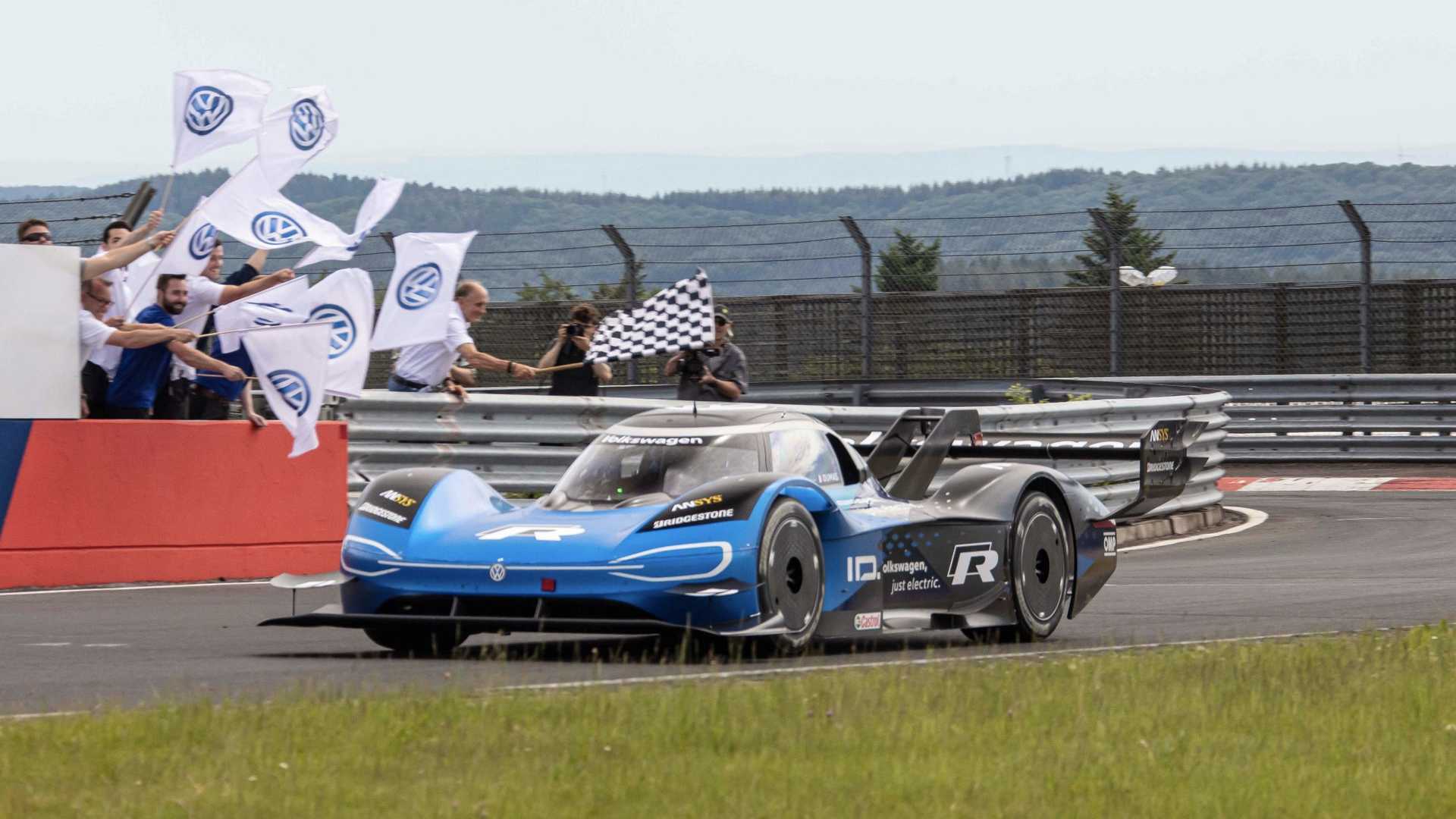
Volkswagen I.D. R At The Nürburgring Used More Than 1 kWh/km

The 24.7 kWh of energy used during the record-breaking run was actually the most efficient record ever. Volkswagen I.D. R‘s EV record at the Nürburgring Nordschleife set on June 3, 2019, turns out to be the most efficient lap at the famous track, according to the German manufacturer. Total energy consumption by the car was 24.7… Continue reading Volkswagen I.D. R At The Nürburgring Used More Than 1 kWh/km